30 Minimalist Kitchen Ideas to Create a Clean, Calm & Stylish Space

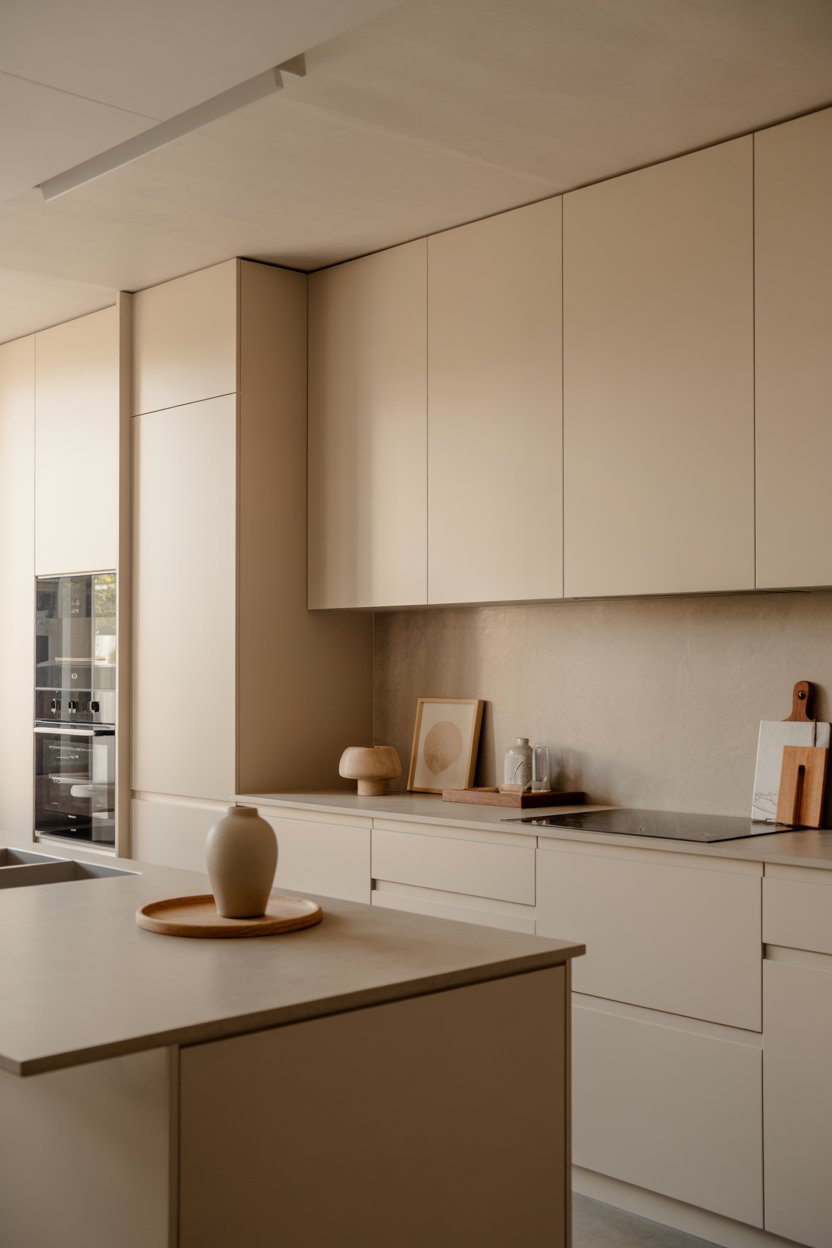
A minimalist kitchen is more than just a design trend-it’s a lifestyle choice that embraces simplicity, functionality, and intentional living. By focusing on clean lines, clutter-free surfaces, and thoughtfully chosen materials, minimalist kitchens create a sense of calm that makes everyday cooking and gathering more enjoyable.
At its core, minimalist design is about keeping only what you truly need while ensuring every element serves a purpose. This doesn’t mean your kitchen has to feel cold or empty. With the right balance of textures, colors, and lighting, a minimalist kitchen can feel warm, inviting, and full of character.
From sleek cabinetry and hidden storage solutions to natural wood accents and soft neutral palettes, there are countless ways to bring this aesthetic into your home. Whether you have a spacious open-plan layout or a compact kitchen, minimalist principles can help you maximize both style and efficiency.
In this guide, you’ll discover 30 inspiring minimalist kitchen ideas designed to transform your space into a modern, clutter-free haven. Each idea offers practical inspiration to help you create a kitchen that is not only beautiful but also perfectly suited to your everyday lifestyle.
1. All-White Minimalist Kitchen
An all-white minimalist kitchen is the ultimate expression of simplicity and elegance. The clean, bright palette creates an airy atmosphere that instantly makes any space feel larger and more open. It’s a timeless choice that never goes out of style.
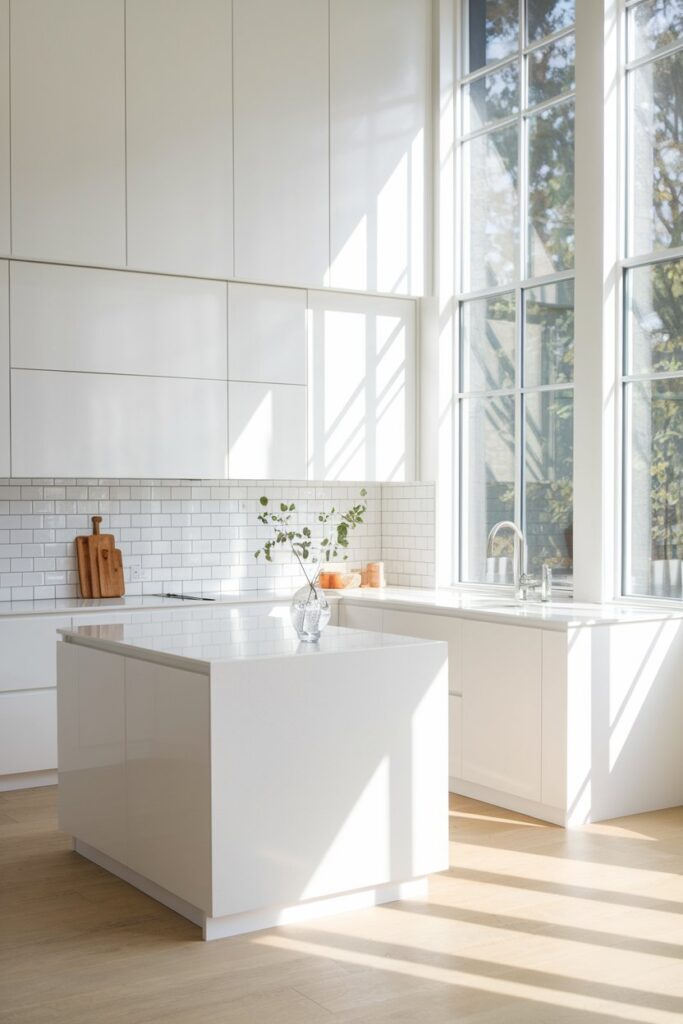
To avoid a flat or sterile look, layer different textures within the white spectrum. Think glossy subway tiles, matte cabinetry, marble countertops, and soft linen accents. These subtle contrasts add depth while maintaining a cohesive aesthetic.
Lighting plays a crucial role in enhancing the beauty of an all-white kitchen. Natural light reflects beautifully off white surfaces, while warm ambient lighting keeps the space feeling inviting rather than cold.
Keep decor minimal and purposeful. A single vase with fresh greenery or a wooden cutting board can add warmth without disrupting the clean look. Less truly becomes more in this design approach.
An all-white minimalist kitchen offers a calm, clutter-free environment that feels both luxurious and livable—perfect for those who appreciate understated sophistication.
2. Neutral Color Palette with Warm Tones
A neutral kitchen with warm tones strikes the perfect balance between minimalism and comfort. Shades like beige, taupe, cream, and soft greys create a soothing backdrop that feels inviting and lived-in.
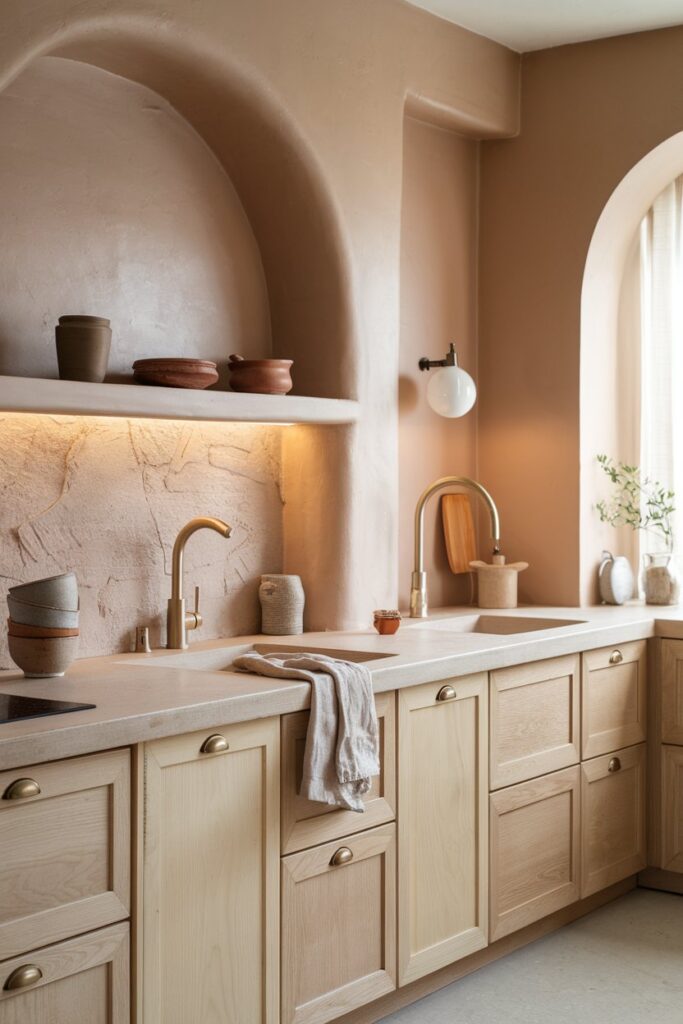
Incorporating warm elements such as wood cabinetry, brass hardware, or woven textures helps prevent the space from feeling too stark. These details add personality while still keeping the overall look simple and refined.
Layering is key to making neutral tones feel dynamic. Combine different finishes like matte cabinets, stone countertops, and textured backsplashes to create visual interest without overwhelming the space.
Lighting should enhance the warmth of the palette. Soft, golden lighting or pendant fixtures can highlight the richness of neutral tones and make the kitchen feel cozy and welcoming.
This approach is ideal for homeowners who want a minimalist kitchen that still feels warm, relaxed, and effortlessly stylish.
3. Handleless Cabinet Design
Handleless cabinets are a hallmark of modern minimalist kitchens, offering a sleek and uninterrupted visual flow. By eliminating bulky hardware, the cabinetry appears seamless and clean.
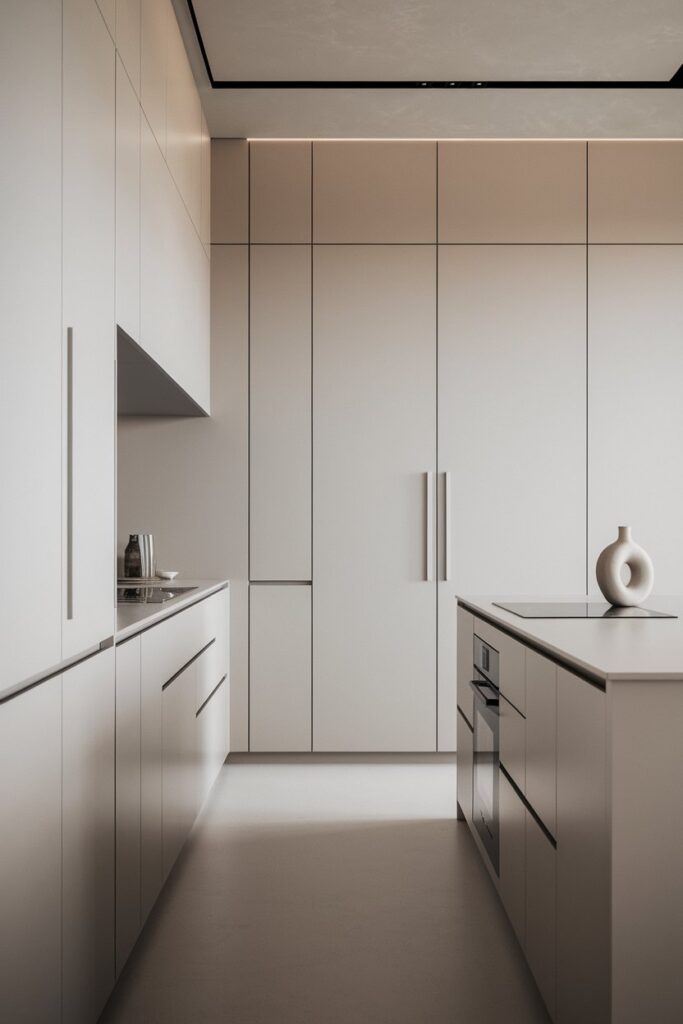
Push-to-open mechanisms or integrated grooves make handleless designs both functional and aesthetically pleasing. They contribute to a streamlined look that emphasizes simplicity and order.
This design works especially well in smaller kitchens, where reducing visual clutter can make the space feel larger and more open. The smooth surfaces create a sense of continuity that enhances the minimalist vibe.
Material choice becomes more important when hardware is absent. High-quality finishes like matte laminates, natural wood, or lacquered surfaces can elevate the overall appearance.
Handleless cabinets prove that small design decisions can have a big impact. They offer a refined, contemporary look that aligns perfectly with minimalist principles.
4. Open Shelving with Limited Decor
Open shelving is a popular minimalist feature that combines functionality with visual appeal. It allows you to display everyday essentials while keeping the kitchen feeling light and open.
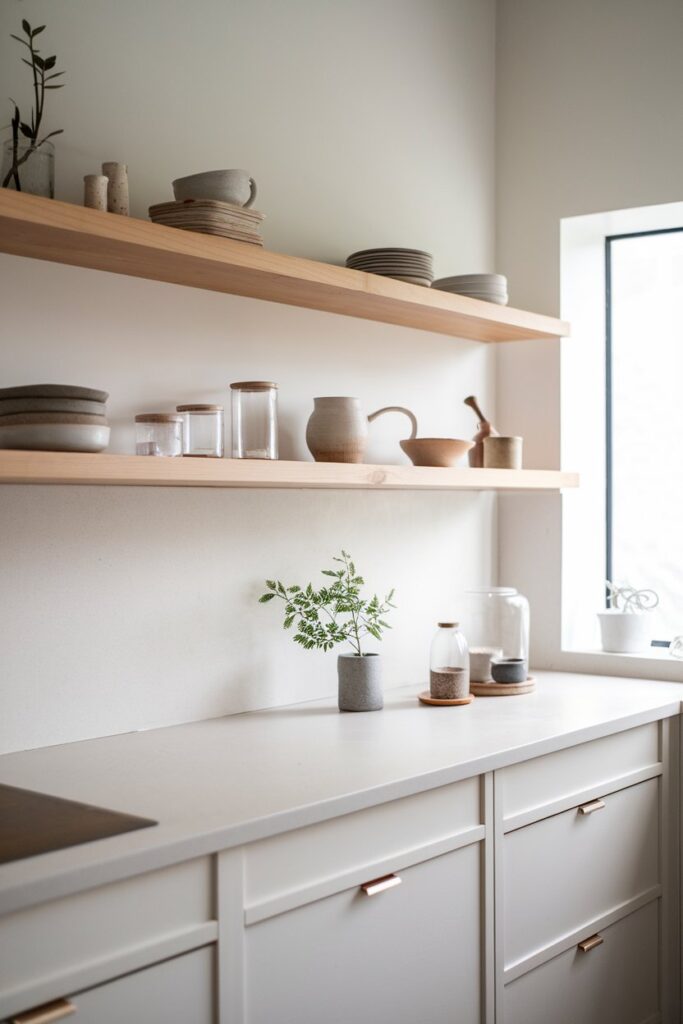
The key to success is restraint. Instead of overcrowding shelves, choose a few well-curated items such as neutral dishware, glass jars, or small plants. This keeps the look intentional and uncluttered.
Consistency in color and material helps maintain a cohesive design. Sticking to a limited palette ensures the shelves enhance the minimalist aesthetic rather than disrupt it.
Open shelves also encourage organization. When everything is visible, it becomes easier to maintain order and avoid unnecessary accumulation.
With thoughtful styling, open shelving can transform your kitchen into a space that feels both practical and beautifully curated.
5. Clutter-Free Countertops
Clutter-free countertops are essential to achieving a true minimalist kitchen. Clear surfaces instantly create a sense of calm and order, making the space feel more spacious and functional.
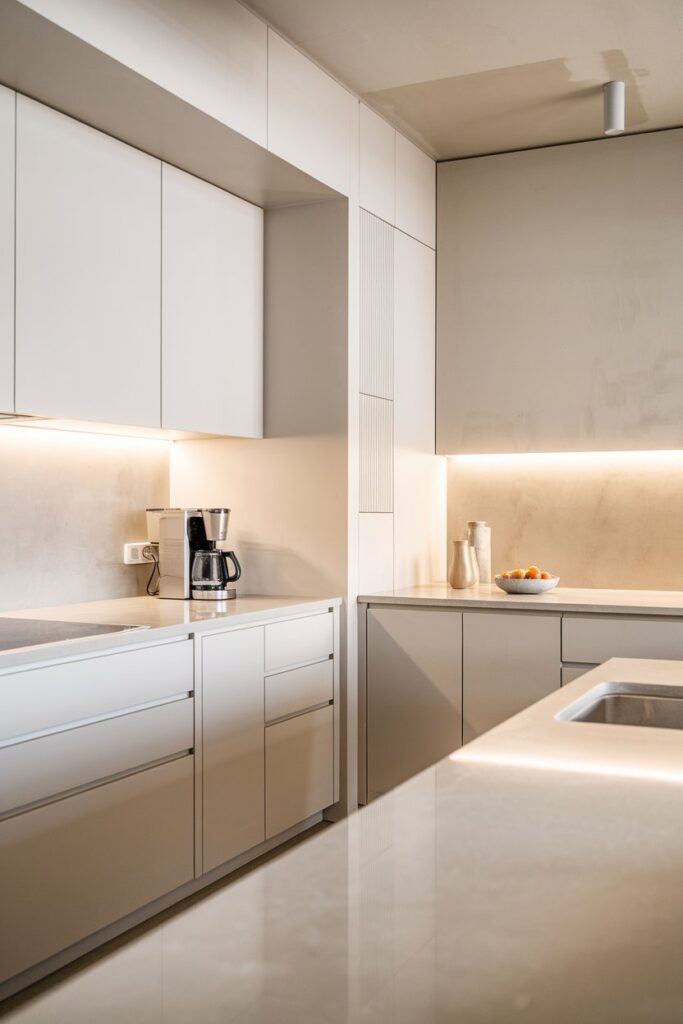
Start by storing away appliances and utensils that are not used daily. Utilize cabinets, drawers, and hidden storage solutions to keep everything organized and out of sight.
Limit countertop items to a few essentials, such as a coffee maker or a knife block. Even these should be chosen with design in mind to complement the overall aesthetic.
Incorporating smart storage solutions like pull-out drawers or vertical organizers can help maintain a clean look without sacrificing convenience.
A clutter-free countertop not only enhances visual appeal but also improves efficiency, making your kitchen a more enjoyable place to cook and gather.
6. Built-In Appliances for a Seamless Look
Built-in appliances are a cornerstone of minimalist kitchen design, helping create a smooth and uninterrupted visual flow. By integrating appliances into cabinetry, the kitchen feels cohesive, clean, and thoughtfully designed.
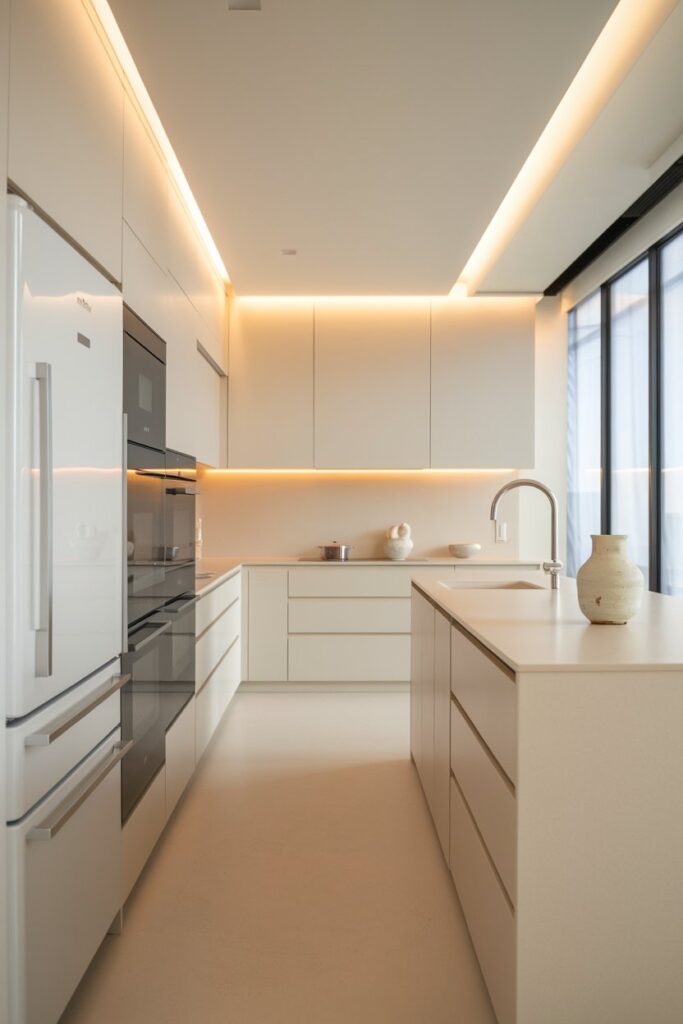
Panel-ready refrigerators, concealed dishwashers, and built-in ovens allow appliances to blend seamlessly with surrounding surfaces. This approach reduces visual clutter and keeps the focus on the overall aesthetic rather than individual elements.
Functionality remains at the heart of this design choice. Built-in appliances are strategically placed to improve workflow, making cooking and cleaning more efficient while maintaining a streamlined look.
Material consistency is key when integrating appliances. Matching cabinet fronts or using complementary finishes ensures a unified appearance that enhances the minimalist vibe.
A kitchen with built-in appliances feels polished and modern, offering both style and practicality. It’s an ideal solution for homeowners who value clean lines and a clutter-free environment.
7. Minimalist Kitchen with Natural Wood Accents
Incorporating natural wood accents into a minimalist kitchen adds warmth and organic beauty. The contrast between sleek surfaces and natural textures creates a balanced and inviting space.
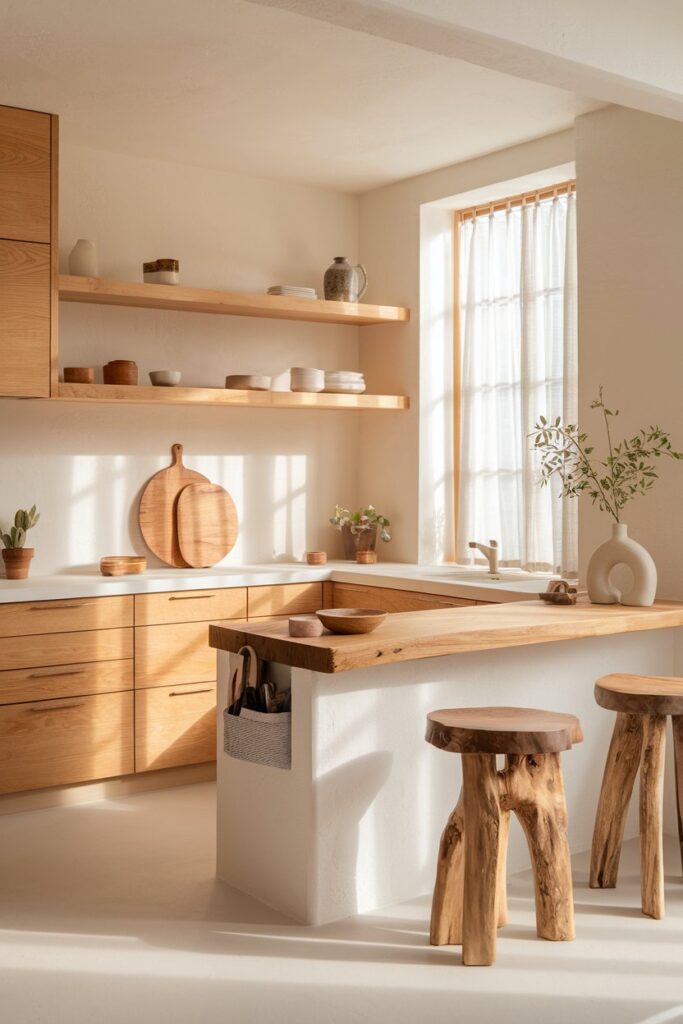
Wood can be introduced through cabinetry, open shelving, countertops, or even small details like cutting boards and stools. Lighter woods such as oak or birch work especially well for a soft, airy feel.
The key is moderation. Use wood as an accent rather than the dominant element to maintain the clean simplicity of minimalist design. This keeps the space feeling fresh and uncluttered.
Pairing wood with neutral tones like white, beige, or soft gray enhances its natural beauty while maintaining a cohesive palette. The combination feels timeless and effortlessly stylish.
A minimalist kitchen with wood accents brings a sense of calm and connection to nature, making the space feel both modern and welcoming.
8. Matte Black Minimalist Kitchen
A matte black minimalist kitchen makes a bold yet sophisticated statement. The deep, rich tones create a dramatic look while still maintaining the clean lines of minimalist design.
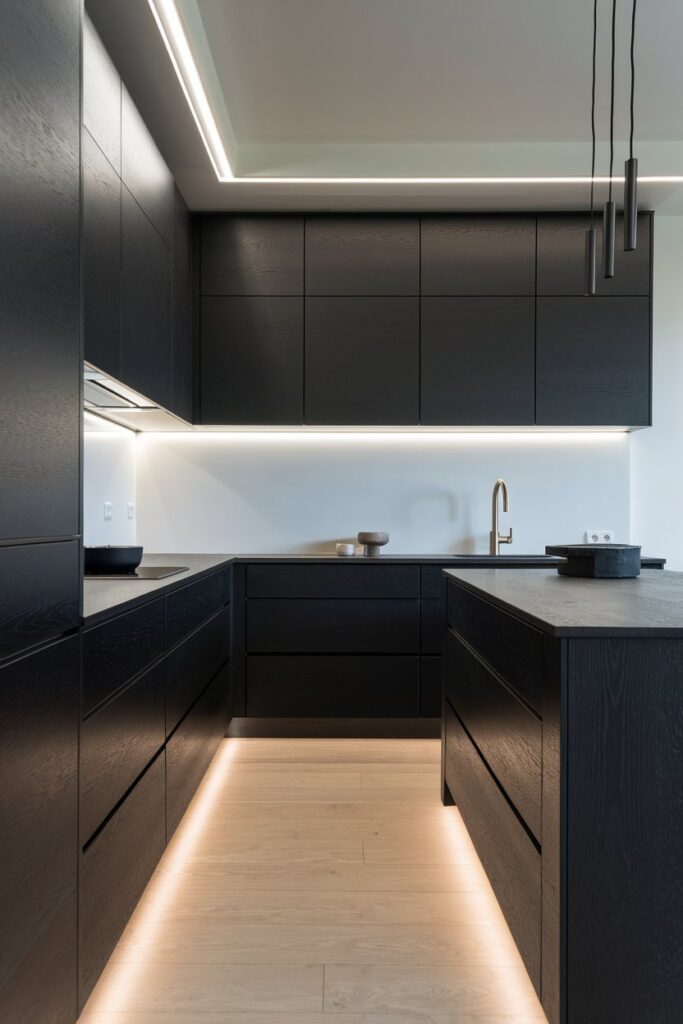
Matte finishes are essential to achieving this aesthetic. Unlike glossy surfaces, matte textures absorb light, giving the space a soft, refined appearance that feels modern and elegant.
Balance is key when working with darker tones. Incorporating elements like light countertops, wood accents, or metallic fixtures can prevent the space from feeling too heavy or enclosed.
Lighting plays a crucial role in enhancing a matte black kitchen. Strategic use of under-cabinet lighting, pendant lights, or natural light ensures the space remains functional and inviting.
For homeowners looking to make a statement while keeping things simple, a matte black minimalist kitchen offers the perfect blend of drama and sophistication.
9. Small Minimalist Kitchen for Compact Spaces
Minimalism is especially effective in small kitchens, where simplicity can make a big impact. By reducing clutter and focusing on essentials, even the smallest space can feel open and functional.
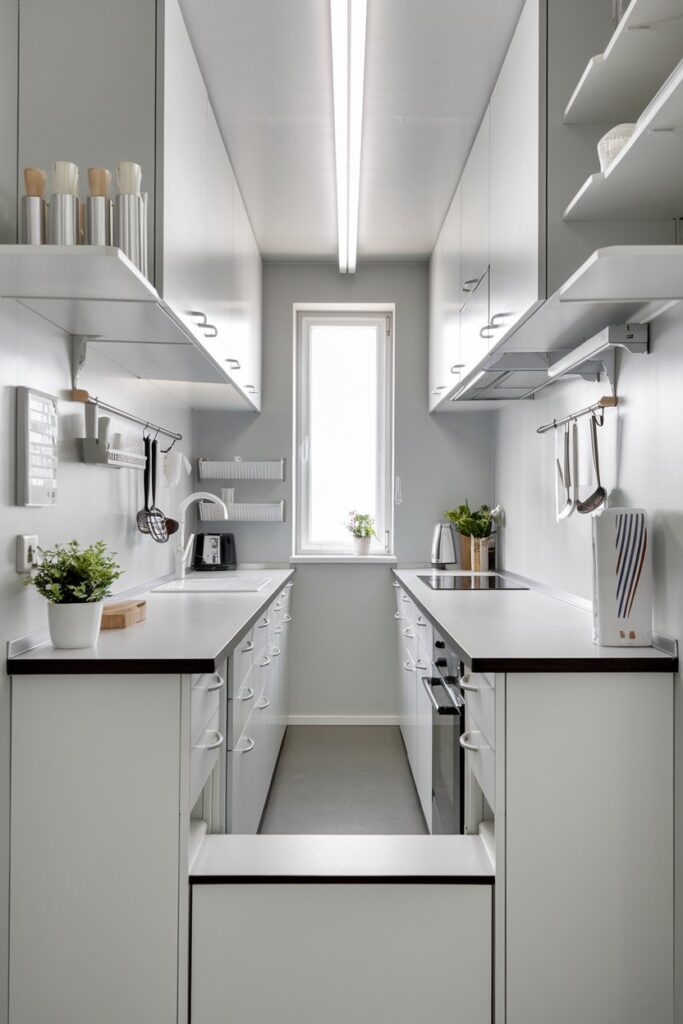
Opt for compact, multi-functional furniture and appliances to maximize efficiency. Slim cabinets, foldable surfaces, and space-saving layouts help make the most of limited square footage.
Light colors and reflective surfaces can visually expand the space. White or neutral tones paired with glass or glossy finishes create an airy, open feel.
Smart organization is essential in compact kitchens. Utilizing vertical storage, wall-mounted racks, and hidden compartments helps keep everything in its place without overcrowding the space.
A small minimalist kitchen proves that size doesn’t limit style. With thoughtful design, it can be both practical and beautifully streamlined.
10. Hidden Storage Solutions
Hidden storage solutions are a game-changer in minimalist kitchens, allowing you to maintain a clean and uncluttered look. By keeping everyday items out of sight, the space feels calm and organized.
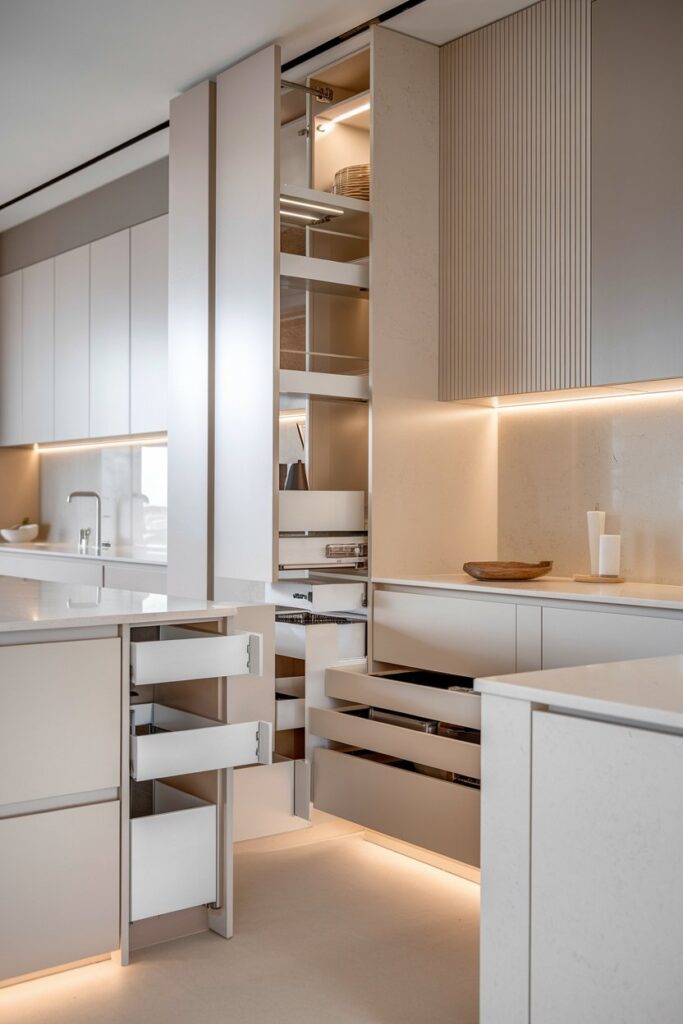
Incorporate features like pull-out cabinets, drawer organizers, and concealed pantry units to maximize storage without disrupting the design. These solutions make it easy to access items while keeping them neatly tucked away.
Appliance garages are another great option for hiding small appliances like toasters and coffee makers. This keeps countertops clear while still maintaining convenience.
Custom cabinetry can take hidden storage to the next level. From toe-kick drawers to built-in spice racks, every inch of space can be utilized efficiently.
With the right hidden storage solutions, your kitchen can remain both highly functional and visually serene—perfect for achieving a true minimalist aesthetic.
11. Minimalist Kitchen with Statement Lighting
In a minimalist kitchen, statement lighting can serve as both a functional element and a striking focal point. With fewer decorative items, lighting becomes an opportunity to add personality without overwhelming the space.
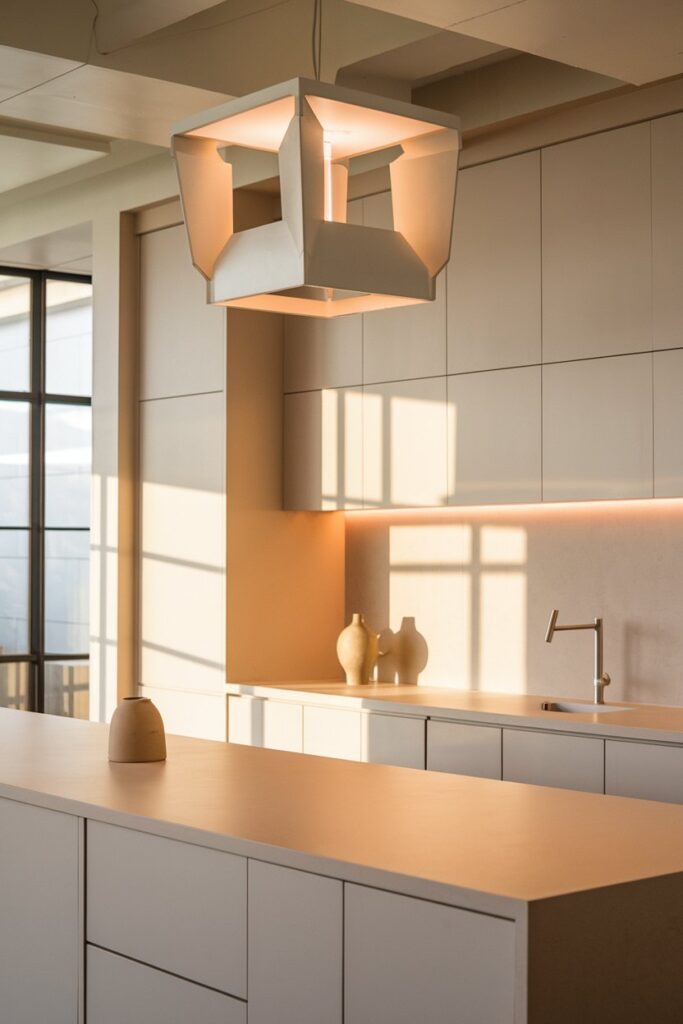
Choose fixtures with clean lines and sculptural forms, such as oversized pendants, geometric chandeliers, or sleek linear lights. These designs enhance the minimalist aesthetic while drawing the eye upward.
Placement is just as important as style. Hanging pendant lights over a kitchen island or dining area creates visual interest and defines zones within an open layout.
Material choices like matte black, brushed brass, or frosted glass can complement the overall palette while adding subtle contrast. The key is to keep the design cohesive and intentional.
A minimalist kitchen with statement lighting feels curated and modern, proving that even a single bold element can elevate the entire space.
12. Monochrome Kitchen Design
A monochrome kitchen design embraces a single color palette to create a clean and cohesive look. Whether you choose all-white, all-black, or varying shades of gray, the result is effortlessly sophisticated.
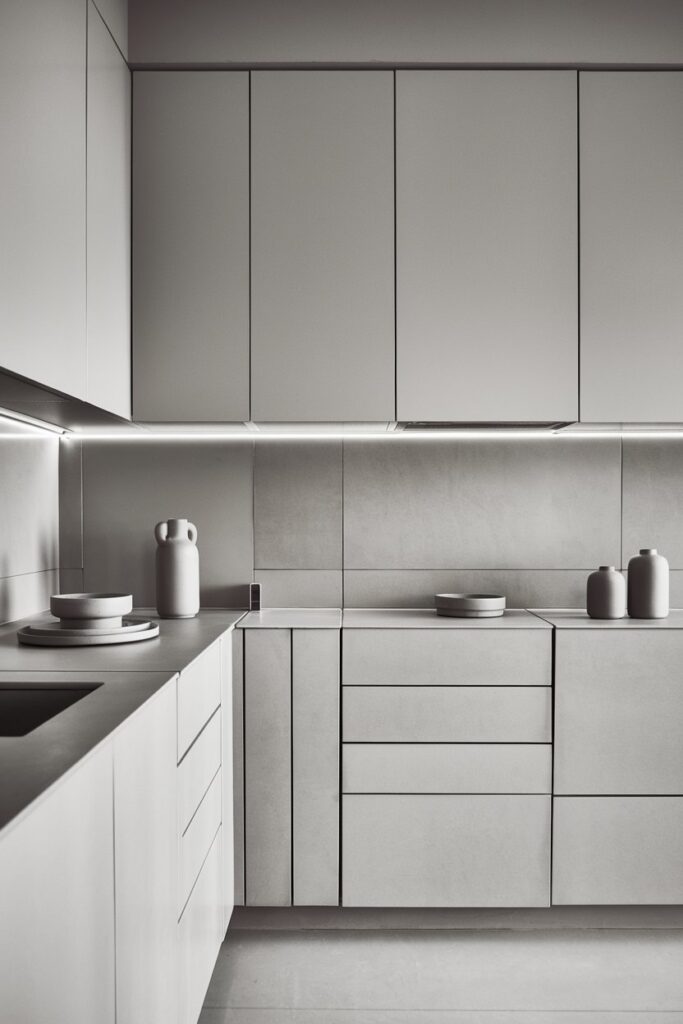
The beauty of monochrome lies in its simplicity. By limiting the color range, the focus shifts to form, texture, and material, allowing each element to stand out in a subtle way.
Layering different shades and finishes prevents the design from feeling flat. Combining matte and glossy surfaces or smooth and textured materials adds depth and visual interest.
Accents can be introduced sparingly to enhance the space. Metallic hardware, wooden touches, or greenery can break the uniformity while maintaining the minimalist feel.
A monochrome kitchen is timeless and elegant, offering a refined aesthetic that feels both modern and serene.
13. Scandinavian Minimalist Kitchen Style
Scandinavian design is a perfect match for minimalist kitchens, blending simplicity with warmth and functionality. It emphasizes clean lines, natural materials, and a light, airy atmosphere.
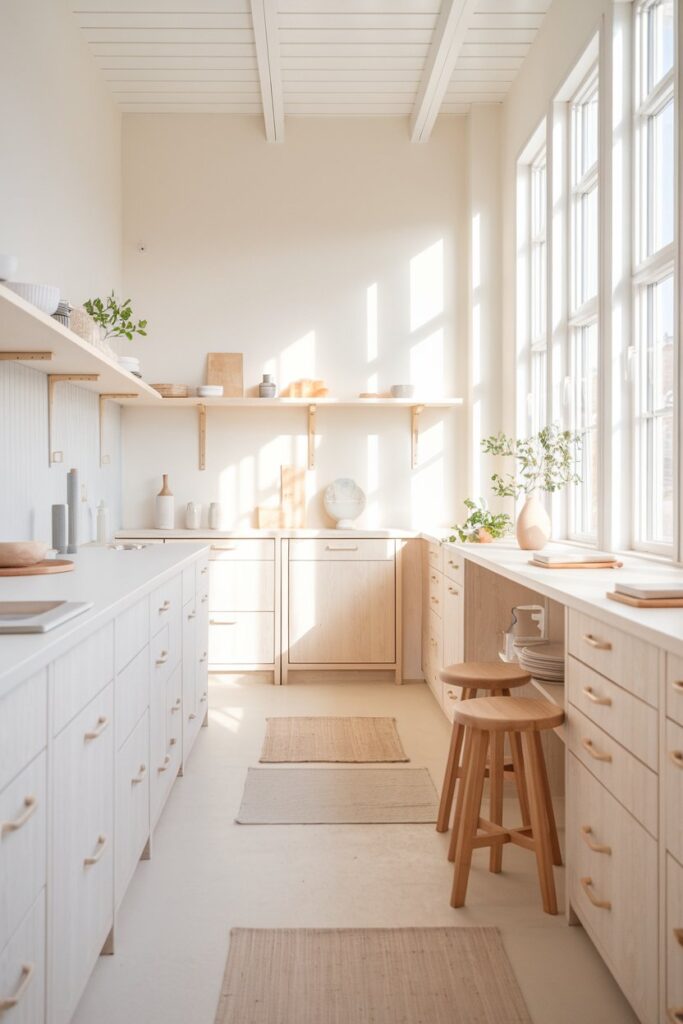
White or soft neutral walls paired with light wood cabinetry create a bright and welcoming foundation. This combination reflects natural light beautifully, making the space feel open and fresh.
Functionality is at the core of Scandinavian design. Smart storage solutions, practical layouts, and clutter-free surfaces ensure the kitchen remains both efficient and visually pleasing.
Add cozy elements like soft textiles, subtle patterns, or a touch of greenery to bring warmth into the space. These details create a balance between minimalism and comfort.
A Scandinavian minimalist kitchen feels effortlessly stylish and inviting, making it ideal for those who appreciate both beauty and practicality.
14. Minimalist Kitchen with Marble Countertops
Marble countertops bring a sense of luxury to minimalist kitchens without compromising simplicity. Their natural veining adds subtle visual interest while maintaining a clean and elegant look.
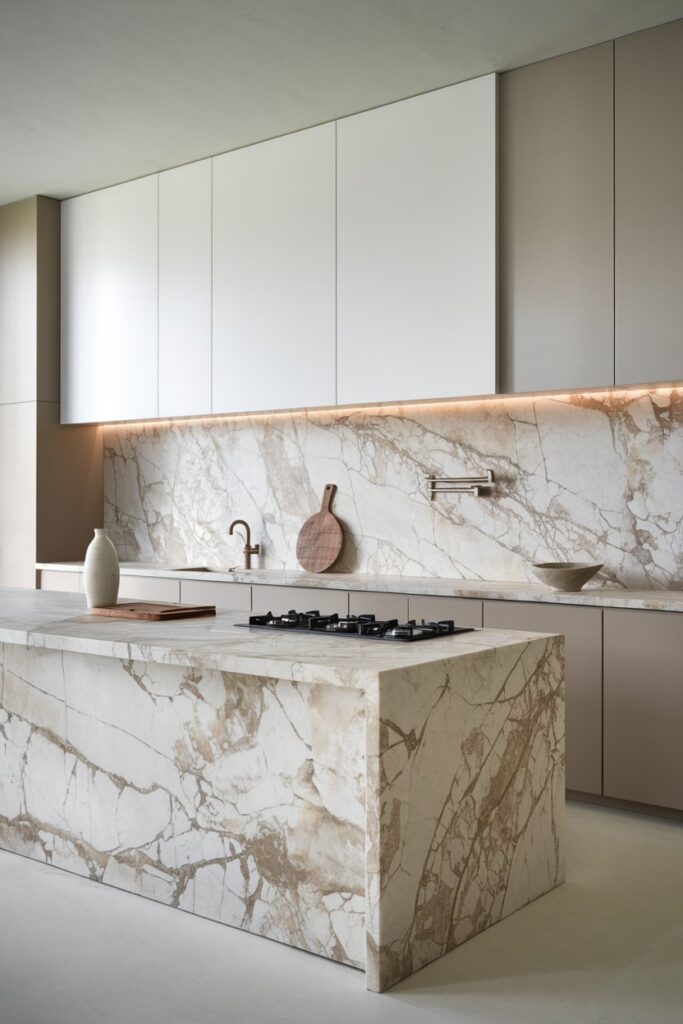
White or light-colored marble pairs beautifully with neutral cabinetry, creating a soft and sophisticated palette. For a more dramatic effect, darker marble can add depth and contrast.
The key is to let the marble be the star. Keep surrounding elements understated so the natural beauty of the stone stands out without competition.
Pair marble with sleek cabinetry, minimal hardware, and simple backsplashes to maintain a cohesive aesthetic. This balance ensures the space feels refined rather than overdesigned.
A minimalist kitchen with marble countertops offers the perfect blend of elegance and simplicity, making it a timeless choice for modern homes.
15. Sleek Island-Centric Kitchen Layout
An island-centric kitchen layout places the island at the heart of the space, combining functionality with minimalist design. It becomes a central hub for cooking, dining, and socializing.
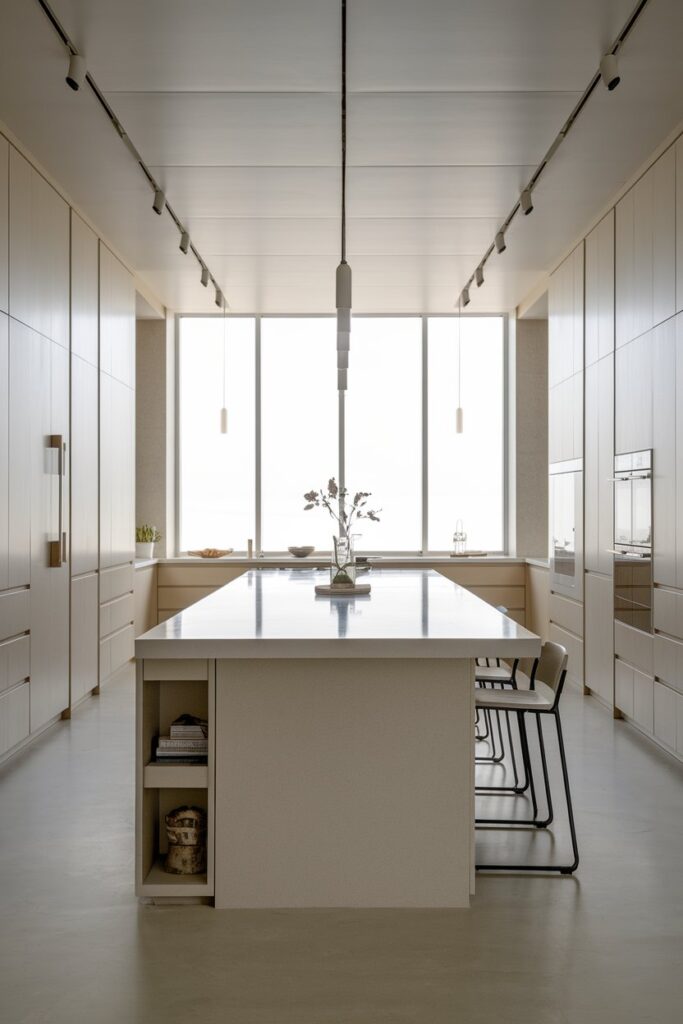
A sleek island with clean lines and minimal detailing enhances the overall aesthetic. Opt for handleless cabinetry, smooth surfaces, and a clutter-free design to maintain simplicity.
The island can serve multiple purposes, from additional storage to seating and workspace. This versatility makes it especially valuable in both large and small kitchens.
Lighting above the island can further define the space. Pendant lights or linear fixtures add focus while complementing the minimalist style.
A well-designed island-centric kitchen creates a sense of balance and flow, making the space both practical and visually appealing.
Minimalist Kitchen Design Essentials: Quick Reference Guide
This table offers a quick overview to help readers easily understand and apply minimalist kitchen principles in their own homes.
| Element | Minimalist Approach | Why It Works |
| Color Palette | Neutral tones (white, beige, gray, soft pastels) | Creates a calm, clean, and visually open space |
| Cabinet Design | Flat-panel, handleless cabinets | Ensures a sleek and clutter-free appearance |
| Storage Solutions | Hidden storage, pull-out drawers, vertical space | Keeps surfaces tidy and maximizes functionality |
| Countertops | Minimal items, clear surfaces | Enhances visual simplicity and ease of use |
| Materials | Wood, marble, matte finishes | Adds texture without overwhelming the design |
| Lighting | Natural light + simple statement fixtures | Brightens space while adding subtle character |
| Appliances | Built-in or integrated designs | Maintains a seamless and cohesive look |
| Layout | Open plan or efficient compact layouts | Improves flow and usability |
| Décor | Limited, purposeful accents | Keeps focus on simplicity and intentional design |
| Sustainability | Eco-friendly materials and energy-efficient choices | Supports a mindful and long-lasting lifestyle |
16. Glass Cabinet Accents in Minimal Design
Glass cabinet accents can elevate a minimalist kitchen by adding lightness and visual depth without disrupting simplicity. They break up solid cabinetry and create an airy, open feel.
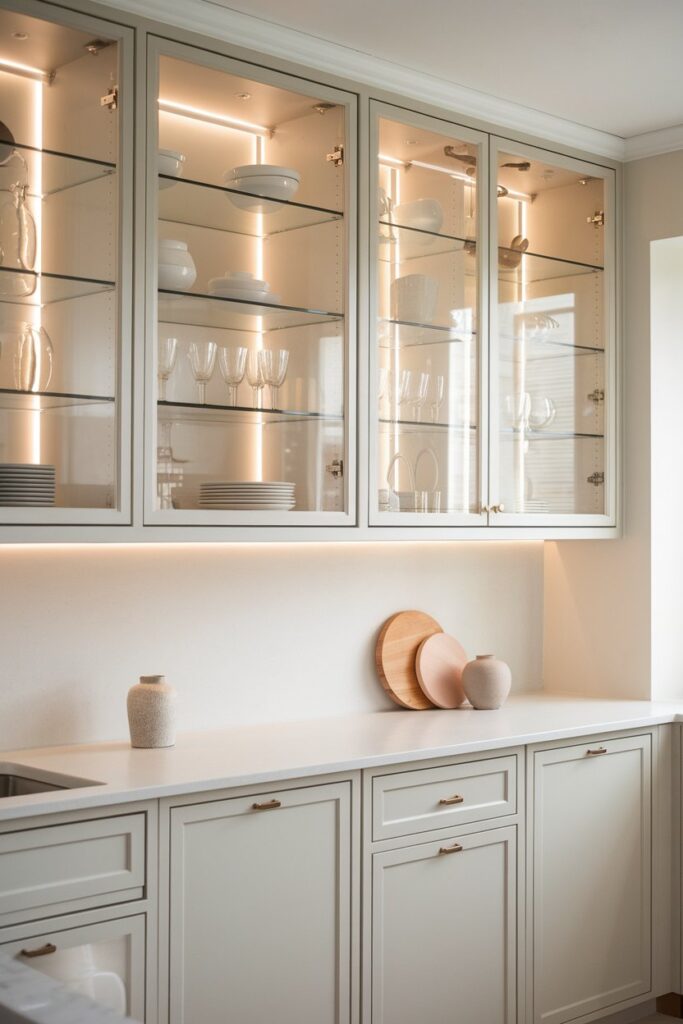
Frosted, clear, or ribbed glass panels each offer a different effect. Clear glass showcases neatly arranged dishware, while frosted glass provides a softer, more concealed look that still feels light.
The key to success is thoughtful styling. Keep items inside cabinets organized and cohesive in color to maintain a clean, curated appearance. Neutral dishware and minimal decor work best.
Pair glass cabinets with handleless designs or slim hardware to preserve the streamlined aesthetic. Subtle lighting inside cabinets can further enhance their visual appeal.
Glass accents add elegance and dimension to minimalist kitchens, proving that small details can make a significant impact without overwhelming the space.
17. Minimalist Kitchen with Integrated Dining Space
An integrated dining space brings functionality and flow to a minimalist kitchen. By blending cooking and dining areas, you create a cohesive environment that feels open and connected.
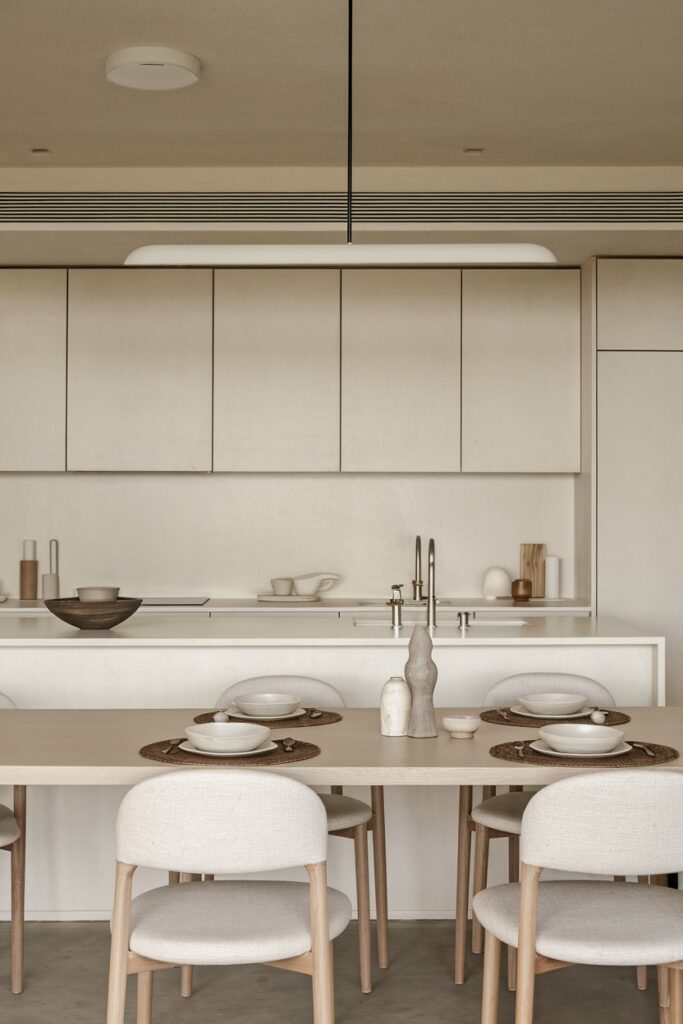
A simple dining table or an extended kitchen island can serve as a seamless transition between the two zones. Clean lines and matching materials help unify the space.
Keep furniture minimal and purposeful. Opt for sleek chairs, neutral tones, and clutter-free surfaces to maintain a harmonious look throughout the area.
Lighting can help define the dining space without adding visual clutter. A pendant light above the table creates a focal point while enhancing the overall ambiance.
A minimalist kitchen with an integrated dining area encourages connection and simplicity, making it perfect for modern living and effortless entertaining.
18. Soft Pastel Minimalist Kitchen
Soft pastel tones offer a refreshing twist on minimalist kitchen design. Shades like pale sage, blush pink, powder blue, or muted lavender introduce color while maintaining a calm and subtle aesthetic.
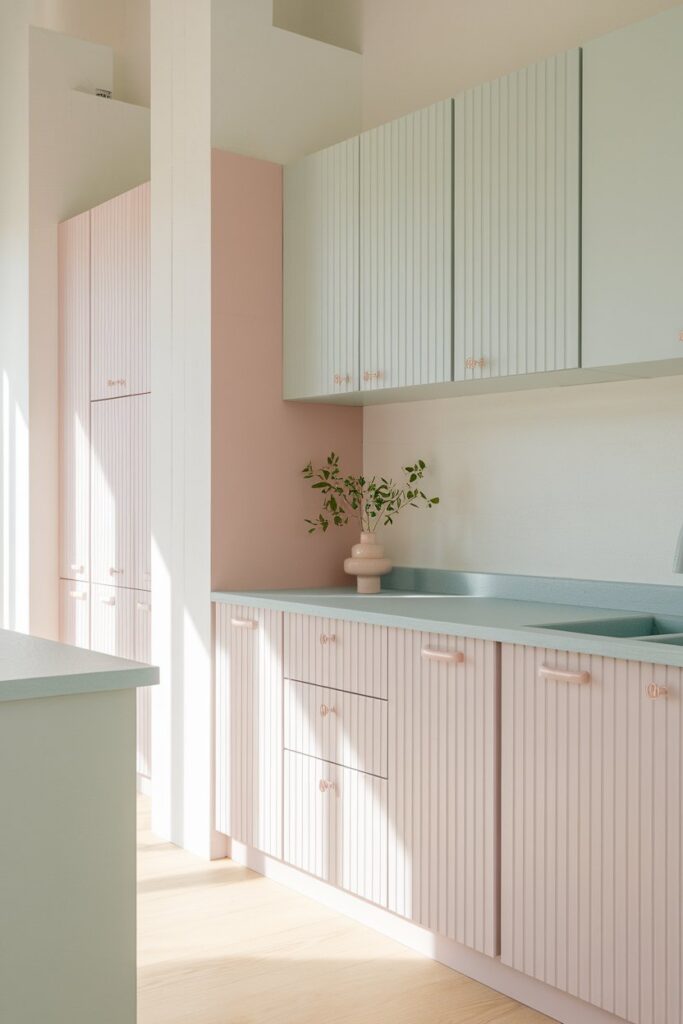
Pastels work best when paired with neutral elements such as white walls, light wood finishes, or soft gray accents. This combination keeps the space feeling balanced and uncluttered.
Use pastel tones sparingly for cabinetry, backsplashes, or small accents. The goal is to enhance the space without overpowering the minimalist foundation.
Natural light plays an important role in bringing out the softness of pastel hues. It helps the colors appear fresh and uplifting rather than overly decorative.
A soft pastel minimalist kitchen feels light, modern, and inviting—perfect for homeowners who want a touch of color without sacrificing simplicity.
19. Industrial Minimalist Kitchen Look
An industrial minimalist kitchen combines raw materials with clean, simple design. It’s a perfect blend of rugged character and refined minimalism.
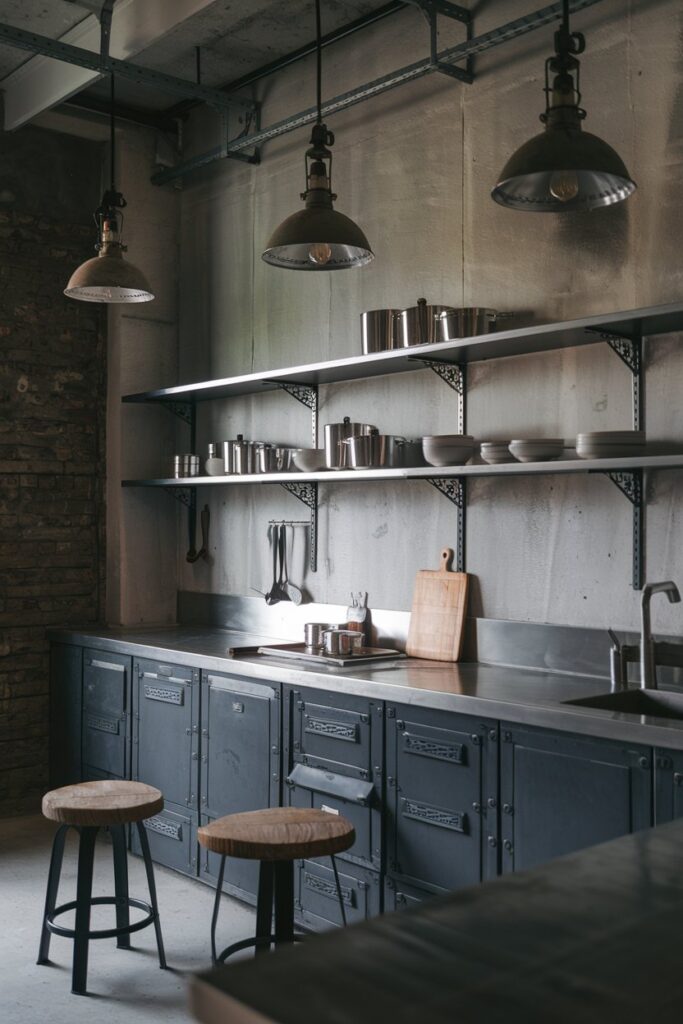
Exposed elements like concrete walls, metal finishes, and open pipes add texture and authenticity. These features create visual interest while keeping the design straightforward.
Balance is essential to prevent the space from feeling too harsh. Incorporate softer elements like wood accents or warm lighting to create contrast and comfort.
Stick to a restrained color palette of grays, blacks, and natural tones. This keeps the look cohesive while highlighting the beauty of industrial materials.
An industrial minimalist kitchen offers a bold yet understated aesthetic, ideal for those who appreciate modern design with a touch of edge.
20. Minimalist Kitchen with Under-Cabinet Lighting
Under-cabinet lighting is a subtle yet impactful addition to a minimalist kitchen. It enhances both functionality and ambiance without adding visual clutter.
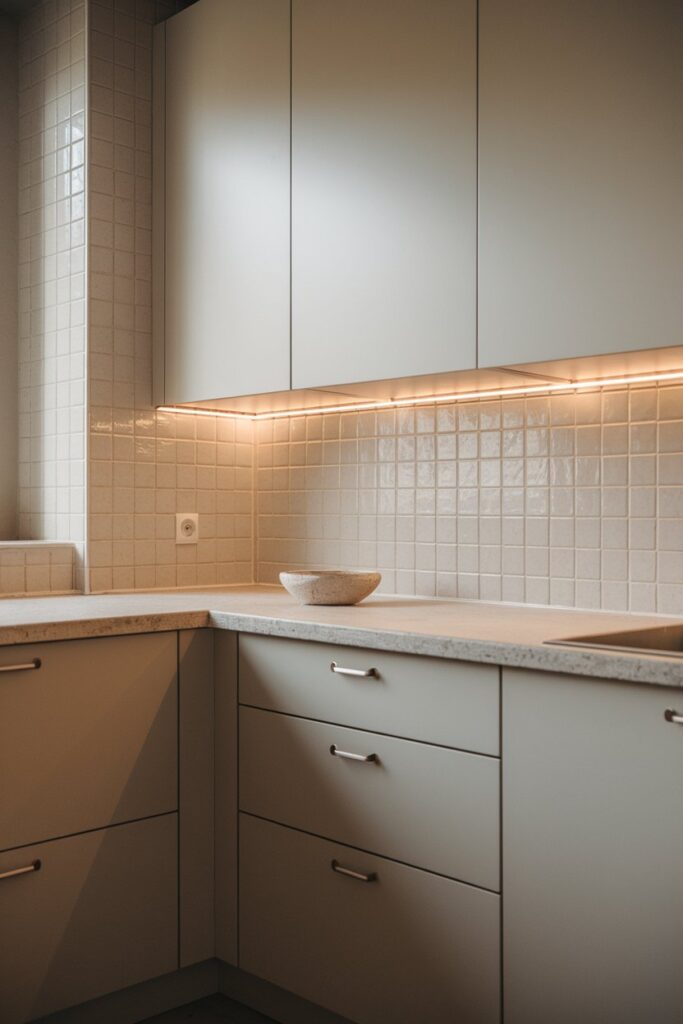
This type of lighting provides focused illumination for countertops, making food preparation easier and more efficient. It also highlights textures like backsplashes or stone surfaces.
LED strip lights are a popular choice for their sleek design and energy efficiency. Warm lighting creates a cozy atmosphere, while cool lighting offers a crisp, modern feel.
Installation can be discreet, keeping wires and fixtures hidden to maintain the clean aesthetic. The result is a seamless integration that complements the overall design.
A minimalist kitchen with under-cabinet lighting feels polished and thoughtfully designed, proving that even subtle details can transform a space.
21. Floor-to-Ceiling Cabinetry
Floor-to-ceiling cabinetry is a defining feature of a well-organized minimalist kitchen. It maximizes vertical space while creating a clean, uninterrupted visual flow that feels both modern and efficient.
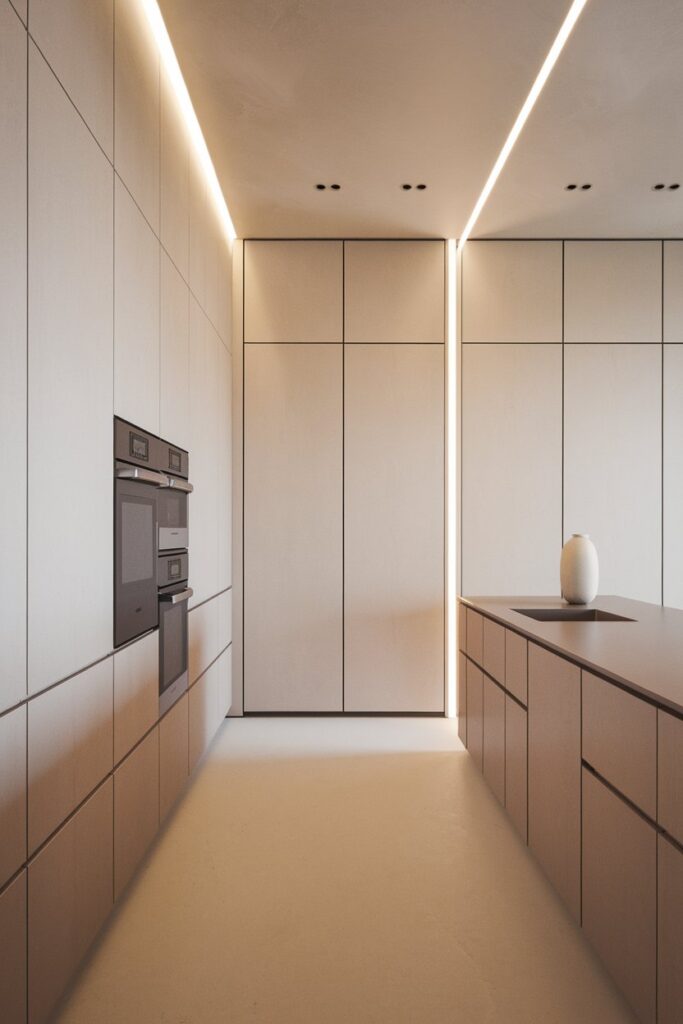
By extending cabinets to the ceiling, you eliminate awkward gaps that often collect dust or clutter. This approach also provides ample storage, allowing you to keep everyday items neatly tucked away.
Choose simple, flat-panel cabinet doors in neutral tones to maintain a streamlined look. Handleless designs or subtle hardware further enhance the seamless aesthetic.
To avoid the space feeling too heavy, consider mixing closed cabinets with a few open sections or incorporating lighter colors. Strategic lighting can also help balance the overall design.
Floor-to-ceiling cabinetry offers both style and practicality, making it an ideal choice for homeowners who value organization and a clutter-free environment.
22. Minimalist Kitchen with Open Floor Plan
An open floor plan enhances the beauty of a minimalist kitchen by creating a sense of flow and spaciousness. Without visual barriers, the kitchen seamlessly connects with living and dining areas.
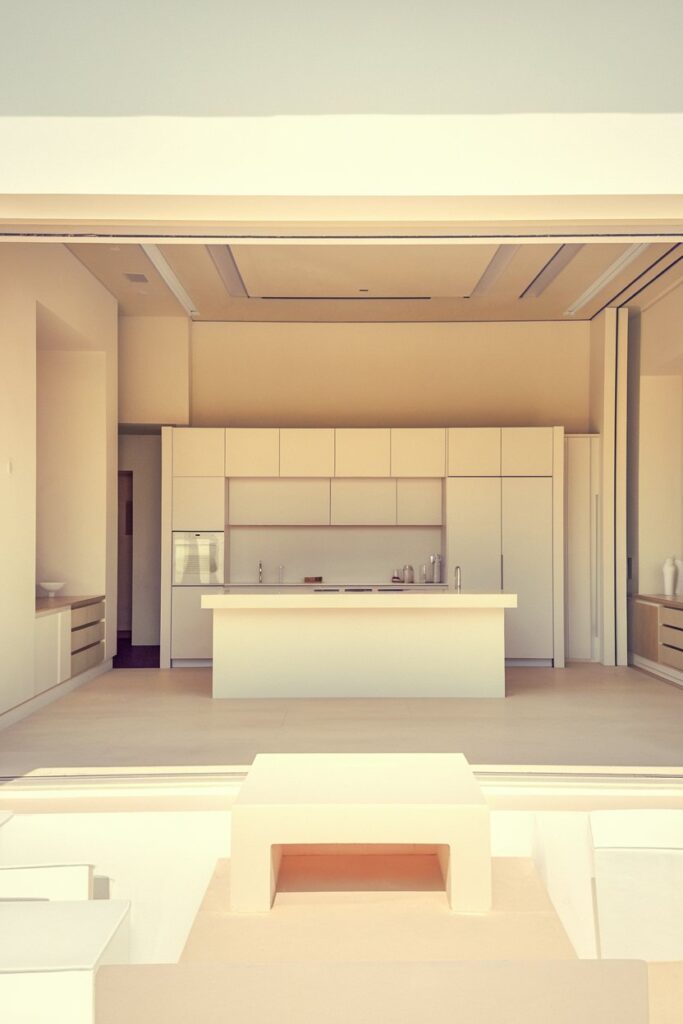
Consistency is key in an open layout. Using a cohesive color palette and similar materials across spaces helps maintain a unified and harmonious design.
Keep the kitchen visually simple to ensure it blends effortlessly with surrounding areas. Clean lines, minimal decor, and concealed storage help maintain a tidy appearance.
Furniture placement can define different zones without disrupting openness. A kitchen island, rug, or lighting fixture can subtly separate spaces while keeping the layout fluid.
A minimalist kitchen within an open floor plan feels modern, airy, and inviting—perfect for both everyday living and entertaining.
23. Two-Tone Minimalist Kitchen Design
A two-tone kitchen design adds depth and interest while staying true to minimalist principles. By combining two complementary colors, you can create contrast without overwhelming the space.
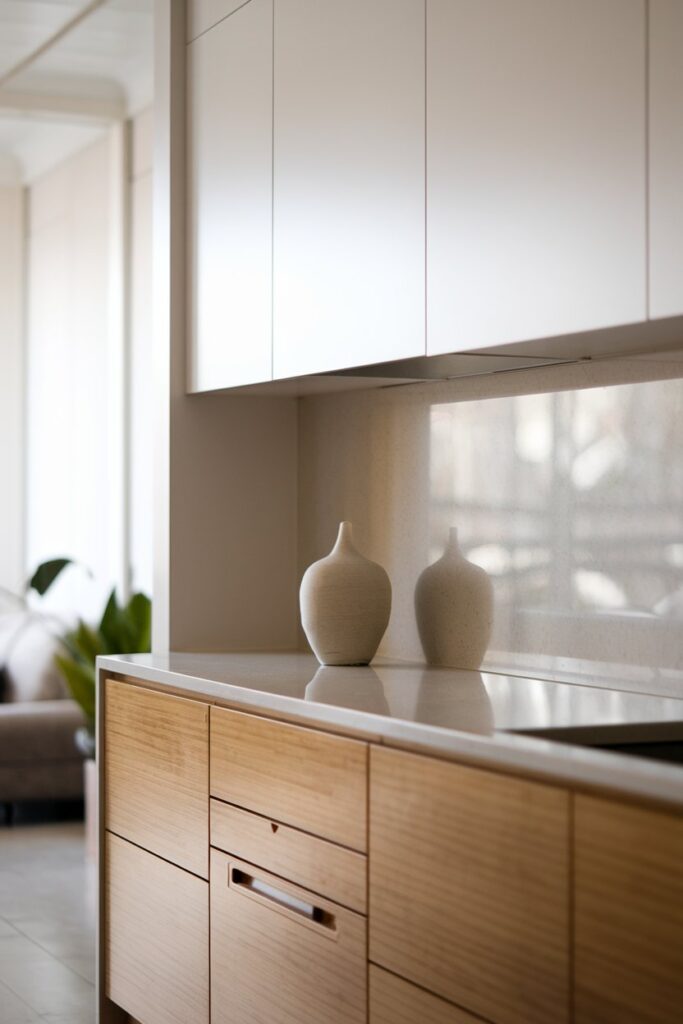
A popular approach is pairing light upper cabinets with darker lower ones. This keeps the kitchen feeling open while grounding the design with a subtle visual anchor.
Neutral combinations like white and gray, beige and wood, or black and soft taupe work beautifully in minimalist settings. The key is to keep the palette cohesive and understated.
Use clean lines and simple finishes to maintain balance. Avoid excessive patterns or details that could distract from the overall simplicity.
A two-tone minimalist kitchen offers the perfect blend of visual interest and refined elegance, making it both stylish and timeless.
24. Minimalist Kitchen with Smart Storage Hacks
Smart storage hacks are essential for maintaining a minimalist kitchen that is both functional and clutter-free. Thoughtful organization allows you to make the most of every inch of space.
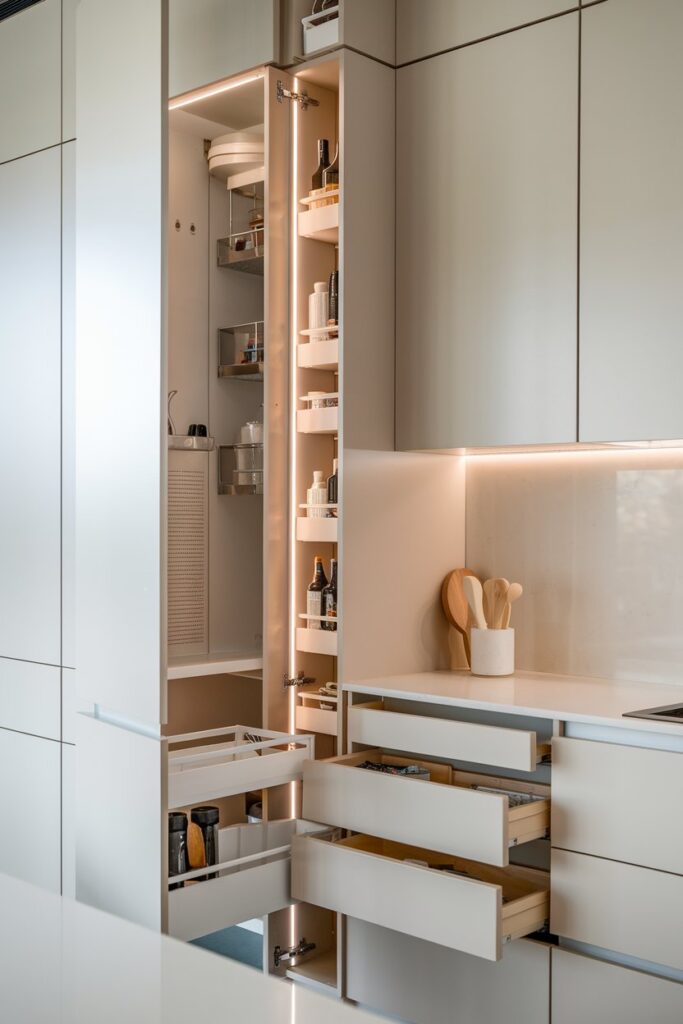
Incorporate features like pull-out drawers, corner organizers, and vertical dividers to keep items easily accessible yet neatly stored. These solutions simplify daily tasks while reducing visual clutter.
Hidden compartments and multi-functional furniture can further enhance efficiency. From built-in spice racks to sliding pantry shelves, these details make a big difference.
Decluttering regularly is just as important as smart storage. Keeping only what you truly need helps maintain the clean, streamlined look that defines minimalism.
A minimalist kitchen with smart storage feels effortless and organized, allowing you to enjoy both style and practicality in your everyday routine.
25. Minimalist Kitchen with Textured Finishes
Textured finishes add depth and character to a minimalist kitchen without compromising its simplicity. They create subtle visual interest while maintaining a clean and cohesive design.
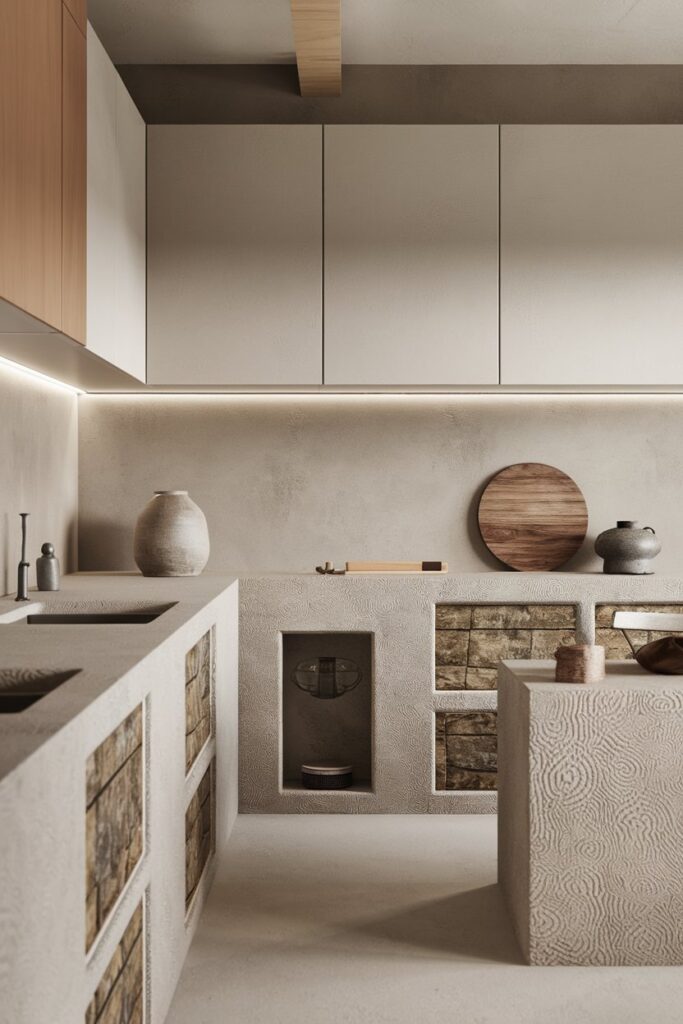
Incorporate textures through materials like matte cabinetry, stone countertops, wood grain surfaces, or textured backsplashes. These elements bring warmth and dimension to the space.
The key is to keep the palette restrained. Neutral tones allow textures to stand out without making the kitchen feel busy or overwhelming.
Layering different textures can enhance the overall aesthetic. Combining smooth and rough surfaces creates a balanced and visually engaging environment.
A minimalist kitchen with textured finishes feels sophisticated and inviting, proving that simplicity doesn’t have to be flat or monotonous.
26. Japandi-Style Minimalist Kitchen
A Japandi-style minimalist kitchen blends the simplicity of Japanese design with the warmth of Scandinavian aesthetics. The result is a calm, balanced space that feels both functional and deeply inviting.
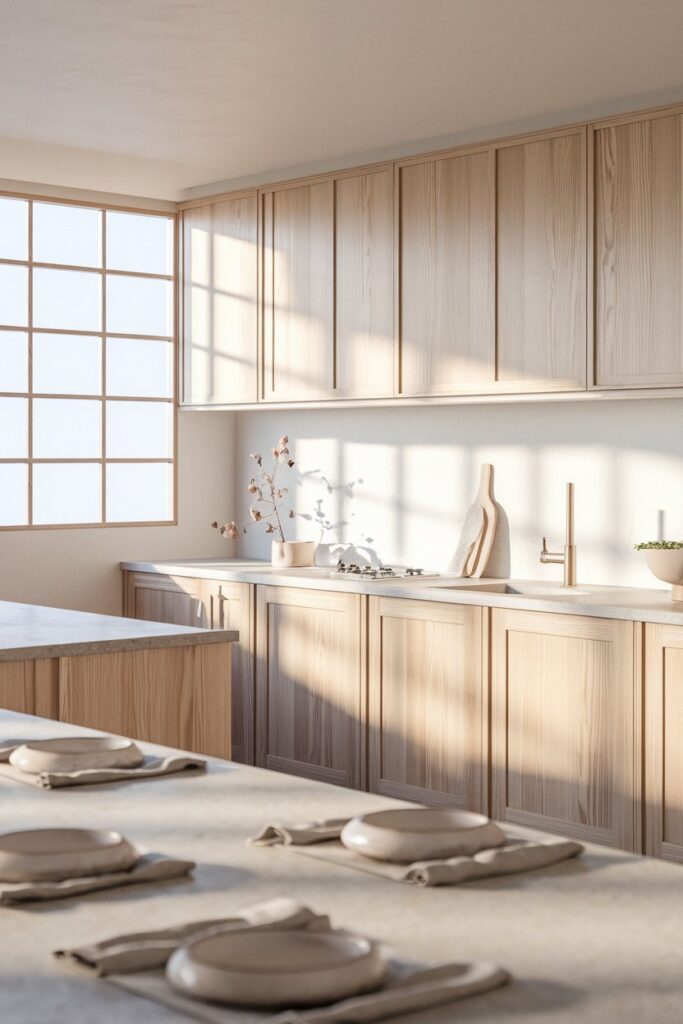
This style focuses on natural materials, muted tones, and clean lines. Light wood cabinetry, soft neutral palettes, and minimal decor create a serene and uncluttered environment.
Functionality is at the core of Japandi design. Every element serves a purpose, from streamlined storage to thoughtfully chosen accessories that enhance daily living without excess.
Incorporate handcrafted details like ceramic dishware or textured fabrics to add character. These subtle touches bring warmth while maintaining the minimalist philosophy.
A Japandi kitchen is perfect for those who value simplicity, mindfulness, and timeless beauty in their home.
27. Minimalist Kitchen with Large Windows & Natural Light
A minimalist kitchen filled with natural light feels open, fresh, and effortlessly beautiful. Large windows allow sunlight to flood the space, enhancing its simplicity and highlighting every detail.
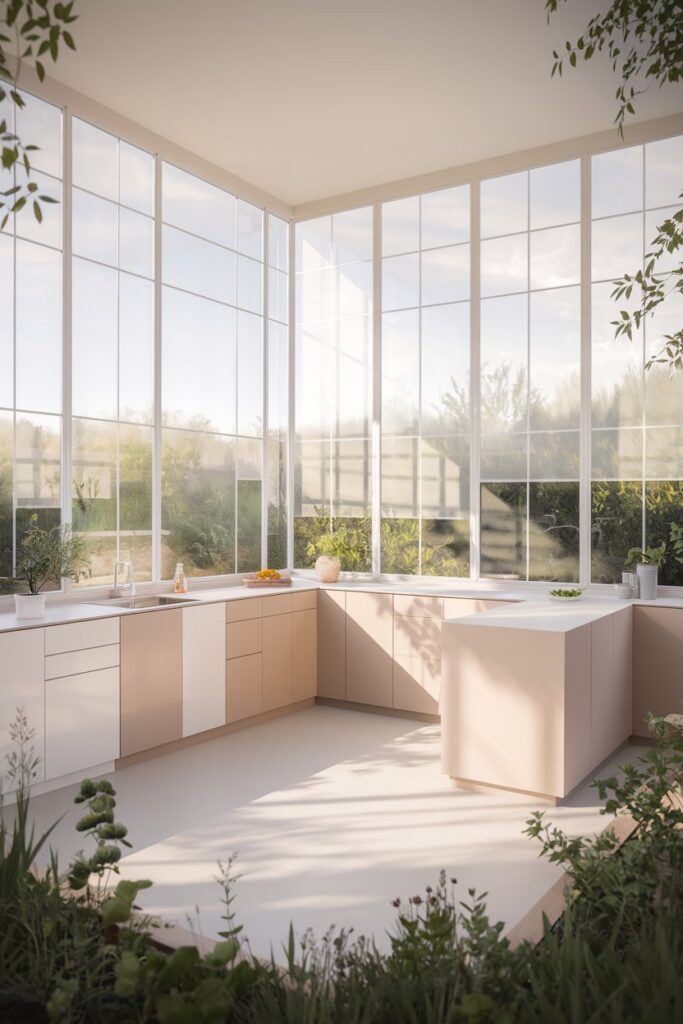
Natural light works especially well with neutral color palettes, making whites, beiges, and soft grays appear brighter and more inviting. It creates a sense of openness that artificial lighting can’t replicate.
Keep window treatments minimal or opt for sheer curtains to maximize light flow. The goal is to maintain an unobstructed connection with the outdoors.
Incorporating greenery near windows can further enhance the natural feel. Plants thrive in sunlight and add a refreshing touch to the clean design.
A kitchen designed around natural light feels uplifting and serene, making it a joy to cook, gather, and spend time in.
28. Compact Galley-Style Minimalist Kitchen
A galley-style kitchen is ideal for minimalist design, especially in compact homes. Its streamlined layout focuses on efficiency, with parallel counters that maximize functionality.
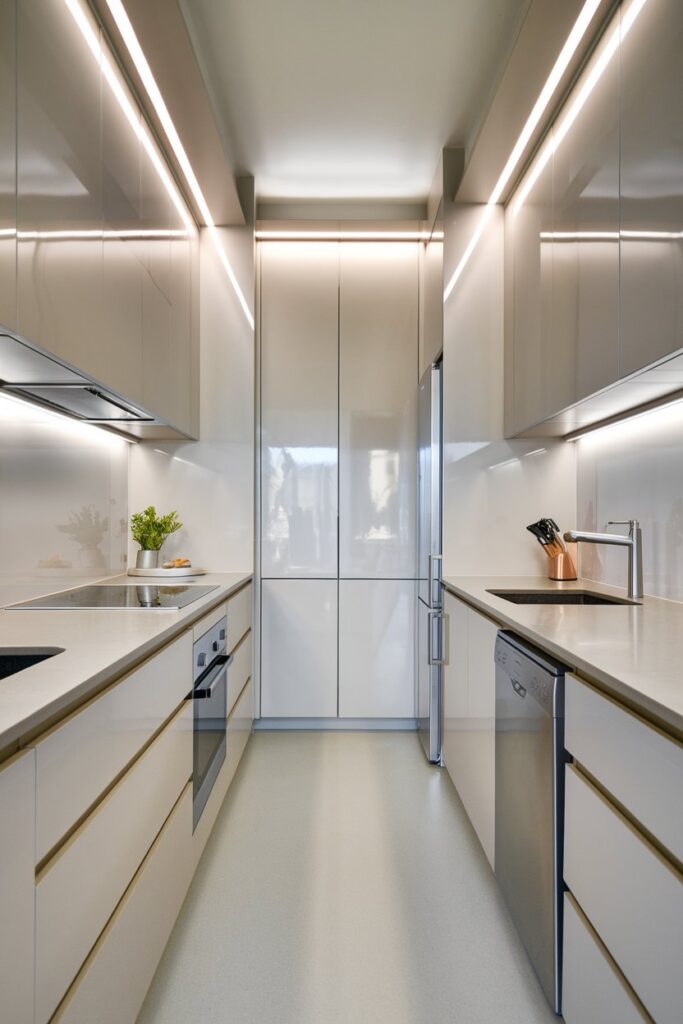
Keeping the design simple is essential in narrow spaces. Light colors, handleless cabinets, and uncluttered surfaces help the kitchen feel more open and less confined.
Smart storage solutions play a crucial role. Utilize vertical space, slim cabinets, and built-in appliances to keep everything organized without overcrowding the area.
Good lighting is key to making a galley kitchen feel inviting. Under-cabinet lights and reflective surfaces can brighten the space and enhance its overall appeal.
A compact minimalist galley kitchen proves that even small layouts can be stylish, practical, and beautifully efficient.
29. Minimalist Kitchen with Subtle Metallic Accents
Subtle metallic accents can elevate a minimalist kitchen by adding a touch of sophistication and shine. When used sparingly, they enhance the design without overwhelming its simplicity.
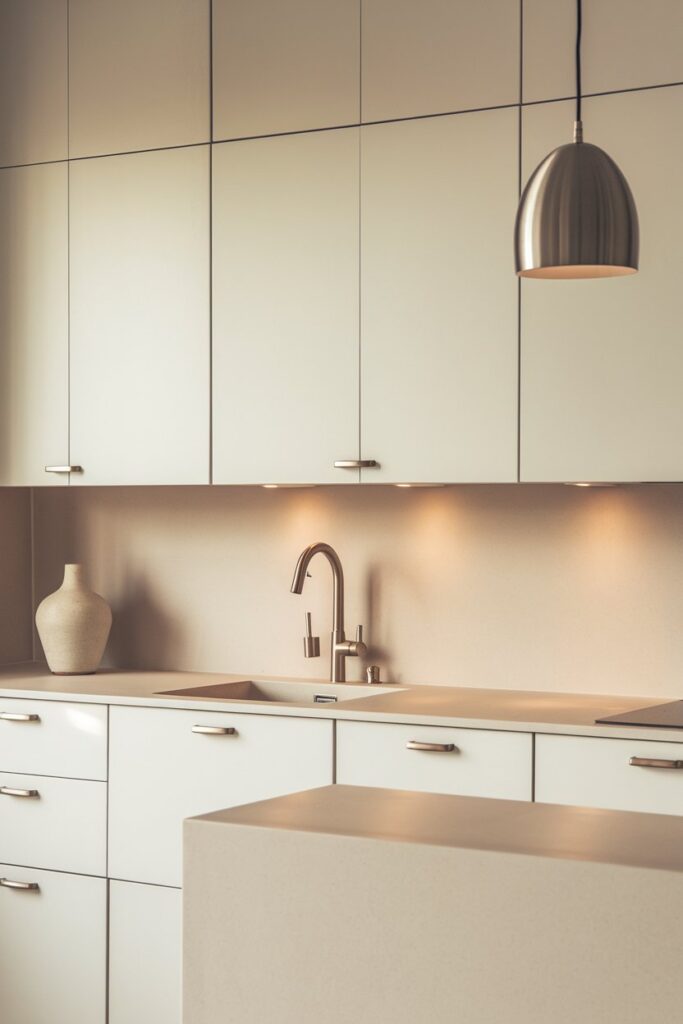
Incorporate metals through hardware, light fixtures, or faucets in finishes like brushed brass, stainless steel, or matte gold. These elements introduce contrast while remaining refined.
The key is balance. Pair metallic accents with neutral tones and clean lines to ensure they complement rather than dominate the space.
Mixing metals can also work when done thoughtfully. Combining warm and cool tones in small doses creates visual interest without disrupting the minimalist aesthetic.
A minimalist kitchen with metallic accents feels polished and modern, offering just the right amount of elegance.
30. Eco-Friendly Minimalist Kitchen Design
An eco-friendly minimalist kitchen combines sustainability with simplicity, creating a space that is both beautiful and responsible. It focuses on reducing waste while maximizing efficiency.
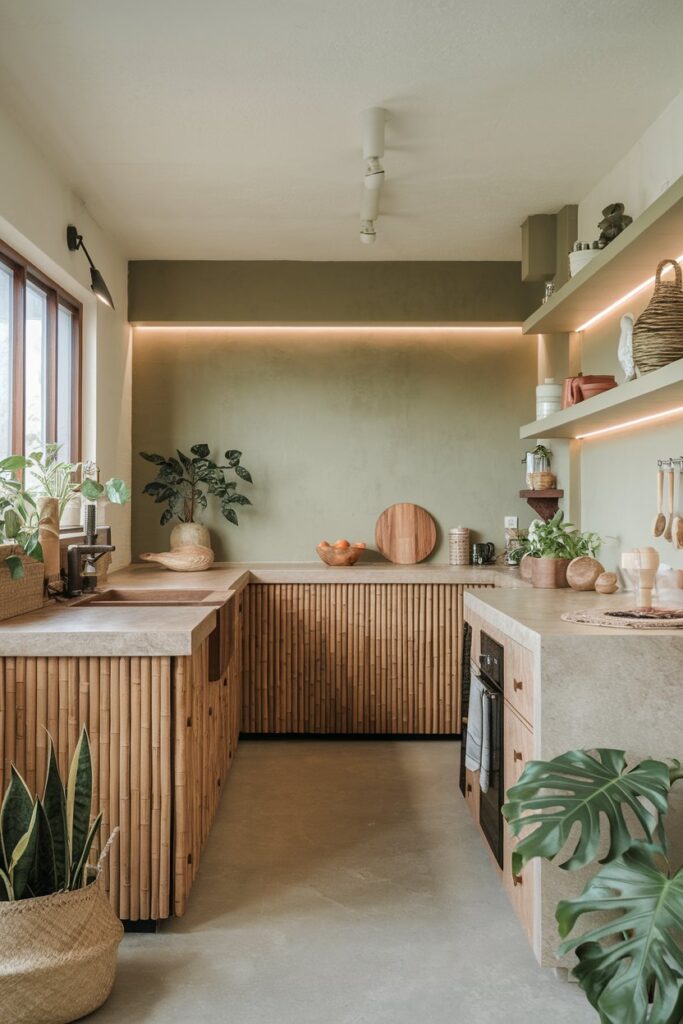
Choose sustainable materials such as bamboo, reclaimed wood, or recycled surfaces for cabinetry and countertops. These options add natural beauty while minimizing environmental impact.
Energy-efficient appliances and LED lighting help reduce energy consumption without compromising performance. These choices align perfectly with the minimalist focus on functionality.
Reducing clutter also supports sustainability. Owning fewer, high-quality items encourages mindful consumption and long-term use.
An eco-friendly minimalist kitchen is not just a design choice—it’s a lifestyle. It reflects a commitment to simplicity, sustainability, and thoughtful living.
Key Takeaways
- Minimalist kitchens focus on simplicity, functionality, and clutter-free living, creating a calm and organized environment.
- A neutral color palette with layered textures helps maintain visual interest without overwhelming the space.
- Smart storage solutions like hidden cabinets and vertical organization are essential for keeping surfaces clean.
- Handleless cabinetry and built-in appliances contribute to a seamless, modern look.
- Incorporating natural materials such as wood and stone adds warmth and balance to minimalist designs.
- Lighting-both natural and artificial—plays a key role in enhancing openness and highlighting design elements.
Minimalism is not about emptiness, but about intentional design choices that improve both aesthetics and everyday functionality.