30 Japandi Bathroom Ideas to Transform Your Space into a Calm, Minimalist Retreat

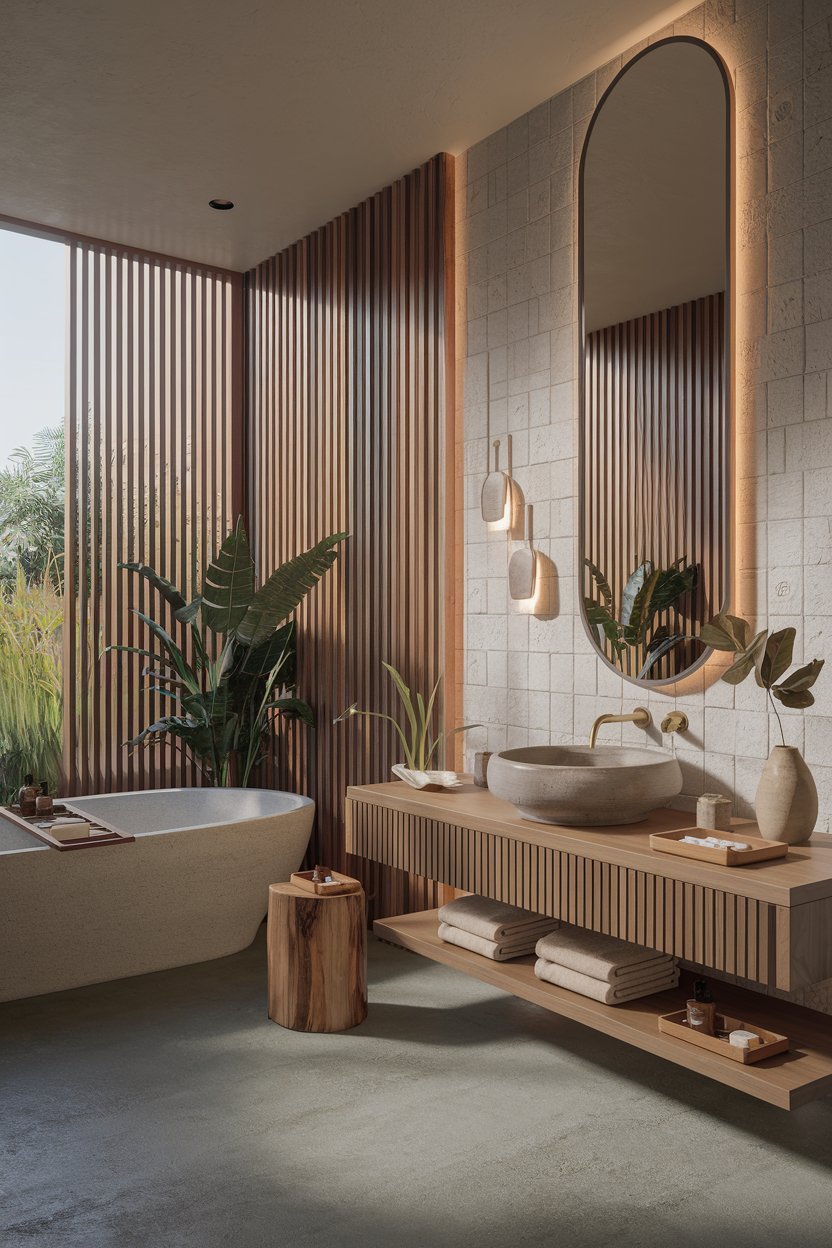
A Japandi bathroom is more than a design choice-it’s an experience rooted in balance, tranquility, and intentional living. Blending the clean minimalism of Scandinavian style with the timeless serenity of Japanese aesthetics, Japandi design creates a soothing retreat where simplicity and warmth coexist effortlessly. This fusion celebrates natural materials, subtle textures, soft color palettes, and functional beauty, making it one of today’s most sought-after styles for modern homes.
Homeowners and design enthusiasts love Japandi bathrooms for their calming atmosphere and mindful approach to space. Whether your bathroom is compact or spacious, the Japandi philosophy encourages decluttering, prioritizing quality over quantity, and embracing a harmonious flow. It’s a style that invites relaxation—warm wood tones alongside cool stone elements, sleek lines softened by organic shapes, and thoughtful details that evoke a sense of everyday luxury.
In this article, you’ll discover 30 inspiring Japandi bathroom ideas, each offering unique ways to bring peace, elegance, and natural beauty into your home. From soft curves and bamboo accents to spa-inspired showers and Wabi-Sabi touches, these ideas will help you create a bathroom that feels restorative, timeless, and deeply connected to nature. Whether you’re planning a full renovation or a simple refresh, these concepts will spark your imagination and guide you toward a beautifully balanced Japandi oasis.
1. Minimalist Japandi Bathroom with Warm Wood Tones
A minimalist Japandi bathroom built around warm wood tones instantly creates a sense of balance and serenity. The combination of clean Scandinavian simplicity and Japanese warmth makes the space feel calm yet intentional. Light to medium wood shades—such as ash, beech, or natural oak—bring gentle warmth without overwhelming the minimalist aesthetic.
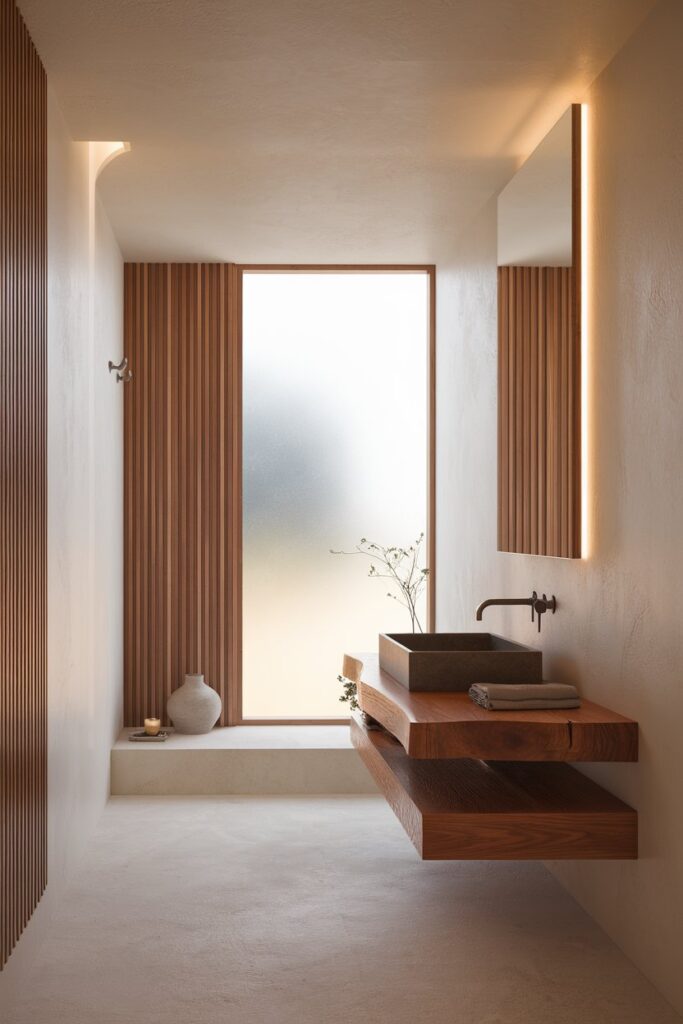
Incorporating warm wood cabinetry or slatted paneling adds texture and dimension while maintaining a clean look. These subtle elements help the bathroom feel organic and grounded, transforming even a small space into a retreat-like environment. Keep the lines sleek and avoid ornate detailing to preserve the minimalist mood.
Pairing warm woods with matte finishes—such as soft white walls or neutral stone tiles—enhances the soothing atmosphere. A floating vanity or open shelving highlights the Japandi preference for simplicity and functional design. Natural lighting, if available, beautifully highlights the warmth of the wood.
Introduce minimal accessories crafted from natural materials like bamboo, linen, or ceramic. Think understated bath trays, small planters, or handcrafted soap dishes. These additions complete the look while keeping the space uncluttered. The result is a timeless bathroom that feels both modern and tranquil, perfect for unwinding after a long day.
2. Neutral Color Palette Japandi Bathroom (Beige, White & Soft Grey)
A Japandi bathroom designed around a soft neutral palette instantly feels serene and harmonious. Shades of beige, warm white, and gentle grey come together to create a calming backdrop that reflects both Scandinavian brightness and Japanese understated elegance. This palette keeps the space airy and welcoming without feeling stark.
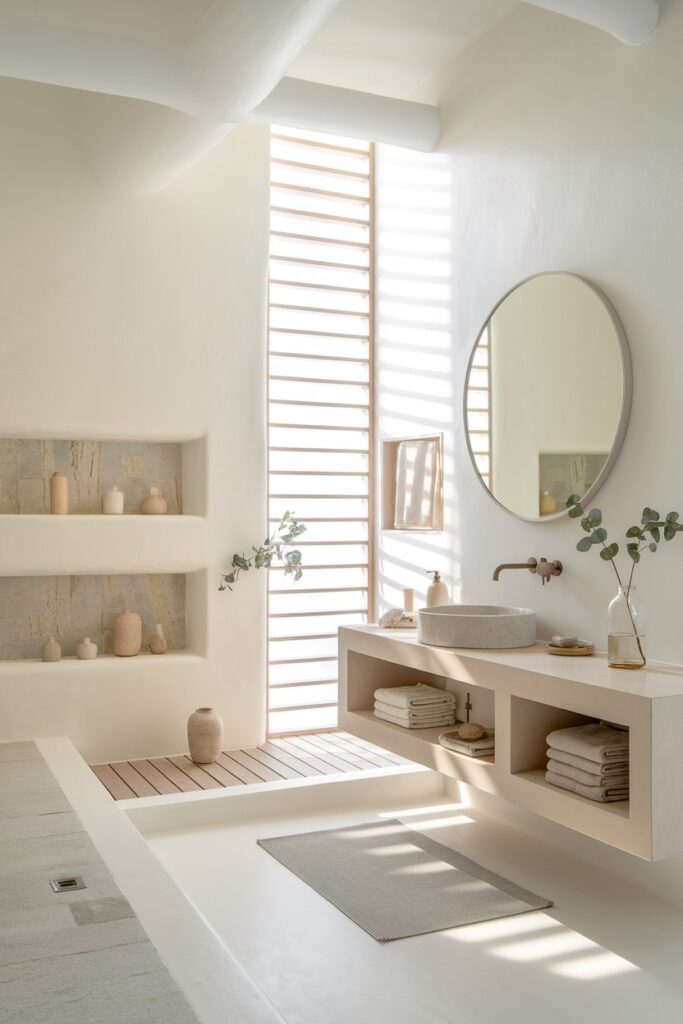
Start with neutral walls—think off-white or muted beige—to set a clean, tranquil foundation. Light grey tiles or soft-toned stone add subtle depth, preventing the room from appearing flat. Pairing these tones with natural wood elements creates the signature Japandi warmth, resulting in a space that feels both refined and lived-in.
To maintain the minimalist tone, choose simple fixtures in matte finishes. Soft grey or brushed metal taps complement the palette beautifully. Consider adding a few organic textures, such as linen towels or woven baskets, to introduce gentle visual interest without disrupting the calm atmosphere.


A neutral palette also offers incredible versatility. You can easily layer in subtle accents like stone accessories, ceramic trays, or potted greenery. This makes the bathroom feel thoughtfully styled without overwhelming the eye. Together, these elements form a soothing sanctuary ideal for anyone who values peaceful, uncluttered living.
3. Japandi Bathroom with Light Oak Vanities
A Japandi bathroom featuring light oak vanities brings a sense of warmth and modern elegance to the space. Light oak perfectly embodies the blend of Scandinavian simplicity and Japanese naturalism. Its soft grain and pale finish brighten the room while maintaining a grounded, organic feel.
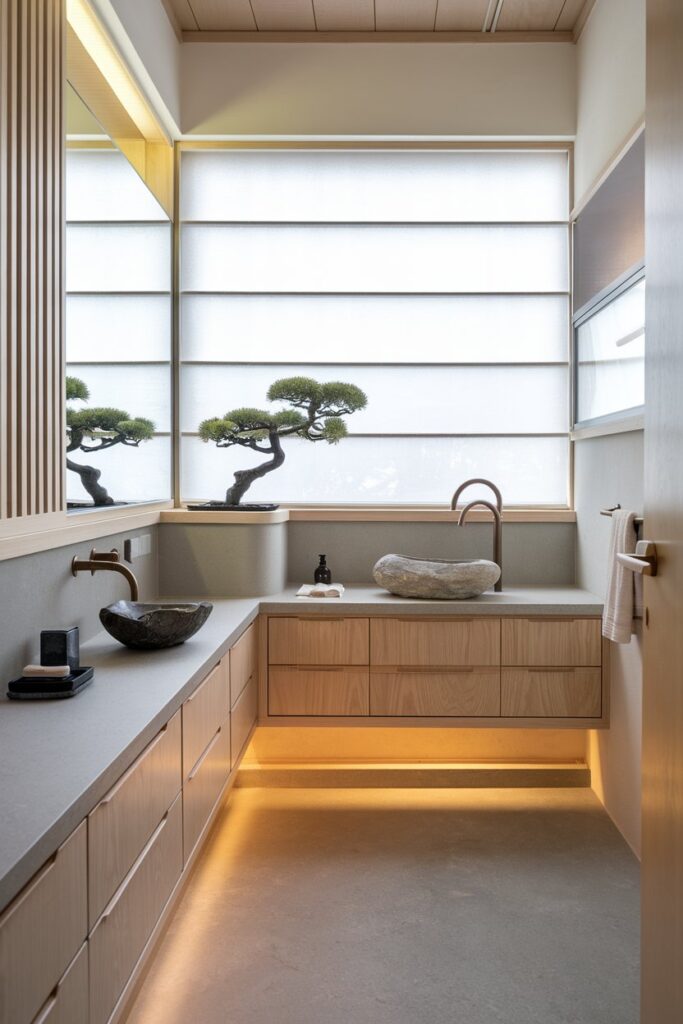
Choosing a floating light oak vanity enhances the minimalist aesthetic. The clean lines and open space below help the bathroom appear larger and less cluttered. Paired with sleek drawer fronts or soft-close cabinets, the vanity becomes a functional yet stylish centerpiece that reflects Japandi principles.
Complement the vanity with natural stone countertops or matte white basins for a clean, harmonious look. Light oak pairs beautifully with soft neutral tiles, adding depth without overpowering the design. Consider incorporating subtle black or brushed metal fixtures to introduce contrast and a more contemporary edge.
To elevate the space further, add small décor elements that highlight the vanity’s warmth. A ceramic vase, a small plant, or neatly folded linen towels can soften the room while keeping the minimalist tone intact. With the right styling, a light oak vanity transforms the bathroom into a calming retreat that effortlessly blends modern comfort with natural beauty.
4. Stone Basin Sink with Wooden Countertop
A stone basin sink paired with a wooden countertop is a classic Japandi combination that celebrates nature and craftsmanship. The contrast between the smooth, sculptural stone and the organic warmth of wood creates a visually striking focal point in the bathroom. This blend of materials embodies Japandi’s appreciation for authenticity and tactile surfaces.
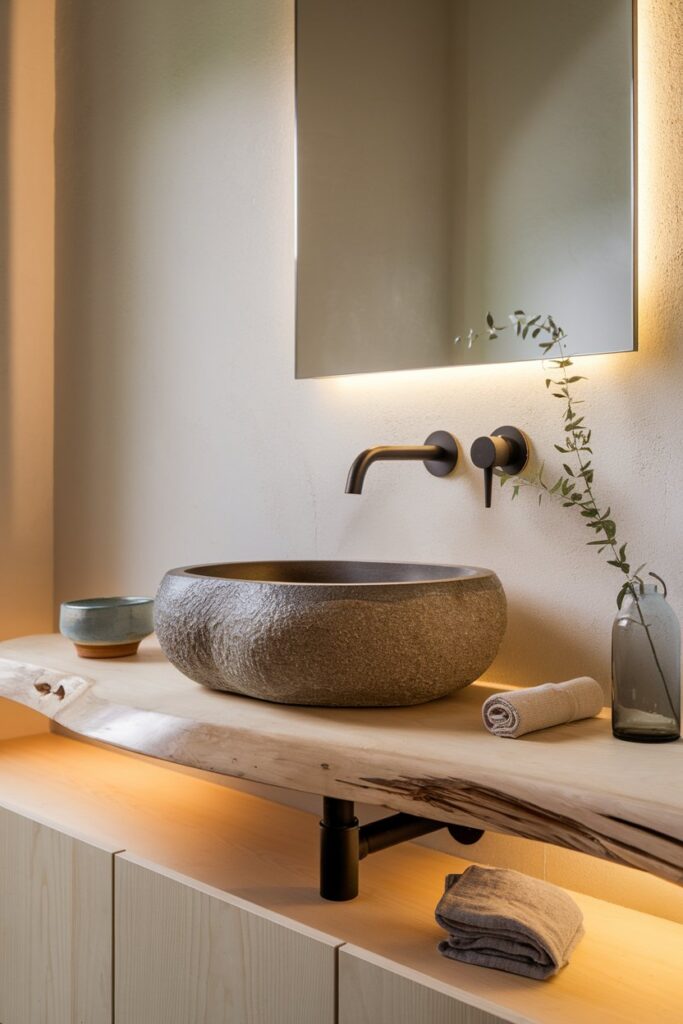
Choosing a stone basin—whether in marble, river stone, or textured ceramic—adds a sense of artisanal beauty. Each piece feels unique, making the sink itself a conversational element. When placed on a wooden countertop, the pairing highlights the harmony between rugged and refined textures.
A solid wood or engineered wood countertop works beautifully in this setup. Opt for a satin or matte finish to maintain the natural look and prevent any overly glossy surfaces. The grain of the wood enhances the rustic elegance of the stone, creating a serene spa-like ambiance.
Keep accessories minimal around the basin to allow the materials to shine. A simple soap dispenser, a rolled hand towel, or a small plant is all you need. Together, the stone and wood form a timeless, soothing space that appeals to homeowners seeking both beauty and intentional design.
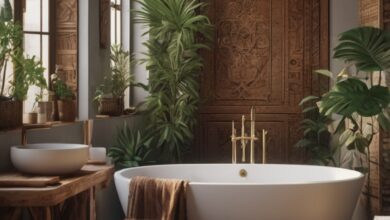
5. Freestanding Tub in a Japandi Zen Setting
A freestanding tub instantly elevates a Japandi bathroom, turning it into a peaceful Zen sanctuary. The soft curves of the tub contrast beautifully with the clean lines typical of Japandi design, creating a perfect balance of form and function. This setup encourages slow living and mindful relaxation.
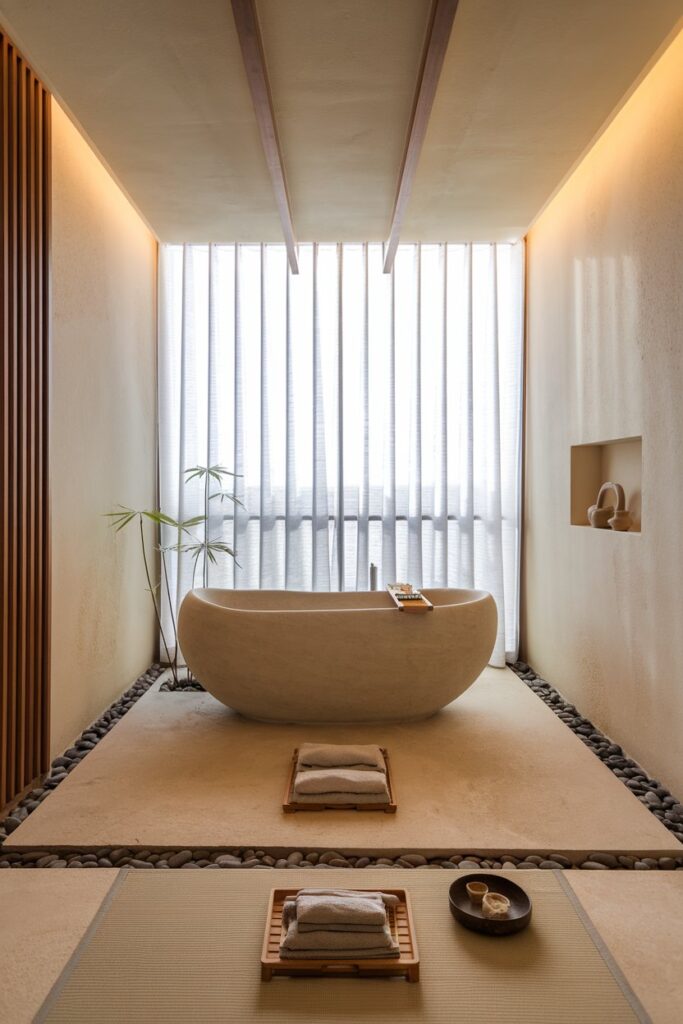
Choose a tub with a minimalist silhouette—oval or gently rectangular shapes work best. A matte white finish enhances the serene, spa-like feel. Positioning the tub near a window or under soft lighting creates a soothing ambiance that’s ideal for unwinding at the end of the day.
Surround the tub with natural materials to reinforce the Zen look. Wood bath trays, bamboo stools, or neutral stone flooring contribute to a calming environment. Adding a few well-placed plants introduces a gentle organic touch without overwhelming the minimalist aesthetic.
Soft textiles such as waffle towels, linen bath mats, or cotton robes enhance the comfort and warmth of the space. With everything balanced and intentional, the freestanding tub becomes the heart of the bathroom. It’s a true retreat where homeowners can escape daily stress and embrace a sense of peaceful simplicity.
6. Textured Tile Walls with Natural Materials
Textured tile walls bring depth and character to a Japandi bathroom, creating a serene backdrop that feels both refined and earthy. Soft, tactile surfaces like ribbed tiles, stone-inspired ceramics, or handmade clay tiles help the space feel grounded without overpowering the minimalist design. Their subtle texture enhances the room’s natural warmth.
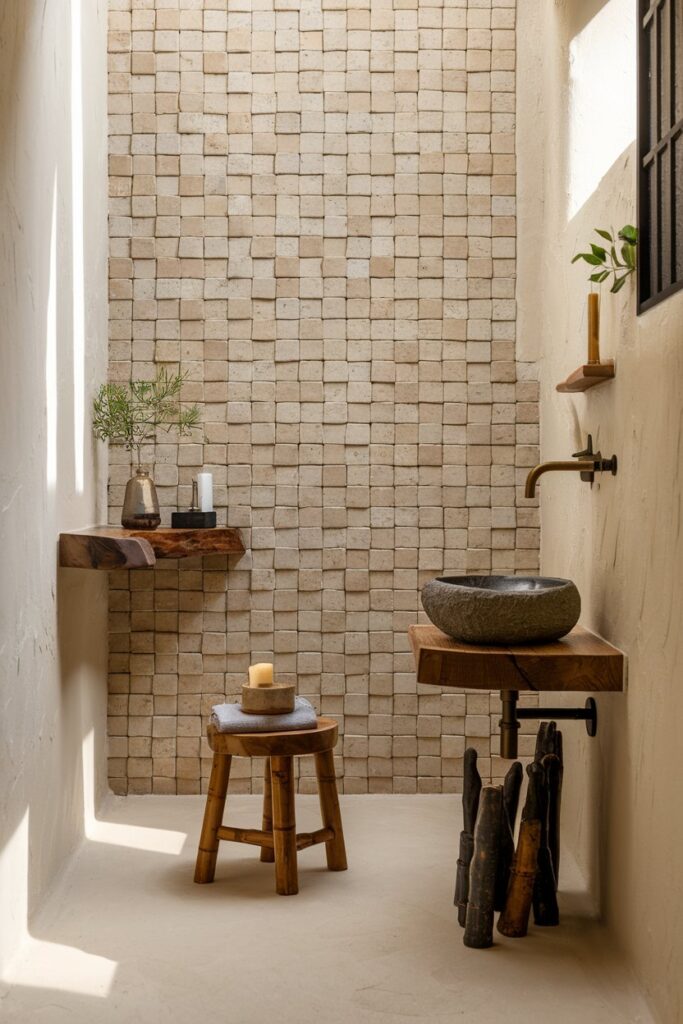
Pairing these tiles with natural materials such as wood, bamboo, or jute creates a harmonious Japandi aesthetic. Light oak shelves, wooden stools, or woven baskets complement the textured walls beautifully. These natural elements soften the geometry of the tiles and add a sense of handcrafted authenticity.
To maintain a cohesive look, keep your color palette neutral—think warm white, sand, soft grey, or muted beige. These tones enhance the gentle shadows and dimension created by the textured surfaces. The tiles become a visual highlight while still fitting seamlessly into the minimalist environment.
Soft, diffused lighting can further elevate the texture, creating soothing patterns and enhancing the room’s spa-like feel. Whether you use textured tiles behind the vanity or as an accent wall in the shower, they instantly elevate the space with subtle artistry. The result is a bathroom that feels natural, refined, and deeply calming.
7. Japandi Bathroom with Black Accents for Contrast
Adding black accents to a Japandi bathroom introduces a sophisticated layer of contrast while preserving the design’s calming spirit. Black details—when used sparingly—enhance the natural materials and soft neutral palette typical of Japandi aesthetics. They bring structure, balance, and a modern edge.
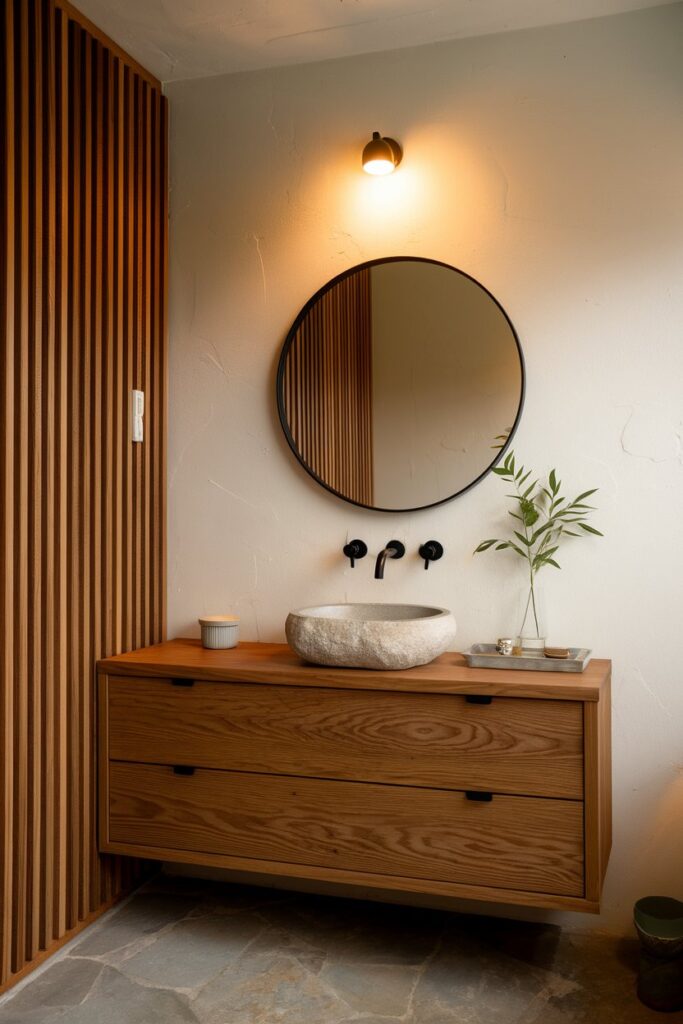
Start by incorporating matte black fixtures such as faucets, shower hardware, or towel bars. These small touches instantly create a sense of depth without overwhelming the space. Against light woods and soft beige tones, the black accents feel bold yet refined.
Black-framed mirrors or glass partitions are another beautiful way to bring contrast into the bathroom. Their clean lines add architectural interest, grounding the space visually. Pairing them with natural textures like wood and stone enhances the Japandi blend of warmth and minimalism.
To keep the look cohesive, avoid adding too many dark elements. A few well-chosen accents provide just the right amount of dramatic contrast. Add soft textures—linen towels, woven baskets, or ceramic accessories—to maintain the airy and welcoming feel. The result is a Japandi bathroom that feels modern, balanced, and elegantly understated.
8. Floating Wood Vanity with Clean Lines
A floating wood vanity is a quintessential feature in Japandi design, combining functionality with warm, minimalist beauty. Its elevated silhouette helps the bathroom feel more spacious, while the clean lines contribute to a sense of calm and order. Light or medium-toned wood works particularly well, giving the vanity a soft, natural presence.
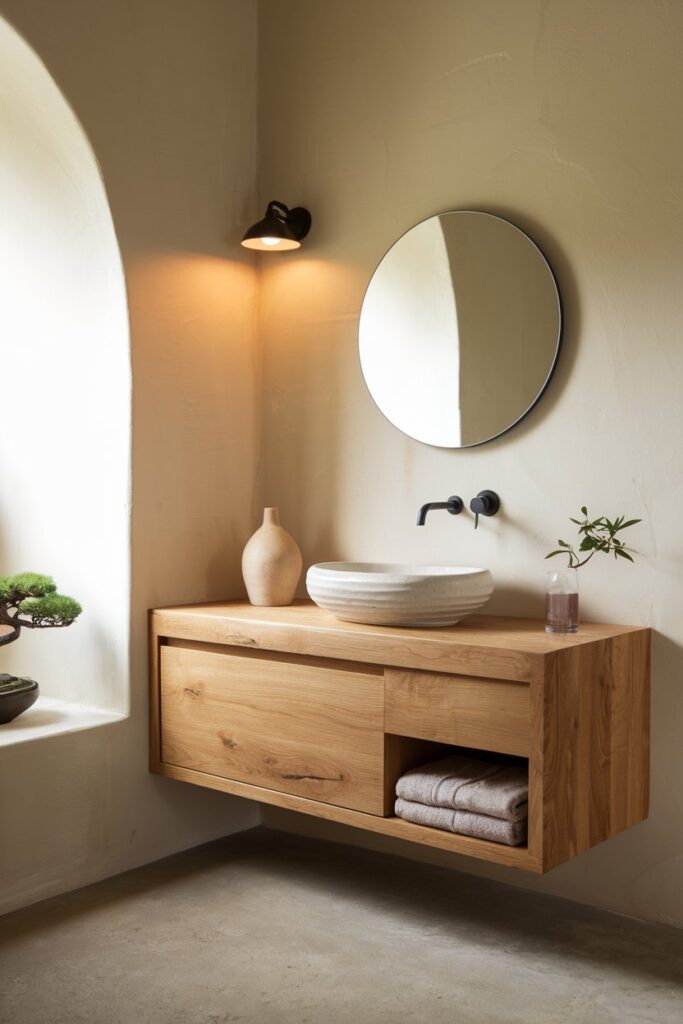
This type of vanity enhances the overall flow of the room by keeping the floor visible, making it ideal for small or medium-sized bathrooms. With integrated storage and sleek drawer fronts, it offers clutter-free living—a key element in both Japanese and Scandinavian design philosophies.
Pair the vanity with a simple countertop, such as matte white surfaces or natural stone. Vessel sinks or low-profile basins complement the clean lines and add a touch of modern elegance. Minimalist hardware in brushed metal or matte black completes the look.
Styling should remain understated: a small plant, a ceramic soap dish, or a neatly folded towel is all you need. These little touches bring softness and warmth without disrupting the simplicity. A floating wood vanity ensures the bathroom feels light, balanced, and thoughtfully designed.
9. Shower Space with Frameless Glass and Soft Lighting
A shower space enclosed with frameless glass embodies the Japandi philosophy of openness and simplicity. The clean, unobstructed lines help the bathroom feel larger and more serene, allowing natural light to flow effortlessly throughout. This minimalist approach keeps the space visually calm.
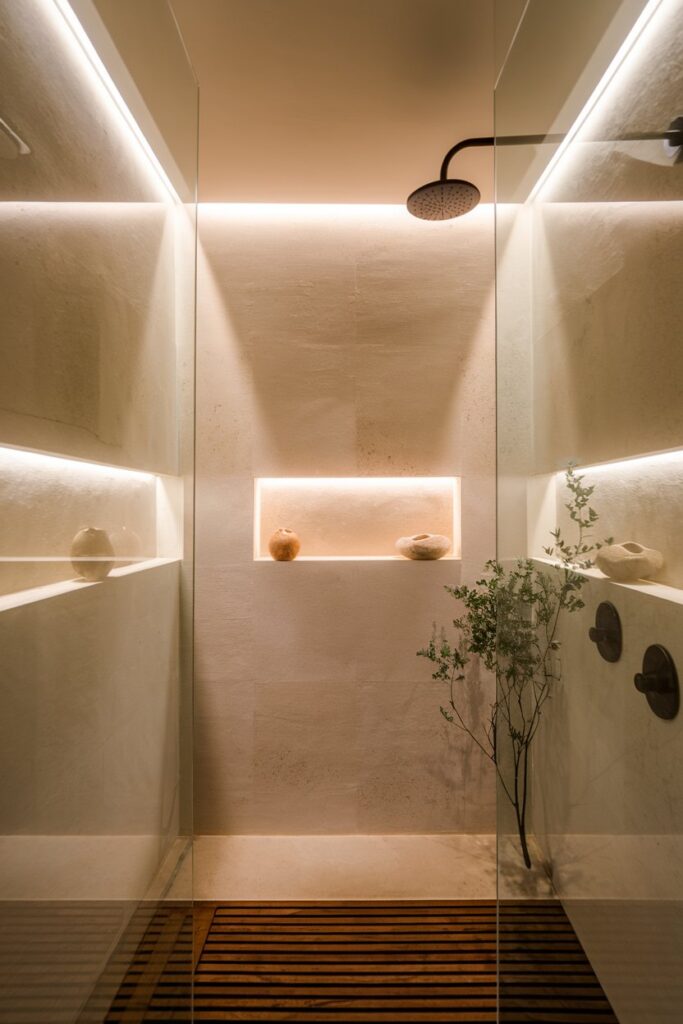
Pairing the frameless glass with soft, ambient lighting enhances the relaxing atmosphere. Warm LED strips, hidden spotlights, or diffused wall lights create a gentle glow that highlights textures like natural stone or neutral tiles. This soft illumination transforms daily routines into quiet moments of retreat.
Inside the shower, choose a neutral color palette and natural materials to maintain the Japandi balance. Stone-inspired tiles, light wood benches, or bamboo accessories add warmth and subtle texture. The lack of bulky frames ensures every material is showcased beautifully.
Keep the fixtures simple and modern—matte black, brushed gold, or stainless steel all work well. The overall effect is a spa-like shower area that feels luxurious yet understated. With frameless glass and soothing lighting, the bathroom becomes a sanctuary designed for peaceful, mindful living.
10. Japanese-Style Soaking Tub in a Scandinavian Layout
A Japanese-style soaking tub brings an authentic sense of calm to a Japandi bathroom, especially when paired with a clean Scandinavian layout. These deep, compact tubs encourage slow bathing rituals and offer a meditative escape from daily stress. Their sculptural forms instantly become a focal point.
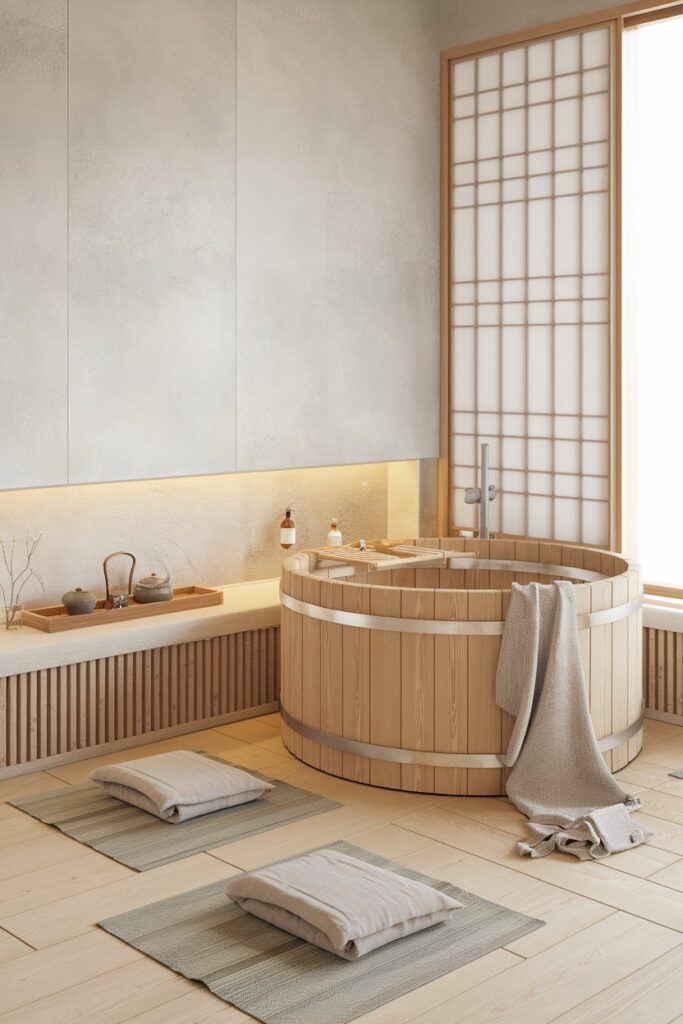
In a Scandinavian-inspired layout, the soaking tub shines against a backdrop of clean lines, airy space, and neutral colors. Light wood flooring, soft grey tiles, or warm white walls provide the perfect minimal foundation. The tub’s height and round or square silhouette add a unique architectural element.
Place the soaking tub near natural light sources if possible. A window, skylight, or diffused lighting helps create the serene ambiance typical of traditional Japanese bathing culture. To enhance functionality, add a slim wooden bench or built-in ledge for bath accessories.
Keep nearby décor minimal—perhaps a linen towel, a small plant, or a wooden bath tray. These subtle touches maintain the Scandinavian clarity while supporting the Japanese focus on nature and ritual. Together, the two styles create a bathing experience that is both soothing and deeply intentional.
11. Nature-Inspired Japandi Bathroom with Plants
A nature-inspired Japandi bathroom enriched with plants creates an atmosphere of tranquility and fresh energy. Greenery softens the clean lines of Japandi design while introducing a vibrant connection to the outdoors. Even a few well-placed plants can transform the space into a soothing retreat.
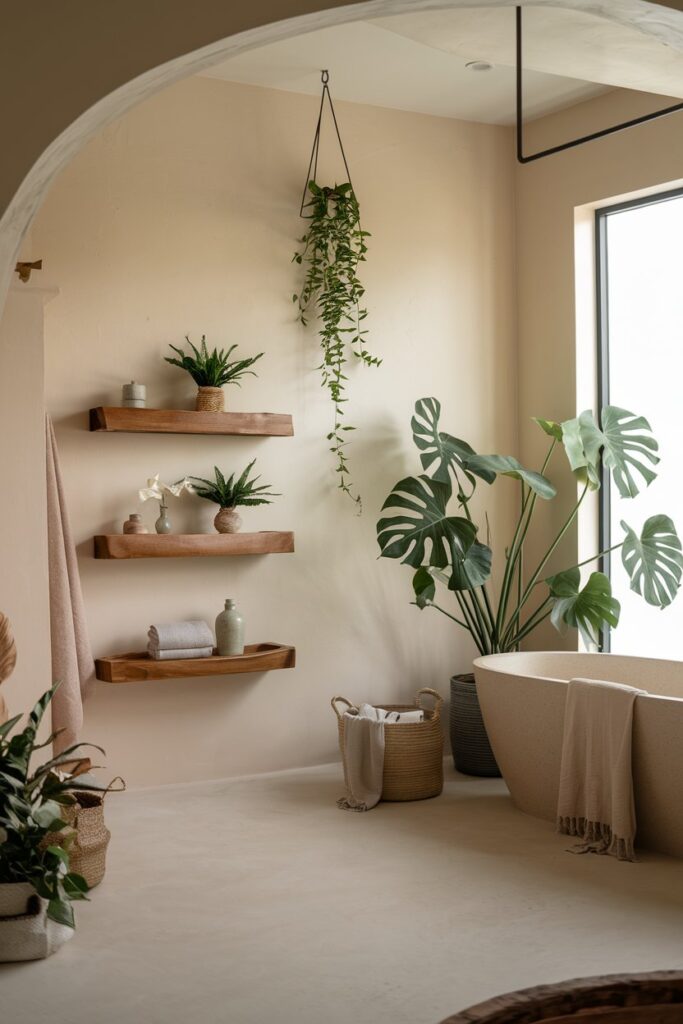
Choose low-maintenance plants suitable for humidity, such as ferns, pothos, or peace lilies. Their soft shapes and rich tones complement the neutral palette typical of Japandi interiors. Placing plants near the vanity, tub, or open shelves adds gentle movement and organic warmth.
Consider incorporating natural materials like bamboo planters, ceramic pots, or woven baskets to enhance the calming environment. These subtle textures bring a harmonious balance, reinforcing the Japandi blend of Scandinavian simplicity and Japanese nature-focused design.
If natural light is available, position plants to take advantage of it. A small window or skylight can help create a serene, spa-like ambiance reminiscent of traditional Japanese bathhouses. With greenery bringing life into the room, the bathroom becomes a sanctuary that encourages relaxation and mindfulness.
12. Warm Ambient Lighting for a Cozy Japandi Bath
Warm ambient lighting plays a crucial role in crafting a cozy Japandi bathroom. Soft, diffused light enhances the natural materials and calming color palette, making the room feel serene and inviting. Instead of harsh overhead lighting, Japandi design embraces a gentler, layered approach.
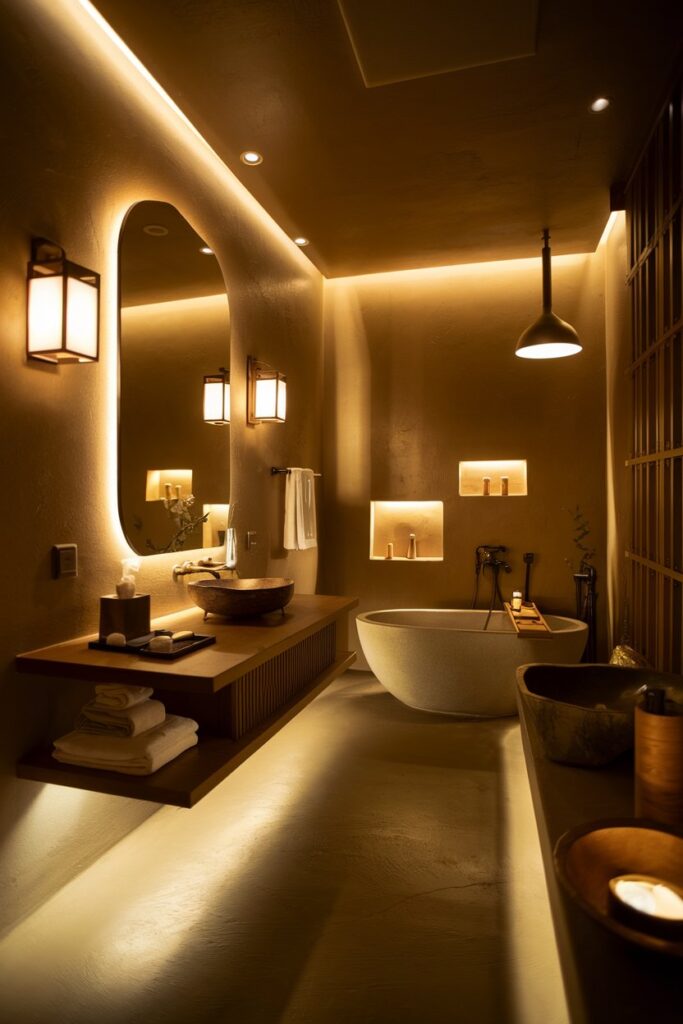
Start by incorporating warm LED lights along mirrors, under vanities, or behind floating shelves. These hidden sources of illumination create a soothing glow that elevates the peaceful vibe. Wall sconces with frosted glass or fabric shades are also excellent choices for soft, uniform lighting.
Pair this warm illumination with natural textures such as wood, linen, and stone to enhance their depth and warmth. Lighting placed near textured walls or tiled surfaces creates subtle shadows that enrich the overall ambiance.
Candles or small lantern-style lights can add an additional layer of coziness, perfect for evening relaxation. When combined, these lighting elements transform the bathroom into a tranquil sanctuary. Whether preparing for the day or winding down, warm lighting sets the tone for a calming, restorative experience.
13. Japandi Bathroom with Soft Linen Textiles
Soft linen textiles add a gentle, welcoming touch to any Japandi bathroom. Linen’s natural fibers and subtle texture align perfectly with the principles of simplicity, comfort, and authenticity that define both Japanese and Scandinavian design. Its slightly rumpled, organic look enhances the room’s relaxed atmosphere.
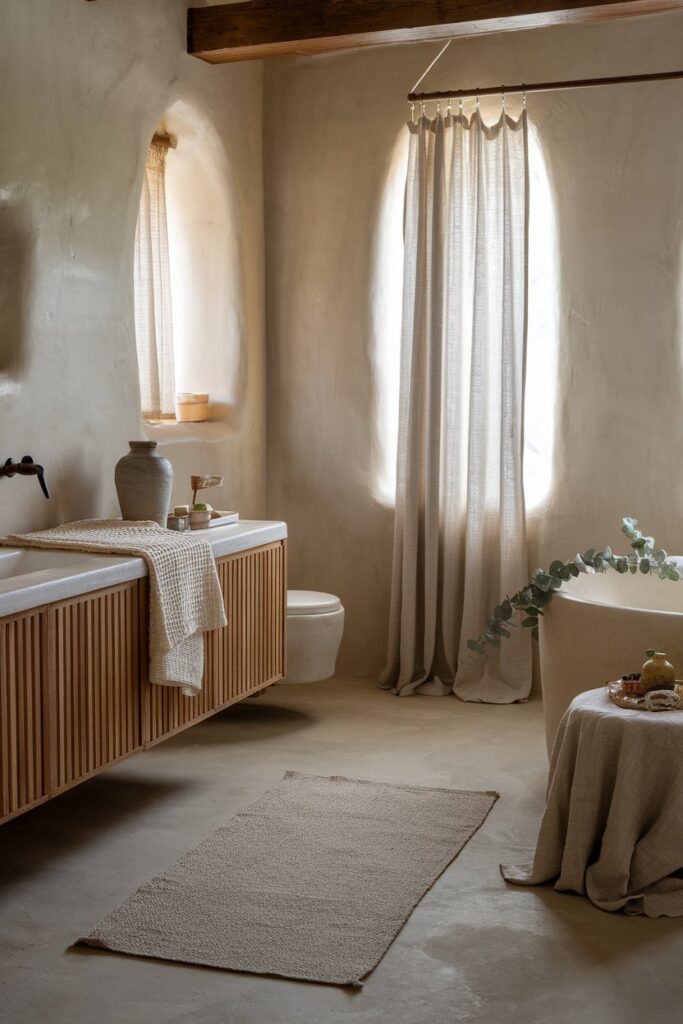
Start by incorporating linen towels in muted tones like beige, soft grey, or warm white. Their breathable, lightweight feel brings a spa-like quality to everyday routines. Matching linen bath mats or shower curtains contribute additional layers of comfort and texture.
Linen blends beautifully with Japandi materials such as natural wood, stone, and ceramic. These textiles soften hard surfaces while adding warmth without overwhelming the minimalist aesthetic. Folded neatly on open shelves or hung over simple pegs, they serve both functional and decorative purposes.
Because linen ages gracefully, it embodies the wabi-sabi philosophy—celebrating beauty in imperfection and natural wear. This makes it a perfect addition for homeowners seeking a calming, lived-in feel. With soft linen textiles, the bathroom becomes a peaceful, comforting sanctuary.
14. Concrete Elements Blended with Wood Accents
Combining concrete elements with warm wood accents creates a striking yet serene Japandi bathroom. Concrete provides a modern, minimalist foundation, while wood introduces natural warmth, balancing the space beautifully. Together, these materials reflect Japandi’s belief in harmony through contrast.
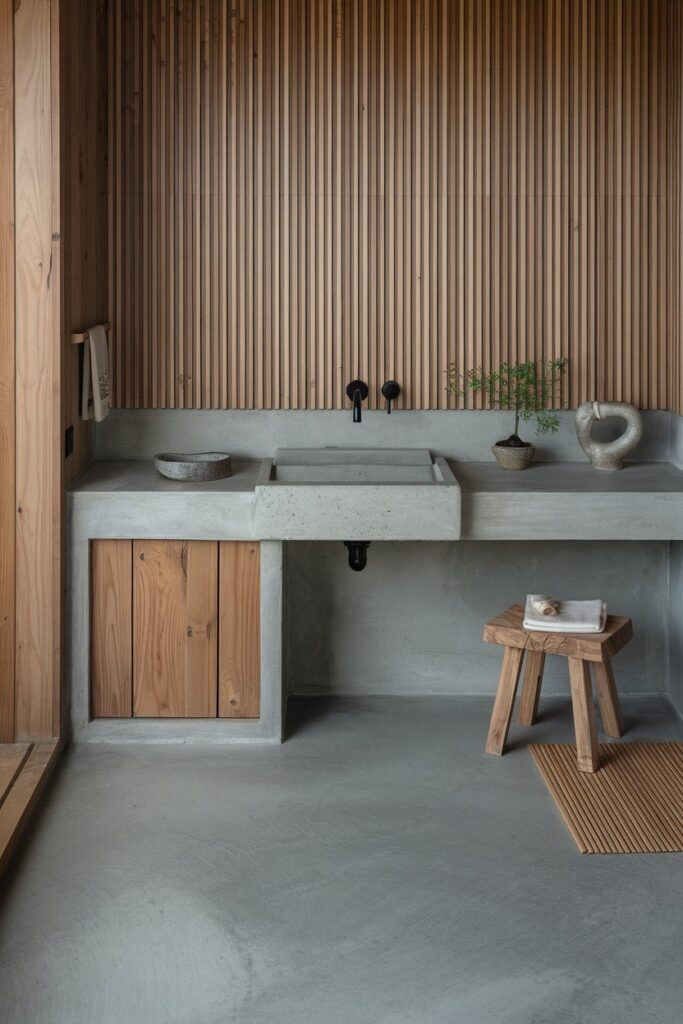
Consider using concrete for countertops, sinks, or flooring. Its smooth, matte surface adds a contemporary feel and pairs perfectly with the neutral palette common in Japandi design. Concrete also highlights clean lines, making the space feel uncluttered and intentional.
To offset the coolness of concrete, incorporate wood accents throughout the room. A wooden vanity, bath stool, or wall paneling brings warmth and texture. Light-toned woods work especially well to maintain an airy and soothing atmosphere.
This material pairing is versatile and timeless. Soft lighting, linen textiles, and ceramic accessories can enhance the natural balance between rugged concrete and warm wood. The result is a bathroom that feels modern yet cozy, ideal for those who appreciate a blend of minimalism and nature.
15. Open Shelving with Minimalist Japandi Decor
Open shelving is a perfect element in a Japandi bathroom, offering both functionality and elegance. The open design encourages thoughtful curation, allowing homeowners to display only what is meaningful or essential. This aligns beautifully with Japandi’s emphasis on simplicity and intentional living.
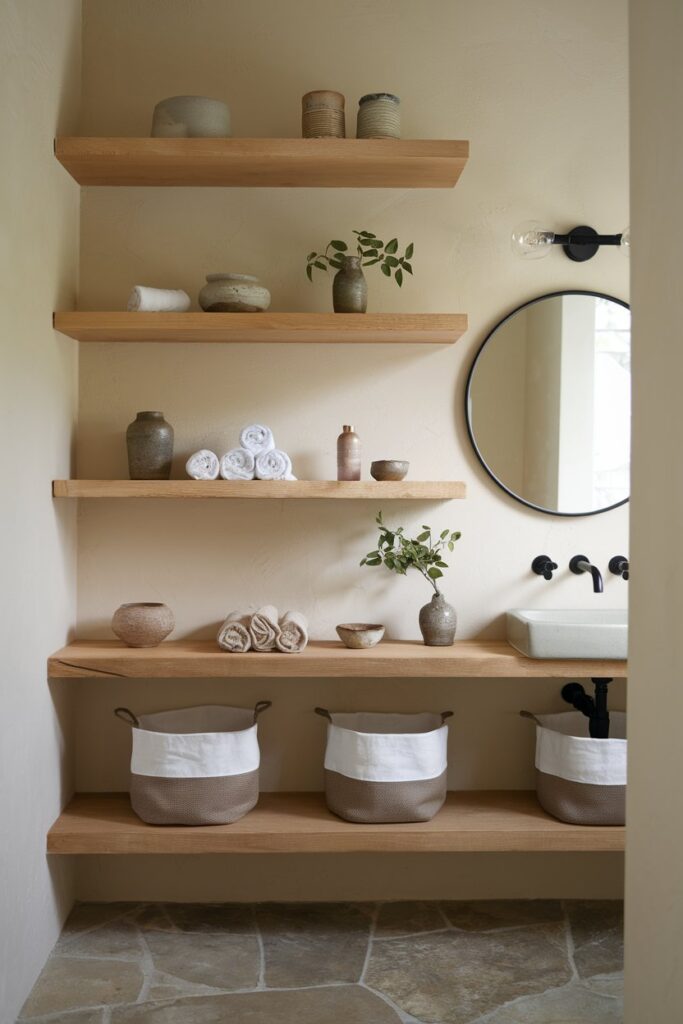
Choose floating wood shelves in light or medium tones to maintain the natural, calming aesthetic. Their clean lines complement the minimalist look, while the visible grain adds gentle warmth to the space. Position shelves near the vanity, tub, or above the toilet for practical storage.
Keep the decor minimal—consider ceramic jars, rolled linen towels, small plants, or handcrafted accessories. The goal is to showcase simple beauty without clutter. Natural textures like bamboo, rattan, or stone pair wonderfully with the wood shelves, reinforcing the Japandi connection to nature.
Neutral-colored storage baskets can help keep essentials organized while maintaining the clean aesthetic. When styled thoughtfully, open shelving becomes a subtle focal point that enhances the room’s sense of calm. It’s a beautiful way for homeowners to combine practicality with serene, minimalist design.
Below is a clean, reader-friendly table that highlights key Japandi bathroom elements. It’s designed to give quick inspiration and practical guidance without overwhelming the reader.
Top Japandi Bathroom Elements & How to Use Them
| Japandi Element | Description | How to Incorporate It |
| Natural Wood Tones | Warm, organic textures that soften minimalist spaces | Add wooden vanities, stools, shelving, or bath trays |
| Neutral Color Palette | Soft whites, beiges, greys, and muted earth tones | Repaint walls, choose neutral tiles, or update textiles |
| Stone & Concrete | Brings a sleek, grounded feel to the bathroom | Use stone basins, concrete sinks, or stone-textured flooring |
| Minimalist Decor | Clean, uncluttered surfaces with functional elegance | Choose simple accessories and reduce visual noise |
| Indoor Plants | Adds a refreshing biophilic touch | Include potted ferns, bamboo, or hanging greenery |
| Soft Textiles | Light linens and organic fabrics | Use waffle towels, cotton bath mats, or linen curtains |
| Ambient Lighting | Warm, diffused illumination that enhances serenity | Add warm LED strips, lantern-style fixtures, or wall sconces |
| Matte Black Accents | Adds modern contrast without overpowering the space | Use black faucets, handles, frames, or towel racks |
| Sliding Wooden Doors | Space-saving and deeply rooted in Japanese tradition | Install a wooden or shoji-style sliding door |
| Organic Shapes | Curved forms that soften Scandinavian minimalism | Add rounded mirrors, curved basins, or soft-edged decor |
16. Small Japandi Bathroom with Space-Saving Design
A small Japandi bathroom proves that limited space can still feel serene, functional, and beautifully designed. By blending Scandinavian efficiency with Japanese simplicity, every inch of the room serves a purpose without feeling cramped. Clean lines and thoughtful placement help the space feel open and uncluttered.
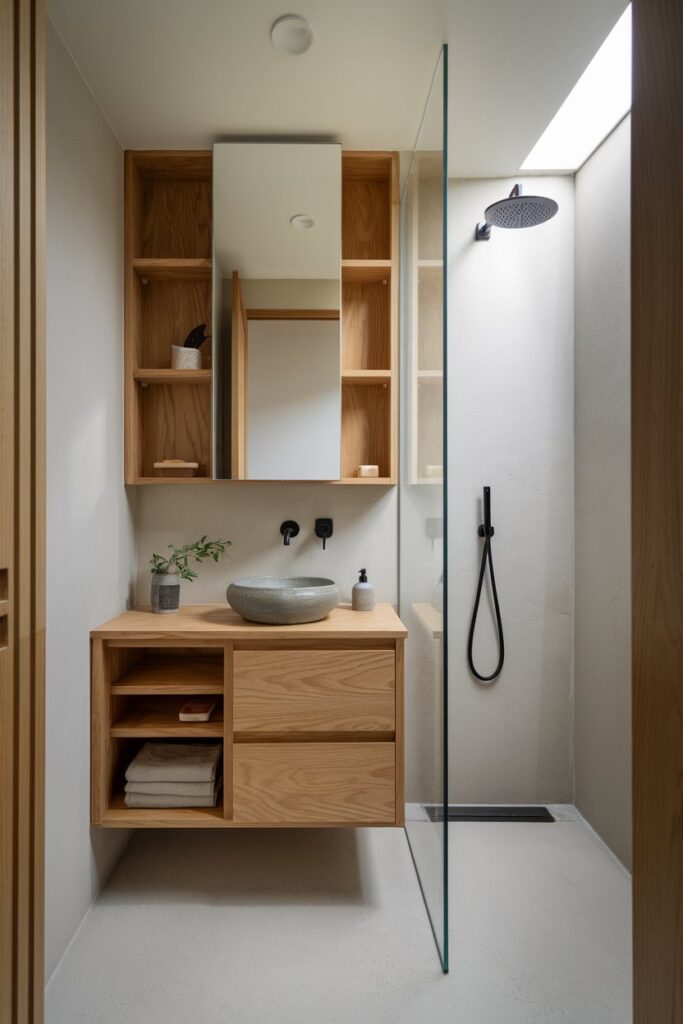
Start with a neutral color palette to visually expand the room. Soft whites, warm beiges, and light wood tones keep the bathroom airy and inviting. Floating vanities, wall-mounted faucets, and compact storage solutions help free up floor space, making the room feel larger than it is.
Smart storage plays a crucial role. Use vertical shelving, recessed niches, or narrow cabinetry to create functional areas without overwhelm. Hidden storage compartments maintain a minimalist look while keeping essentials within easy reach.
To enhance comfort, incorporate natural materials like light wood, stone, or linen. Even in a small layout, these elements create a calming, spa-like environment. When designed thoughtfully, a small Japandi bathroom offers the perfect blend of practicality and peaceful elegance—ideal for homeowners embracing minimalist living.
17. Black-framed Mirror Paired with Wood Elements
A black-framed mirror paired with warm wood elements brings striking contrast to a Japandi bathroom. The sleek black lines add modern sophistication, while the natural wood introduces softness and warmth—creating a perfectly balanced aesthetic.
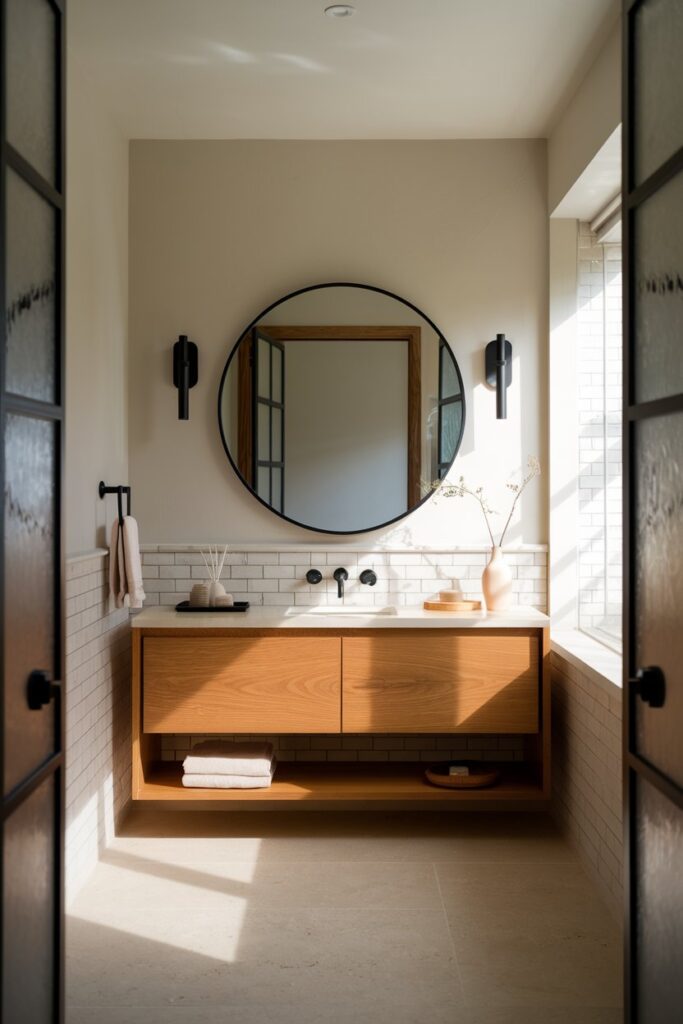
Choose a minimalist mirror with a thin, matte-black frame to maintain simplicity. Its strong geometric outline becomes an elegant focal point above the vanity, grounding the space visually. When positioned against light walls or wood textures, the contrast feels refined rather than overwhelming.
Complement the mirror with wood accents such as a floating vanity, open shelving, or slatted paneling. Light oak or ash tones work beautifully, offering a natural counterbalance to the darker frame. These elements deepen the organic, calming character of Japandi design.
Together, the black mirror and wood pieces create harmony through contrast, a key principle of this style. Add subtle accessories—like ceramic trays, linen hand towels, or small plants—to soften the overall look. This combination results in a bathroom that feels modern, warm, and thoughtfully curated.
18. Japandi Bathroom Featuring Neutral Stone Flooring
Neutral stone flooring sets the tone for a beautifully grounded Japandi bathroom. The soft textures and natural variations found in stone create a calming foundation that aligns perfectly with Japandi’s love for earthy materials. Whether textured limestone, smooth travertine, or subtle terrazzo, stone flooring adds depth without overwhelming the space.
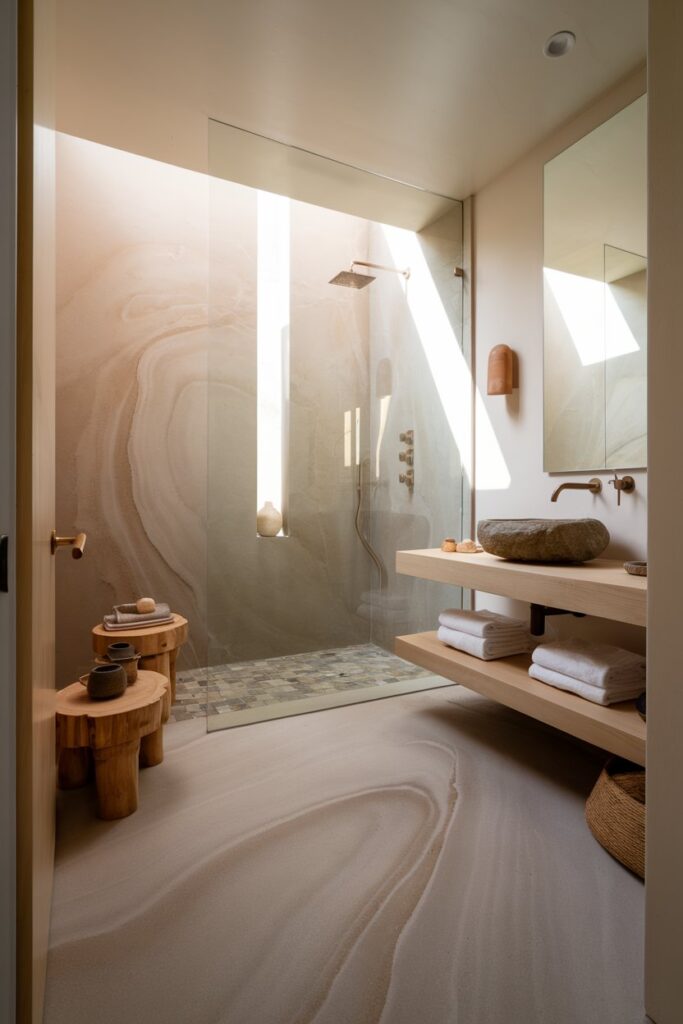
The neutral tones—beige, sand, cream, or soft grey—pair seamlessly with warm wood vanities and minimalist fixtures. This combination helps create a serene environment where nature-inspired elements shine. Stone flooring also adds a subtle tactile quality, enhancing the spa-like feel.
To maintain a cohesive look, choose matte or honed finishes rather than polished ones. These softer surfaces blend effortlessly into the Japandi aesthetic and feel more soothing underfoot. You can even extend stone onto the shower walls or tub surround for a seamless, luxurious appearance.
Layering in soft textiles such as linen rugs or cotton bath mats adds warmth to balance the stone’s coolness. With its timeless appeal and natural elegance, neutral stone flooring becomes the perfect base for a peaceful, modern Japandi retreat.
19. Matte Black Fixtures in a Japandi Setting
Matte black fixtures offer a striking yet balanced touch in a Japandi bathroom. Their clean, modern lines create a beautiful contrast against soft neutrals and natural materials, adding depth without disrupting the room’s serene feel. Whether used for faucets, shower hardware, or cabinet pulls, matte black instantly elevates the design.
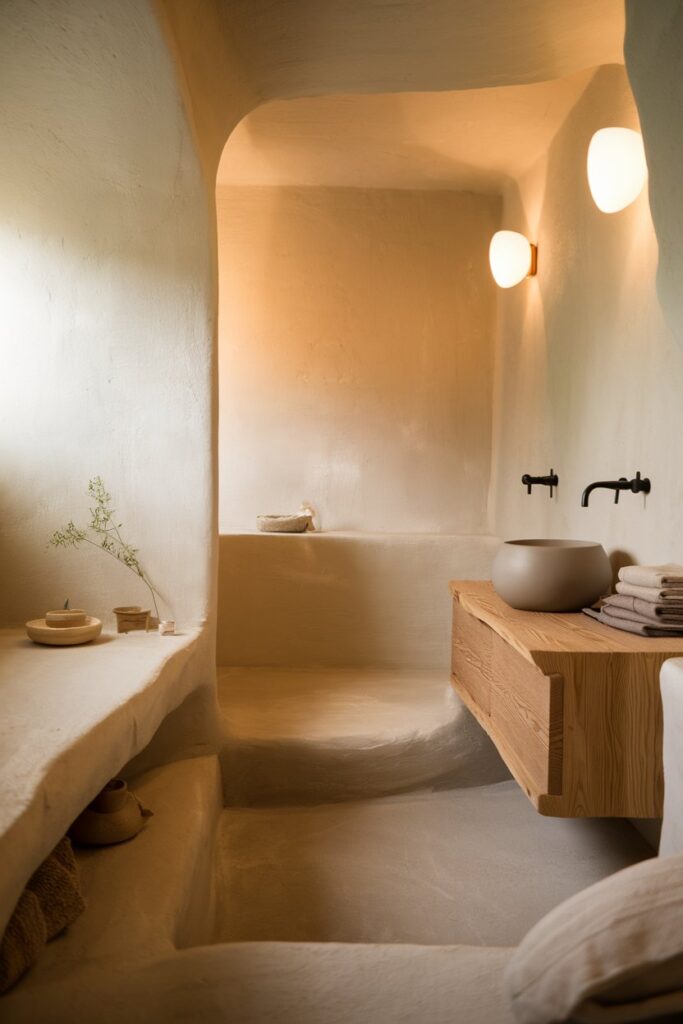
These fixtures work especially well with light wood tones, stone surfaces, and minimalist vanities. The dark, velvety finish adds sophistication while keeping the overall look understated. In a space filled with warm materials, matte black acts as a grounding element.
To maintain harmony, use black accents sparingly for maximum impact. Pair them with soft lighting and a neutral palette to preserve the Japandi softness. A black-framed mirror, towel bars, or shower trim can complement the fixtures and create a cohesive design story.
Matte black also suits the Japandi philosophy of functional beauty. The fixtures feel contemporary yet timeless—never flashy or busy. Combined with natural textures and gentle curves, matte black brings structure, elegance, and subtle drama to the bathroom.
20. Wabi-Sabi Inspired Japandi Bathroom Aesthetic
A Wabi-Sabi-inspired Japandi bathroom embraces the beauty of imperfection, natural aging, and organic simplicity. This aesthetic celebrates authenticity, encouraging homeowners to appreciate textures, variations, and the gentle passage of time. The result is a space that feels soulful, serene, and deeply personal.
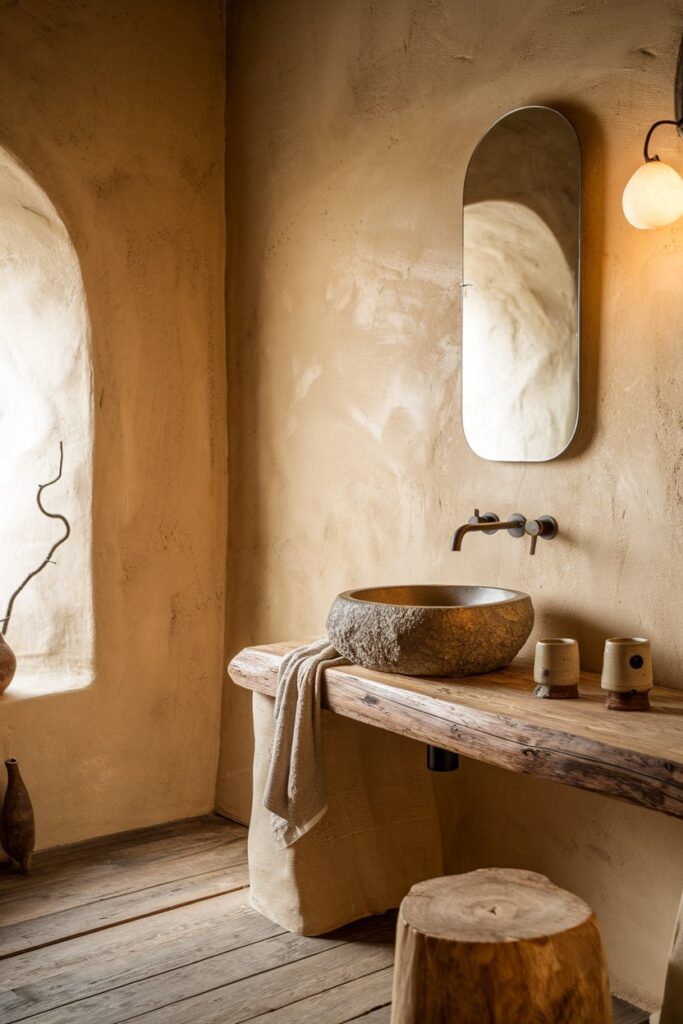
Start with natural materials such as raw wood, textured ceramics, stone basins, or hand-finished tiles. Their unique imperfections bring warmth and depth to the environment. Instead of striving for perfect symmetry, allow asymmetry and subtle irregularities to enhance the character of the space.
A muted color palette—soft beige, warm grey, clay, and off-white—creates a calming foundation. These tones frame the natural textures beautifully and support the peaceful, grounded atmosphere. Layer in linen towels, woven baskets, or handcrafted decor for additional softness.
Minimalism remains key, but Wabi-Sabi encourages meaningful, curated touches. A single branch in a ceramic vase, a handmade soap dish, or a weathered wooden stool can become quiet focal points. This blend of Japandi clarity and Wabi-Sabi soul creates a bathroom that feels honest, tranquil, and connected to nature.
21. Japandi Bathroom with Sliding Wooden Doors
Sliding wooden doors bring a touch of traditional Japanese architecture into a Japandi bathroom while maintaining the clean simplicity of Scandinavian design. Their space-saving function makes them ideal for bathrooms of all sizes, especially in compact layouts where hinged doors take up valuable room.
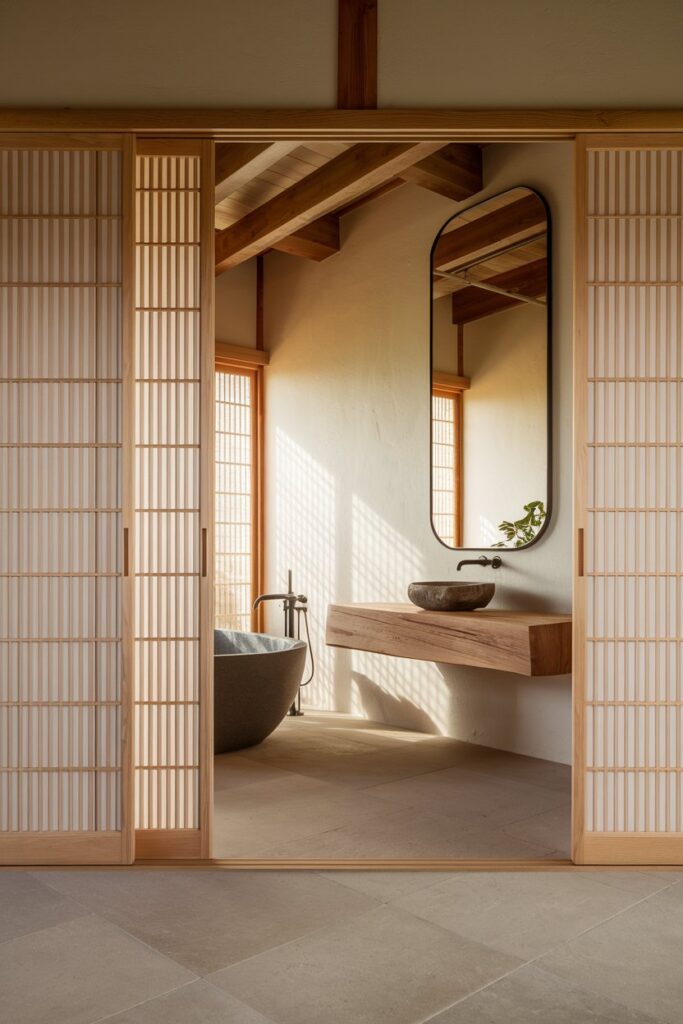
Choose doors crafted from light or medium-toned wood to enhance the natural, calming atmosphere. Slatted patterns, subtle grain, or minimalist paneling add quiet texture without overwhelming the space. Frosted glass inserts can soften the look further, allowing diffused light to pass through while maintaining privacy.
These doors pair beautifully with other Japandi elements such as stone tiles, soft textiles, and matte finishes. The seamless transition they provide between spaces makes the bathroom feel more intentional and serene, reinforcing the flow and harmony central to both design styles.
Because sliding wooden doors act as both functional elements and design statements, they can set the tone for the entire bathroom. Their warm, natural presence encourages a spa-like feel, inviting homeowners into a space designed for calm and relaxation.
22. Organic-Shaped Decor and Accessories
Organic-shaped décor plays an important role in softening the clean, structured lines of a Japandi bathroom. Curved silhouettes bring gentle movement and a sense of natural flow, balancing the overall minimalist aesthetic. These forms add visual interest while maintaining the serene atmosphere that defines Japandi style.
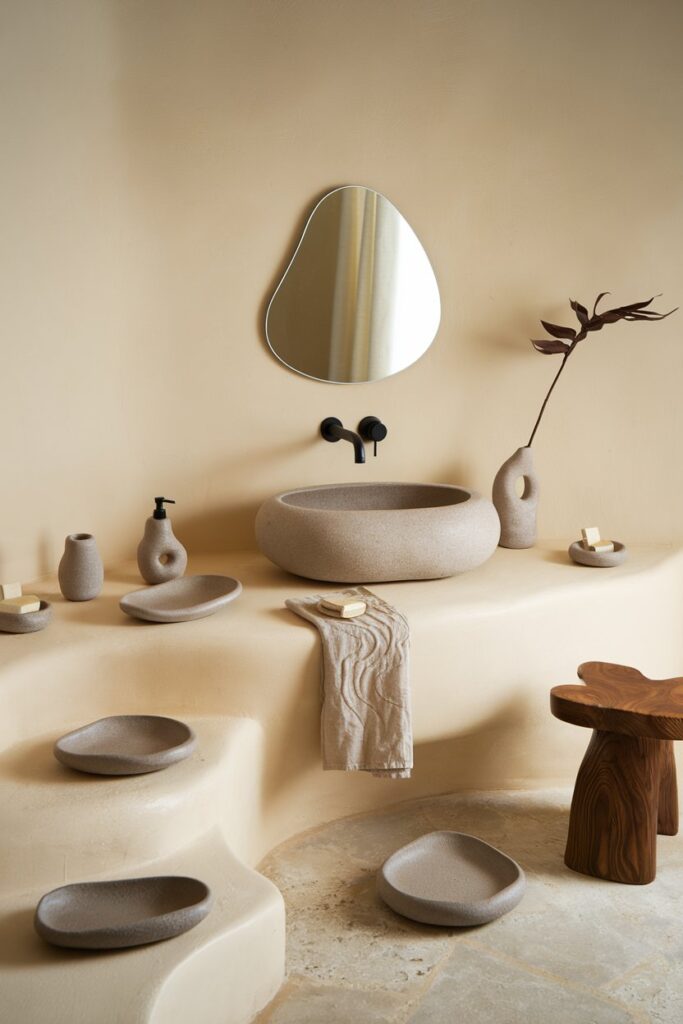
Consider incorporating rounded mirrors, pebble-shaped trays, or sculptural ceramic vessels. Their soft shapes contrast beautifully with straight-lined vanities and shelving. Even small touches, like wavy soap dishes or curved planters, contribute to a more relaxed and inviting environment.
Organic accessories also highlight the Japandi appreciation for handcrafted pieces. Imperfect edges, hand-molded ceramics, and natural stone items celebrate subtle irregularities that bring warmth and authenticity. These elements help homeowners create a bathroom that feels personal and effortlessly stylish.
For a cohesive look, keep your color palette muted—think warm whites, earthy neutrals, and soft greys. This allows the shapes and textures to shine without overpowering the space. With the right mix of organic décor, a Japandi bathroom becomes a place of calm, comfort, and natural beauty.
23. Bathroom with Japanese Bamboo Accents
Bamboo accents bring an unmistakable sense of Japanese authenticity to a Japandi bathroom. Lightweight, sustainable, and naturally warm, bamboo instantly softens the space while reinforcing the design’s connection to nature. Its soft, golden tones add a soothing glow that complements Japandi’s neutral aesthetic.
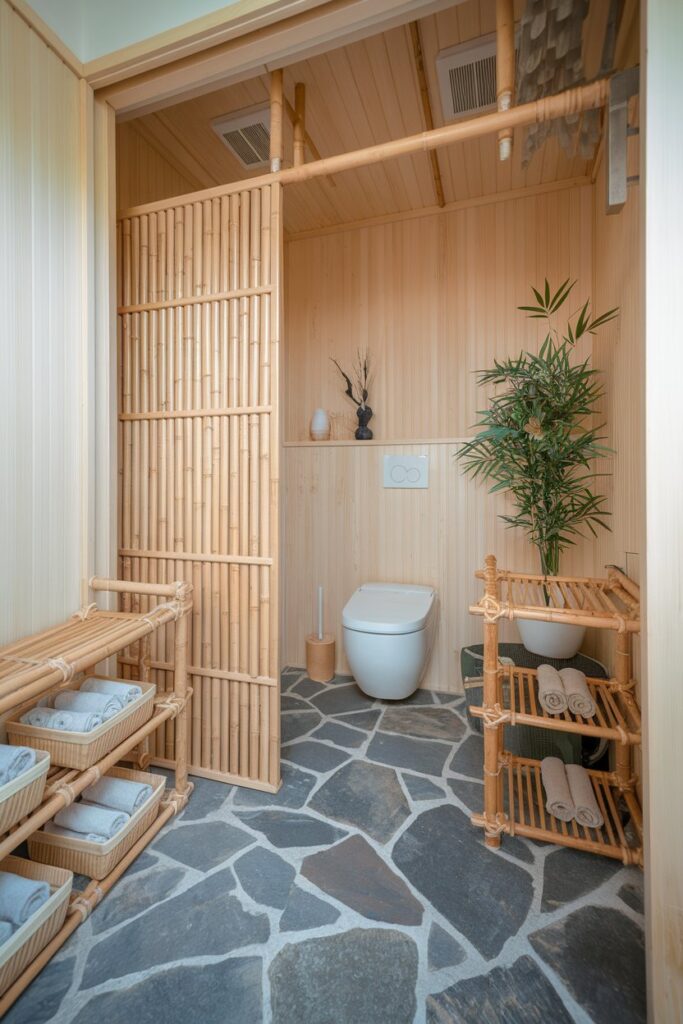
Incorporate bamboo through accessories such as bath stools, trays, toothbrush holders, or storage baskets. These small details introduce warmth without clutter. For a bolder statement, consider bamboo wall panels, window shades, or even a bamboo ladder for hanging towels.
Bamboo pairs effortlessly with other Japandi materials like stone, linen, and light wood. Its smooth texture contrasts beautifully with matte finishes, creating a balanced, harmonious environment. Because bamboo is resistant to moisture, it works exceptionally well in bathroom settings.
To enhance the Zen vibe, add a few plants or natural-textured décor alongside your bamboo features. The combination creates a tranquil, spa-like atmosphere reminiscent of traditional Japanese bathhouses. With bamboo accents, the bathroom becomes a peaceful retreat that feels grounded, organic, and soothing.
24. Japandi Spa-Inspired Shower Area
A spa-inspired shower area is at the heart of many Japandi bathrooms, offering a retreat-like experience grounded in calm and simplicity. The goal is to create a space that feels restorative, uncluttered, and deeply connected to nature. Soft lighting, warm materials, and clean lines help establish this mood.
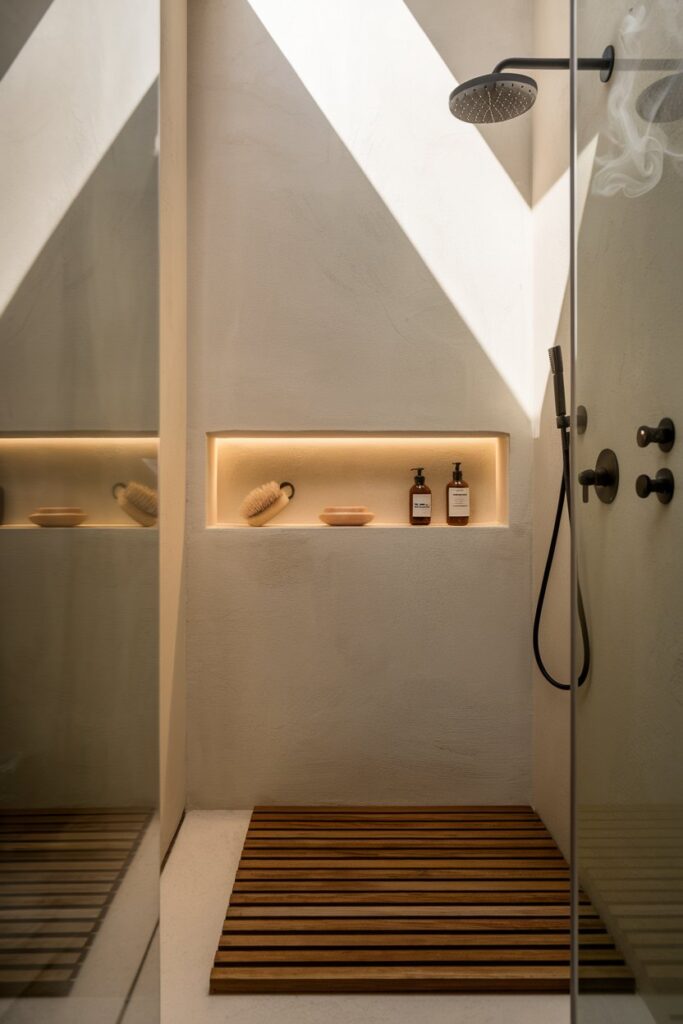
Start with natural surfaces such as stone tiles, textured ceramics, or wood-look panels. These materials bring warmth and authenticity while enhancing the sensory experience. A frameless glass enclosure maintains openness, allowing textures and tones to remain the visual focus.
Introduce soft, ambient lighting—hidden LED strips, warm wall sconces, or diffused overhead lights. This gentle glow transforms everyday showers into soothing rituals. A rainfall showerhead or handheld wand adds luxurious functionality while maintaining a minimalist look.
Enhance the spa-like atmosphere with subtle accessories: a wooden shower bench, eucalyptus bundles, or neatly arranged linen towels. These small touches reinforce relaxation and add organic charm. A Japandi spa-inspired shower area becomes a peaceful sanctuary, perfect for unwinding after long days.
25. Scandinavian Minimalism Blended with Japanese Elegance
Blending Scandinavian minimalism with Japanese elegance results in a bathroom that feels both calming and refined. This fusion-known as Japandi-emphasizes clean lines, natural materials, and a deep appreciation for purposeful design. Every element is chosen intentionally, creating a space that feels balanced and inspiring.
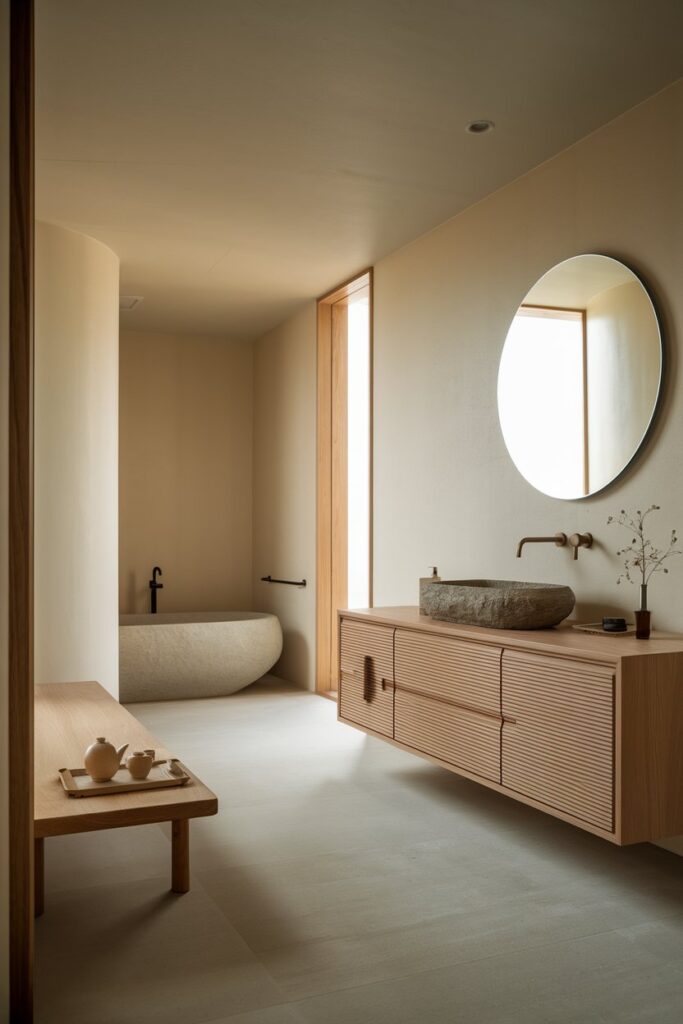
Begin with a neutral foundation using warm whites, soft greys, and natural wood tones. These colors create an airy, welcoming canvas, typical of Scandinavian interiors. Layer in Japanese influences through handmade ceramics, delicate décor, and thoughtfully selected accessories that celebrate craftsmanship.
Keep the layout simple and uncluttered. Floating vanities, open shelving, and minimalist fixtures maintain a sense of openness. Meanwhile, Japanese-inspired details—like textured tiles, subtle curves, or organic shapes—introduce elegance and quiet beauty.
Natural lighting, soft textiles, and greenery further enhance the calming atmosphere. Together, these elements create a harmonious blend of functionality and artistry. The result is a Japandi bathroom that feels peaceful, modern, and deeply connected to nature—perfect for homeowners seeking both simplicity and soul.
26. Soft Curves and Rounded Forms in Japandi Decor
Soft curves and rounded forms play an essential role in creating the calm, fluid movement that defines Japandi design. These gentle shapes soften the clean, angular lines common in minimalist interiors, adding warmth and a sense of natural ease. Incorporating round elements helps the bathroom feel more inviting and harmonious.
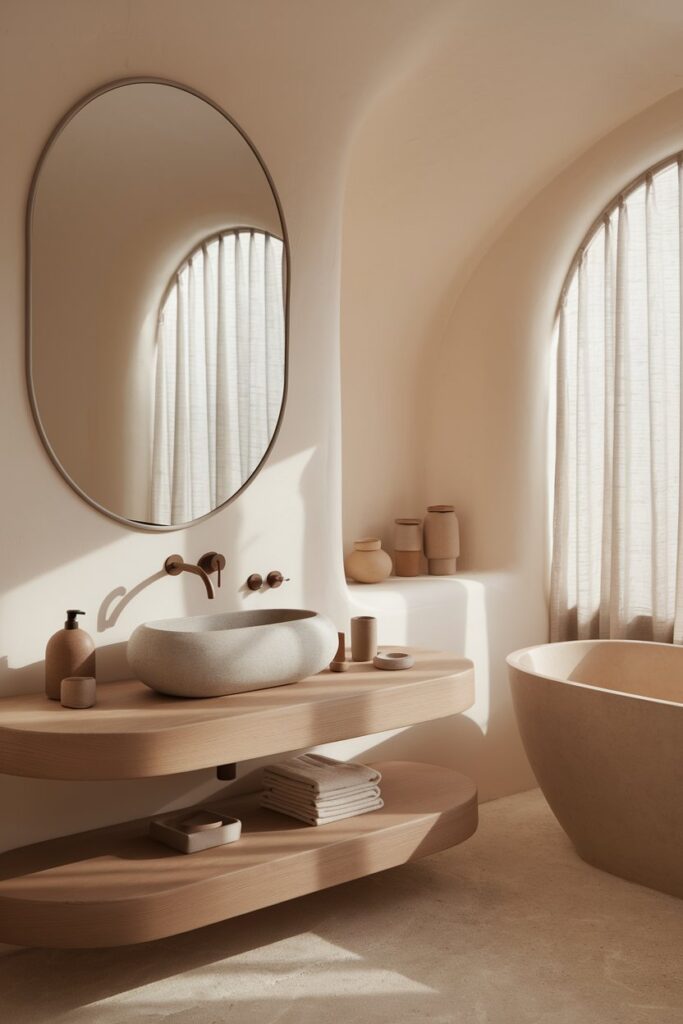
Consider using circular mirrors, curved vanities, or oval vessel sinks to introduce these softer silhouettes. Their organic forms bring visual balance to the room and create a soothing rhythm that encourages relaxation. Even subtle touches—like rounded soap dishes or gently arched faucets—contribute to this serene atmosphere.
Rounded furniture and accessories also align beautifully with Japanese wabi-sabi principles, celebrating form, simplicity, and imperfection. These pieces evoke a handcrafted aesthetic that enhances the overall authenticity of the space.
Keep the color palette subdued to emphasize the calming effect of the curves. Light woods, muted neutrals, and soft lighting accentuate the gentle shapes without overwhelming the minimalist foundation. Together, these elements create a Japandi bathroom that feels peaceful, elegant, and thoughtfully composed.
27. Large Windows for Natural Light in a Japandi Bathroom
Large windows bring an invaluable sense of openness, warmth, and serenity to a Japandi bathroom. Natural light enhances the organic materials and soft neutral palette, making the entire space feel airy and rejuvenating. This connection to the outdoors aligns perfectly with both Japanese and Scandinavian design philosophies.
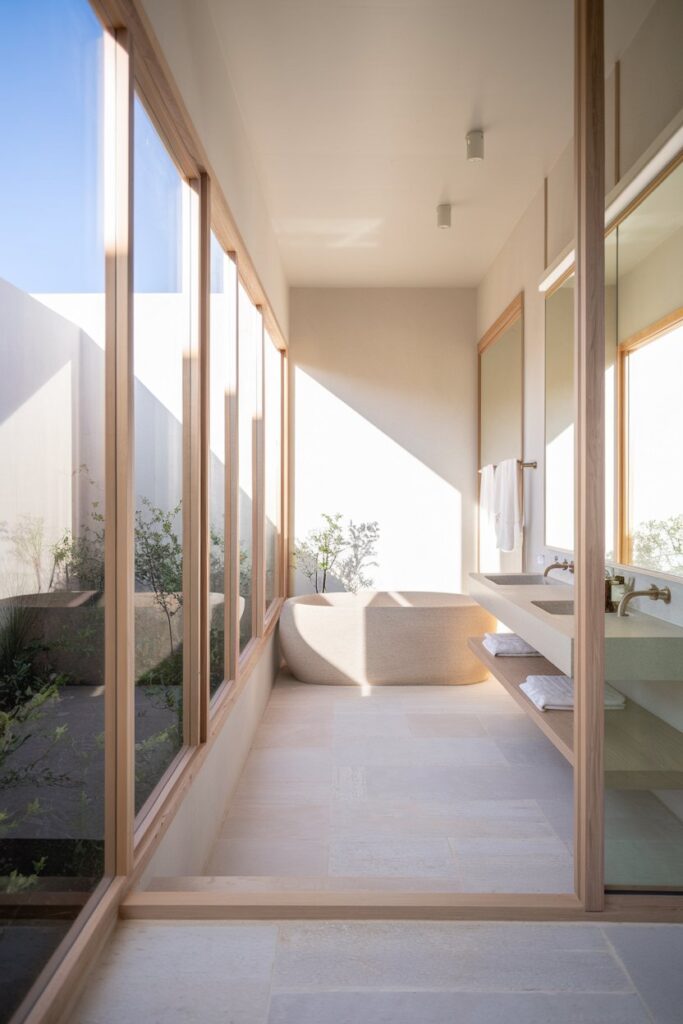
Floor-to-ceiling windows or wide horizontal openings allow sunlight to filter in throughout the day, creating a soothing interplay of light and shadow. If privacy is a concern, frosted glass, slatted screens, or bamboo blinds can maintain seclusion while preserving the soft glow.
The natural light highlights textures like stone flooring, wood accents, and linen textiles, making each material feel more tactile and alive. Plants also thrive in this environment, adding a refreshing touch of greenery that brings the bathroom closer to nature.
With ample daylight illuminating the space, the bathroom feels more spacious, calm, and thoughtfully designed. Large windows turn the room into a tranquil sanctuary where homeowners can unwind while feeling connected to the natural world.
28. Neutral Patterned Tiles with Japandi Vibes
Neutral patterned tiles add subtle character to a Japandi bathroom while maintaining its clean, calming aesthetic. Soft patterns in beige, sand, white, or muted grey bring visual interest without overwhelming the minimalist design. These tiles introduce gentle movement and texture, reflecting both Scandinavian and Japanese appreciation for understated beauty.
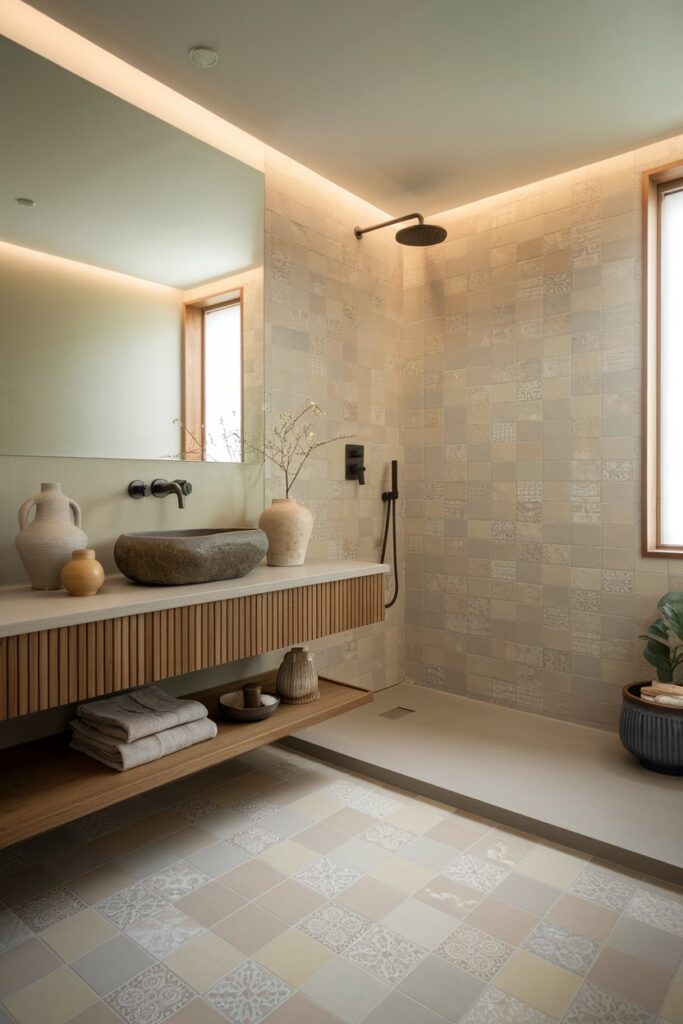
Look for patterns inspired by nature—wave-like textures, soft geometrics, or organic linework. These designs work wonderfully on bathroom floors, shower walls, or backsplash areas. Because the patterns are subtle, they complement the Japandi palette rather than competing with it.
Pair the tiles with natural materials like oak wood, stone basins, or matte black accents to create balance. The combination enhances the bathroom’s warmth and grounding feel, ensuring the space remains serene and cohesive.
Soft lighting can elevate the tile patterns even further, creating delicate shadows that highlight their craftsmanship. Neutral patterned tiles allow homeowners to add personality to their Japandi bathroom in a way that feels elegant, timeless, and authentic.
29. Japandi Bathroom with Double Vanity Setup
A double vanity setup brings both practicality and beauty to a Japandi bathroom, making it ideal for shared spaces. The clean, symmetrical layout enhances daily routines while maintaining the simplicity and calm that define Japandi design. With thoughtful material choices, the double vanity becomes a focal point of natural elegance.
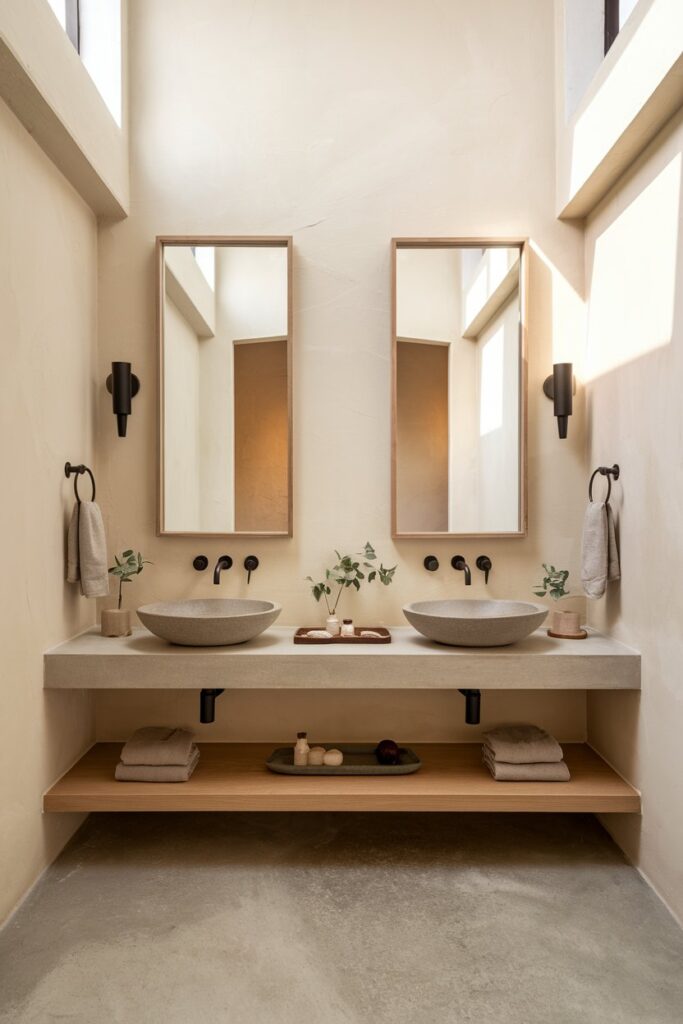
Choose a vanity crafted from light or warm-toned wood to reflect the Japandi preference for natural materials. Floating styles work exceptionally well, offering the illusion of more space and keeping the room open and airy. Pair the vanity with matte basins and minimalist hardware to preserve the serene aesthetic.
Separate mirrors—ideally with thin frames or rounded edges—add balance and harmony to the setup. Soft accent lighting above or behind the mirrors creates a gentle glow that enhances the relaxing atmosphere.
With two sinks and ample storage, the double vanity is both functional and visually appealing. It encourages organization and reduces clutter, supporting the Japandi philosophy of purposeful living. This setup offers homeowners an elegant, efficient foundation for a calming bathroom experience.
30. Calming Japandi Bathroom with Subtle Aromatherapy Elements
A calming Japandi bathroom becomes even more tranquil when paired with subtle aromatherapy elements. Gentle scents complement the minimalist environment, turning everyday routines into restorative rituals. This sensory layer enhances the spa-like atmosphere that Japandi design naturally encourages.
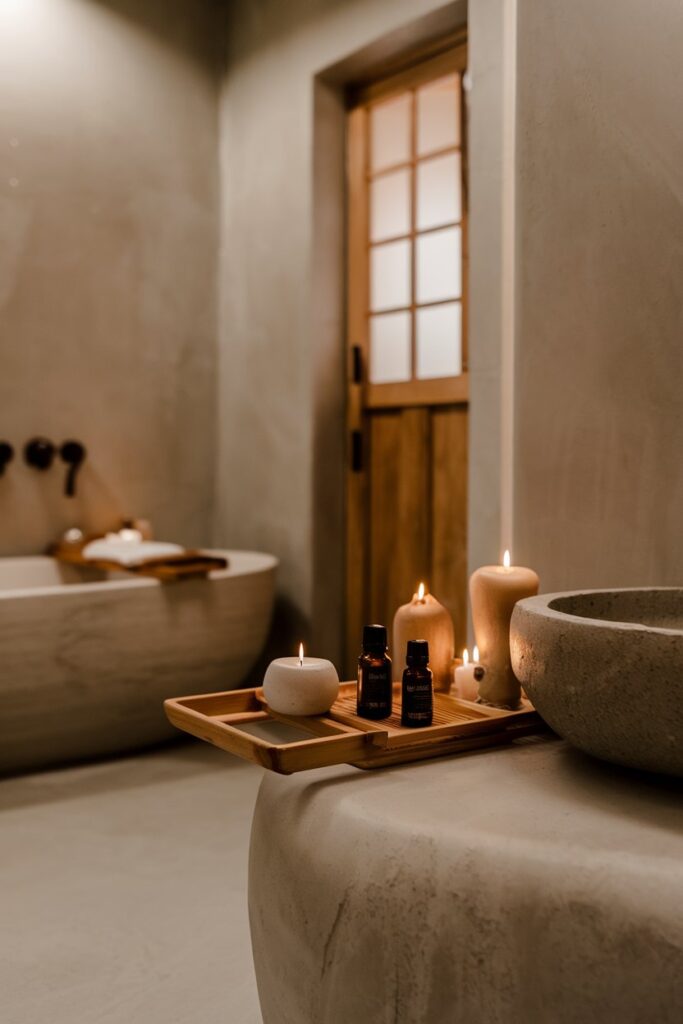
Choose essential oils with earthy, soothing notes such as cedarwood, lavender, eucalyptus, or sandalwood. These scents align beautifully with the natural materials and serene color palette typical of Japandi spaces. Use ceramic diffusers, wooden reed diffusers, or small oil burners to maintain the minimalist look.
Aromatherapy pairs perfectly with natural textures like linen towels, wooden accessories, and stone surfaces. Together, these elements create a multisensory experience that feels grounded and peaceful. Even simple touches—a eucalyptus bundle in the shower or a soy candle near the vanity—can elevate the bathroom’s ambiance.
Keep the fragrances subtle rather than strong. The goal is to enhance the environment gently, allowing the bathroom’s natural beauty to remain the focus. With aromatherapy woven seamlessly into the design, the Japandi bathroom becomes an oasis of calm, encouraging mindfulness and relaxation.
Key Takeaways
- Japandi design blends Japanese serenity with Scandinavian simplicity, creating bathrooms that feel calm, warm, and intentionally minimal.
- Natural materials like wood, stone, and bamboo are essential for achieving the signature organic and grounded Japandi aesthetic.
- A neutral color palette of whites, beiges, greys, and earthy tones forms the foundation of a soothing and harmonious bathroom environment.
- Soft lighting, textured textiles, and subtle aromatherapy elevate the bathroom into a spa-like retreat focused on wellness and relaxation.
- Clean lines, clutter-free surfaces, and functional layouts highlight the minimalist principles central to both Japanese and Scandinavian design.
- Matte black accents and thoughtfully placed contrast elements can add depth without breaking the calm, balanced atmosphere.
- Nature-inspired details—from indoor plants to natural light and organic shapes – enhance the feeling of tranquility while reinforcing Japandi’s timeless appeal.