30 Grey Bathroom Ideas That Prove Neutral Can Be Stunning

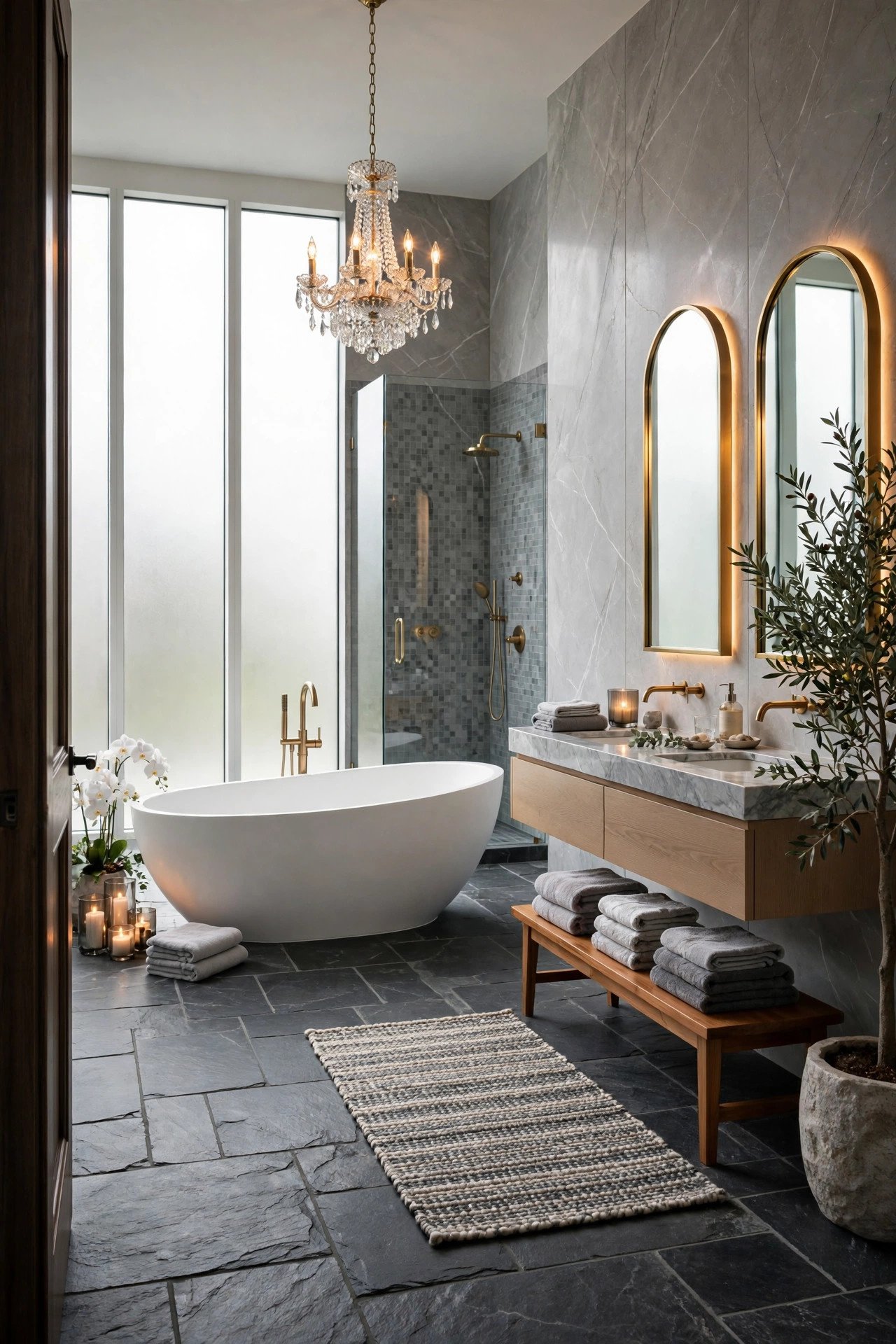
Grey might be the most misunderstood color in home design. Too often it is dismissed as cold, flat, or boring, yet in the bathroom it becomes something quietly extraordinary. A grey bathroom feels calm at six in the morning and sophisticated at midnight. It hides water spots better than white, it photographs beautifully, and it never shouts for attention, which means every fixture, tile, and texture you choose gets its moment. From pale dove that opens up a powder room to deep charcoal that turns a master bath into a moody retreat, grey spans an enormous range of moods without ever feeling trendy in a way you will regret. It pairs with marble, wood, brass, black, and greenery alike, so it works with whatever fixtures you already own. This collection gathers thirty distinct grey bathroom ideas, each one a complete design direction you can borrow, adapt, or mix with another. Whether you are planning a full renovation or simply refreshing what is there, you will find shades, materials, and layouts that prove neutral can be anything but boring. Take your time, save your favorites, and imagine each one in your own space, because the right grey is out there waiting for you.
1. Light Grey Subway Tile Elegance
Classic subway tile in a soft light grey is one of the safest and prettiest choices you can make for a bathroom. The familiar brick pattern keeps the walls feeling bright and airy, while the grey tone adds depth that plain white tile simply cannot offer.
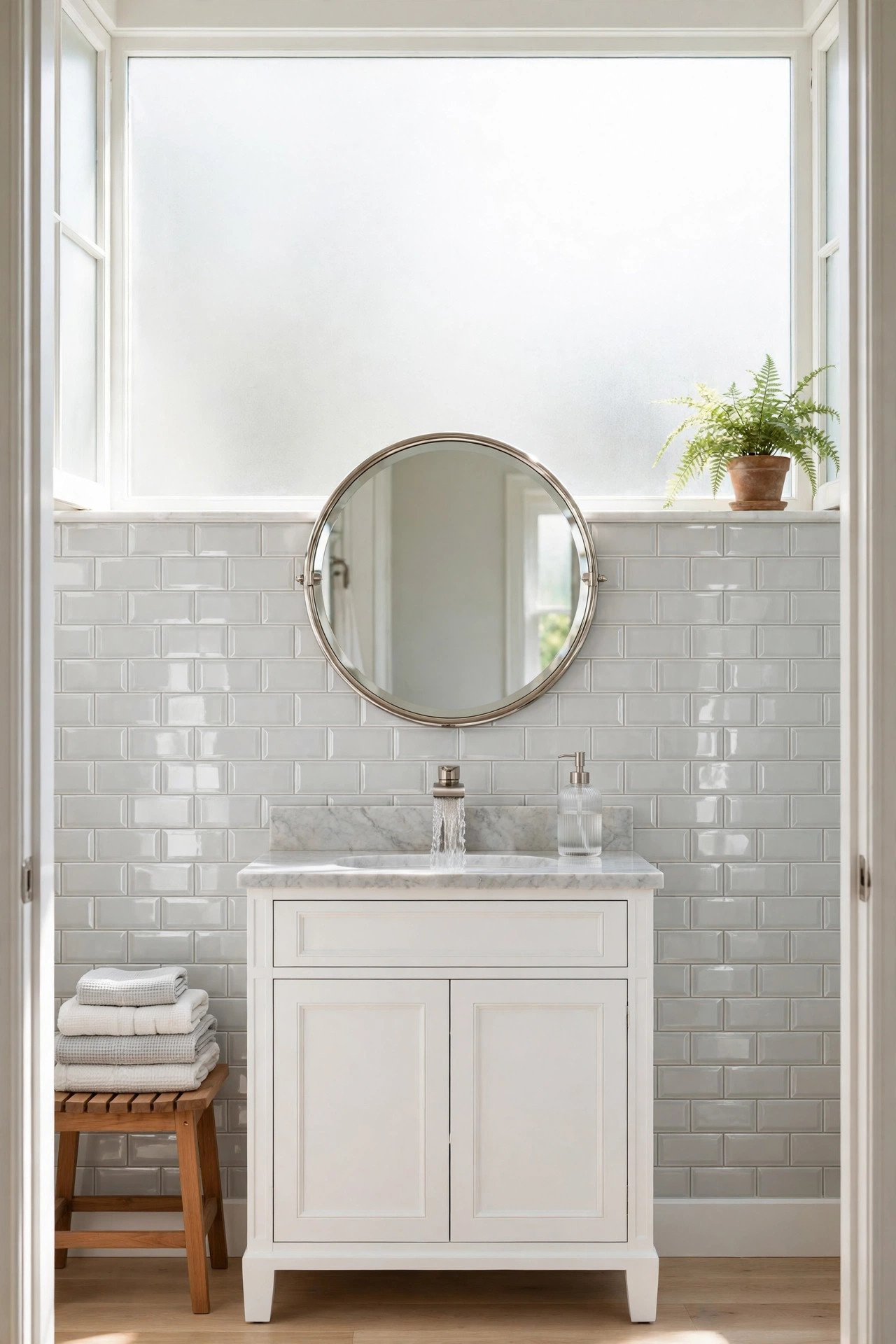
Lay the tiles in a traditional running bond for timeless appeal, or turn them vertical for a modern twist that draws the eye upward and makes low ceilings feel taller. A contrasting grout in charcoal will sharpen every line, while matching light grout keeps the surface calm and seamless.
This look shines in showers, behind vanities, and as a full-height feature wall. Pair it with polished chrome fixtures and a crisp white ceiling to keep the palette fresh. Because the tile is so versatile, you can change towels, art, and accessories seasonally without ever clashing.
Homeowners love how forgiving light grey subway tile is in real life. It hides soap residue and water marks far better than stark white, so your bathroom looks cleaner between scrubbings.
For a designer finish, add a pencil-thin marble border or a row of handmade-look tiles at eye level. These small details elevate a budget-friendly material into something that feels custom and considered.
2. Charcoal Grey Statement Wall
If your bathroom feels bland, one charcoal grey wall can change everything. Deep, dramatic, and endlessly flattering, a charcoal statement wall anchors the room and makes everything around it look more expensive.
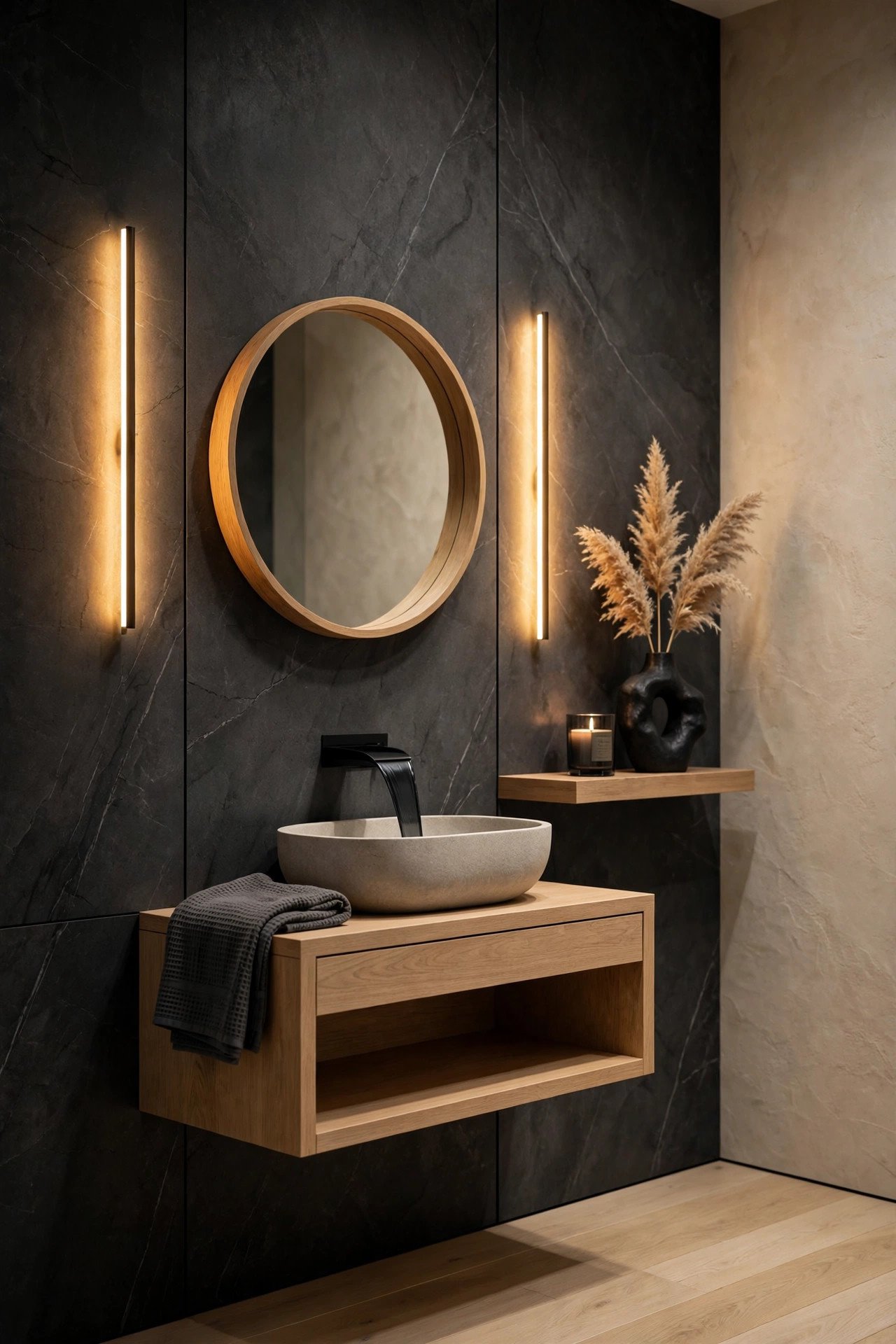
Choose the wall behind the vanity or the freestanding tub so the drama lands where you look most. Matte paint gives a velvety, chalk-like finish, while moisture-rated satin stands up better in steamy zones. Either way, the depth of the color turns an ordinary wall into a backdrop for mirrors, art, and light.
Balance is everything with dark walls. Keep the remaining walls light, bring in warm wood or brass accents, and make sure your lighting is generous. Wall sconces flanking the mirror will wash the charcoal with glow and keep it from feeling heavy.
Charcoal also photographs beautifully, which is a quiet bonus if you ever sell. It reads as sophisticated rather than personal, and buyers remember the bathroom with the dramatic wall.


To soften the look, layer in texture: a woven shade, a eucalyptus sprig in a vase, or a plush charcoal bath mat. These touches keep the statement wall feeling styled rather than stark, and they make the whole room feel intentional.
3. Grey Marble Vanity Luxe
Few materials say luxury like grey marble on a vanity. Softly veined Carrara-style stone or dramatic grey-veined quartz brings a five-star hotel feeling into an ordinary morning routine, and it never goes out of style.
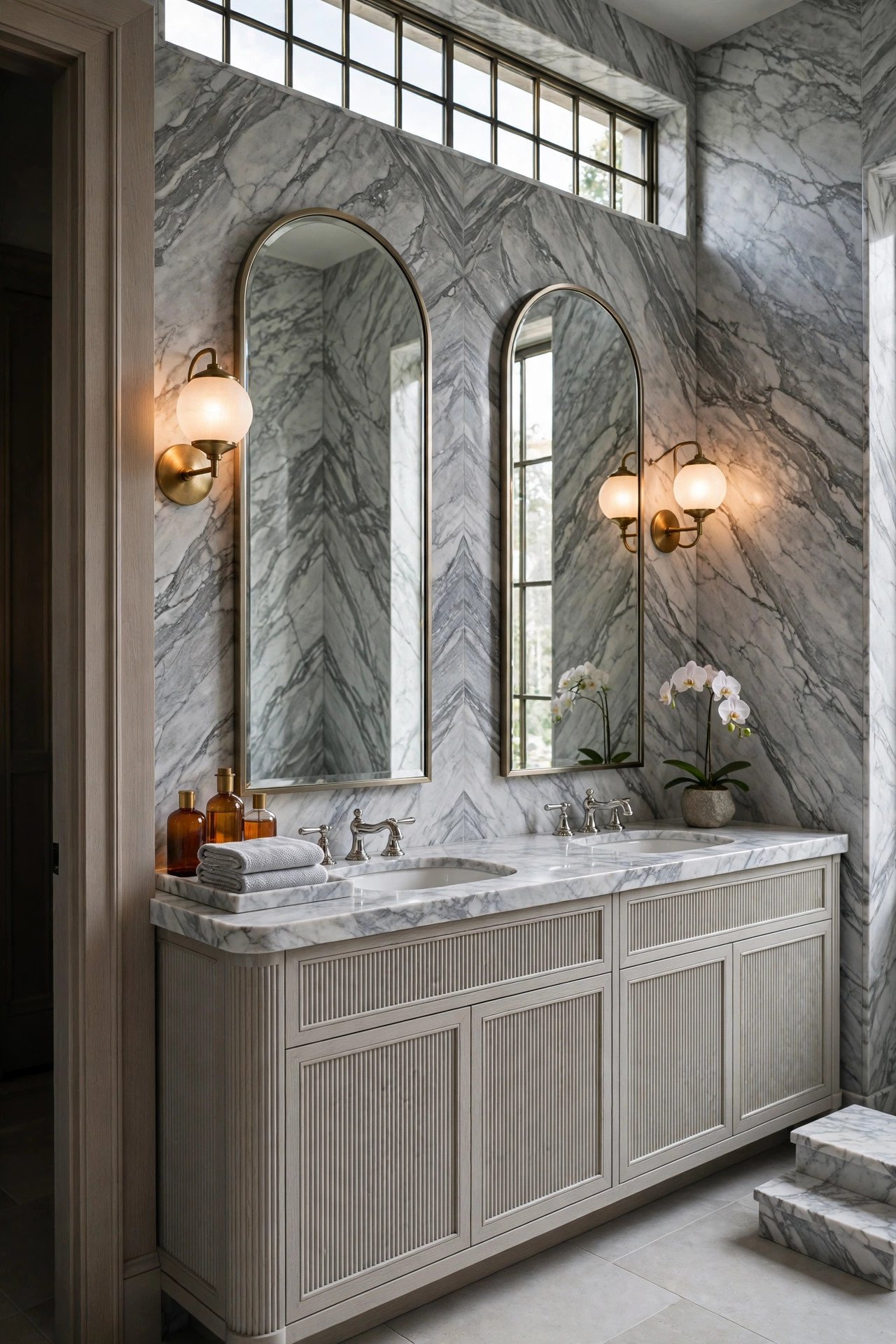
Use the marble for the countertop and extend it up the wall as a backsplash for a seamless, high-end look. Honed finishes feel modern and hide etches better than polished, which matters around toothpaste and cosmetics. If real stone is out of budget, porcelain slabs printed with marble veining deliver the same drama at a fraction of the cost.
Let the vanity stone be the star. Keep the cabinetry below in a quiet tone like warm white or soft greige, and choose simple hardware so the veining stays the focus. A vessel or undermount sink in white porcelain keeps the palette crisp.
Maintenance is simpler than its reputation suggests. Seal natural marble once a year, wipe spills promptly, and use gentle cleaners. With those small habits, a grey marble vanity will look beautiful for decades.
For extra indulgence, add a matching marble shelf above the toilet or a small marble tray on the counter. Repeating the stone in two or three spots makes the bathroom feel designed by a professional, not decorated by accident.
4. Concrete Grey Industrial Style
Concrete-look grey surfaces give a bathroom an industrial edge that feels honest and modern. Board-formed texture, soft mottling, and a cool matte finish turn walls and floors into architecture rather than decoration.
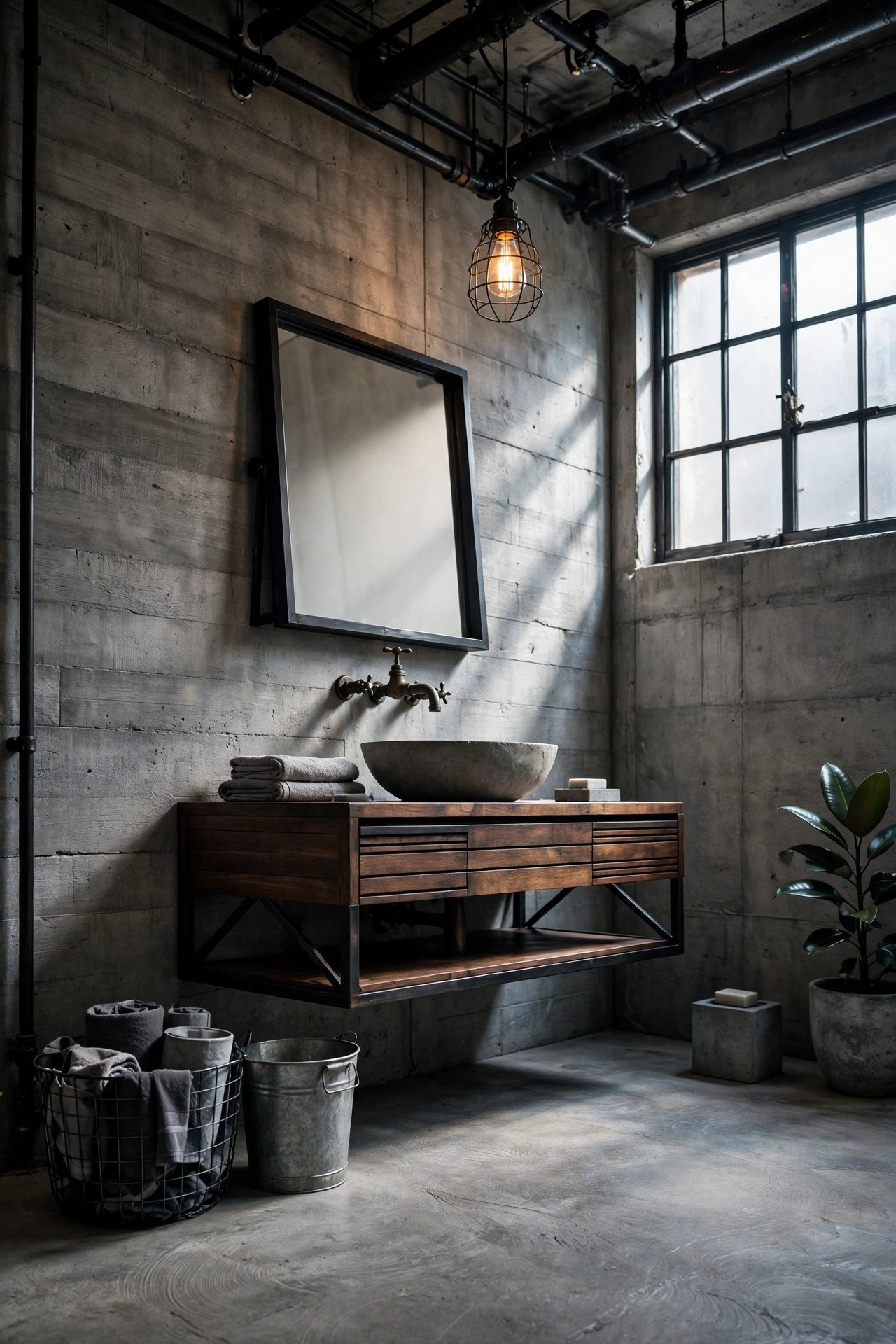
You do not need to pour actual concrete to get the look. Large-format porcelain tiles mimic poured concrete convincingly, and microcement coatings can be troweled right over existing tile for a renovation-friendly update. Both are waterproof, durable, and surprisingly warm underfoot when paired with the right lighting.
Style an industrial grey bathroom with black metal fixtures, exposed-bulb sconces, and a simple wall-hung vanity. Keep the palette tight: concrete grey, black, and one warm material like oak shelving or a teak bath stool to take the chill off.
This style suits busy households because it hides wear beautifully. Scuffs and patina only add character, so you can relax instead of fussing over every mark.
Add one soft element to balance the hard surfaces, such as a thick waffle-weave towel or a frosted glass shower panel. The contrast between rough concrete and soft textile is exactly what makes industrial bathrooms feel curated instead of cold.
5. Warm Greige Shiplap Charm
Greige, that perfect blend of grey and beige, brings warmth to the cool side of the spectrum. On shiplap walls it feels coastal, cottage, and completely welcoming, like a deep breath the moment you walk in.
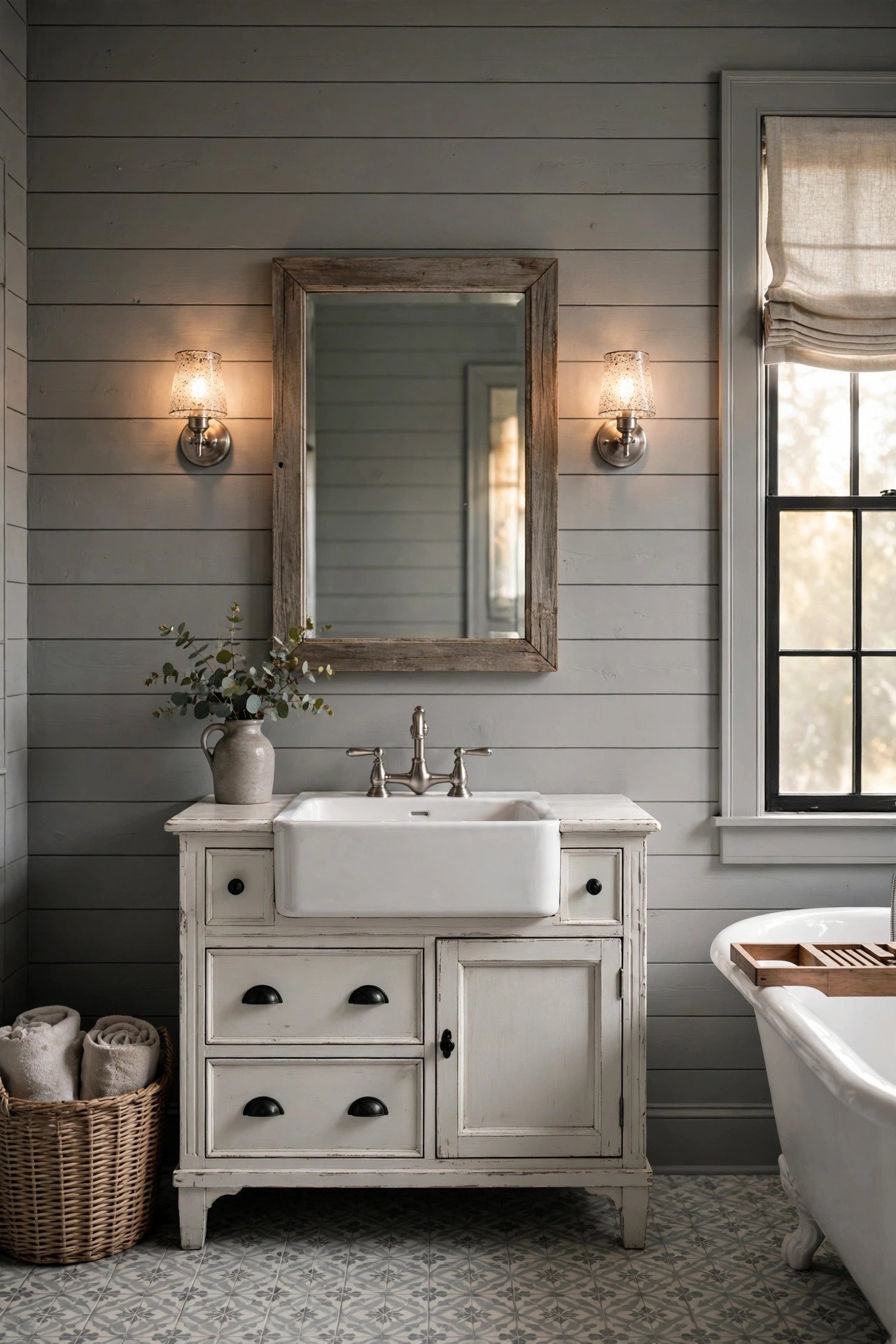
Run the shiplap horizontally to make a narrow bathroom feel wider, or vertically to add height. Paint it in a warm greige and let the shadow lines do the decorating. The texture catches light beautifully and gives flat drywall walls instant character.
Pair greige shiplap with brushed nickel or matte black fixtures, a simple white vanity, and natural fiber storage baskets. The palette stays neutral but never boring, because the undertones do the quiet work of keeping everything cohesive.
This is a wonderful choice for a guest bathroom. It feels clean and fresh without the sterile edge that all-white rooms can have, and guests will find it instantly comfortable.
Finish the look with soft lighting and a hint of greenery. A small potted plant on the vanity or a eucalyptus bundle on the showerhead picks up the warmth in the greige and makes the whole space feel alive and cared for.
6. Grey and White Minimalist Spa
A grey and white bathroom done with restraint feels like a private spa. The secret is not minimalism for its own sake, but choosing fewer things and letting each one be beautiful.
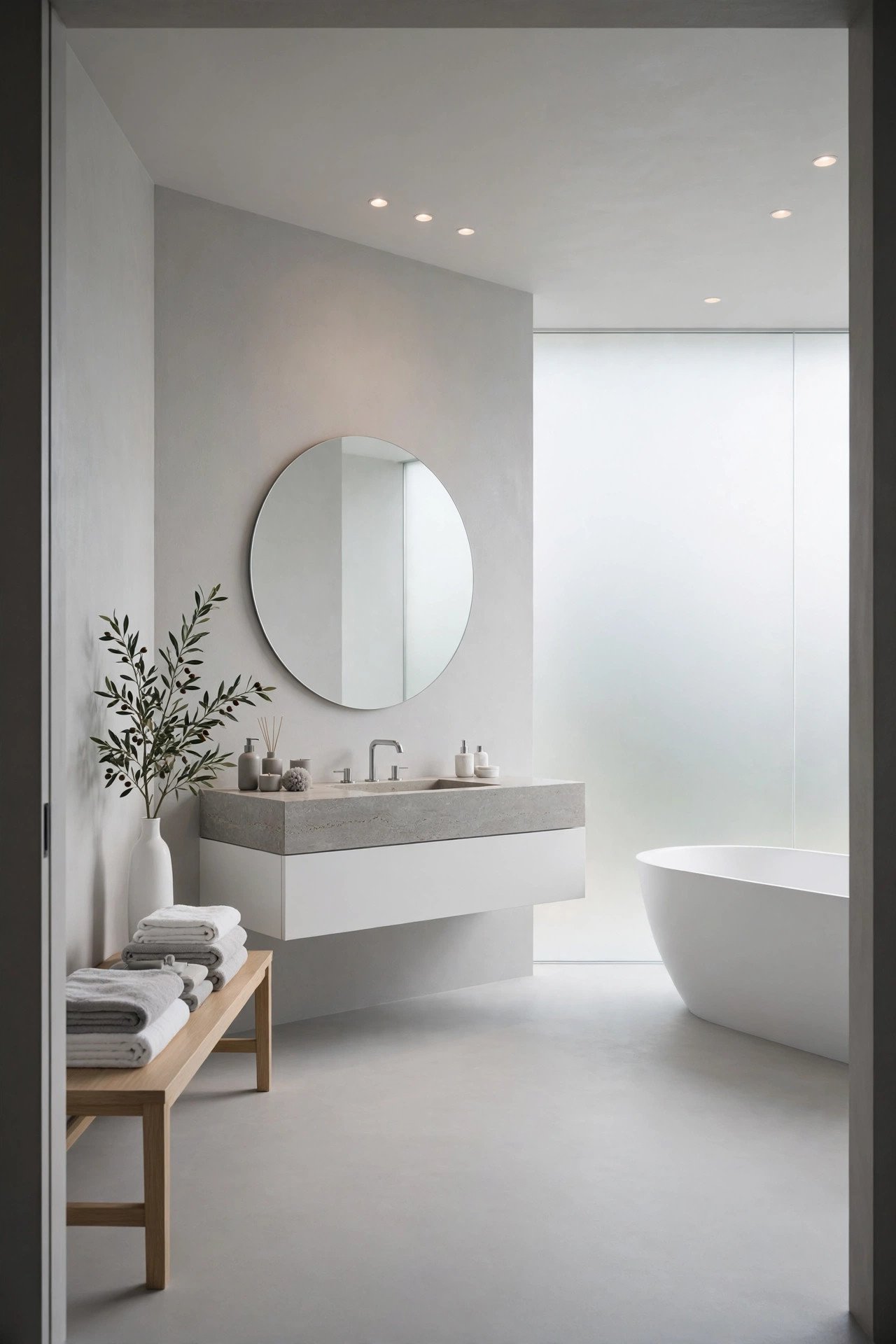
Start with large white or pale grey wall tiles and a soft grey floor. Keep the vanity floating and handle-free, hide clutter behind closed storage, and choose one sculptural element, like a freestanding tub or a round vessel sink, as the focal point. Negative space becomes part of the design.
Texture keeps minimalism from feeling empty. Layer a nubby bath mat, folded waffle towels, a wooden bath tray, and frosted glass. Each surface invites touch, which is exactly what a spa should do.
Lighting matters enormously in a minimalist scheme. A dimmable overhead plus warm sconces lets you shift from bright morning routines to a candlelit soak in seconds. If you can add one, a small skylight or frosted window makes the grey tones glow naturally.
Edit ruthlessly and then stop. One plant, one piece of art, one beautiful soap dispenser. In a grey and white spa bathroom, every object earns its place, and the calm you feel is the reward for that discipline.
7. Dark Grey Moody Retreat
Dark grey walls, dimmable lights, and rich textures can turn a master bathroom into the most relaxing room in the house. This is not a gloomy cave; it is a cocoon, and it works beautifully for evening soaks and slow weekend mornings.
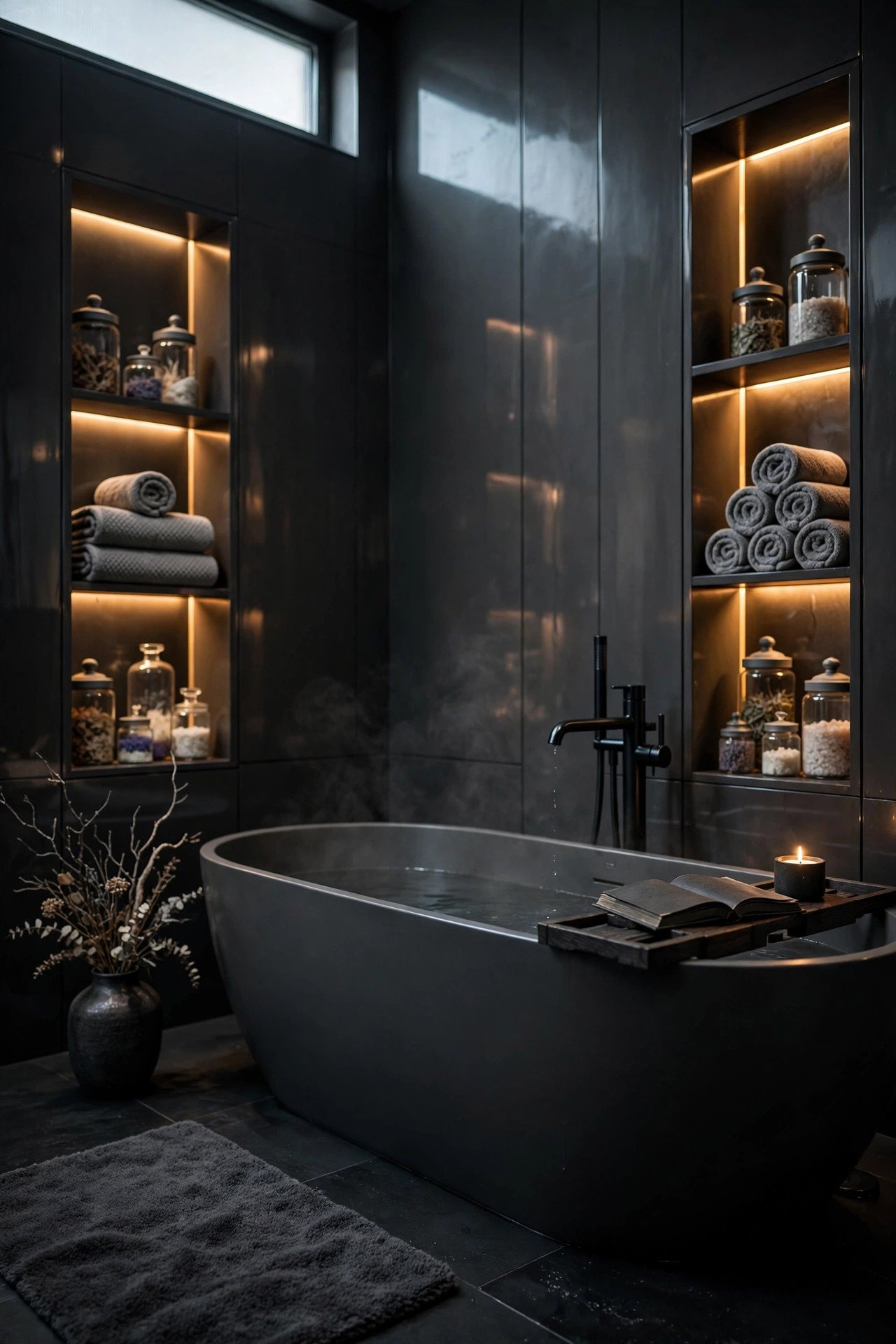
Choose a grey with warm undertones so the darkness feels enveloping rather than cold. Paint all four walls, or tile floor to ceiling in a smoky porcelain, then layer in lighter elements, a white tub, pale towels, a light wood stool, to keep the contrast gentle.
Metallics are the jewelry of a moody bathroom. Brushed brass or aged bronze sconces and faucets catch the light and warm the whole room. A large mirror doubles the glow and keeps the space from feeling closed in.
Plants thrive visually against dark grey. The green pops, the leaves look sculptural, and the whole room feels alive. Choose humidity-loving varieties and place them where they catch the mirror light.
Finish with scent and sound: a candle, a small speaker, a stack of thick towels on a heated rail. A moody grey retreat engages every sense, which is why it feels less like a bathroom and more like an escape you never have to leave home to find.
8. Grey Herringbone Floor Tiles
A herringbone floor in grey tile is pure quiet luxury. The zigzag pattern adds movement and craftsmanship to a surface most people ignore, and grey keeps it sophisticated rather than busy.
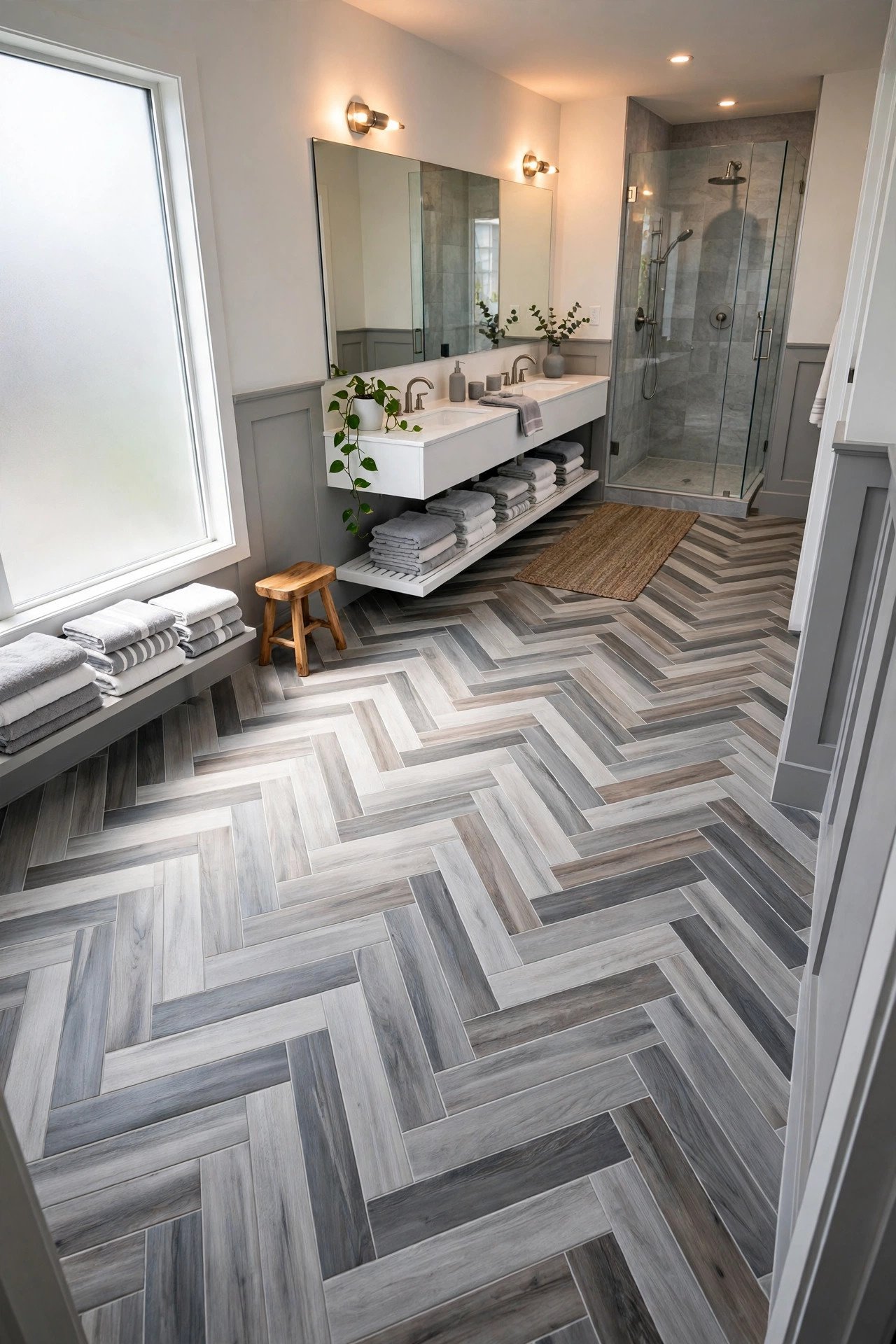
Small-format porcelain planks or classic rectangular tiles both work. Mid-tone greys show the pattern best, while pale greys feel airy and charcoal feels dramatic. Keep the grout close to the tile color so the herringbone reads as texture rather than a grid.
Because the floor does the talking, keep the rest of the room simple: flat-front vanity, plain wall tile, unfussy fixtures. The contrast between the lively floor and calm walls is exactly what makes this design sing.
Herringbone is also practical. The pattern disguises dirt and the small grout lines of porcelain are easy to maintain. It is a floor that looks better the longer you live with it.
If a full herringbone floor feels like a commitment, try it in a powder room first. A small space lets you enjoy the pattern at its most jewel-like, and it is the perfect preview before you commit to a larger renovation.
9. Two-Tone Grey Vanity Cabinets
Two-tone vanities, where the cabinet color differs from the countertop or where upper and lower sections contrast, add custom-cabinetry character to a grey bathroom. The look feels tailored and far more interesting than a single flat color.
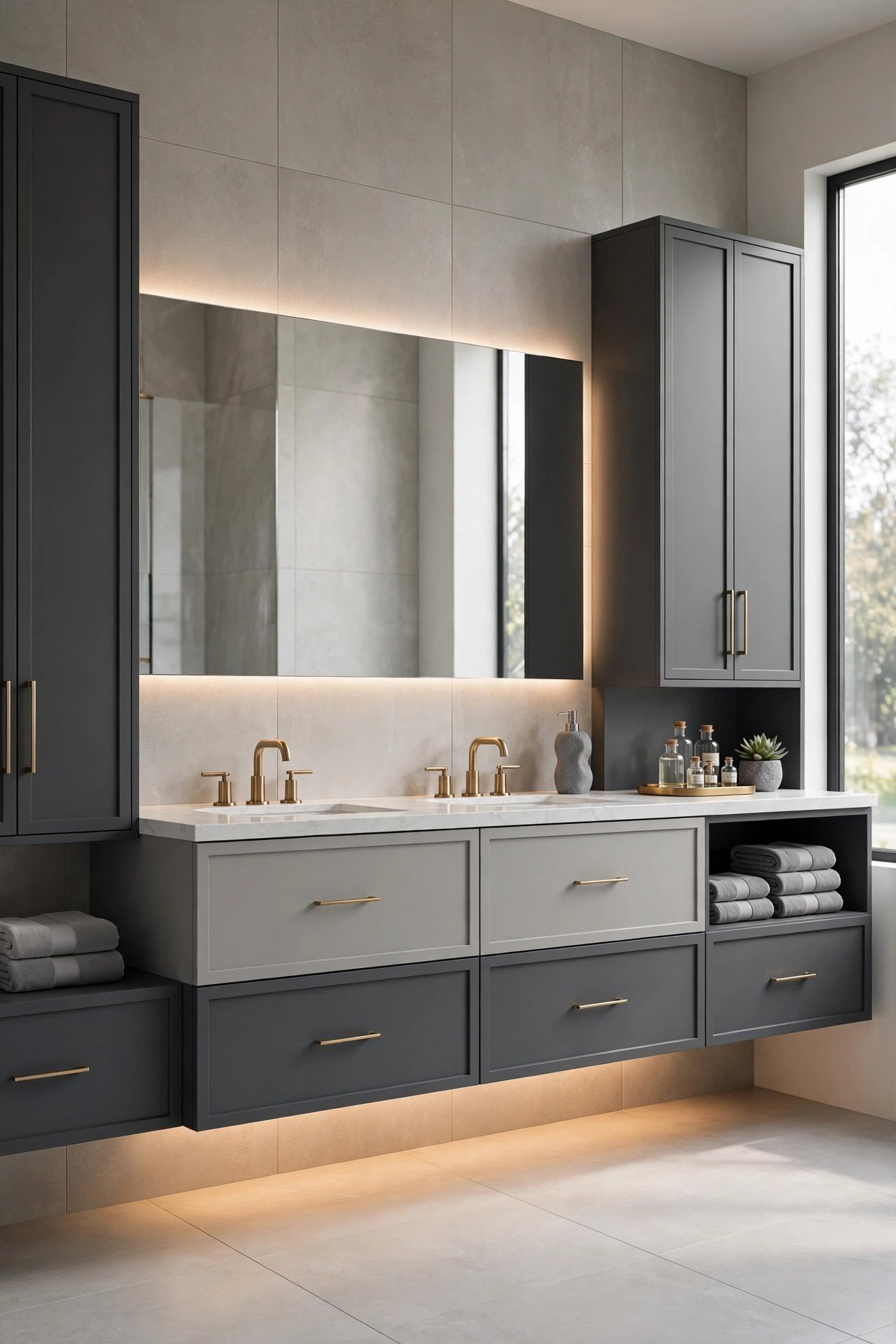
Try a soft grey-blue lower cabinet with a warm white upper, or a charcoal base with a pale grey countertop. The darker tone grounds the room while the lighter tone keeps it bright. Keep hardware consistent across both tones so the pairing feels deliberate.
This approach is brilliant for budget renovations. Painting an existing vanity in a new grey tone, or refacing just the doors, delivers a designer look without the cost of full replacement. A weekend of prep and paint can transform the whole room.
Balance the two tones elsewhere in the space. Echo the darker tone in the mirror frame or floor tile, and repeat the lighter tone in the walls or towels. Repetition is what makes two-tone feel cohesive instead of random.
Finish with thoughtful styling: a tray to corral daily items, a small stack of hand towels, and one decorative object. A styled two-tone vanity looks like it came from a showroom, and it becomes the detail guests ask about.
10. Silver Grey Fixtures and Faucets
Silver-toned fixtures in brushed nickel, polished chrome, or stainless steel are the natural jewelry for a grey bathroom. They share the same cool family, so everything feels harmonious without any effort.
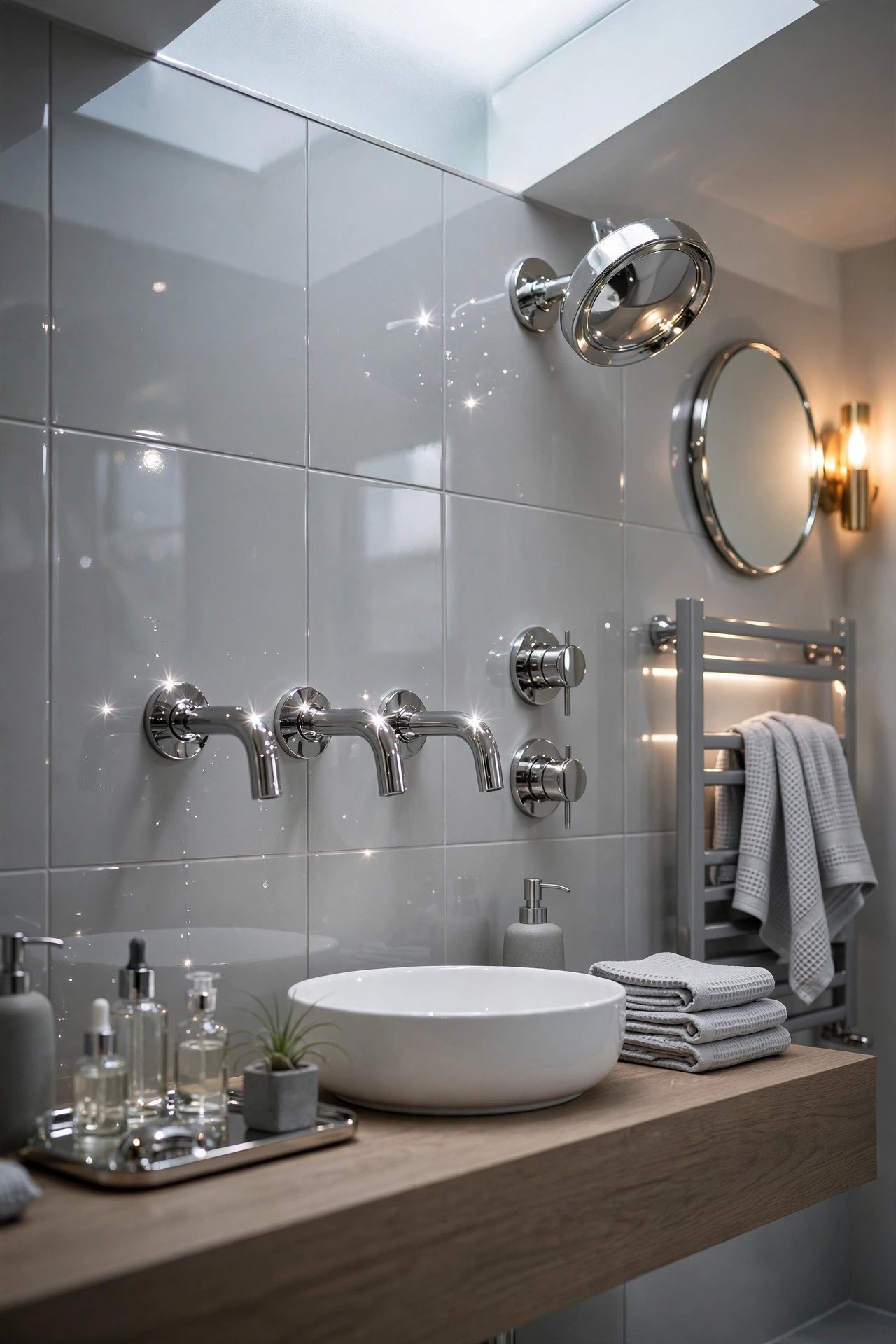
Match your finish across faucets, shower trim, towel bars, and cabinet hardware for a pulled-together look. Brushed finishes hide water spots and fingerprints better than polished, which is a genuine advantage in a hardworking family bathroom.
Use fixtures to set the mood. Polished chrome feels crisp and classic, brushed nickel feels soft and modern, and matte stainless leans industrial. The same grey tile can feel three different ways depending on the metal you choose.
Do not be afraid to let the fixtures be the feature. An arched bridge faucet or a rainfall showerhead in a beautiful silver finish draws the eye and elevates the whole room, especially against a quiet grey backdrop.
Keep them looking new with a quick weekly wipe and a squeegee after showers. Silver finishes are forgiving, and a minute of maintenance keeps them gleaming for years against your grey palette.
11. Grey Penny Tile Shower Niche
Round penny tiles in grey turn a humble shower niche into a piece of art. The mosaic of small circles catches light and water beautifully, and the grey tones make the niche feel intentional rather than utilitarian.
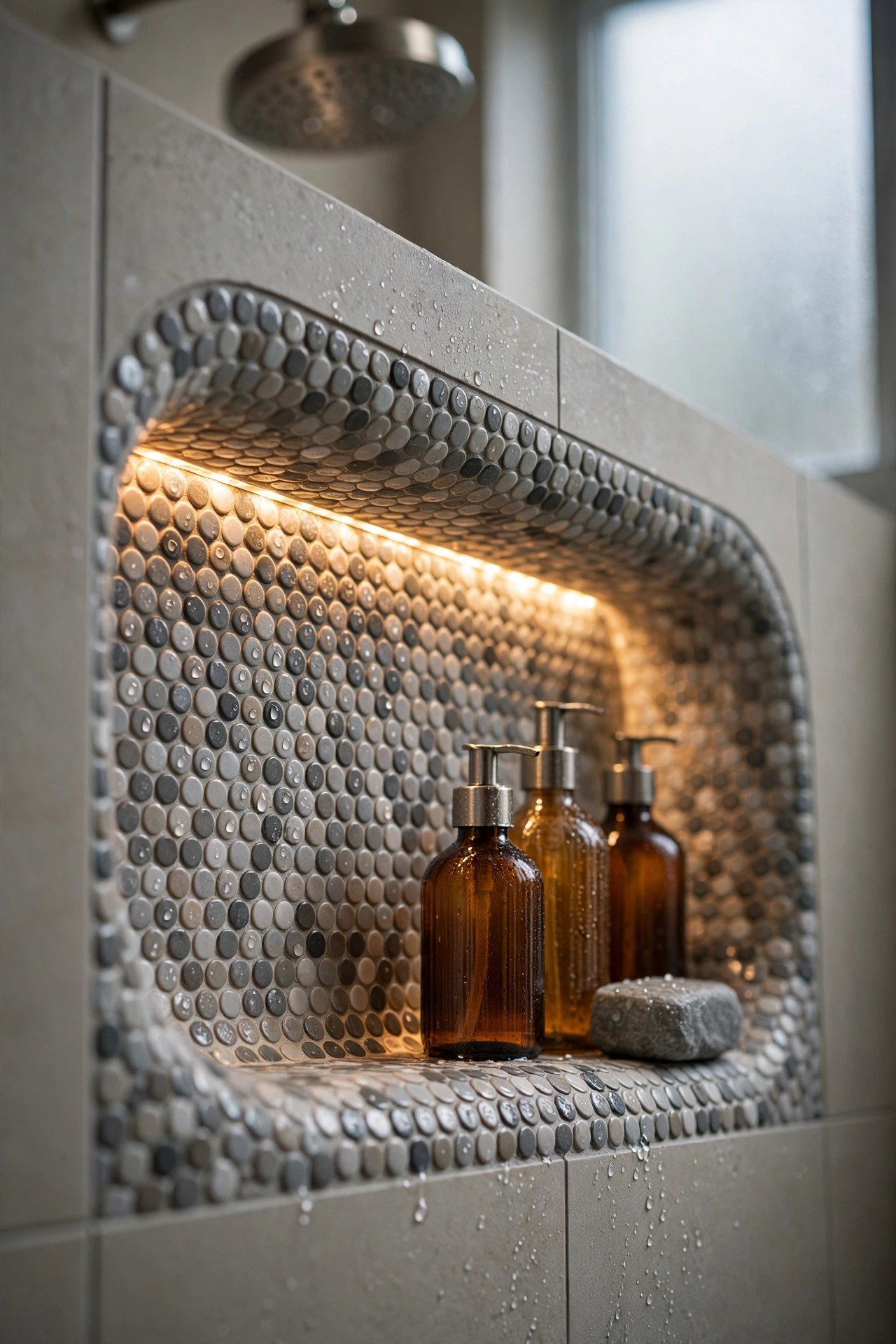
Choose a grey that contrasts slightly with the surrounding shower tile: a shade darker or lighter creates a framed effect that draws the eye. Frosted or matte penny tiles hide soap scum better than glossy ones, and epoxy grout keeps the many grout lines easy to clean.
Size the niche generously if you can. Two rows of bottles need more room than you think, and a niche that is too small ends up cluttered. A wide, low niche also doubles as a design feature, not just storage.
Extend the penny tile beyond the niche for extra impact. A horizontal band of penny tile at eye level around the whole shower, or a penny-tiled shower floor, ties the niche into the larger design.
This is a small upgrade with outsized charm. For the cost of a single sheet or two of mosaic, your shower gains a handcrafted detail that guests notice and you enjoy every single day.
12. Slate Grey Accent Tiles
Slate grey tiles, with their natural cleft texture and shifting tones, bring an organic, earthy depth to a bathroom. No two tiles look exactly alike, which gives the room a handcrafted, one-of-a-kind feeling.
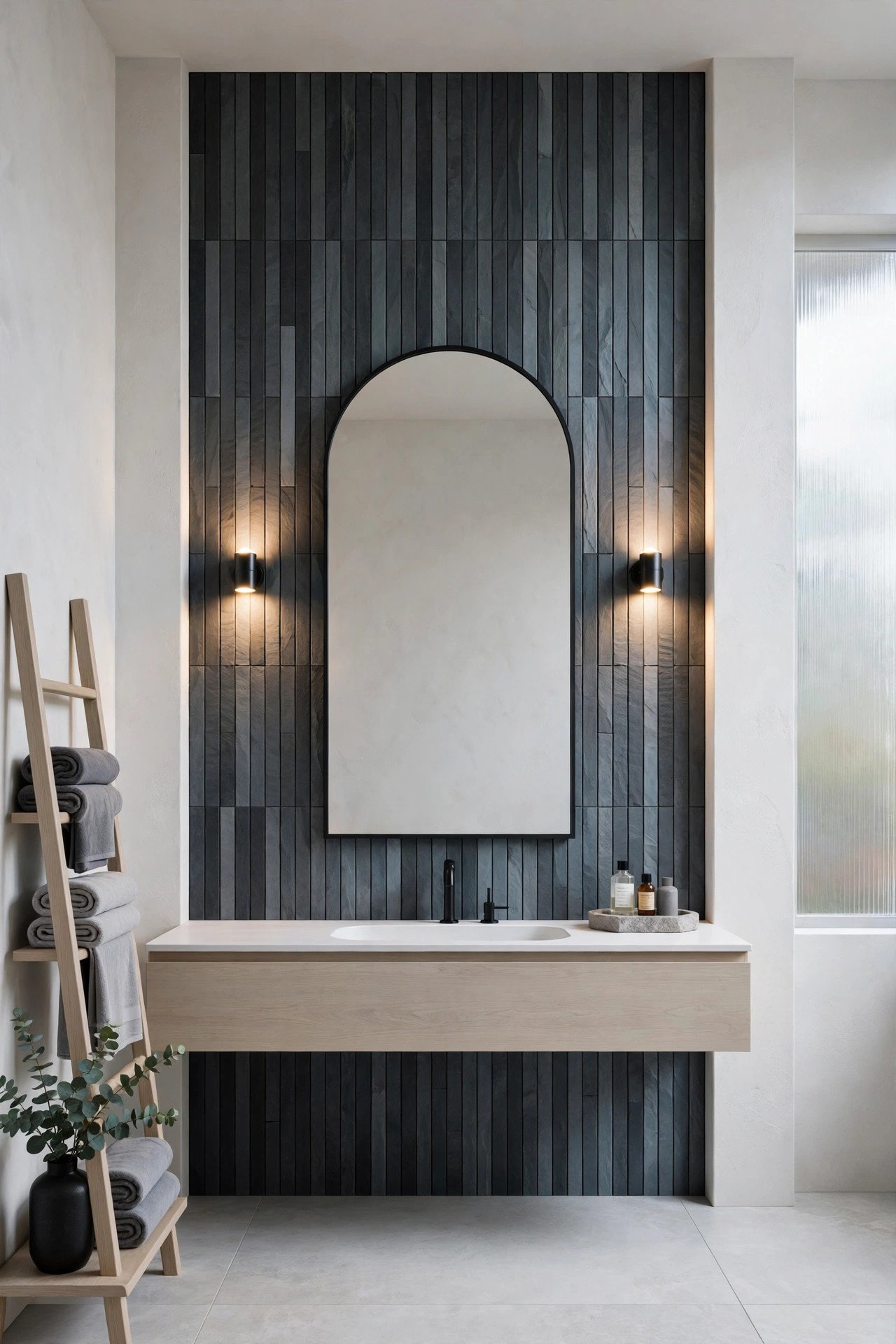
Use slate as an accent rather than everywhere: a shower wall, a tub surround, or a strip behind the vanity. Its texture and variation become a focal point, while quieter surfaces around it let the slate shine. Seal it well, since natural stone needs protection in wet areas.
Pair slate with warm materials to balance its cool, rugged character. A teak bench, woven baskets, or warm white walls keep the room from feeling like a grotto and make the stone feel welcoming.
Slate works beautifully with matte black fixtures and simple, modern forms. The combination feels current and grounded, like a boutique hotel in the mountains.
Lighting will make or break slate. Aim a sconce or recessed light to graze across the surface so the texture casts gentle shadows. That raking light turns a flat wall into a landscape, and it is the detail that makes slate unforgettable.
13. Grey Bathroom With Wood Warmth
Grey and wood are a match made in design heaven. The cool calm of grey and the warm life of wood balance each other perfectly, creating bathrooms that feel both modern and welcoming.
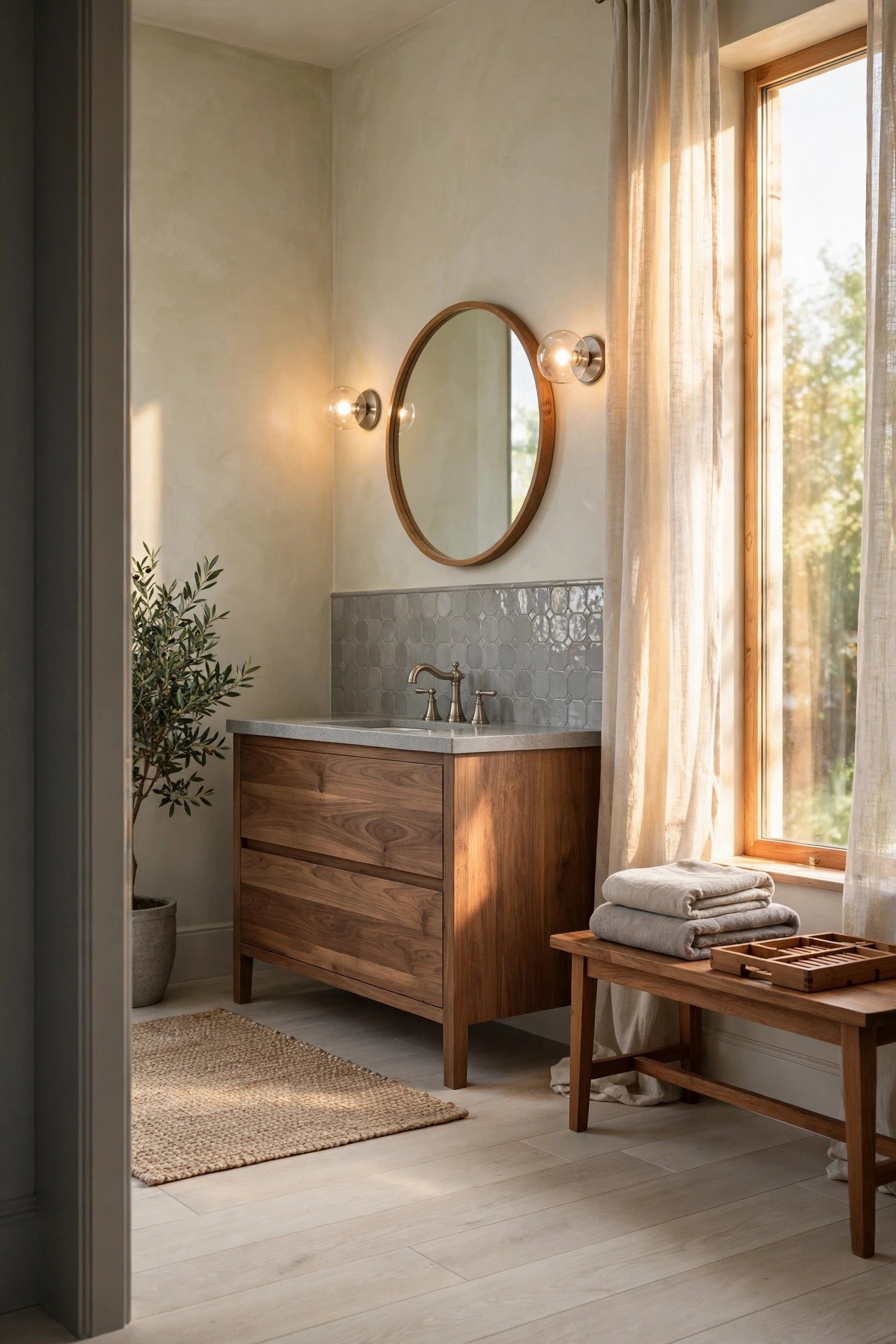
Introduce wood through a floating oak vanity, open cedar shelving, a teak bath mat, or even a wood-look porcelain floor. Each piece adds grain, warmth, and a natural rhythm that softens grey surfaces.
Choose your wood tone with intention. Light oak keeps things Scandinavian and airy, walnut adds richness and drama, and weathered finishes lean coastal or rustic. Any of them will warm up grey tile and stone.
Repeat the wood in at least two places for cohesion: the vanity and a mirror frame, or shelving and a stool. A single wooden item can look accidental; two or more look like a plan.
This pairing is also forgiving across styles. Modern, farmhouse, Japandi, and transitional bathrooms all welcome the grey-plus-wood formula, which means your design will age gracefully as trends come and go.
14. Dove Grey Wainscoting Classic
Dove grey wainscoting brings classic architecture to even the plainest bathroom. The paneled lower wall adds rhythm, shadow, and a tailored finish that paint alone cannot achieve.
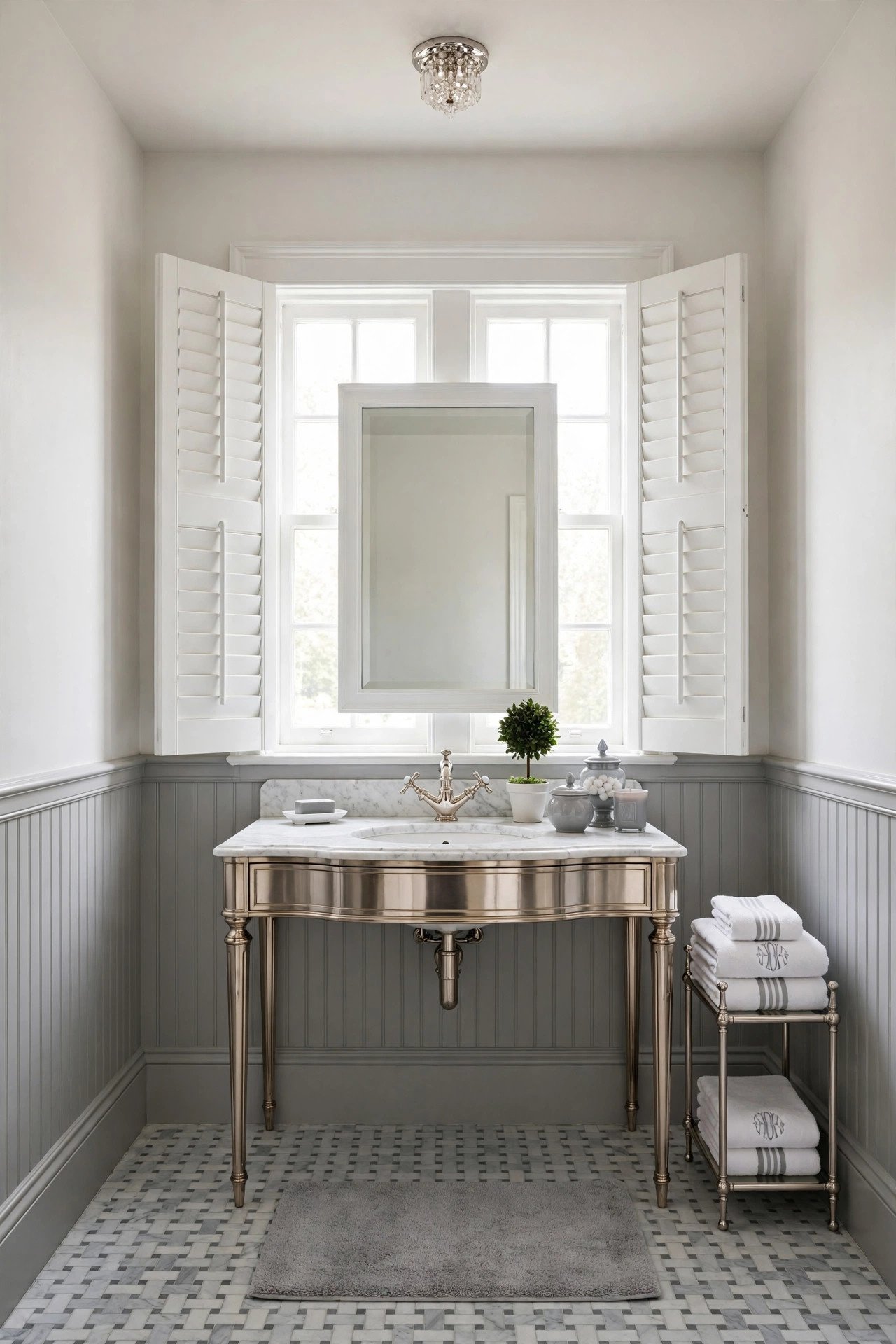
Keep the wainscot at chair-rail height, roughly a third of the wall, and paint the upper wall a soft white or pale grey. The two-tone division makes ceilings feel higher and gives the room a finished, custom-built quality.
This is a perfect weekend project. MDF or PVC beadboard panels, a chair rail, and moisture-rated paint transform a builder-grade bathroom for a modest cost. PVC versions are ideal for wet zones since they will never swell or rot.
Style it traditionally with a pedestal sink and polished nickel, or mix it modern with a floating vanity and matte black fixtures. Dove grey wainscoting is versatile enough to bridge both worlds.
Add simple trim details like a picture-frame molding inside each panel for extra polish. These small carpentry touches read as expensive and permanent, and they make the whole bathroom feel like it was designed with care.
15. Grey Terrazzo Countertops
Terrazzo, with its confetti of stone chips suspended in a grey base, is having a well-deserved revival. It is playful yet sophisticated, durable yet beautiful, and it brings instant personality to a bathroom vanity.
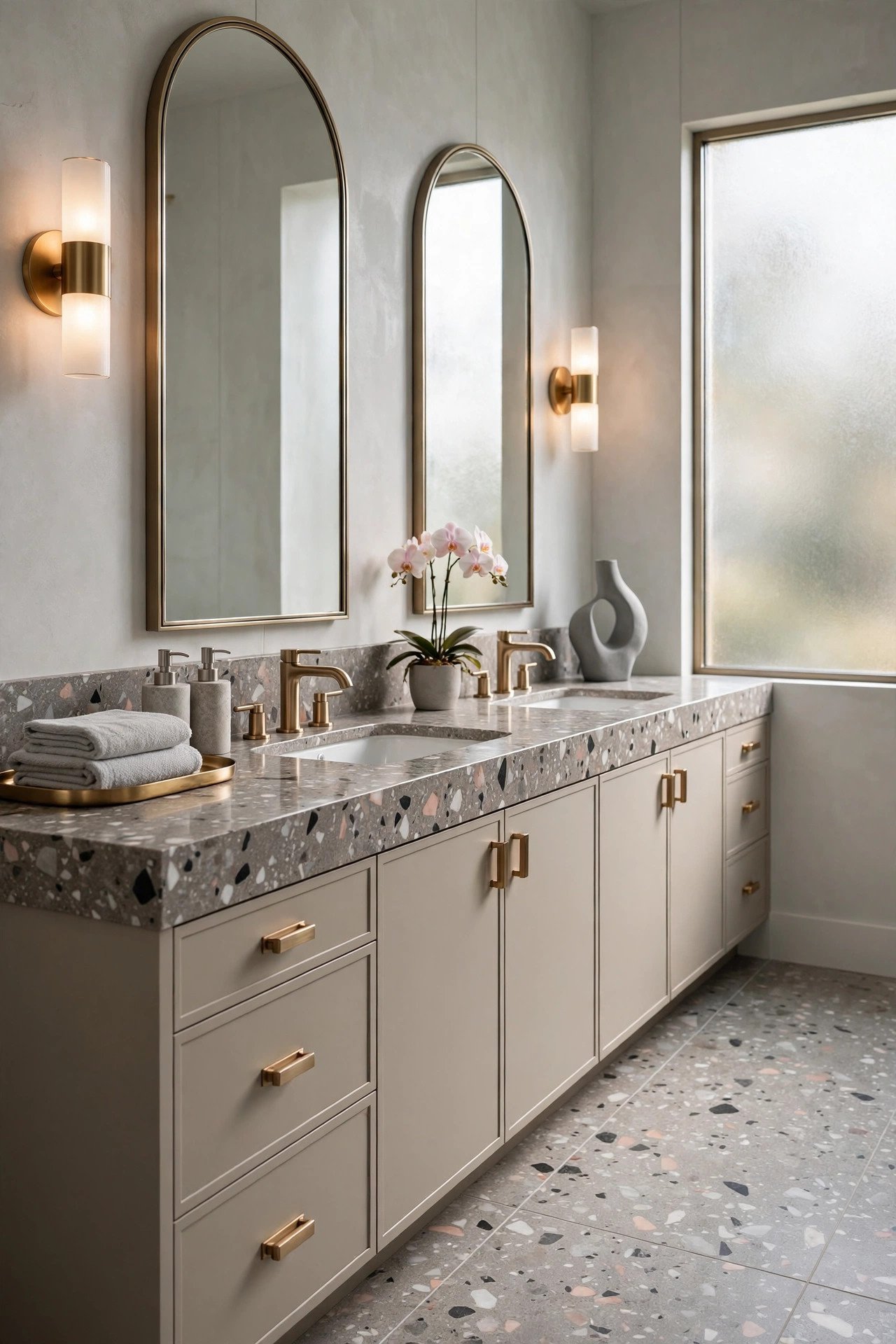
Choose a grey-based terrazzo with chips in white, charcoal, and maybe one warm accent. The pattern hides wear and water spots brilliantly, making it one of the most practical countertop choices you can make.
Let the terrazzo be the star by keeping surrounding surfaces quiet. Simple grey wall tile, a clean white sink, and minimal hardware allow the speckled pattern to shine without competition.
Terrazzo works in any bathroom size. On a small vanity it becomes a jewel-like detail; on a double vanity it creates a continuous ribbon of pattern that ties the whole room together.
Seal cement-based terrazzo periodically and clean with pH-neutral products. With basic care, this centuries-old material will outlast every trend, and its timeless charm only grows as it ages gracefully.
Choosing Your Grey: A Quick Shade and Material Guide
Use this planning table to match grey shades with the right spaces, pairings, and cautions before you start.
| Shade | Best For | Pair With | Watch Out For |
|---|---|---|---|
| Dove Grey | Small bathrooms, classic styles | White trim, polished nickel | Can look flat without texture |
| Greige | Warm, welcoming guest baths | Wood tones, brass, greenery | Undertones vary; test in your light |
| Mid Grey | Modern vanities, floor tile | Matte black, concrete | Needs good lighting to avoid dullness |
| Charcoal | Statement walls, moody retreats | Brass, white tubs, plants | Overwhelms tiny rooms; balance with light |
| Silver Grey | Fixtures, spa-like schemes | Marble, glass, chrome | Can feel cold with cool lighting |
| Slate Grey | Accent walls, natural looks | Teak, stone, black metal | Must be sealed in wet areas |
| Warm Putty Grey | Farmhouse and cottage baths | Shiplap, bronze, cream | May read beige in warm light |
| Blue Grey | Coastal and serene designs | White, rattan, sea glass | Can feel chilly; add warm accents |
| Concrete Grey | Industrial and minimal spaces | Black steel, oak, leather | Large areas can feel stark |
| Pewter Grey | Elegant traditional bathrooms | Marble, crystal, soft white | Darkens noticeably in low light |
16. Small Grey Bathroom Space Savers
Small bathrooms and grey are a natural pairing. Light and mid greys visually recede, making tight walls feel farther apart, while smart space-saving choices keep every inch working hard.
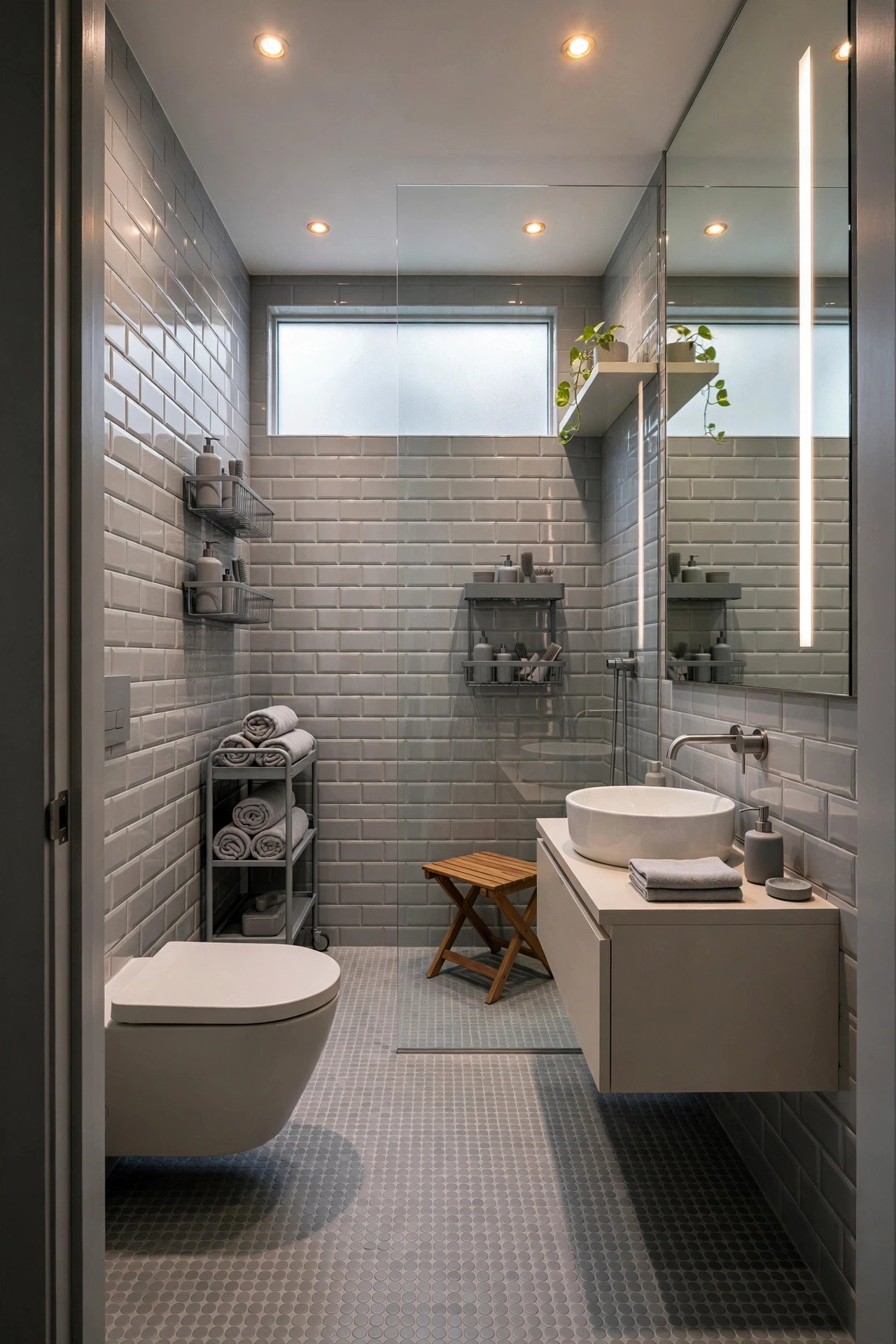
Start with a wall-hung toilet and floating vanity to free up floor space; seeing more floor makes the room feel larger instantly. A large mirror, or mirrored medicine cabinet, doubles light and depth. Choose large-format grey tiles with minimal grout lines so the surfaces read as continuous.
Keep the palette to two or three greys maximum. Too many tones in a small room feel chaotic, while a restrained scheme feels calm and expansive. A pale grey wall with a slightly deeper grey floor is a classic, foolproof combination.
Storage is the make-or-break detail. Recessed niches, over-toilet shelving, and a slim tall cabinet use vertical space that otherwise goes to waste. Corral small items in matching containers so open shelves look styled, not cluttered.
Finish with a clear glass shower panel instead of a curtain or framed door. The uninterrupted sightline makes the whole bathroom read as one open space, and your small grey bathroom will feel twice its actual size.
17. Grey Farmhouse Rustic Touch
Farmhouse style in grey feels fresh and current rather than theme-y. Think weathered wood, simple forms, and honest materials, all softened by a palette of warm greys.
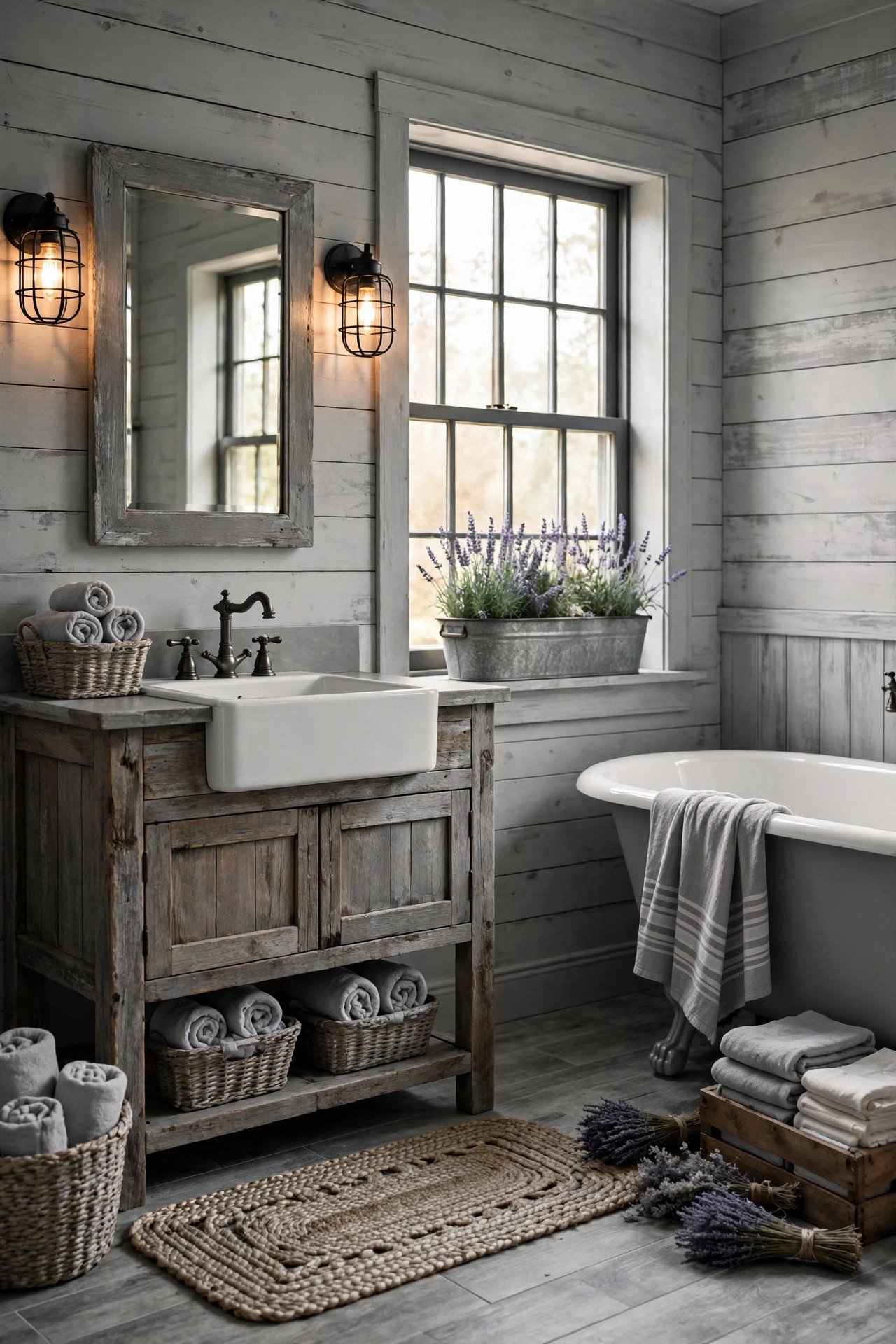
A shaker-style vanity in warm grey, a farmhouse apron sink, and oil-rubbed bronze or matte black fixtures set the tone. Add texture with a braided rug, galvanized accents, and open wood shelving styled with folded towels and simple pottery.
Shiplap or beadboard in greige keeps the farmhouse feeling without going full barn. The key is restraint: one or two rustic elements per bathroom is plenty, surrounded by clean, simple surfaces.
Grey is what keeps this look modern. Where classic farmhouse leans white and cream, grey grounds the room and lets the rustic pieces feel curated rather than kitschy. It is farmhouse grown up.
Add a vintage-inspired mirror, perhaps an arched or round shape with a simple frame, and warm lighting from seeded-glass sconces. The result is a bathroom that feels like a countryside morning: calm, unhurried, and quietly beautiful.
18. Matte Black on Grey Contrast
Matte black fixtures against grey tile create one of the sharpest contrasts in bathroom design. The black reads as graphic and modern, while the grey keeps it from feeling harsh.
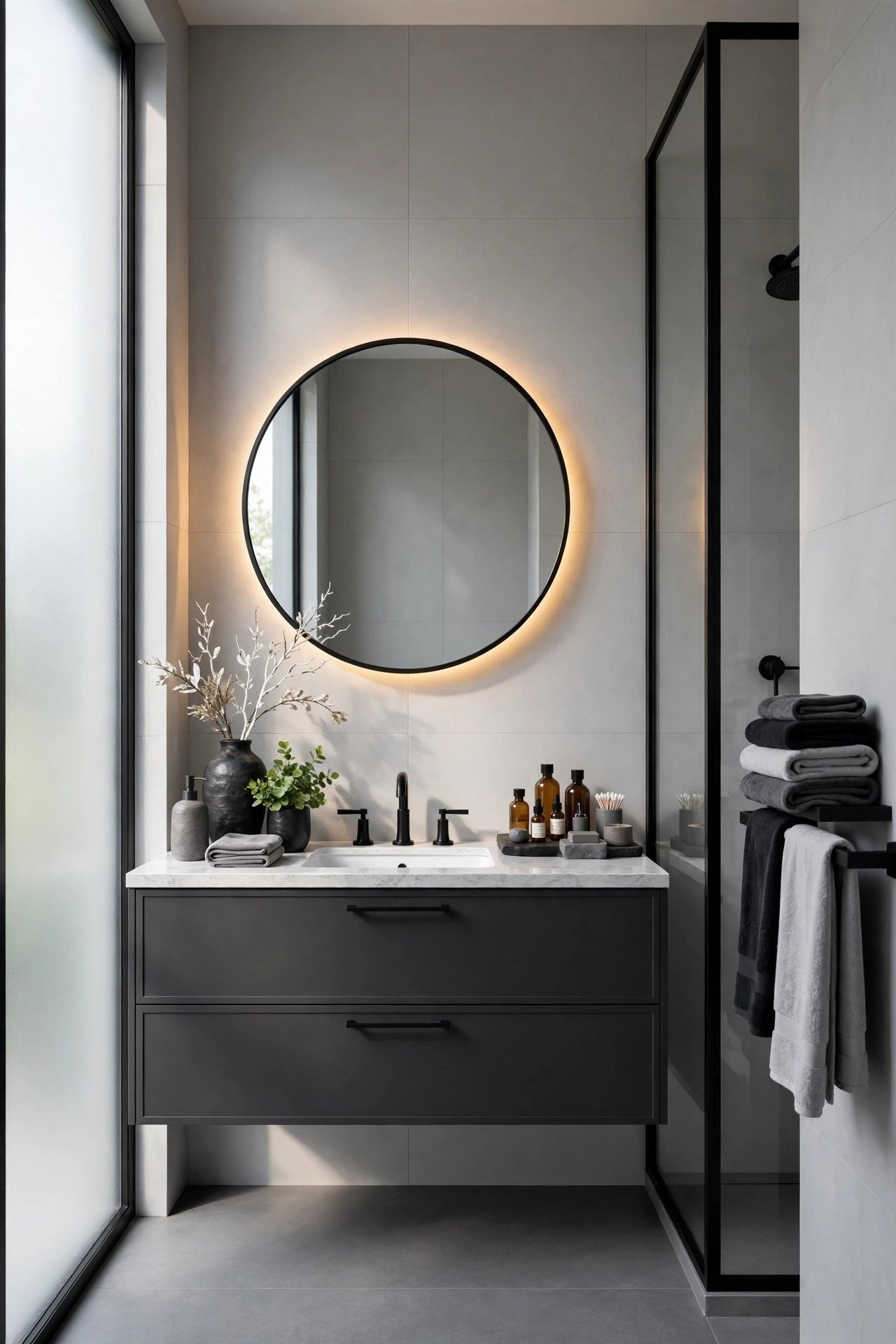
Use black for faucets, shower trim, mirror frames, cabinet hardware, and lighting. Against a mid-grey wall or floor, each black element pops like ink on paper. Keep the black consistent in finish, matte throughout, so the look feels intentional.
This pairing works across grey tones. On pale grey it feels crisp and Scandinavian; on charcoal it feels moody and dramatic. Either way, the contrast adds definition that an all-grey room can lack.
Balance the boldness with softness. White towels, a wood stool, or a green plant prevent the scheme from feeling severe. Texture is your friend: a woven shade or nubby mat warms up the graphic edges.
Matte black is also practical, hiding fingerprints and water spots better than polished chrome. It is a high-impact, low-maintenance choice that makes grey bathrooms feel current and confident.
19. Grey Glass Walk-In Shower
A walk-in shower with grey tile and frameless glass feels like the ultimate luxury: open, light-filled, and completely seamless. Removing the visual barrier of a door or curtain makes even a modest bathroom feel spacious.
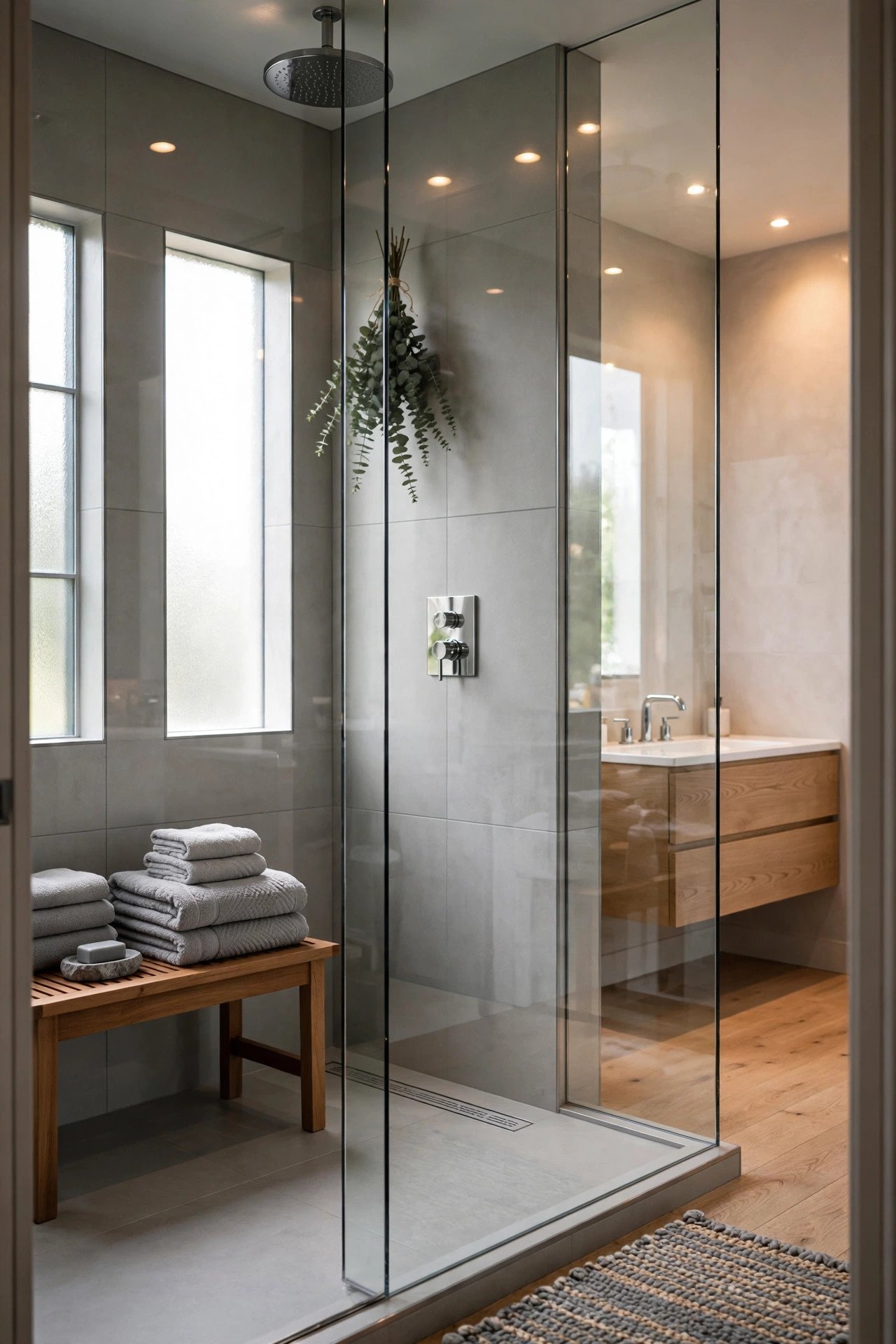
Choose large-format grey porcelain for the shower walls to minimize grout lines and maximize the sense of calm. A linear drain allows a single sloping plane of tile, and a curbless entry makes the floor flow straight in.
Frameless glass panels keep sightlines open. Add a grey-tiled bench or a teak seat for comfort, a recessed niche for products, and a rainfall showerhead for the full spa effect. Every element should feel built-in and effortless.
Lighting inside the shower elevates the experience enormously. A recessed waterproof light or an LED strip in the niche turns an ordinary shower into a glowing retreat after dark.
Maintain the serenity with a daily squeegee habit and good ventilation. Clear glass and grey tile reward a minute of care with years of looking brand new, and the open feeling never gets old.
20. Soft Grey Textiles and Towels
Sometimes the easiest grey bathroom idea is also the cheapest: textiles. Towels, bath mats, shower curtains, and window treatments in layered greys can transform a room in an afternoon.
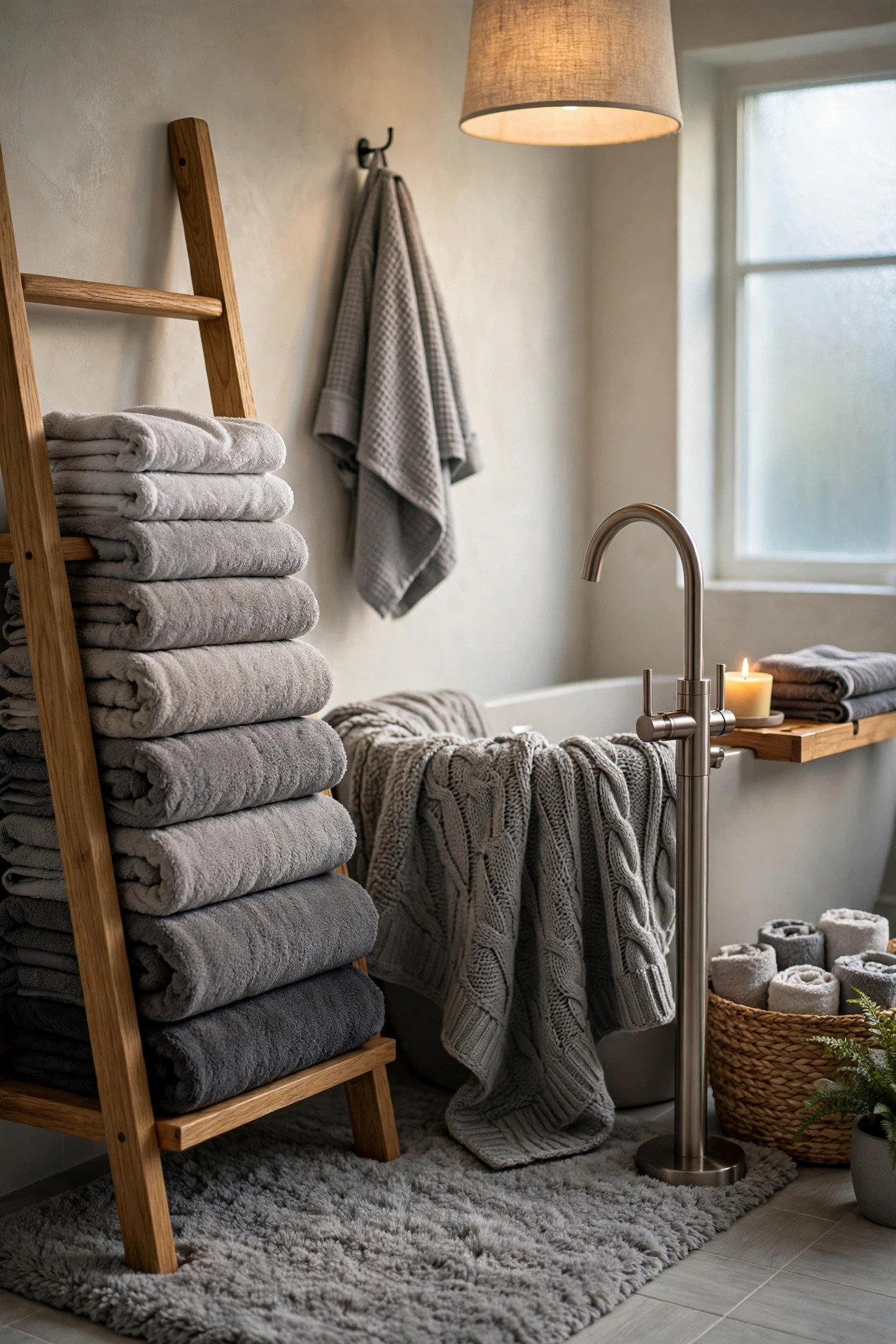
Layer multiple grey tones rather than matching exactly. A charcoal bath mat, medium grey towels, and a pale grey shower curtain create depth and look far more designer than a single flat shade. Add one white element, like a waffle robe, for crispness.
Invest in quality where it touches skin. Thick, absorbent towels in a soft grey make daily routines feel luxurious, and they hold their color well through washing. Turkish and Egyptian cottons are worth the splurge.
Textiles are also the lowest-commitment way to test grey. If you are unsure about painting or tiling, live with grey towels and a grey curtain for a month. You will quickly learn which tones you love in your light.
Rotate seasonally for freshness. Lighter greys and linens for spring, deeper charcoals and plush textures for winter. Your bathroom gets a new look twice a year for the price of a towel set.
21. Grey Mosaic Feature Strip
A horizontal or vertical strip of grey mosaic tile is a jewel-like detail that elevates an entire bathroom. It breaks up large expanses of plain tile with pattern, shimmer, and craft.
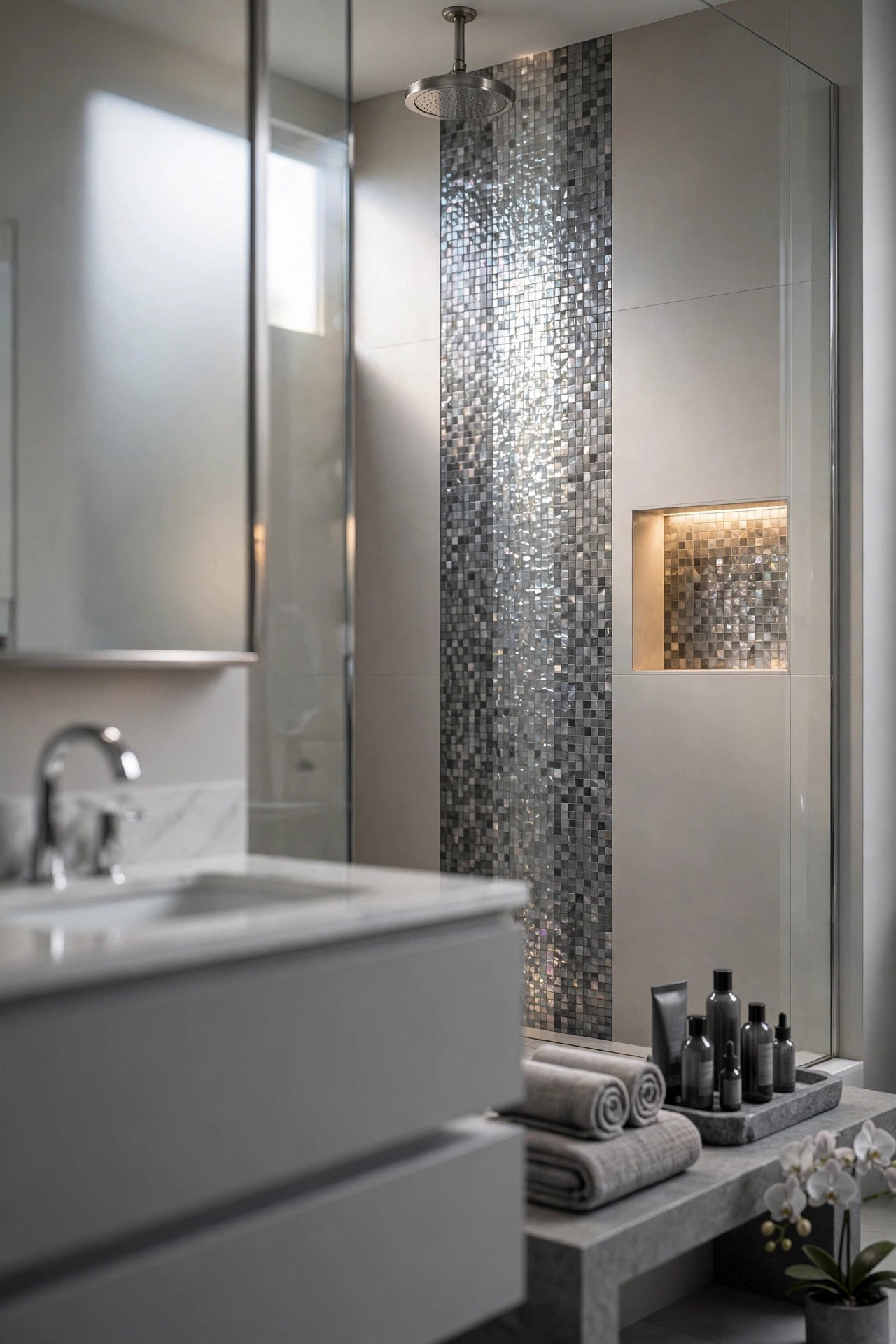
Run the strip at eye level around the room, up the shower wall as an accent column, or behind the vanity as a backsplash feature. Metallic, glass, or natural stone mosaics in grey tones catch light beautifully and add a custom feel.
Keep the surrounding tile simple and quiet so the mosaic reads as jewelry, not noise. Large plain tiles in a coordinating grey make the perfect backdrop, letting the feature strip shine.
This is a budget-friendly luxury. Because the strip uses relatively little tile, you can afford a stunning handmade or metallic mosaic that would be prohibitive wall-to-wall. A little goes a very long way.
Align the strip thoughtfully with fixtures and niches so it feels integrated, not stuck on. When the lines line up, the whole bathroom looks like it was drawn by an architect, and the mosaic becomes its signature.
22. Floating Grey Vanity Modern
A floating vanity in grey is the defining piece of a modern bathroom. Suspended above the floor, it creates an airy, weightless feeling and makes cleaning underneath effortless.
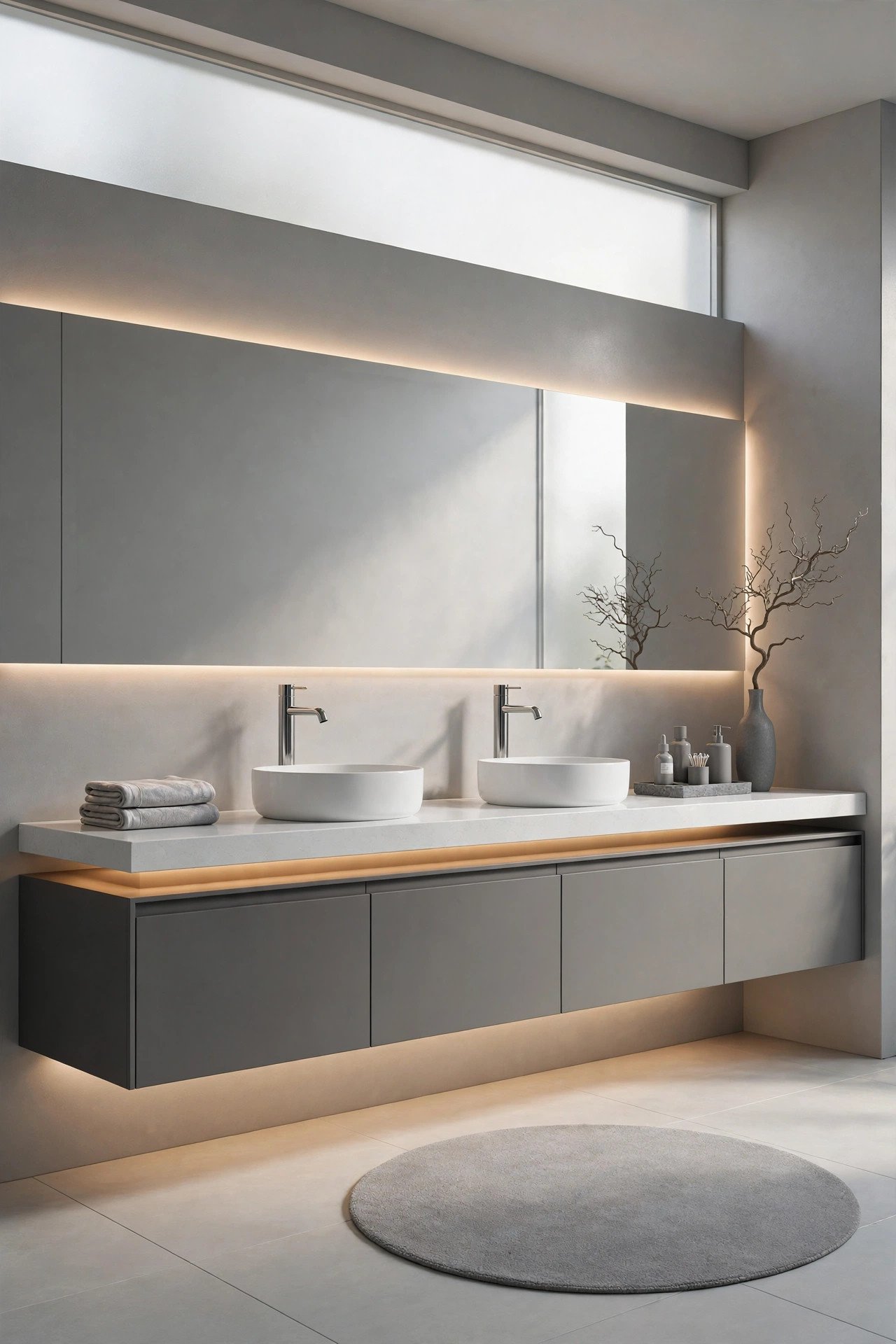
Choose a flat-front design in a matte grey lacquer or wood-look grey for a sleek profile. Handle-free drawers with push-to-open hardware keep the lines clean. Under-cabinet LED lighting adds a soft glow at night and makes the vanity appear to hover.
Pair it with a vessel or integrated sink in white for contrast, and a large round or rectangular mirror above. Keep the countertop clear: a floating vanity looks best when its surface is nearly empty.
The visible floor beneath tricks the eye into seeing more space, which makes floating vanities ideal for small or narrow bathrooms. Every inch of visible tile counts toward the feeling of openness.
Style the open space below with a single beautiful basket or nothing at all. Restraint is the whole point of modern design, and a floating grey vanity rewards it with a bathroom that feels calm, current, and effortlessly chic.
23. Grey and Brass Gold Accents
Brass and gold accents against grey create a warmth and glamour that feels straight out of a boutique hotel. The cool grey makes the warm metal glow, and the combination never fails to look expensive.
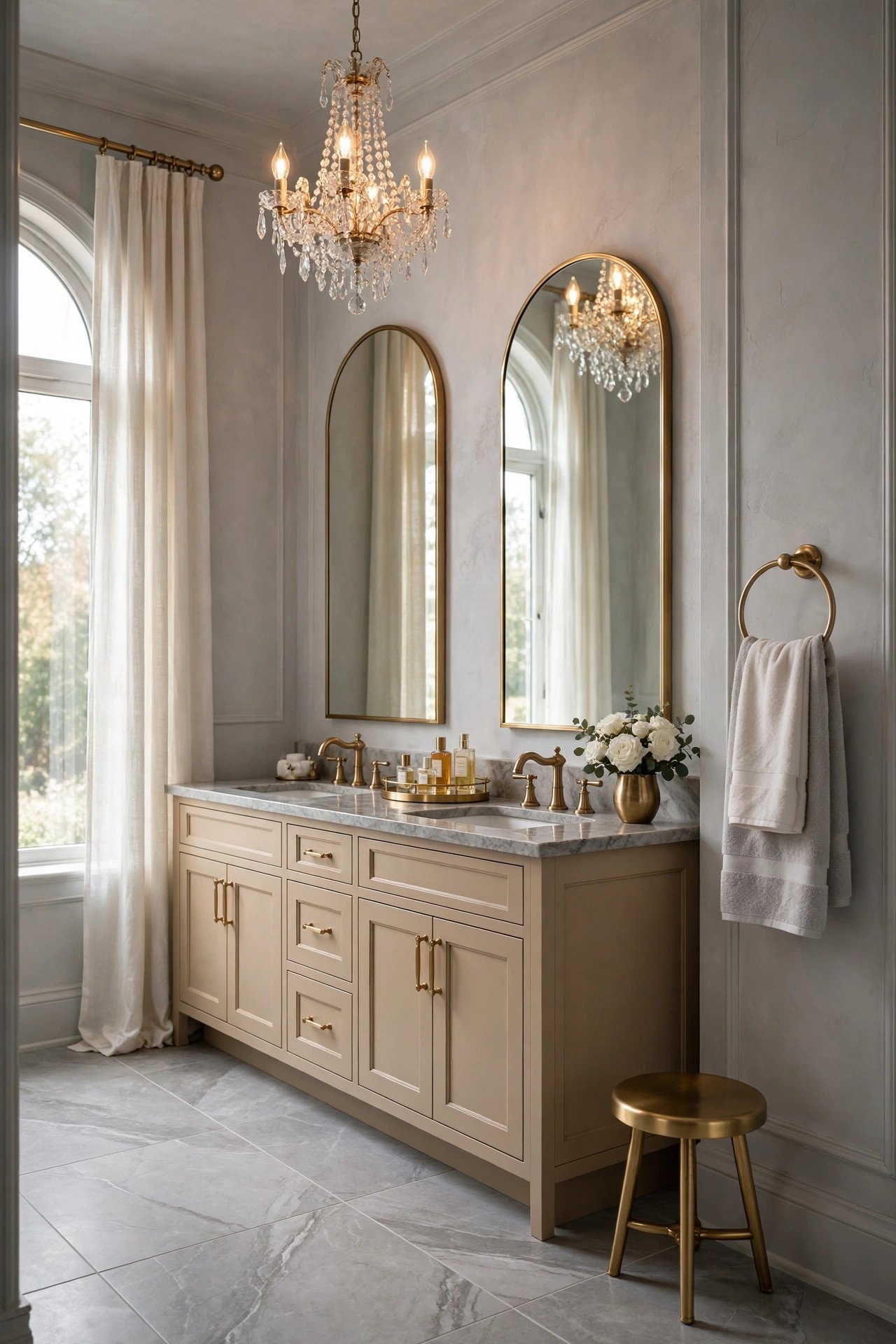
Use unlacquered brass or brushed gold for faucets, mirror frames, sconces, and cabinet pulls. Against a soft grey wall or marble tile, the metal becomes jewelry. Keep the finish consistent so the warmth feels deliberate.
This pairing suits many styles. With marble and classic forms it feels traditional and rich; with concrete tile and clean lines it feels modern and edgy. Grey is the perfect neutral host for brass in any setting.
Balance is key: brass is a strong flavor. A faucet set, a mirror frame, and two sconces are plenty. Let the grey do the quiet work of the background while the brass provides the sparkle.
Maintain the glow with gentle cleaning, and embrace the patina if you choose unlacquered brass. It deepens beautifully over time, telling the story of your home, and against grey it only gets more beautiful.
24. Large Grey Format Porcelain Panels
Oversized porcelain panels in grey bring a seamless, architectural calm to bathroom walls and floors. With grout lines nearly eliminated, surfaces read as continuous stone, and the room feels larger and more serene.
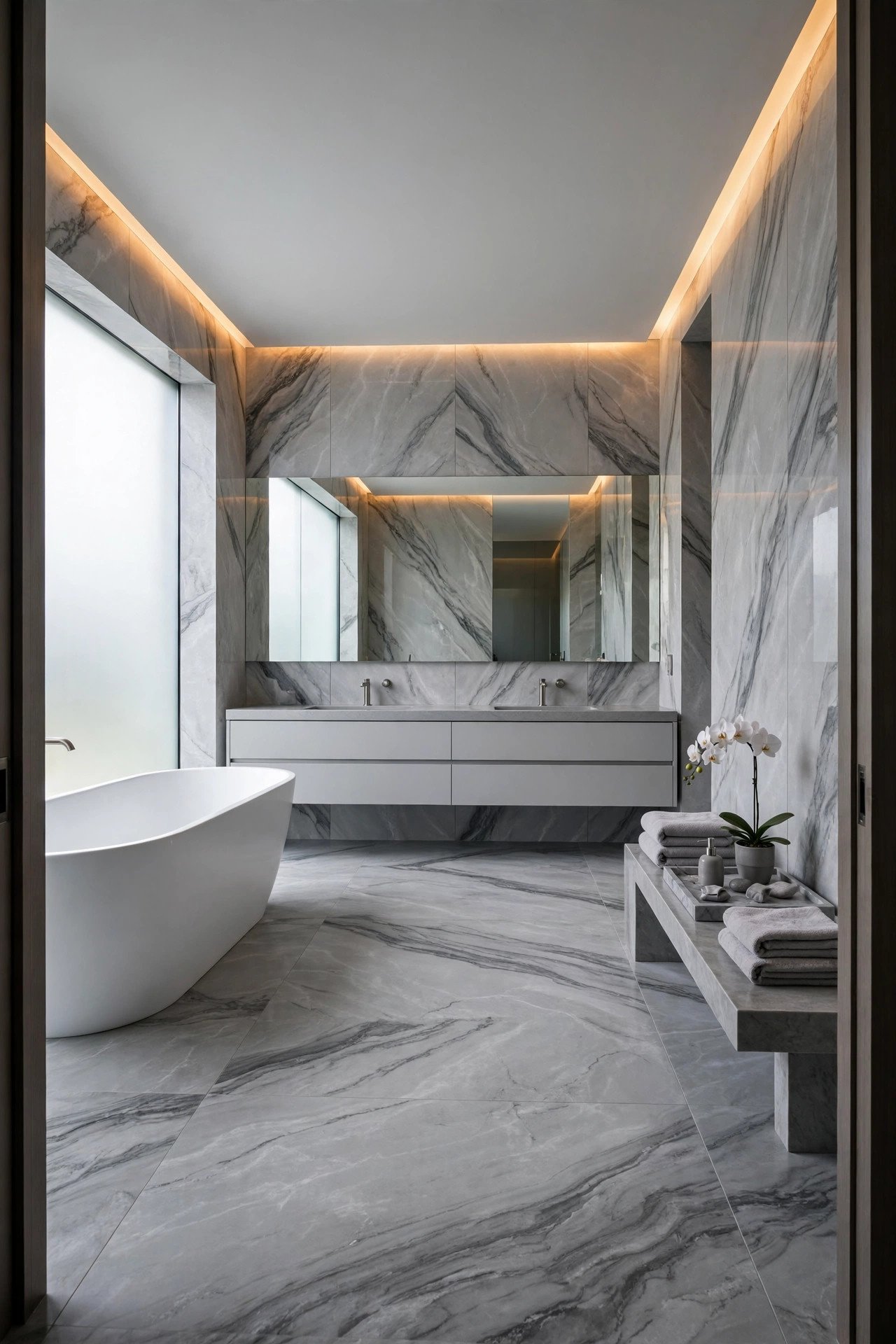
Panels as large as four by eight feet can clad a shower with a single piece per wall. The effect is stunning: veined grey porcelain that mimics marble or concrete without any of the maintenance worries.
This is a job for experienced installers, since the panels are heavy and require precise handling. But the payoff is a bathroom with almost no grout to clean and a look that rivals the most expensive natural stone.
Keep the rest of the design quiet to let the panels star. Simple fixtures, a floating vanity, and minimal accessories allow the vast grey surfaces to create the calm, gallery-like atmosphere they do best.
Large panels also work beautifully on floors, where fewer grout lines mean easier cleaning and a more expansive feel. In a grey palette, they deliver modern luxury with remarkable practicality.
25. Grey Bathroom Lighting Layers
Great lighting transforms a grey bathroom more than any other single element. Grey surfaces respond dramatically to light, shifting from cool to warm, flat to rich, depending on what shines on them.
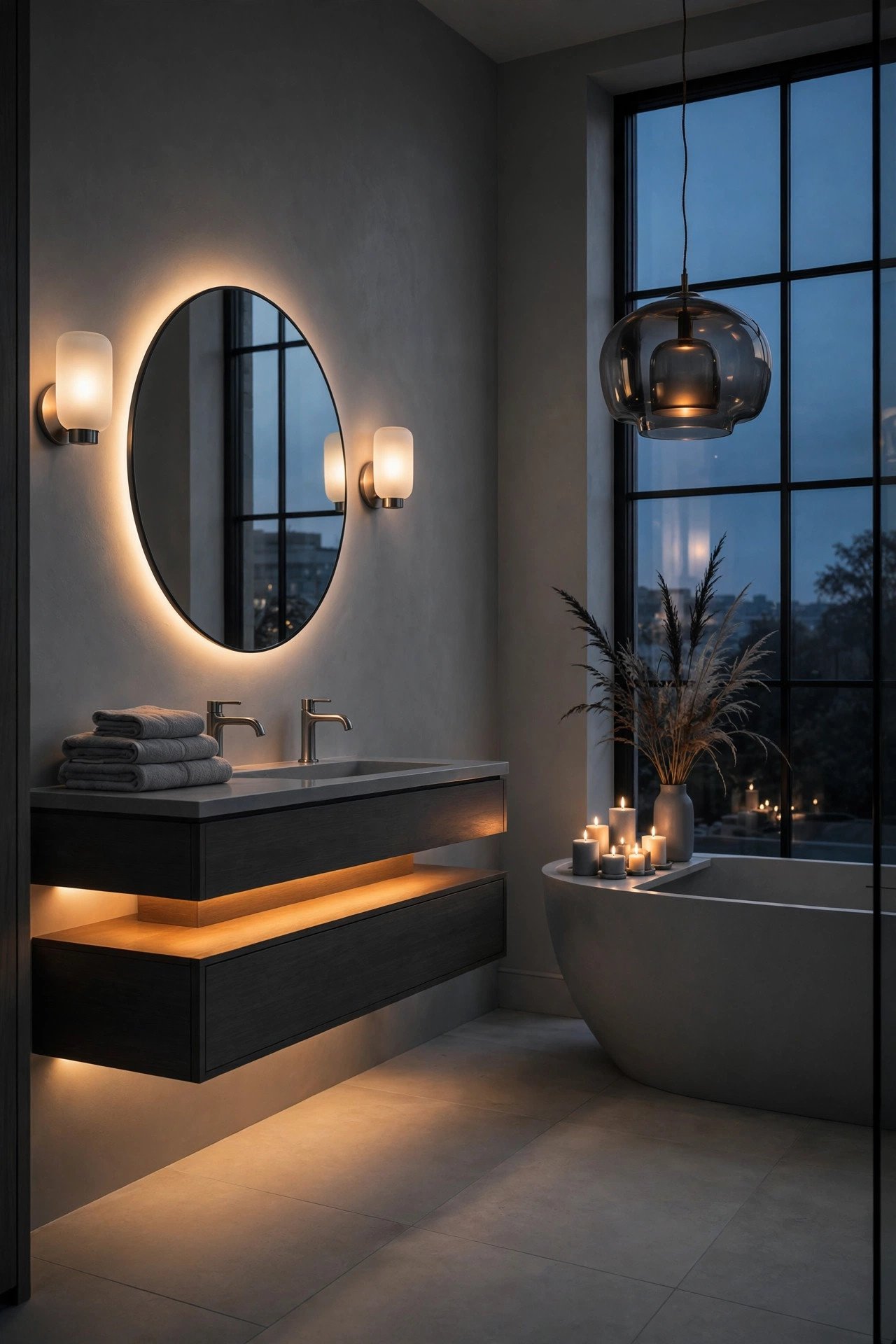
Layer three types: bright overhead for tasks, flattering sconces at face height beside the mirror for grooming, and soft accent light, like an LED strip or a candle-style fixture, for ambiance. Each layer has a job, and together they make the room versatile.
Choose warm white bulbs, around 2700 to 3000 Kelvin, to keep grey from feeling cold or blue. Dimmers on every circuit let you tune the mood from energizing morning to relaxing evening soak.
Light your textures deliberately. A sconce washing across shiplap, slate, or zellige tile creates shadows that reveal the craftsmanship. Grey materials come alive under the right light and fall flat under the wrong light.
Do not forget natural light. Frosted windows, skylights, and glass block bring daylight deep into the room, and grey looks its absolute best in it. When daylight does the heavy lifting, your fixtures just add the finishing glow.
26. Pebble Grey Natural Stone Shower
A pebble-tiled shower floor in soft greys brings the feeling of a riverbed into your bathroom. The rounded stones massage your feet, look completely natural, and turn an ordinary shower into a sensory experience.
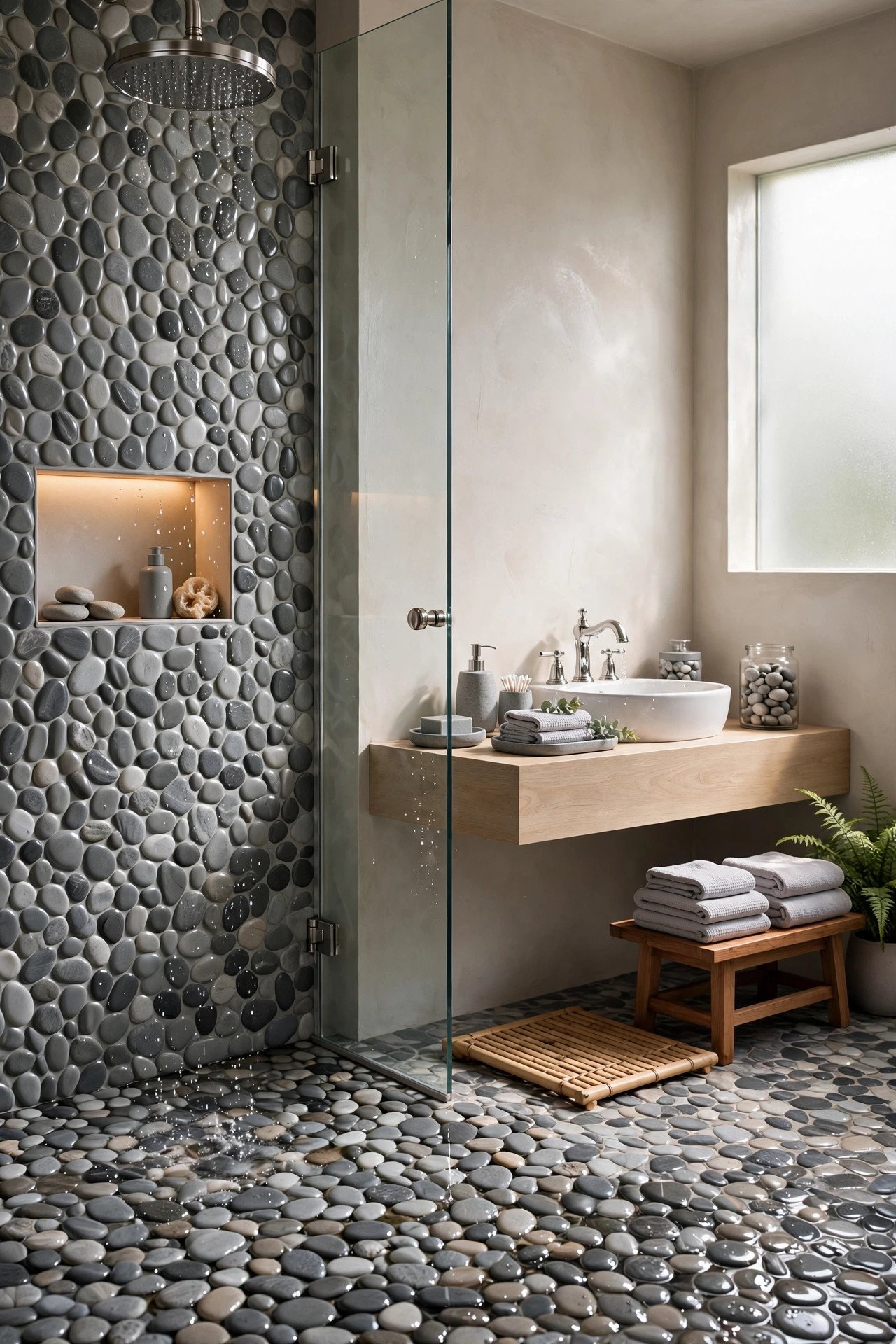
Choose mesh-mounted pebble sheets in mixed grey tones for an organic, varied surface. The small stones and many grout lines provide excellent slip resistance, making pebbles one of the safest shower floor choices.
Pair the pebble floor with simple large-format grey wall tiles so the texture contrast shines. A frameless glass enclosure keeps the view open, and a rainfall showerhead completes the nature-inspired feeling.
Seal the stones and grout well, and choose a grout color close to the pebbles to keep maintenance simple. A quick squeegee after use keeps everything looking fresh.
Extend the theme with a stone vessel sink or a wooden bench, and add a plant that loves humidity. The result is a shower that feels less like plumbing and more like a hidden grotto, and your mornings will never feel routine again.
27. Grey Beadboard Cottage Feel
Beadboard in soft grey gives a bathroom instant cottage charm. The narrow vertical grooves add texture and nostalgia, like a beloved lake house or a countryside inn, while the grey keeps it fresh and current.
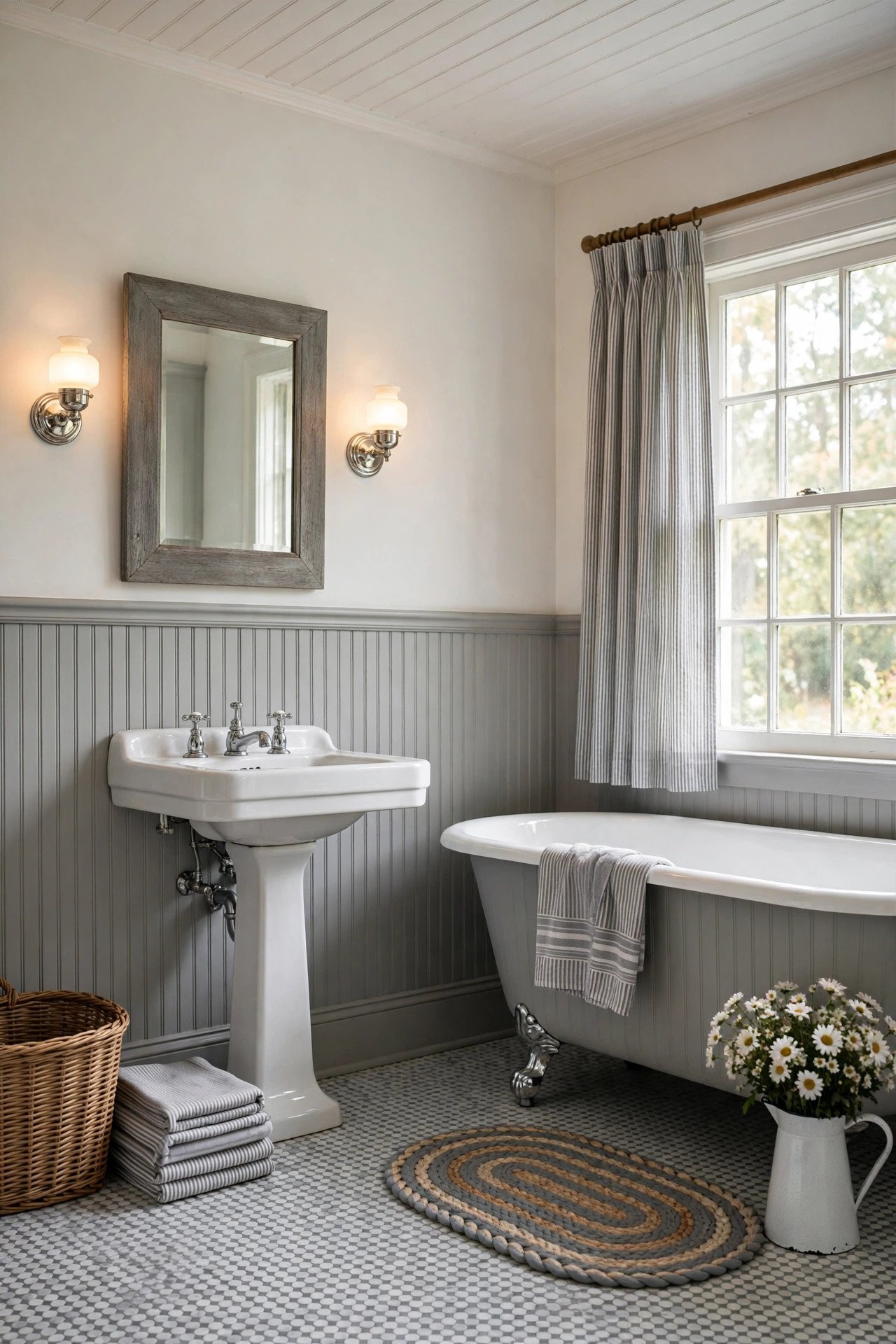
Run beadboard on the lower half of the walls with a chair rail, or take it floor to ceiling in a small powder room for full cozy effect. Moisture-rated paint in a pale grey protects the wood and keeps the look light.
Pair it with a pedestal or console sink, polished nickel fixtures, and a simple round mirror. Vintage-inspired details like a ladder shelf or a woven hamper complete the cottage story without feeling costume-like.
Grey beadboard is wonderfully forgiving of imperfections. The texture disguises uneven walls and the paint touch-ups easily, making it ideal for older homes with character.
Finish with soft, homey touches: a ruffled or scalloped shower curtain, fresh flowers in a mason jar, and thick cotton towels. The cottage grey bathroom is about comfort above all, and it welcomes everyone who enters.
28. Polished Concrete Grey Flooring
A polished concrete floor in grey is sleek, seamless, and surprisingly practical. The smooth, reflective surface bounces light around the room and gives the bathroom a loft-like, architectural polish.
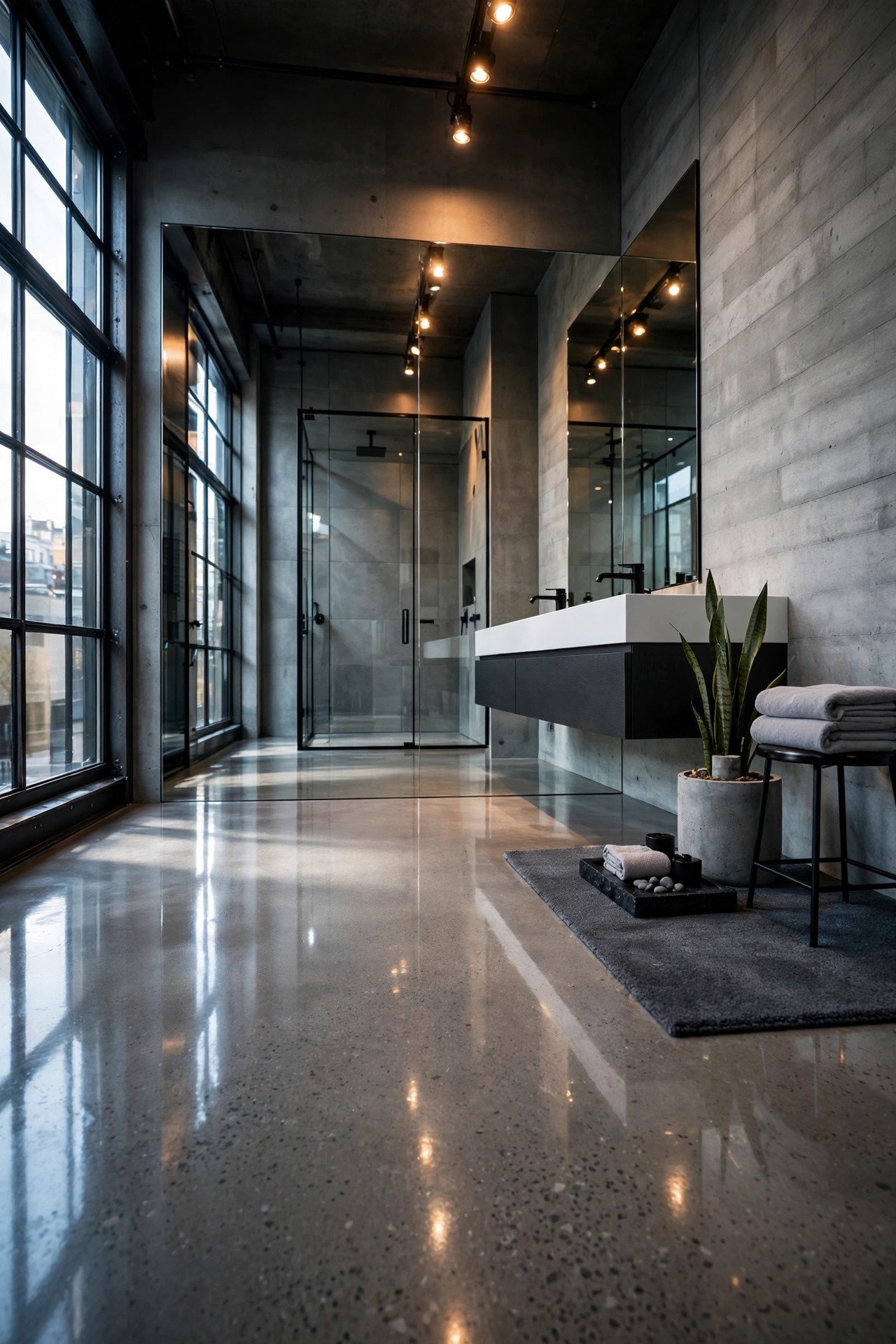
Existing concrete slabs can be ground and polished, or a microcement overlay can create the look over current flooring. Integral color or stains produce tones from pale silver to deep graphite, and the finish can be tuned from satin to high gloss.
Polished concrete is tough, waterproof when sealed, and has no grout lines to scrub. It is also compatible with radiant floor heating, which pairs beautifully with the cool look and warm feel.
Soften the industrial edge with warm accents: a wood vanity, brass fixtures, or a plush rug in the dry zone. The contrast between the hard, glossy floor and soft furnishings is what makes concrete feel like home.
This floor rewards minimalism. Keep the palette tight and the surfaces clear, and the polished grey concrete becomes a quiet, gleaming foundation for everything above it.
29. Grey Framed Mirror Gallery
Mirrors framed in grey, hung as a pair or a small gallery, turn a bathroom wall into a designed moment. Reflected light doubles, the room feels larger, and the frames add architecture where there was none.
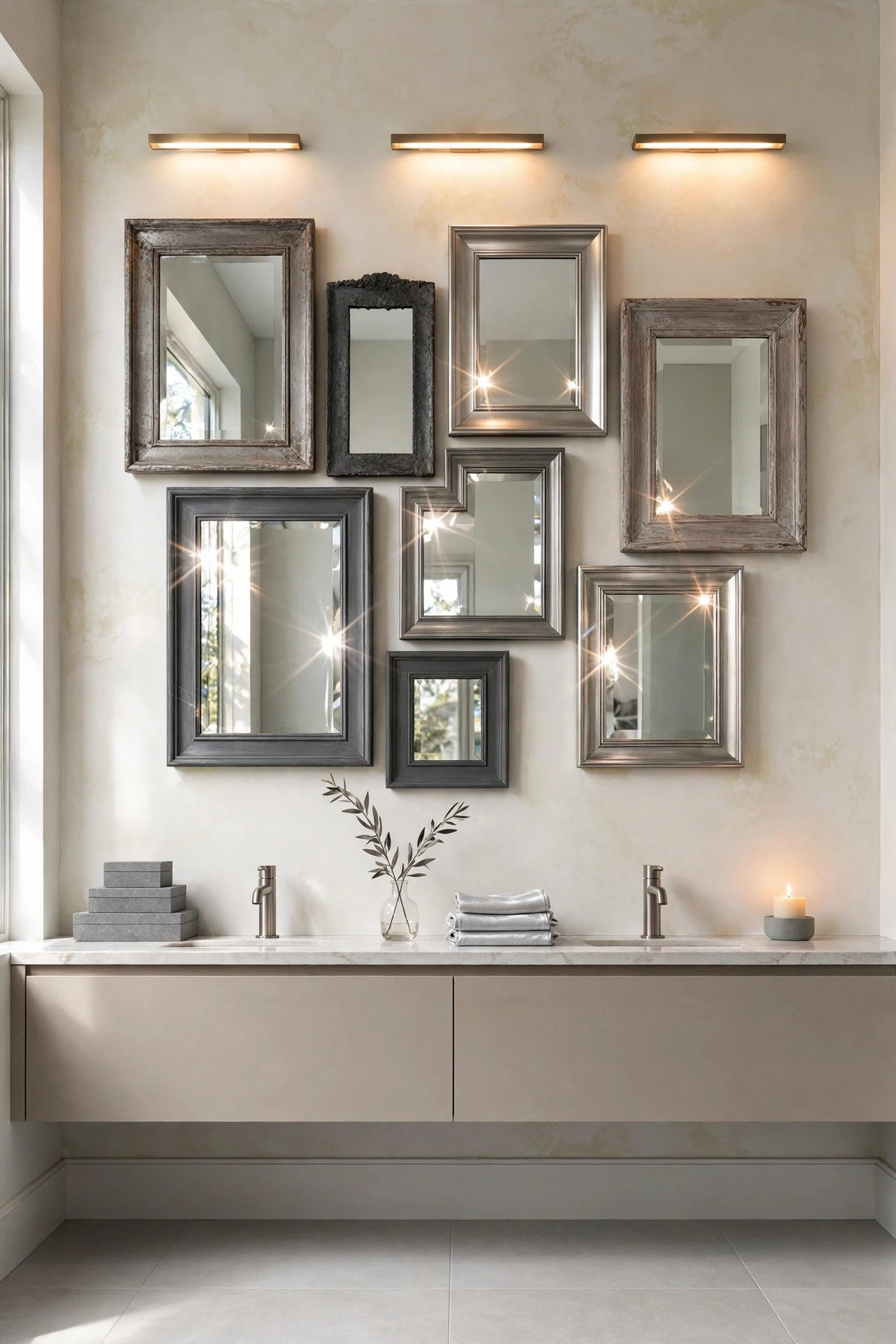
Try two matching rectangular mirrors over a double vanity, or an eclectic mix of round and arched shapes in grey-washed wood frames. Keep the frame tones in the same grey family so the grouping feels curated.
A grey-framed mirror gallery works especially well against white or pale walls, where the frames create gentle definition. Against darker walls, choose lighter grey frames so the mirrors stand out.
Extend the idea beyond the vanity. A leaning floor mirror in a grey frame in the corner, or a small round mirror hung on the side wall, multiplies light into dim corners and makes the whole room glow.
Choose mirrors with interesting details, beveled edges, arched tops, or subtle antiquing, for extra character. Grouped thoughtfully, grey-framed mirrors become wall art that happens to be useful, and your bathroom gains a focal point.
30. Greige and Greenery Botanical Touch
Greige walls with living plants create a bathroom that feels like a calm greenhouse. The warm grey backdrop makes every leaf look more vivid, and the plants soften the hard surfaces of tile and porcelain.
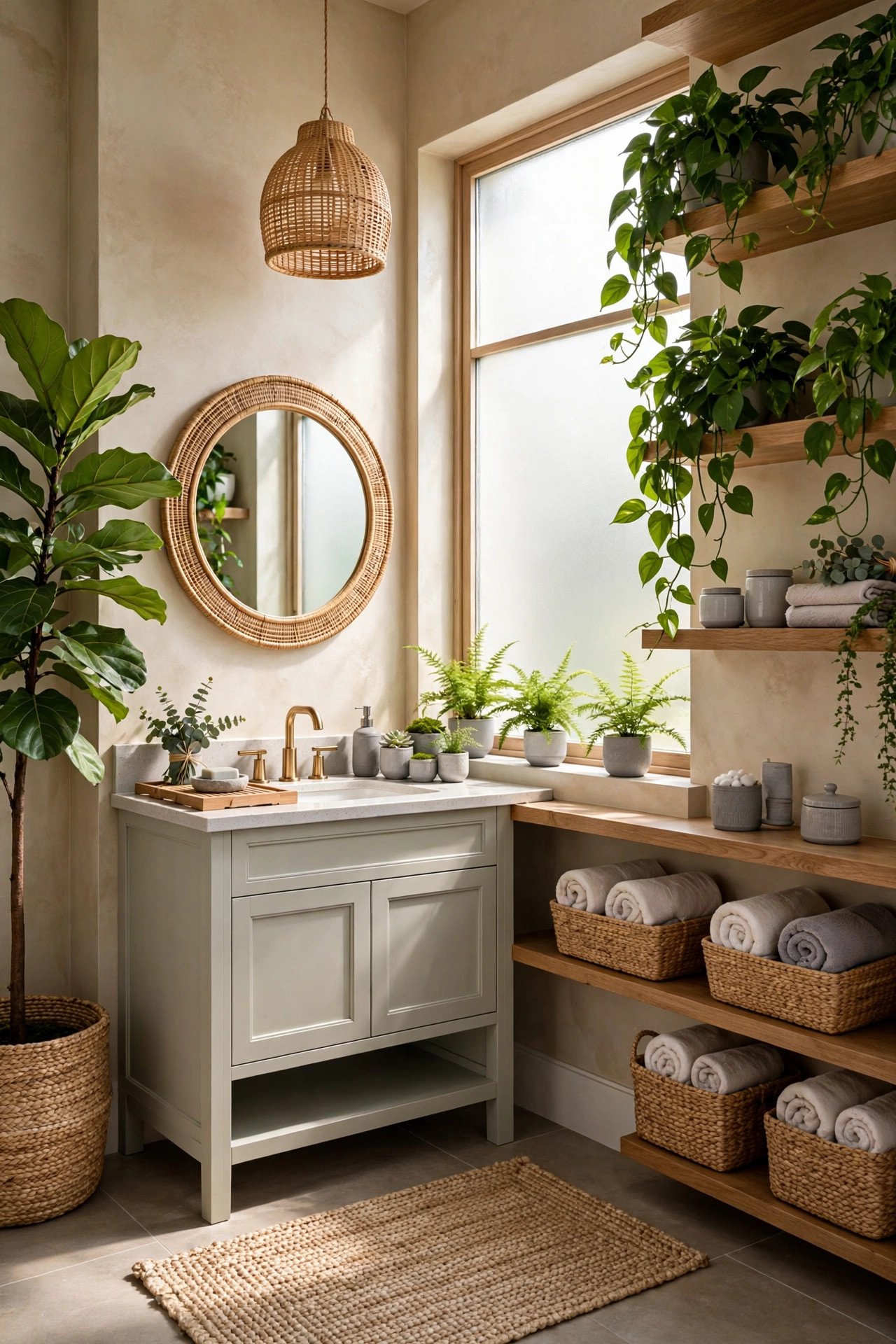
Choose humidity-loving plants: pothos trailing from a shelf, a fern on the vanity, an orchid by the window, or eucalyptus hung from the showerhead. Greige paint with warm undertones flatters green foliage like nothing else.
Use planters that echo the palette: concrete grey pots, woven baskets, or simple white ceramics. Group plants at different heights for a lush, layered look rather than a single lonely pot.
Plants also improve the feeling of air quality and add life to windowless bathrooms, especially with a grow light on a timer. Even two or three plants change the atmosphere completely.
Keep the rest of the styling simple so the greenery stars. Natural wood, soft textiles, and minimal accessories let the botanical elements be the decoration, and your greige bathroom becomes a living, breathing retreat.
Conclusion
Grey endures because it is honest. It does not chase trends or demand attention; it simply creates the calm, versatile backdrop that lets the rest of your bathroom shine. Whether you fell for the quiet luxury of grey marble, the drama of a charcoal statement wall, or the simple comfort of layered grey towels, there is a version of this color that fits your home, your budget, and your morning routine. Start with the idea that excited you most, test your shades in your own light, and build slowly. The most beautiful grey bathrooms are not decorated all at once; they are layered with care over time. Your neutral, stunning retreat is closer than you think.
Key Takeaways
- Test grey paint and tile samples in your bathroom’s actual light before committing, since undertones shift dramatically between morning and evening.
- Layer at least three grey tones, light, mid, and dark, to create depth; a single flat grey is what makes rooms feel boring.
- Warm up cool greys with wood, brass, or greenery so the space feels inviting rather than sterile.
- Use texture, shiplap, herringbone, penny tile, slate, to keep neutral palettes interesting without adding color.
- Match metal finishes across fixtures and hardware for a cohesive, professionally designed look.
- In small bathrooms, favor pale greys, large-format tiles, and floating vanities to maximize the feeling of space.
- Seal natural stone and concrete surfaces in wet areas, and choose moisture-rated paints for walls near showers and tubs.