30 Earthy Kitchen Ideas That Bring Warm Natural Charm Home

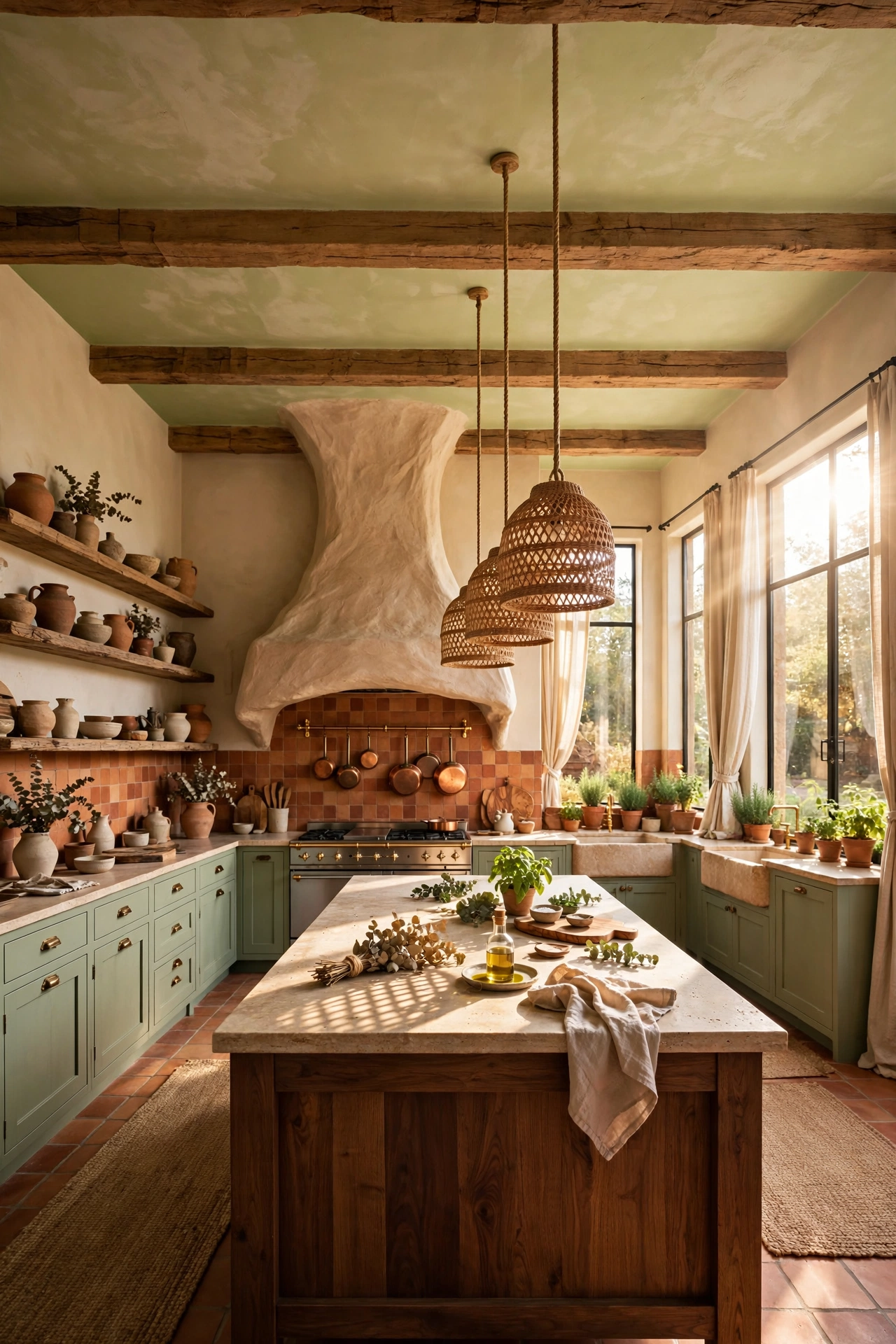
There is something deeply grounding about a kitchen built from the earth’s own palette. Terracotta that glows like late-afternoon sun, wood that carries the memory of the tree it came from, stone worn smooth by time – these are materials that make a kitchen feel less like a showroom and more like a living, breathing part of your home.
An earthy kitchen is not about a single style. It is a philosophy of warmth: natural textures, honest materials, and a color story drawn from clay, bark, sage, sand, and stone. Whether your home leans farmhouse, Mediterranean, bohemian, or quietly modern, earthy elements bring balance to sleek appliances and cold surfaces, wrapping the hardest-working room in your house in softness and soul.
The ideas ahead walk you through thirty ways to layer that warmth, from big-impact moves like limewashed walls and travertine countertops to small, satisfying details like clay utensil crocks and a bundle of eucalyptus on the counter. Take what fits your budget and your space, mix the tones you love, and build a kitchen that feels grounded, welcoming, and entirely yours.
Ready to bring the outdoors in? These thirty ideas will show you how – one warm, natural layer at a time.
1. Warm Terracotta Tile Backsplash
Nothing warms a kitchen faster than a terracotta backsplash. Its sunbaked oranges, rusts, and soft reds catch the light and instantly pull the whole room toward the cozy, handcrafted end of the spectrum.
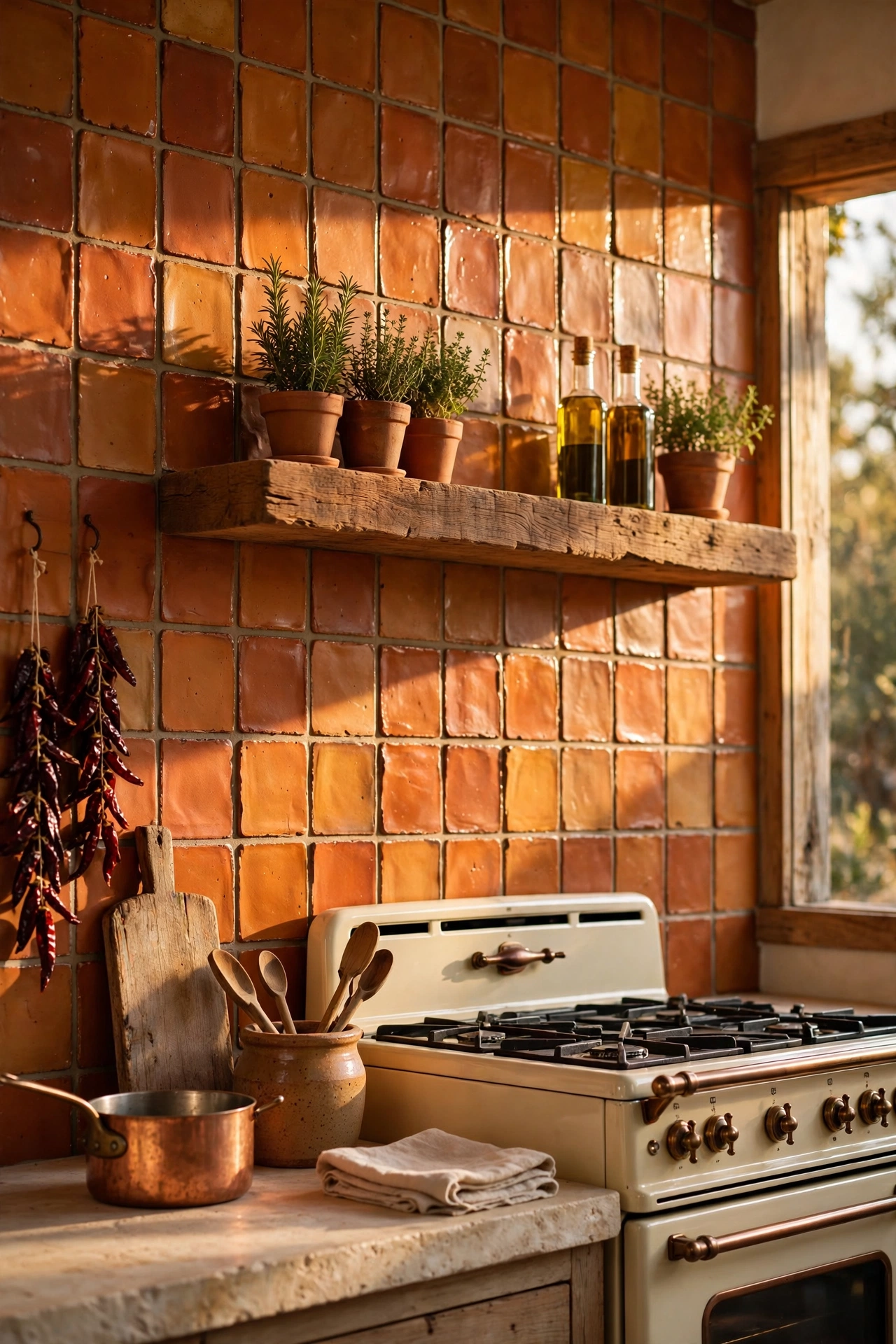
Choose square handmade-look tiles for a Mediterranean feel, or long thin subway tiles for a more modern take on the same warmth. Slightly uneven edges and tonal variation are the whole point – they are what make the tile feel artisanal rather than manufactured.
Pair terracotta with cream or warm white walls so the tile stays the hero, and let wood or butcher block counters echo its earthiness. Sage or olive cabinetry also sits beautifully against it.
If a full tile run feels like a commitment, install it only behind the range as a statement panel, or frame it with a simple wood border. Sealed terracotta wipes clean, so it is as practical as it is pretty.
Budget tip: terracotta-look ceramic tiles deliver the glow at a fraction of the price of handmade clay, and a small backsplash can be installed over a single weekend.
Repeat the terracotta tone in small doses – a clay crock or potted herb – to keep the backsplash connected to the room.

2. Reclaimed Wood Open Shelving
Open shelves made from reclaimed wood bring instant character to a kitchen. Every knot, saw mark, and weathered patch tells a story, and that history is exactly what keeps an earthy kitchen from feeling flat or new-build sterile.
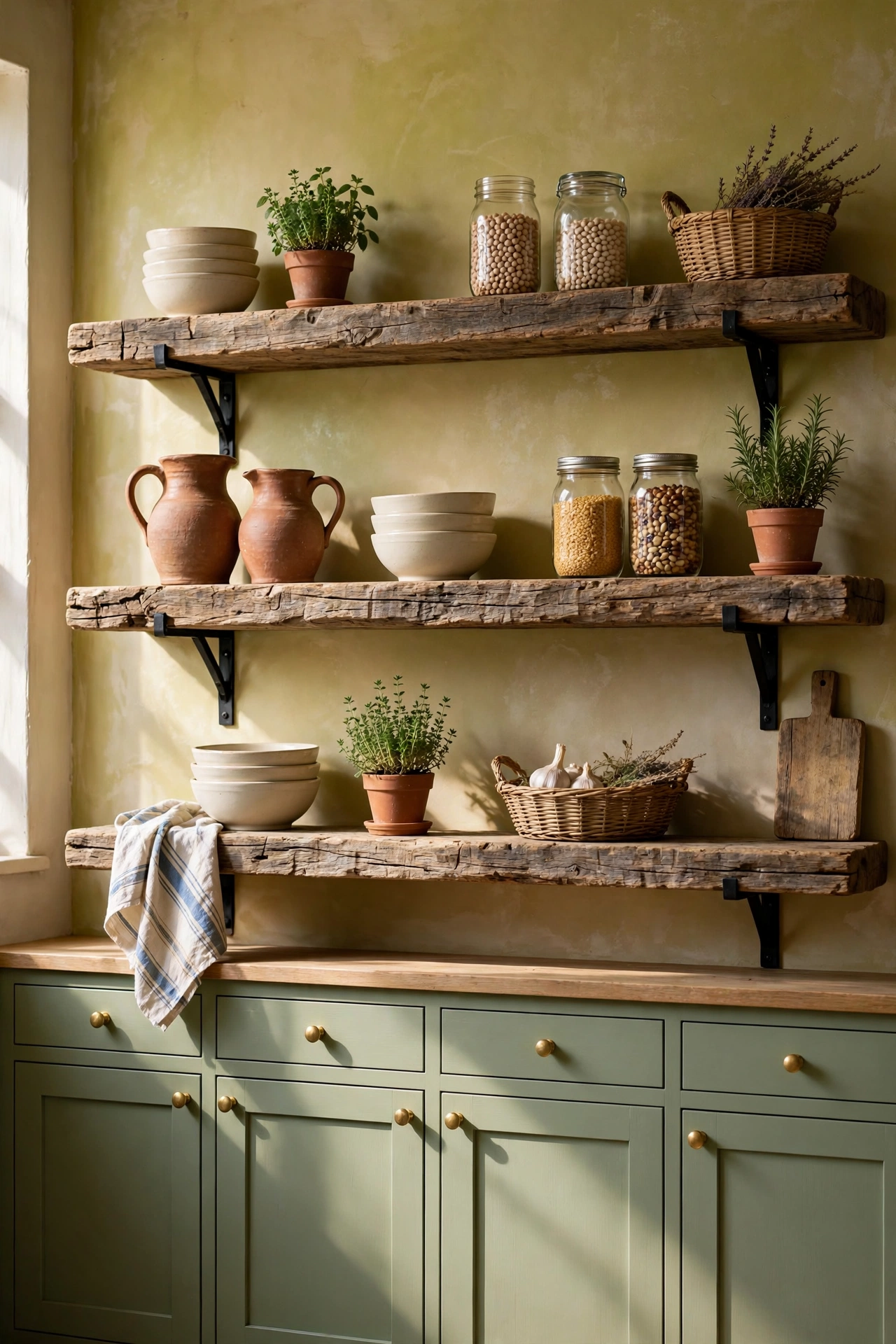
Source planks from salvage yards, barn demolitions, or architectural reclaim dealers – just make sure the wood is sound, dry, and finished food-safe. Two or three thick shelves usually give more impact than a whole wall of thin ones.
Style them with restraint: stack everyday stoneware, lean a cutting board or two, and leave breathing room between groupings. The wood is the star, so let it show.
Support matters more than style here. Use sturdy black iron or brass brackets that match your hardware, and anchor everything into studs – shelves holding dishes and pottery carry real weight.
Reclaimed shelves are one of the most affordable high-impact updates you can make. A pair of brackets and a couple of finished planks can transform a bare wall in a single afternoon.
Finish raw planks with a food-safe hardwax oil to protect against kitchen humidity, and re-oil once a year to keep the wood rich and healthy.
3. Honed Travertine Countertops
Travertine brings the quiet luxury of ancient stone to the kitchen. Its soft, matte surface is full of subtle pits and veining in creams, beiges, and warm taupes – the opposite of a cold, glossy slab.
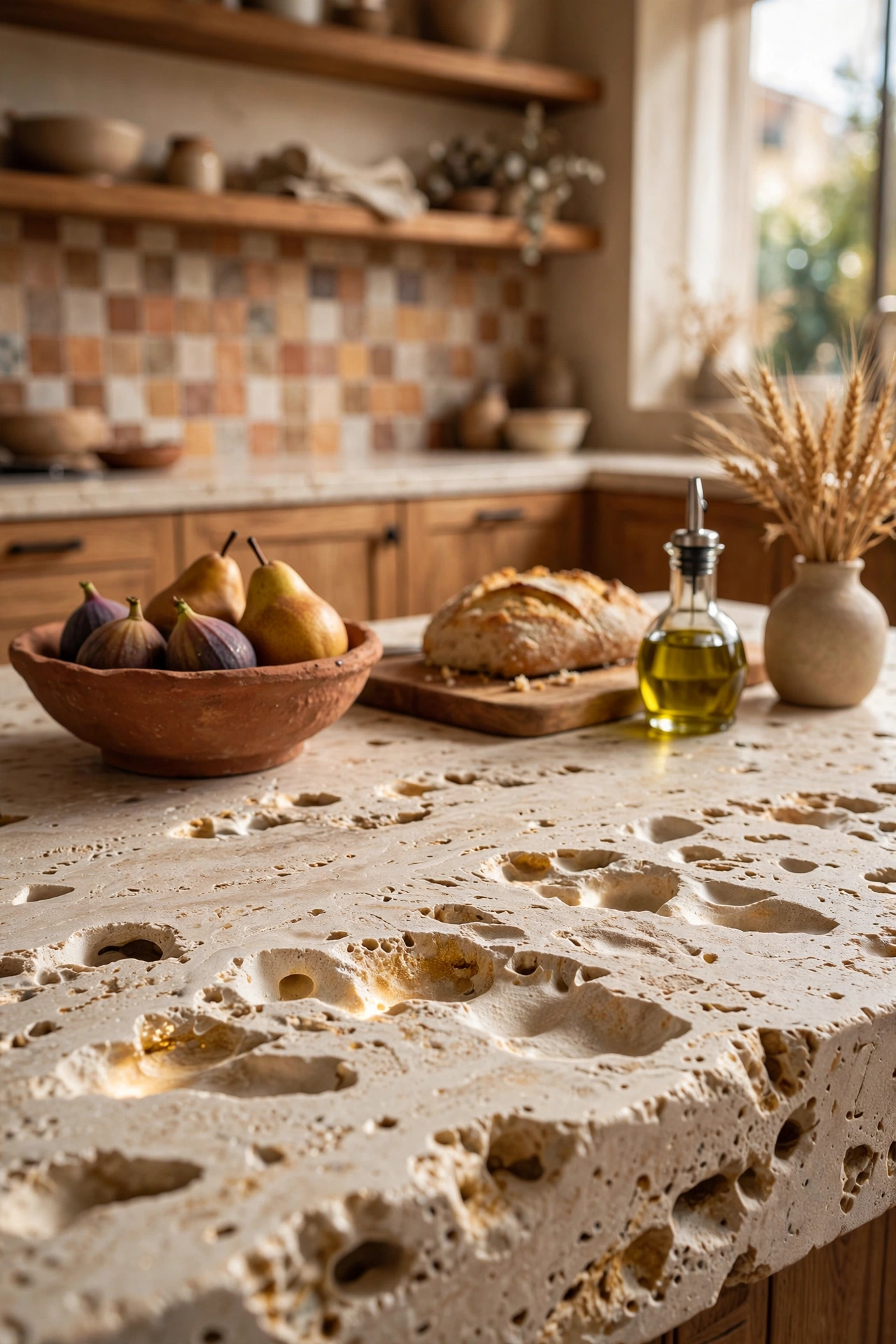
Choose a honed finish rather than polished. It feels softer under the hand, hides fingerprints far better, and suits the earthy aesthetic much more than anything shiny or mirror-like.
Travertine is a natural stone, so it needs sealing and a little respect: wipe spills promptly, use cutting boards, and skip vinegar-based cleaners. Sealed properly, it stands up to daily cooking life without fuss.
Pair it with wood cabinetry or warm painted cabinets, and let the stone’s natural variation do the decorating. A simple edge profile keeps the look timeless rather than fussy or overworked.
If solid travertine stretches the budget, travertine-look porcelain slabs give similar warmth with less maintenance. Save the real stone for the island or a smaller prep area if you need to economize.
Complete the look with a simple farmhouse or vessel sink in a warm material, and keep small appliances in neutral tones so the stone remains the quiet star.
4. Handmade Clay Pottery Display
A collection of handmade clay pots, pitchers, and bowls adds soul that mass-produced decor simply cannot fake. Each piece carries the mark of its maker – a fingerprint, a gentle wobble, a glaze that pooled a little deeper on one side.
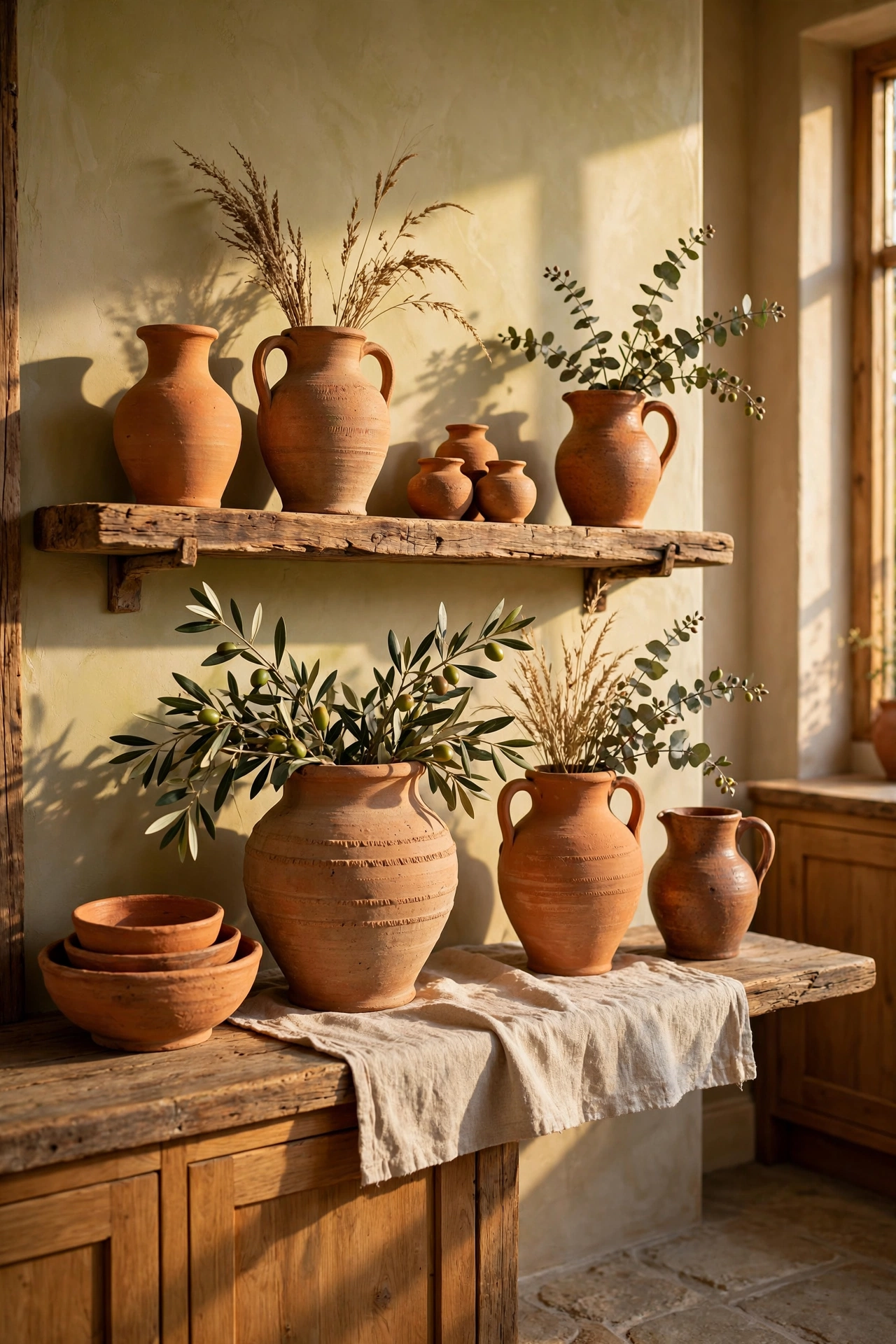
Group pieces in odd numbers and mix heights: a tall jug beside a squat bowl, a trio of small cups trailing behind. Tonal families – all warm rusts, or all sandy neutrals – look curated without feeling matchy or contrived.
Display them where they catch natural light: on open shelves, atop cabinets, or along a windowsill. Morning sun makes matte clay practically glow from within.
Make the collection useful, not just pretty. Store utensils in a crock, fruit in a wide bowl, olive oil in a small pitcher. Pottery that works for its place earns its shelf space every day.
Start with two or three pieces from a local potter or artisan market, then add over time. A slowly gathered collection always looks more authentic than one bought in a single afternoon.
Rotate a few seasonal pieces – a pumpkin-shaped tureen in fall, a bright glazed bowl in summer – to keep the display feeling fresh year-round.
5. Earthy Sage Green Cabinetry
Sage green is the earthy kitchen’s signature color. It sits between gray and green like a leaf in shade – calm, natural, and endlessly easy to live with day after day.
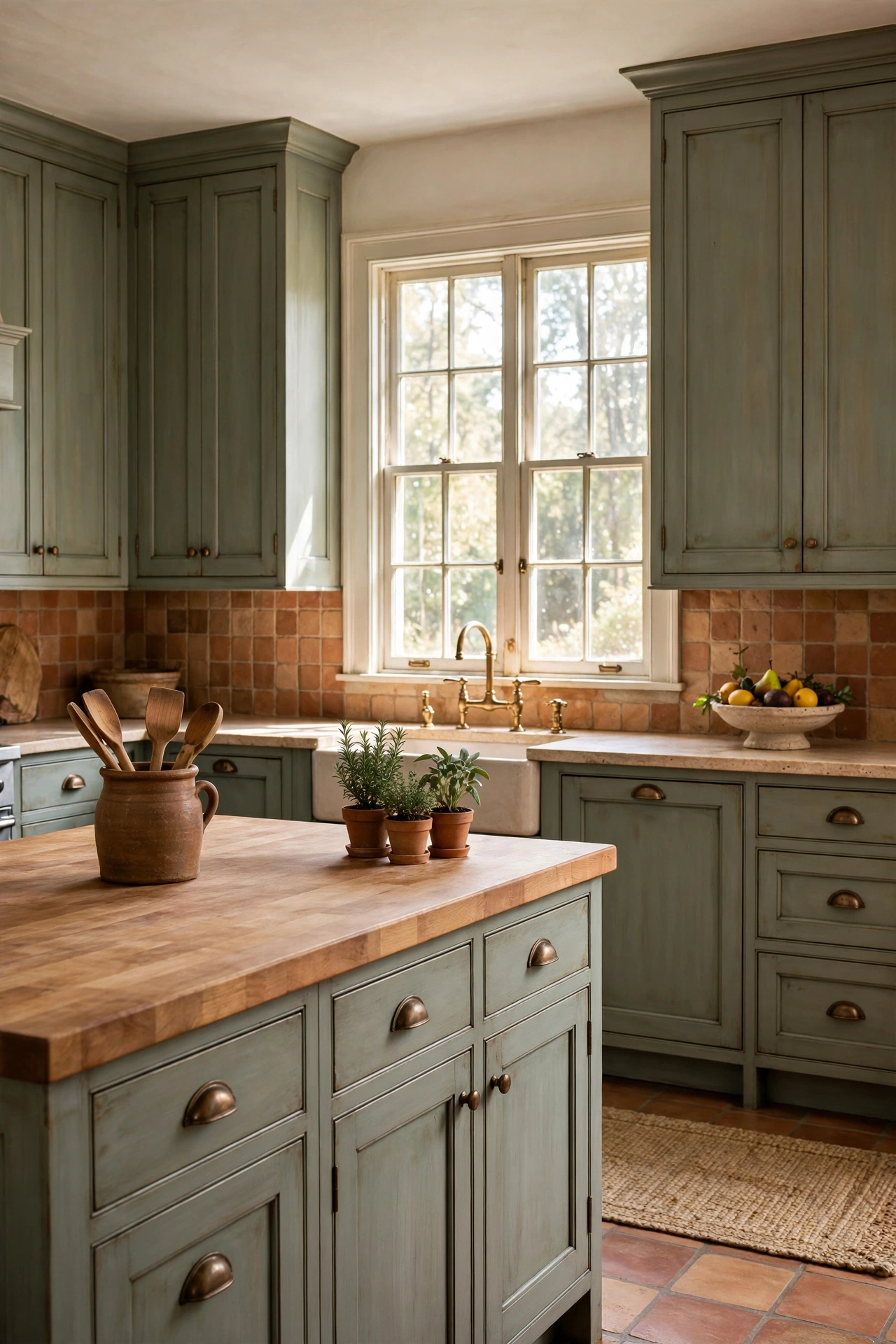
It plays beautifully with both warm and cool companions: pair it with brass hardware and butcher block for warmth, or with honed stone and black fixtures for a crisper, more tailored edge.
The finish matters as much as the color. A matte or eggshell paint keeps sage feeling soft and chalky rather than glossy and modern. Test swatches in your actual light – sage can shift from olive to mint depending on the room.
If repainting everything feels daunting, try sage on the island or the lower cabinets only, with warm white uppers. You get the grounded color without the full-room commitment.
Repainting cabinets is the highest-impact, lowest-cost refresh most kitchens can get. A weekend, quality cabinet paint, and a little patience can remake the entire room’s mood.
Complete the palette with warm white walls, a butcher block or honed stone counter, and brass pulls – the combination reads as timeless rather than trendy, and it will age gracefully for years.
6. Natural Stone Farmhouse Sink
A farmhouse sink carved from natural stone – travertine, limestone, or granite – turns the busiest workstation in the kitchen into a sculptural moment. Its apron front shows off the material’s raw beauty every time you walk into the room.
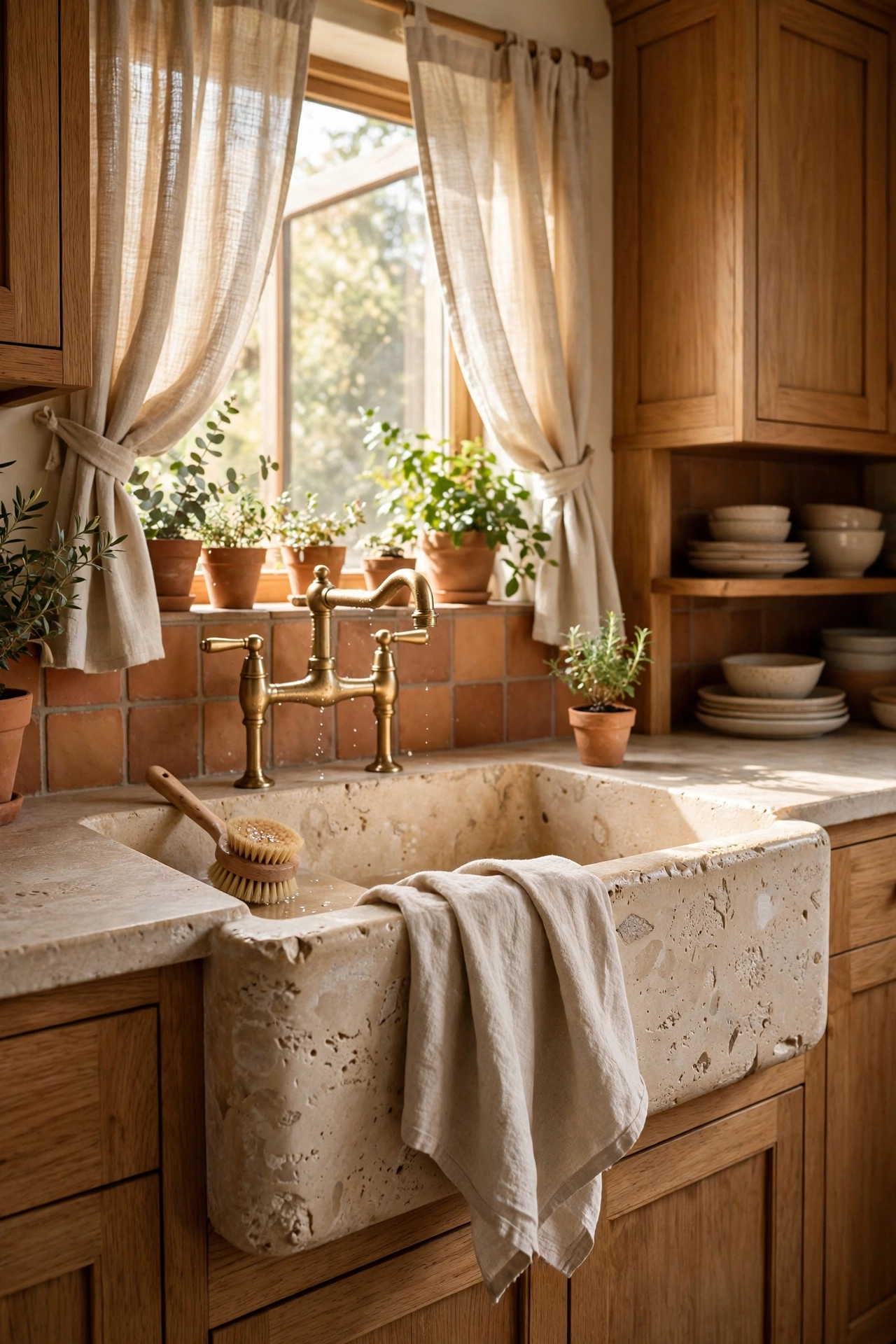
Stone sinks are heavy, so confirm your cabinetry can carry the weight and plan for professional installation. The result is a fixture that feels permanent in the best possible way.
A honed, matte finish suits the earthy look and hides water spots better than polished stone. Expect the surface to develop a gentle patina with use – that slow softening is part of the charm, not a flaw.
Pair it with a simple unlacquered brass or oil-rubbed bronze faucet so the fixtures echo the sink’s organic character instead of competing with it.
Stone sinks are a splurge, but they anchor the whole design. If the budget is tight, a fireclay farmhouse sink in warm white gives a similar handmade feel for considerably less.
Complete the setup with a wall-mounted drying rack or a simple wooden dish drainer beside the sink, keeping the hardworking zone as beautiful as it is practical.
7. Woven Rattan Pendant Lights
Rattan pendants are the fastest way to weave warmth into a kitchen’s lighting. Their open weave filters light into soft, dappled patterns that make everything underneath feel more inviting and alive.
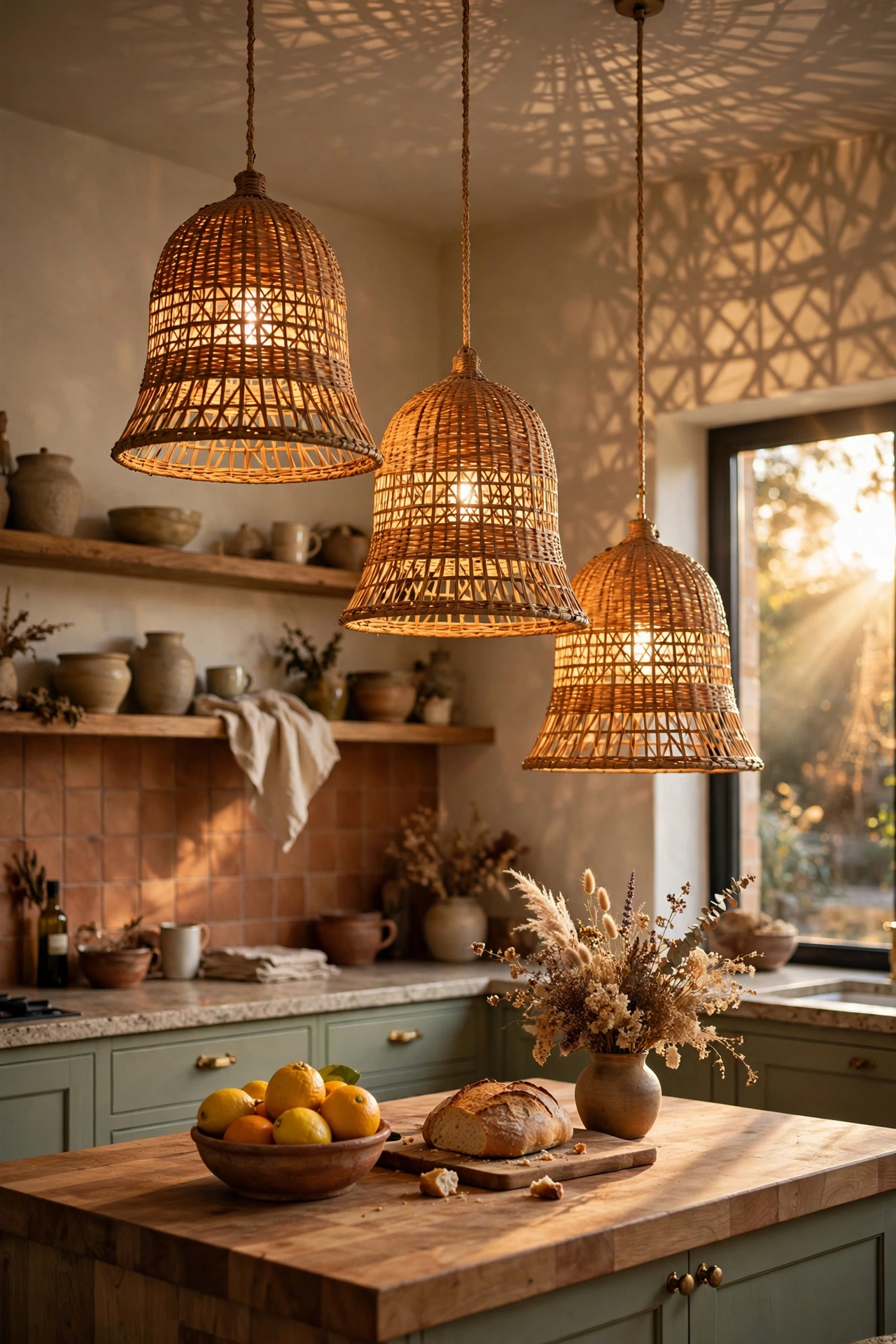
Hang a pair or a trio over the island, sized generously – pendants that are too small look apologetic. Let them drop to about 30 to 36 inches above the countertop for the best balance of light and presence.
Natural rattan works with almost every earthy palette, from terracotta to sage to walnut. For a more finished look, choose pieces with a dark stain or slim black trim.
Pair them with warm-white bulbs, around 2700K, so the glow stays golden rather than clinical. Dimmable fixtures let you shift from bright prep light to a soft evening mood with one touch.
Rattan pendants are widely available at accessible prices, and swapping them is a renter-friendly update that changes the whole feel of the room in under an hour.
For larger kitchens, scale up to oversized drum or dome rattan shades – they fill vertical space beautifully and cast an even warmer pool of light over the island.
8. Butcher Block Kitchen Island
A butcher block island brings warmth straight to the center of the kitchen. Wood at the heart of the room softens surrounding stone and tile, and it invites people to gather, chop, and linger.
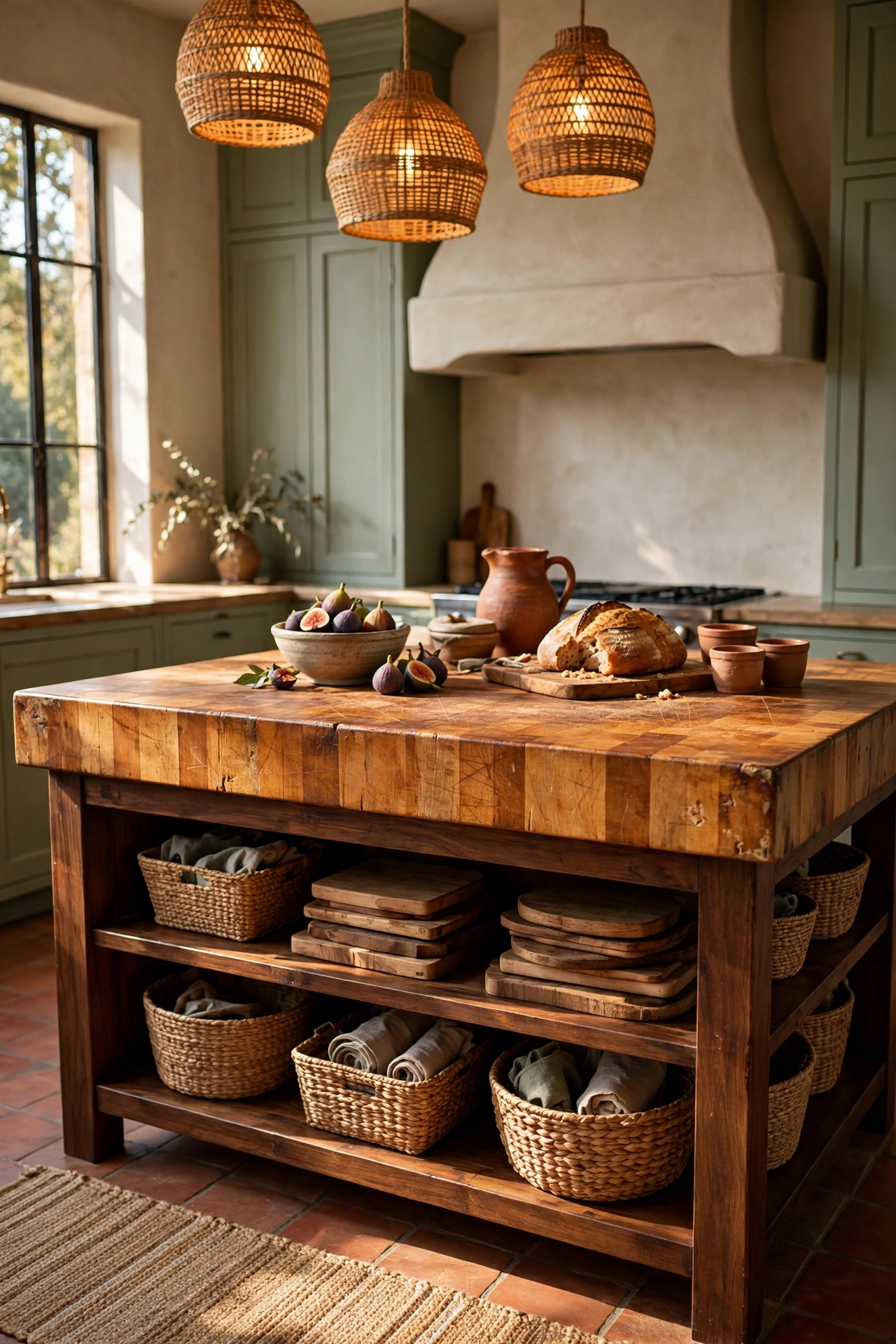
Choose a thick top – at least an inch and a half – for that substantial, furniture-like feel. Maple and walnut are classics; acacia adds rich variation at a friendlier price point.
Finish food-prep areas with food-safe oil, which you can refresh yourself in minutes, or use a hardwax oil for a balance of durability and natural feel. Avoid film finishes that will chip and peel over time.
Contrast the top with a painted or stained base – walnut, sage, or even matte black – so the island reads as a deliberate piece of furniture rather than just more cabinetry.
Butcher block is one of the most affordable solid countertop materials. A pre-made top can be installed on an existing island base in a single day.
Add seating to one side with simple wood or woven stools, turning the island into a casual gathering spot for breakfast, homework, and long evening conversations.
9. Limewash Textured Walls
Limewash paint gives walls a soft, cloud-like movement that flat paint can never achieve. Its mineral finish catches light in gentle waves, adding depth that makes even a simple kitchen feel layered and old-world.
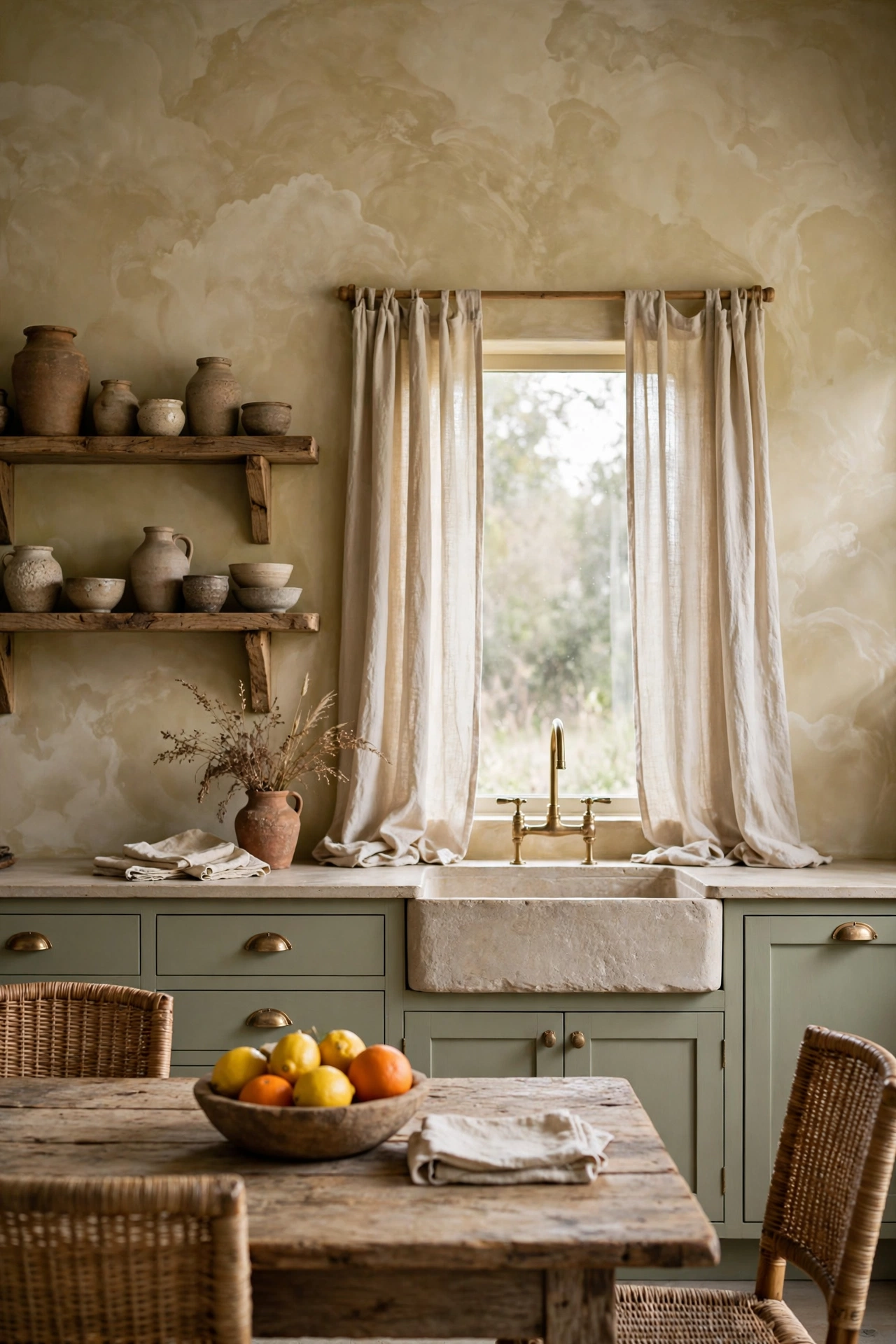
Earthy tones shine in limewash: warm whites, sand, clay, mushroom, and soft sage all take on extra dimension. Sample a few shades, because limewash dries lighter and more mottled than the wet color suggests.
Application is forgiving – large, loose X-shaped strokes with a block brush build the texture naturally. It is a beginner-friendly weekend project with a genuinely high-end result.
Limewash is naturally breathable and low in VOCs, which suits kitchens where air quality matters. It also touches up easily; a fresh coat blends invisibly into the old.
Use it on a single accent wall or the whole room, and keep trim and cabinetry simple so the texture stays the star. One room of limewash often inspires the whole house.
If you love the look but not the DIY, many painters now offer limewash as a service – and because the finish is meant to look hand-applied, even a first attempt usually looks wonderful.
10. Handmade Zellige Tile Accents
Zellige tiles – handmade Moroccan clay tiles with a glassy, uneven glaze – bring shimmer and soul to an earthy kitchen. Their slight imperfections catch light in a way machine-made tile never manages.
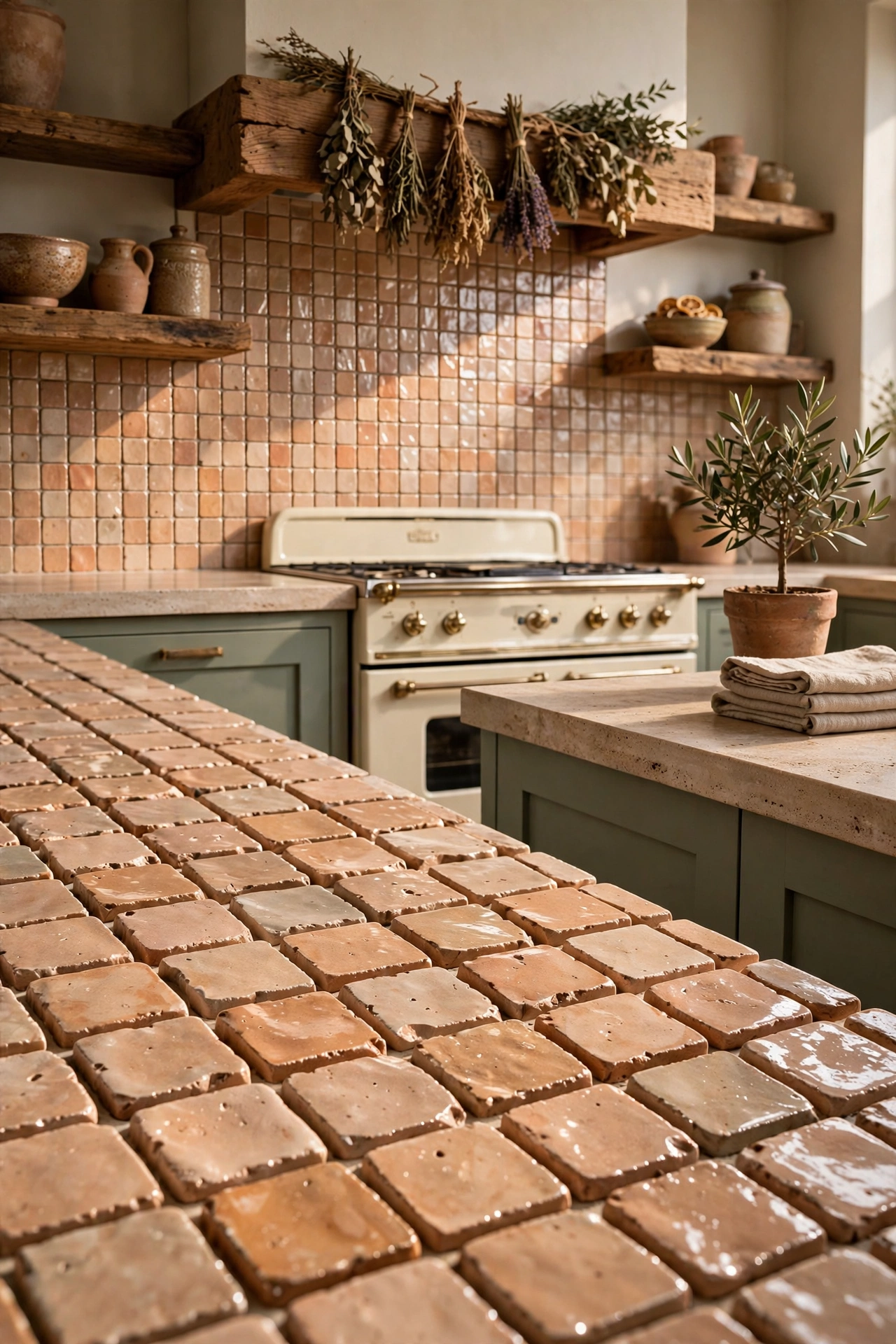
Use them as a full backsplash for maximum impact, or as an accent: a strip behind open shelves, a framed panel behind the range, or a border of zellige set inside a simpler field tile.
Earthy zellige shades – sand, clay, sage, warm white – keep the look grounded rather than coastal. The handmade variation means ordering samples is essential; every batch differs, beautifully.
Pair the glossy tile with matte companions: honed counters, limewashed walls, rough wood. That contrast of shine and softness is exactly what makes zellige sing.
Real zellige is a splurge, but a little goes a long way. One accent wall or range panel delivers most of the magic at a fraction of a full-room cost.
Extend the zellige onto a nearby windowsill or the face of the island for a designer touch – small repeats of the handmade tile make the whole kitchen feel truly considered and cohesive.
11. Rustic Oak Ceiling Beams
Exposed oak beams draw the eye upward and give a kitchen instant architectural weight. They make even a standard-height ceiling feel crafted rather than merely constructed.
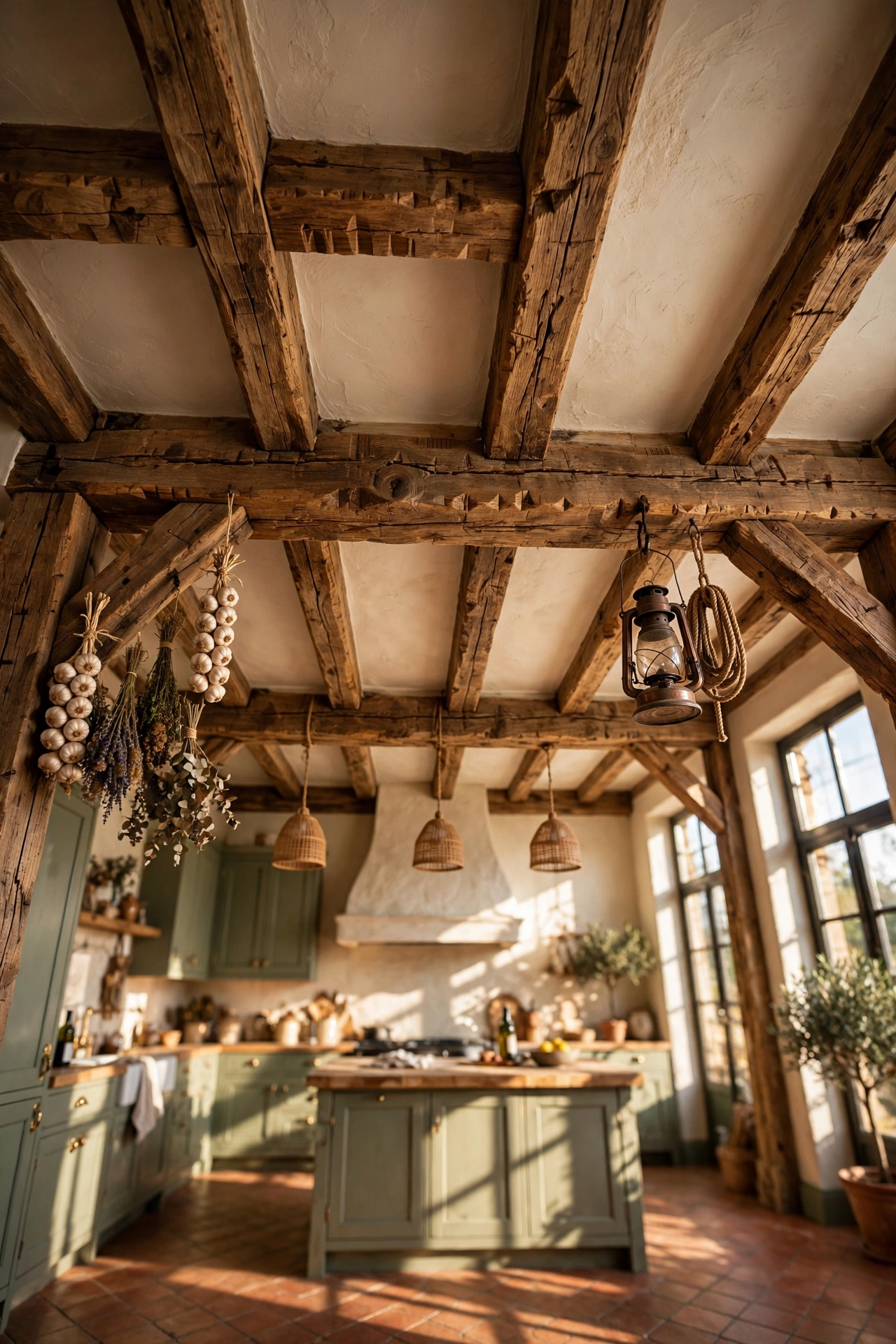
Real reclaimed beams are the gold standard – check salvage yards and demolition dealers – but quality faux beams in real wood veneer or textured polyurethane fool nearly everyone once installed and stained.
Keep the finish matte and natural: a light oil or clear matte sealer lets the grain speak for itself. Dark stains can feel heavy overhead, so test before committing to anything dramatic.
Beams pair naturally with pendant lights hung between them, and they give you a ready anchor for hanging herbs, copper pots, or dried floral bundles.
Installation is straightforward for a carpenter, but plan around wiring and ceiling joists first. Even three beams across a small kitchen can completely change its character.
If your ceiling cannot take the weight of solid timber, hollow box beams clad in reclaimed boards give the same look at a fraction of the weight. Paint the ceiling between the beams a warm white to make the wood pop, and add subtle uplighting if you want the beams to glow after dark.
12. Potted Herb Garden Window
A windowsill herb garden is the earthy kitchen’s living accessory. Fresh basil, thyme, rosemary, and mint add green life, fragrance, and flavor within arm’s reach of the stove.
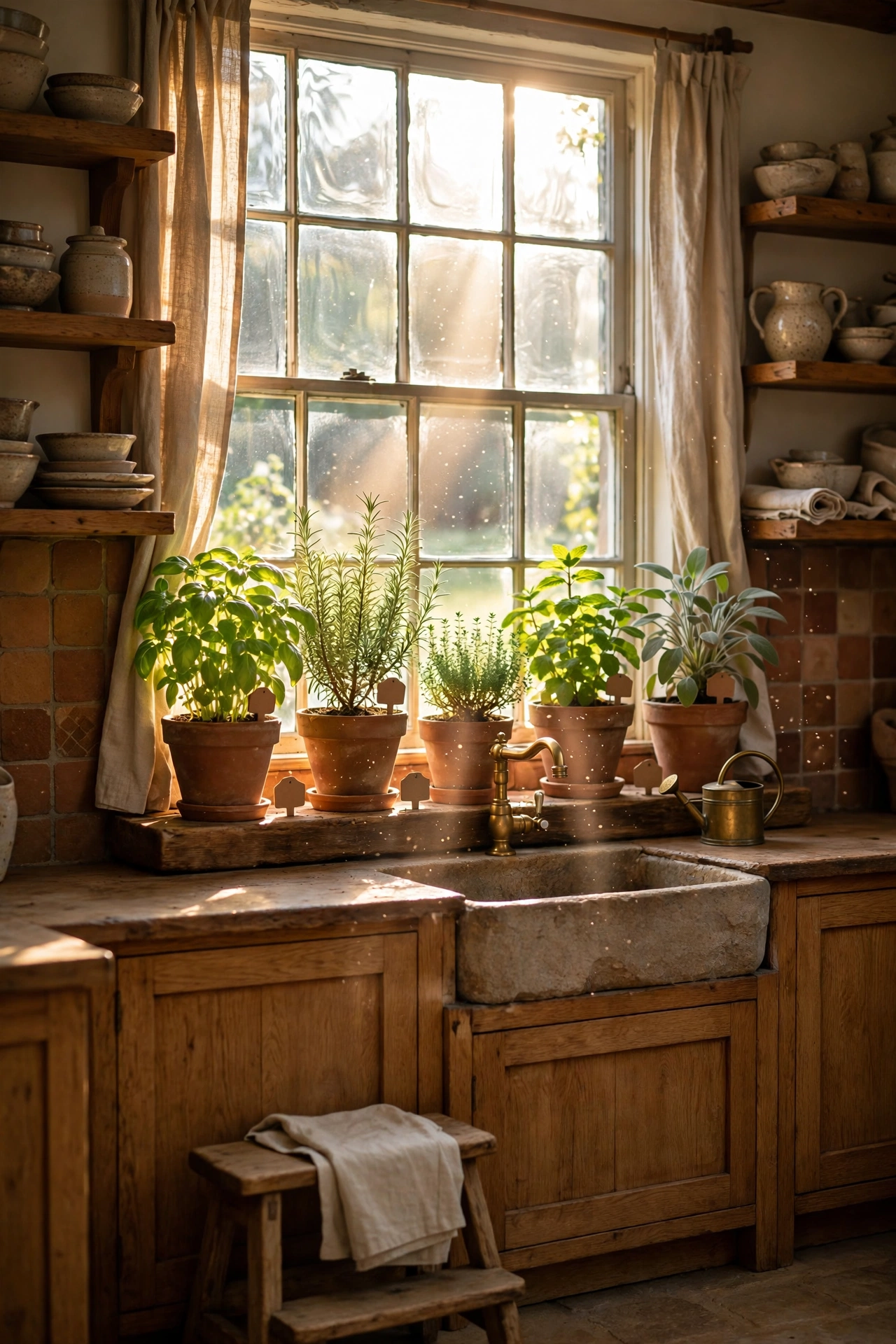
Group pots in a unifying material – terracotta, handmade clay, or simple stoneware – so the collection looks intentional rather than cluttered. Odd numbers and varied heights keep the arrangement feeling natural.
Most culinary herbs want around six hours of sun, so a south- or west-facing window is ideal. Rotate pots weekly so every side gets light, and pinch basil regularly to keep it bushy and productive.
If your window is narrow, use a tiered stand or a wall-mounted rail with hanging planters. Growing vertically saves precious sill space while looking wonderfully lush.
Beyond looks, a herb garden changes how you cook – snipping fresh thyme straight into the pan is a small daily pleasure that keeps the kitchen feeling alive.
Label the pots with small wooden markers or handwritten tags for a charming touch, and keep a pair of herb scissors nearby so snipping becomes second nature. Even a single pot of basil on the sill brings the garden-to-table feeling home.
13. Terracotta Floor Tiles
Terracotta floors are the foundation of the classic earthy kitchen. Their warm, sunbaked tones make the whole room feel grounded, and they age beautifully, gaining character with every passing year.
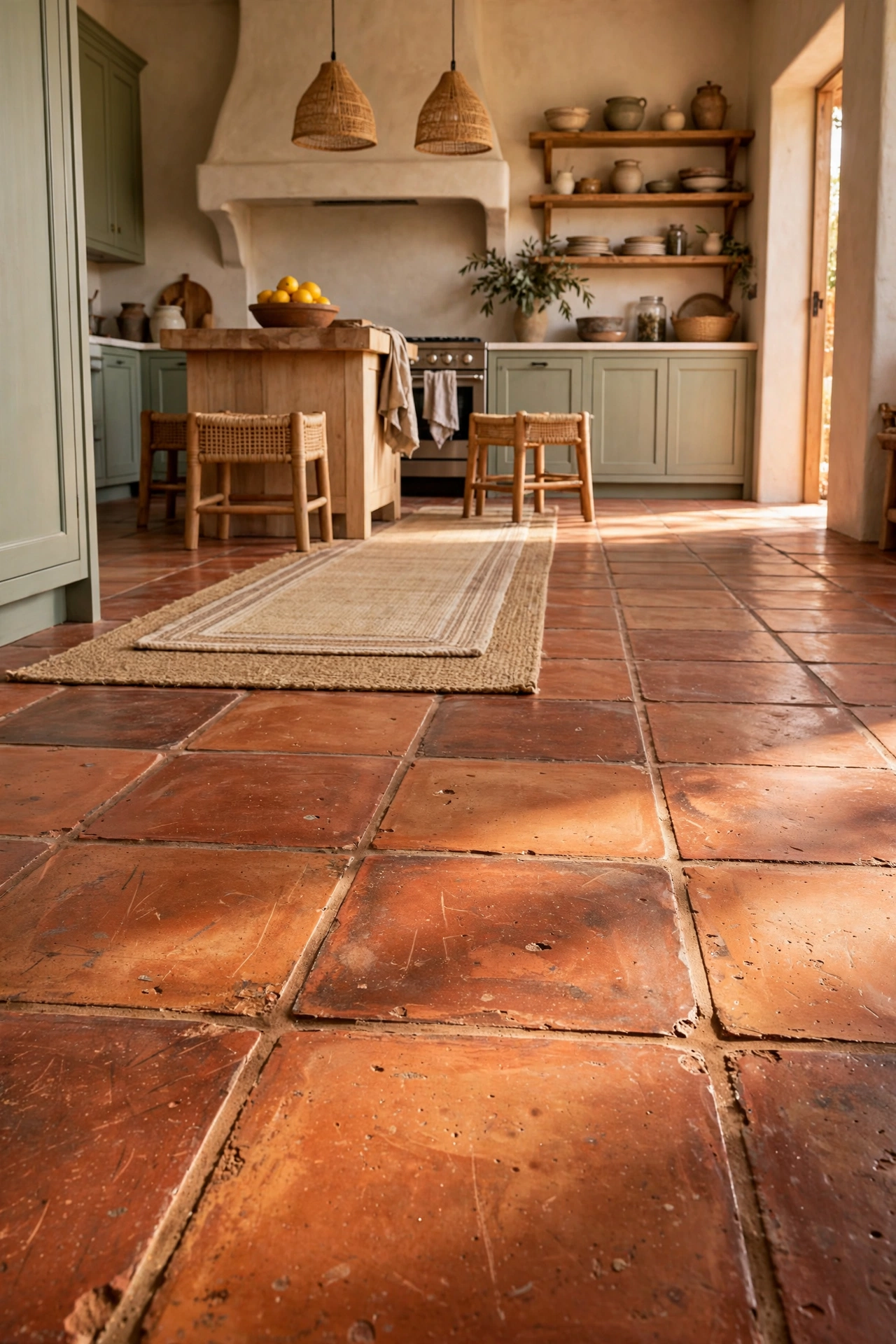
Saltillo tile is the traditional choice, with its rustic edges and wide tonal range; smoother terracotta-look porcelain offers similar warmth with easier maintenance and a tighter budget.
Seal terracotta floors properly and they handle kitchen spills well. A matte sealer preserves the natural look while protecting the porous clay against stains.
Pair terracotta floors with simple, quiet companions – warm white walls, wood cabinetry, natural textiles – and let the floor carry the color story of the room.
Floors are a big commitment, so order full-size samples and live with them for a week. Watch how the tone shifts from morning to evening light before you decide.
In open-plan homes, carry the terracotta into the adjoining dining area to unify the spaces, or stop it at a natural threshold with a slim brass transition strip. Underfloor heating pairs wonderfully with tile, keeping the warm clay cozy underfoot even in winter. However you lay it, terracotta rewards the investment with decades of patina.
14. Live-Edge Wood Dining Table
A live-edge table brings the forest straight into the kitchen. Its natural, wavy edge preserves the tree’s original line, making every single table a one-of-a-kind piece.
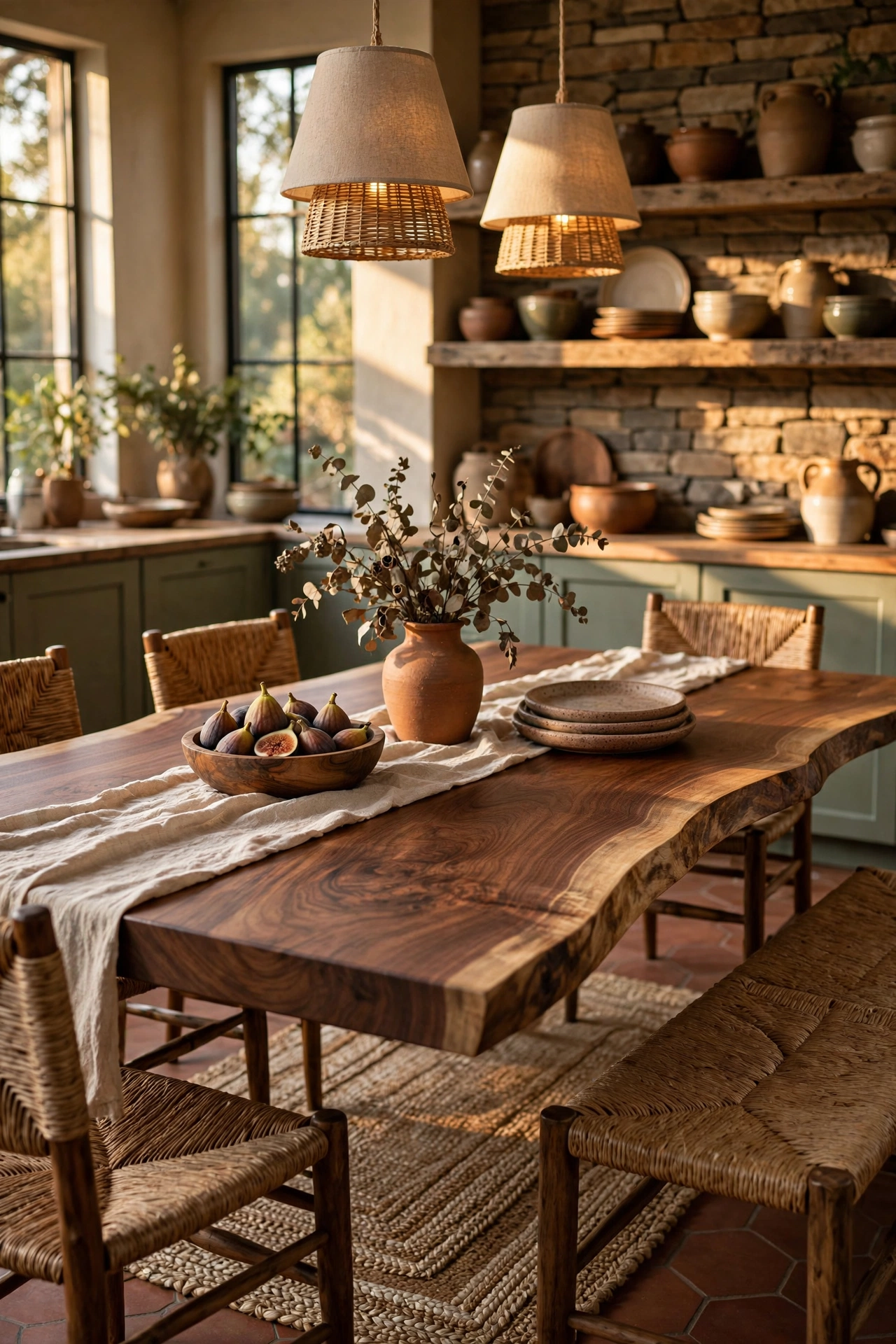
Oak, walnut, and acacia are popular choices – each with its own grain personality. A thick slab feels substantial and sculptural; a thinner one suits smaller eat-in kitchens better.
Finish with a durable hardwax oil or matte polyurethane so the top survives daily meals. The natural edge should be sanded smooth enough to be comfortable, but left visibly organic.
Pair the table with simple chairs – wishbone, ladder-back, or upholstered linen – so the table stays the sculptural focus. A jute rug underneath softens the whole arrangement.
Live-edge tables range from affordable acacia to investment-grade walnut. Check local woodworkers; a custom slab often costs less than a designer brand name.
Protect the table with felt pads under serving dishes and coasters for hot pots, and re-oil the surface once or twice a year to keep the wood nourished. If you love to entertain, choose a slab long enough to seat eight comfortably – a live-edge table turns every dinner into an occasion. Its organic shape also softens rooms full of straight lines.
15. Jute Runner Rug Layering
A jute runner softens hard kitchen floors and adds the natural fiber texture every earthy kitchen needs. Its warm tan weave works like a neutral that still has plenty of personality.
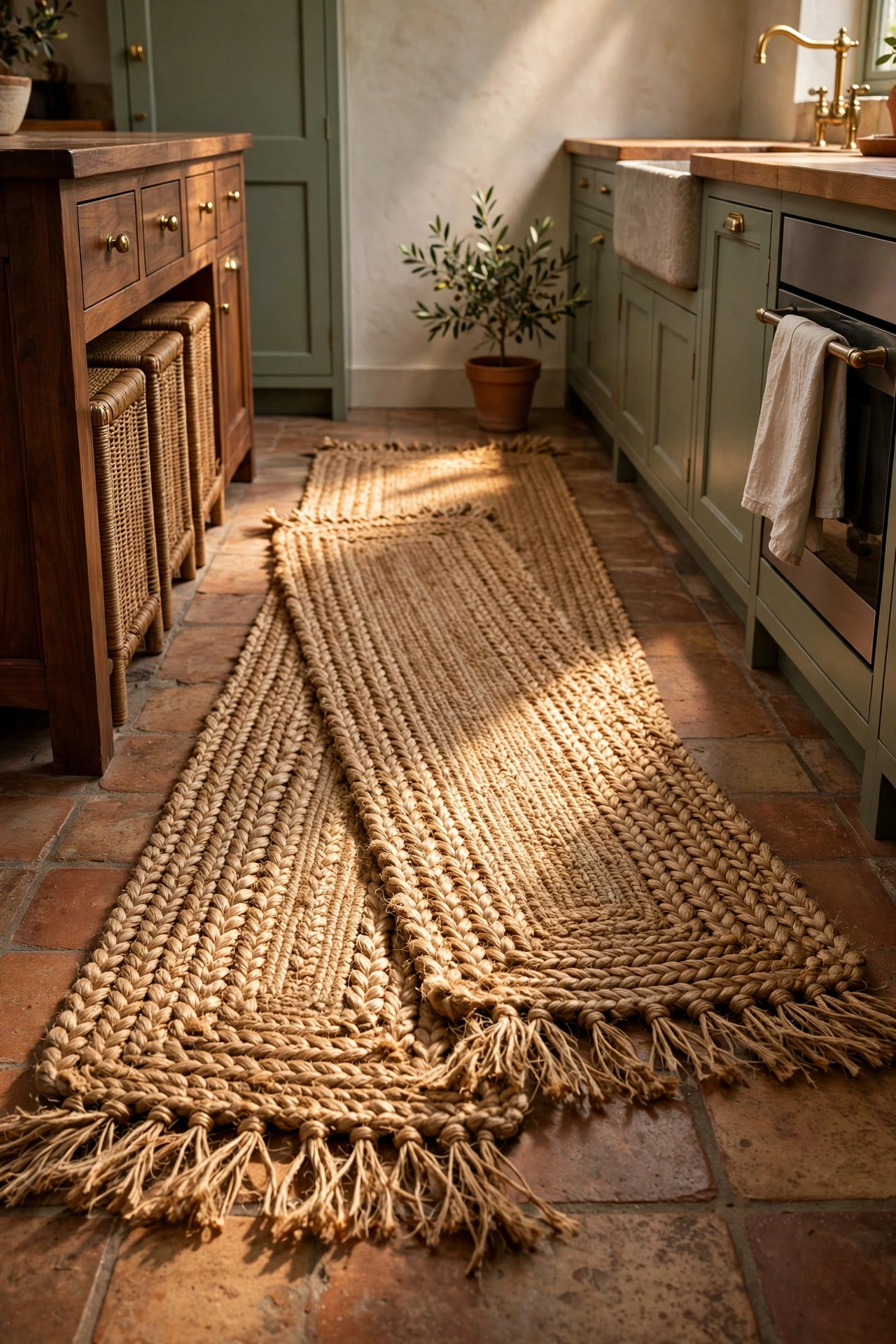
Layer it for extra interest: a flat jute base with a smaller patterned or vintage-style rug on top adds depth and a collected feel. Keep the top layer low-pile so it lies flat and cleans easily.
Place runners where you stand most – along the sink, the island, or the cooking zone. They cushion feet during long prep sessions and protect floors from everyday wear.
Choose a rug pad underneath to prevent slipping and extend the rug’s life. In the kitchen, a washable top layer is a practical luxury well worth having.
Jute is budget-friendly and widely available. Swap or refresh it seasonally – it is one of the easiest ways to update the kitchen’s feel without touching a single wall.
For a bolder look, choose a runner with a subtle tribal or kilim pattern over the jute – the mix of flat natural fiber and low-pile pattern is a classic designer trick. Shake runners out regularly, and spot-clean spills quickly to keep the fibers fresh.
Earthy Kitchen Planning Guide
| Element | Material & Palette Tip | Budget Note |
|---|---|---|
| Backsplash | Terracotta or zellige tile; keep grout matte and warm | $-$$; ceramic lookalikes from ~$3/sq ft |
| Cabinetry | Sage green or mushroom paint in matte/eggshell finish | $$; repainting beats replacing |
| Countertops | Honed travertine, butcher block, or warm stone | $$; butcher block is the value pick |
| Flooring | Terracotta tile or warm wood-look porcelain | $$; porcelain lookalikes cut cost |
| Lighting | Woven rattan or wicker pendants, 2700K bulbs | $; swap fixtures in under an hour |
| Open Shelving | Reclaimed wood planks on iron or brass brackets | $; salvage yards keep it cheap |
| Hardware | Unlacquered brass, aged bronze, or oil-rubbed finishes | $; quickest refresh on this list |
| Walls | Limewash in sand, clay, or warm white | $; beginner-friendly weekend project |
| Textiles | Jute, linen, and seagrass in natural undyed tones | $; layer rugs and cafe curtains |
| Decor & Greenery | Clay pottery, stoneware, dried eucalyptus, potted herbs | $; gather slowly for authenticity |
16. Stoneware Dish Collection
Everyday stoneware in earthy glazes turns the most-used items in your kitchen into decor. Speckled oatmeal, matte sand, and warm gray dishes look beautiful stacked on open shelves and feel wonderful in the hand.
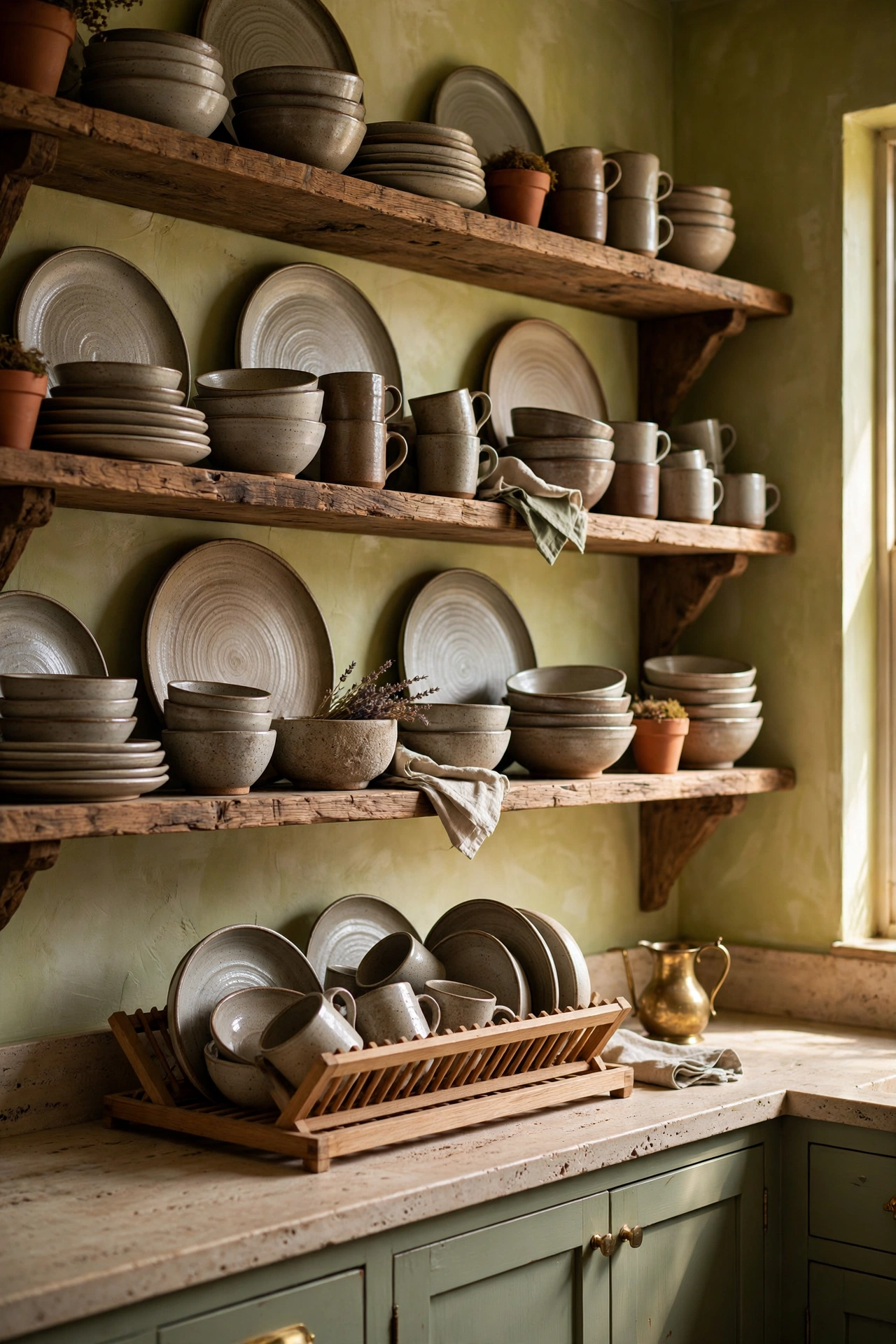
Build the collection gradually, mixing handmade pieces with good-quality manufactured ones. A consistent palette – not matching sets – is what makes it look curated rather than uniform.
Display the pieces you reach for daily: bowls stacked by size, mugs on hooks, plates on a simple rack. Beauty that works for its place never feels staged or precious.
Stoneware is forgiving – it hides wear, goes from oven to table, and suits every cuisine. Choose lead-free, food-safe glazes, and check that handmade pieces are dishwasher-safe if that matters to you.
Start with a dinnerware set in your chosen palette, then add serving pieces over time. Thrift stores and artisan markets are gold mines for one-of-a-kind finds.
If you entertain often, add a few large serving platters and a generous salad bowl in the same glaze family – they make even simple weeknight dinners feel special. Hand-wash treasured handmade pieces to protect their glazes for decades.
17. Earthy Plaster Range Hood
A plaster range hood is a sculptural statement that softens the hardest-working appliance in the kitchen. Its smooth, hand-troweled curves feel more like architecture than equipment.
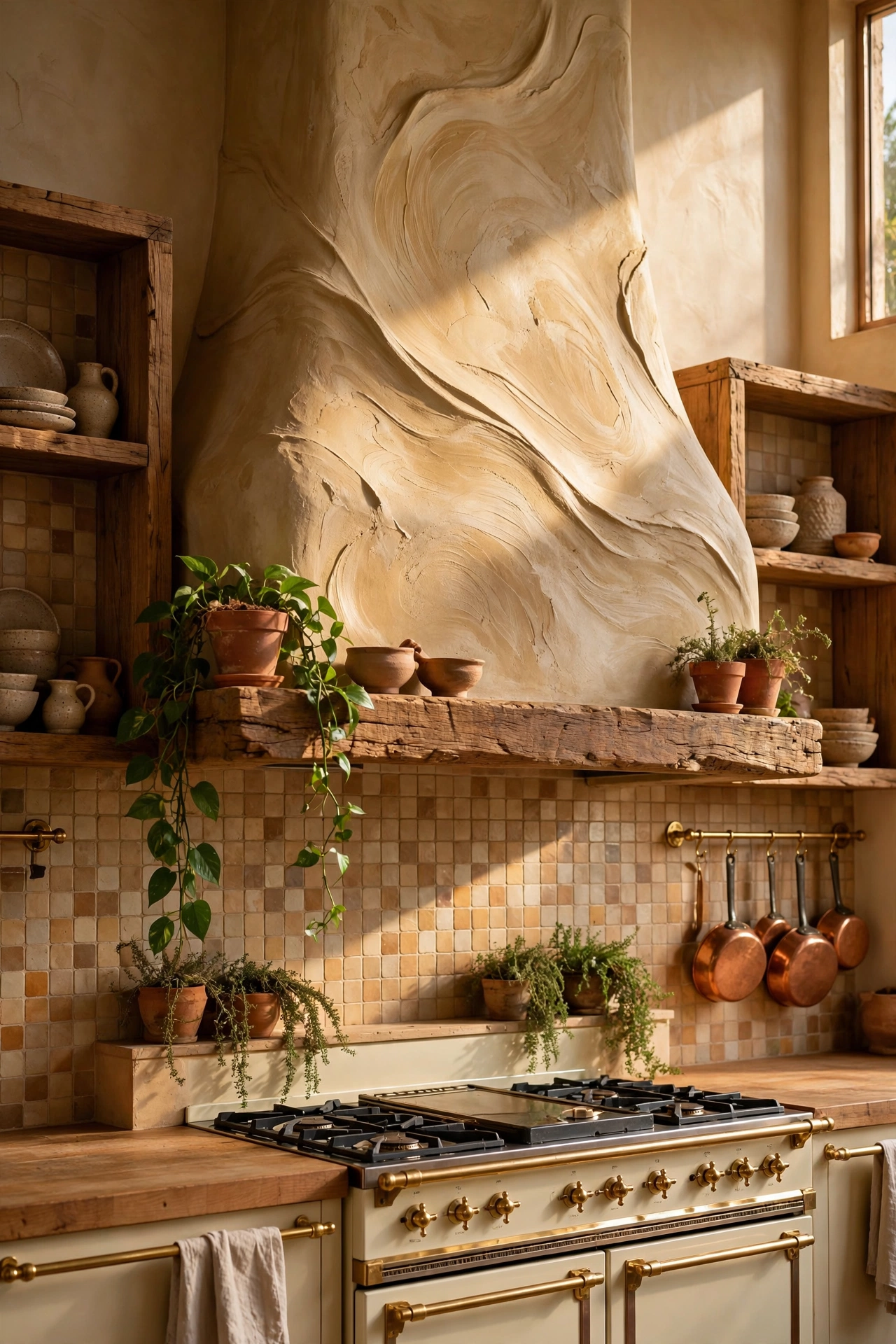
Lime plaster or microcement in warm white, sand, or clay tones gives the classic look. The subtle texture catches light beautifully and visually dissolves the bulk of the hood.
Shape matters: a gentle arch or tapered curve feels organic, while a crisp box reads more modern. Either way, keep the profile simple so the texture does the talking.
Pair a plaster hood with natural companions – wood beams, zellige tile, or a stone backsplash – and keep surrounding cabinetry quiet so the hood holds focus.
A plaster finish can be applied over a standard hood insert, making it an achievable custom look. Budget for a skilled plasterer; the hand finish is what sells it.
Ventilation still matters, so size the insert to your cooktop’s output and vent it properly to the outside. A plaster hood pairs beautifully with a simple open shelf on either side for oils and spices, keeping everything within reach. Done well, it becomes the architectural anchor the whole kitchen is designed around.
18. Wooden Cutting Board Gallery Wall
A wall of wooden cutting boards is functional art. The varied shapes, tones, and grains – from pale maple to deep walnut – create a rich, textural composition that no painting can match.
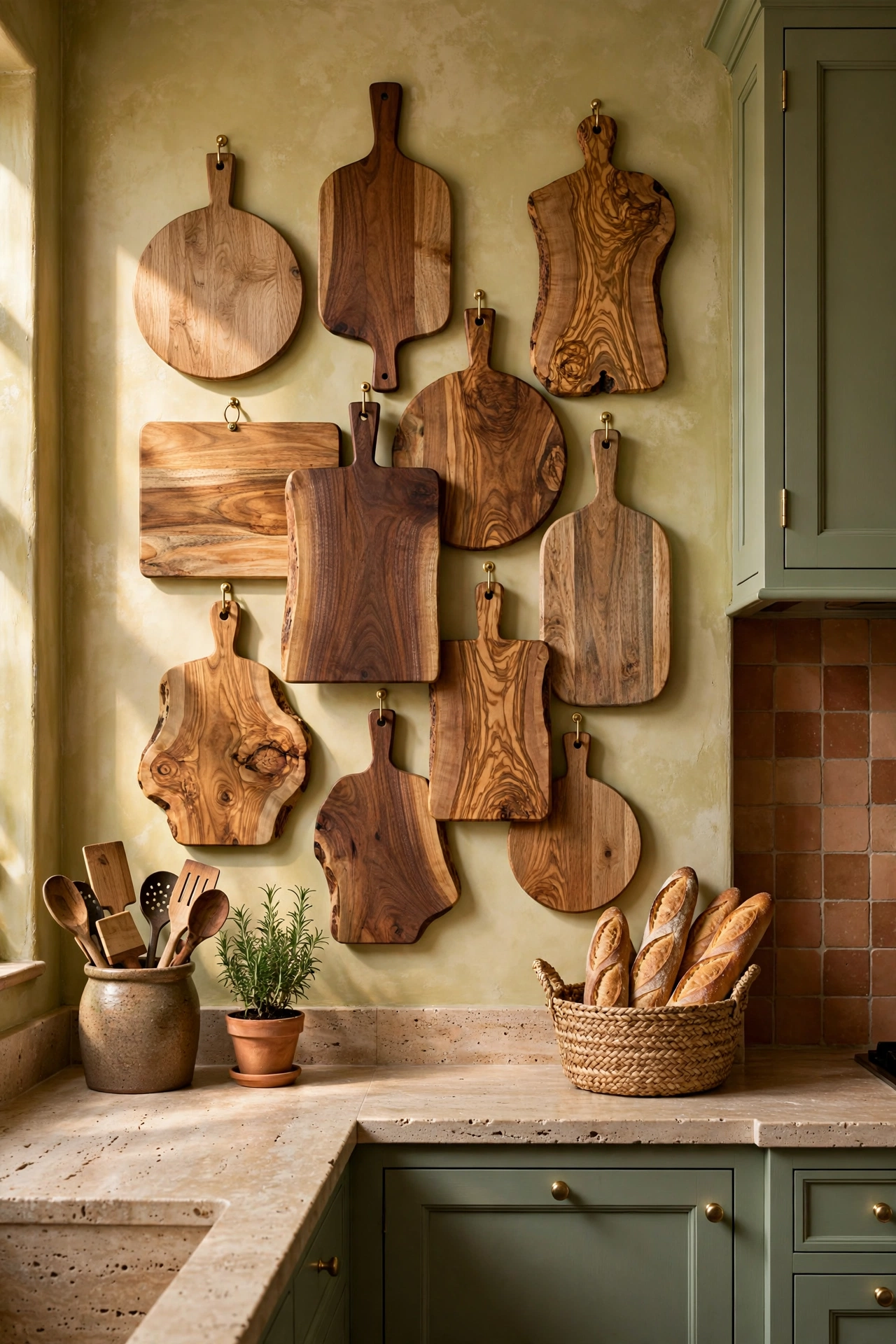
Collect boards in different silhouettes: rounds, rectangles with handles, paddle shapes, and at least one oversized statement piece. Hang them with small brass hooks or simple leather loops.
Arrange the boards on the floor first, then transfer the layout to the wall. Leave breathing room between pieces; a little negative space keeps the wall from feeling cluttered.
Use the boards, not just display them. Rotate them into service and back again – a board with a few honest knife marks has more soul than a pristine one.
This is a wonderfully affordable project: thrift stores are full of solid wood boards waiting for a sanding and oil refresh. A whole gallery wall can come together for very little money.
Add small brass labels or burned-in initials to mark favorites, and include one or two marble or slate boards for contrast. The mix of materials keeps the wall interesting, and the stone boards double as cheese servers when guests come over.
19. Dried Eucalyptus and Floral Arrangements
Dried eucalyptus, grasses, and flowers bring lasting natural beauty to the kitchen without any maintenance. Their muted tones – sage, wheat, dusty rose – are the earthy palette in plant form.
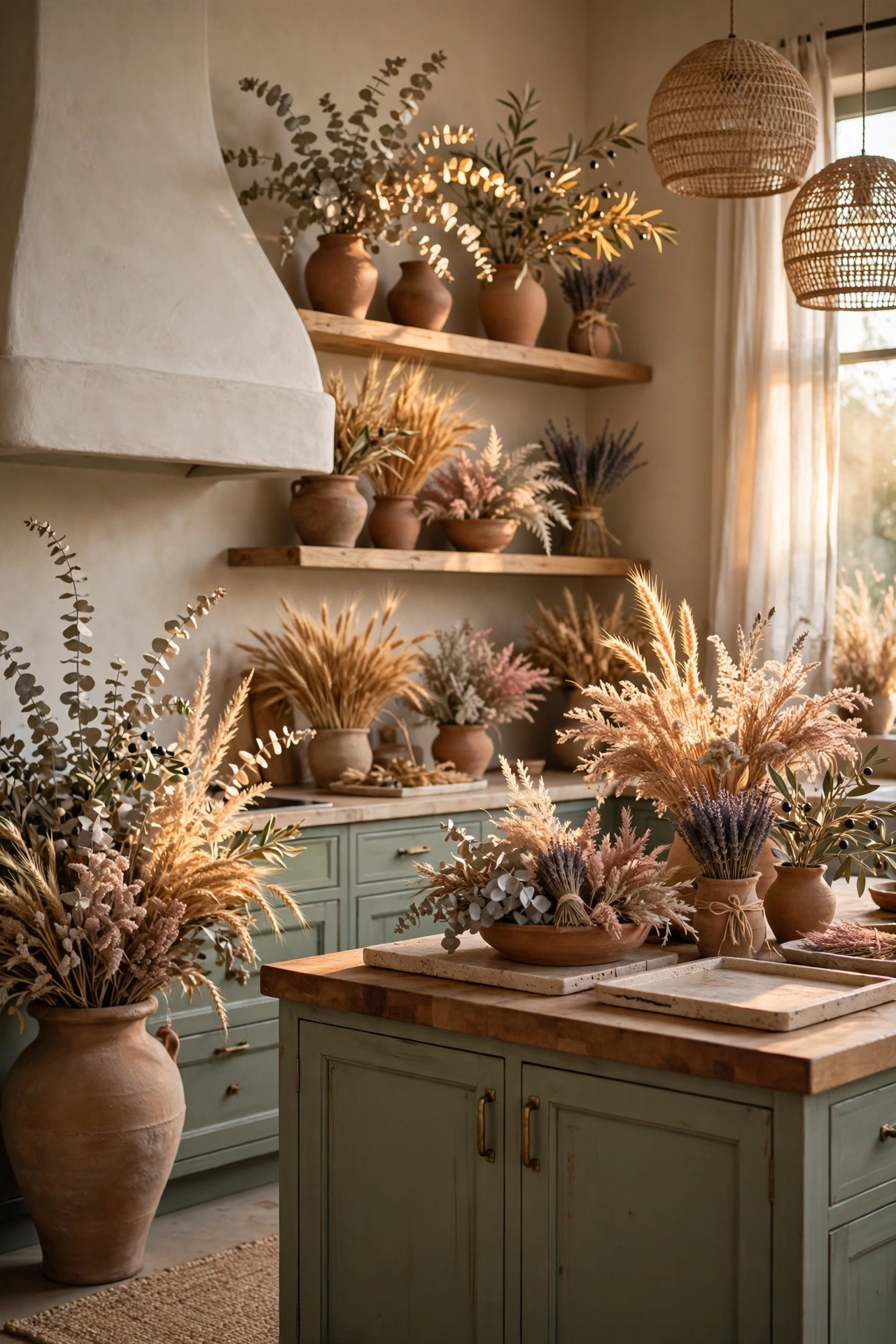
A tall bundle in a clay vase makes a striking countertop moment; smaller sprigs tucked into open shelving add softness between the hard lines of dishes and jars.
Eucalyptus is the star for good reason: it smells wonderful, dries beautifully, and its silvery-green leaves suit every season. Mix in dried lavender, wheat stalks, or pampas grass for variety.
Keep arrangements away from the stove and out of direct cooking splatter. A quick shake outdoors every few months keeps the dust at bay.
Dried florals are budget-friendly and long-lasting – one good bundle can look fresh for a year or more. Refresh a few stems seasonally to keep the arrangement feeling current.
For the holidays, weave in dried orange slices, cinnamon sticks, or preserved autumn leaves to give the arrangement a seasonal twist. Hang a small bundle upside down from a beam or shelf bracket for a cascading effect. Because dried botanicals last so long, you can build a small collection of arrangements and rotate them through the year.
20. Warm Brass and Bronze Hardware
Hardware is the jewelry of the kitchen, and warm metals – unlacquered brass, aged bronze – are the earthy kitchen’s perfect finish. They glow against wood and painted cabinetry alike.
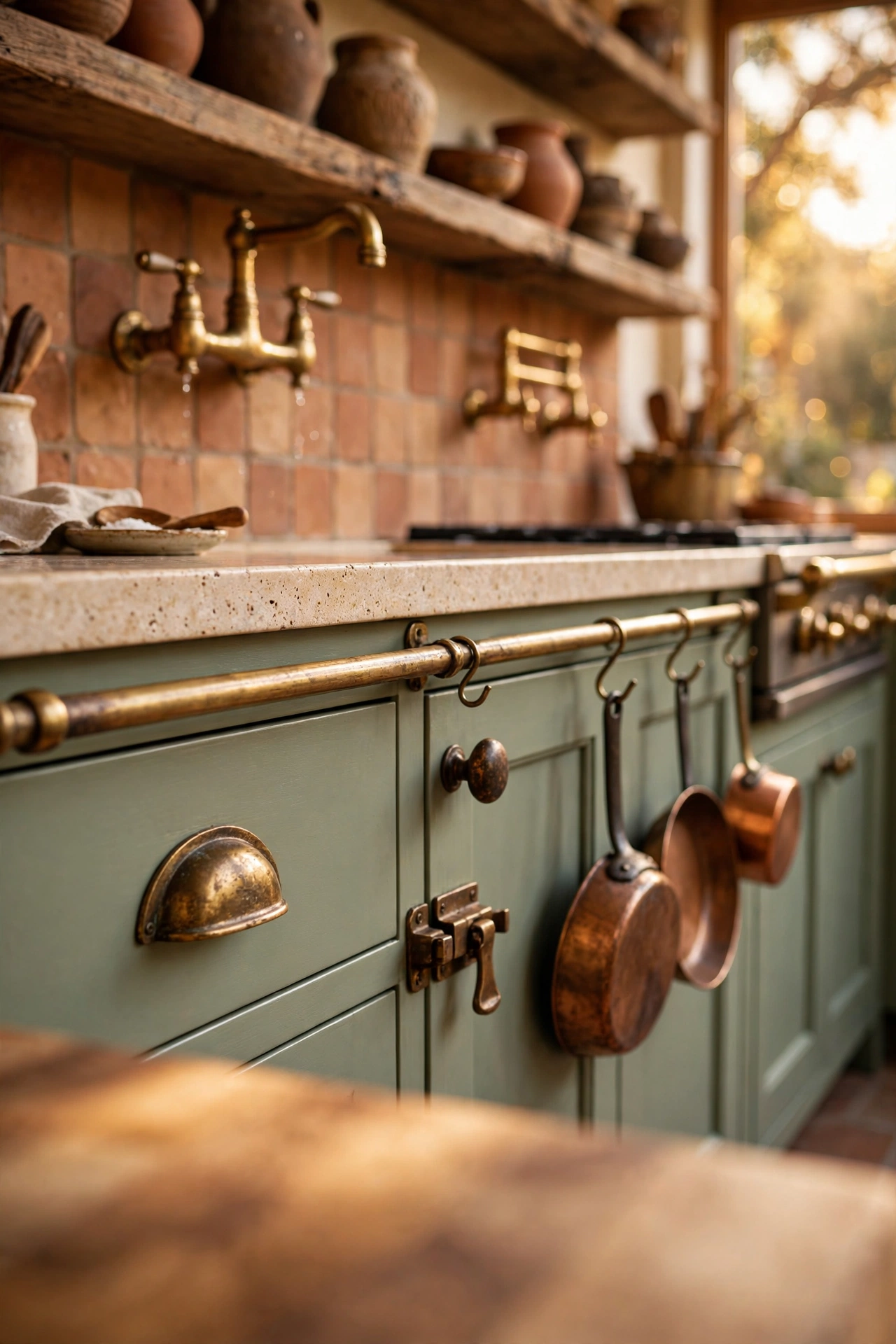
Unlacquered brass develops a living patina, darkening at touch points over time. If you love that evolution, embrace it; if not, choose a lacquered finish that stays bright and even.
Mix knobs and pulls thoughtfully: knobs on doors, cup pulls or bar pulls on drawers, all in one consistent finish. Consistency reads as intentional; mixing metals needs a careful hand.
Oil-rubbed bronze brings a darker, moodier warmth that suits walnut and rustic oak especially well. It hides fingerprints beautifully – a practical bonus in a busy kitchen.
Swapping hardware is the quickest kitchen refresh there is, often under an hour with a screwdriver. It is the highest-impact small-budget move on this entire list.
Before buying, check that new pulls match your existing hole spacing to avoid drilling fresh holes – or embrace the change and fill old holes for a clean start. Keep a soft cloth handy, since warm metals show fingerprints more than chrome. With minimal care, brass and bronze hardware develops a rich character that suits the earthy kitchen.
21. Clay Utensil Crocks
A handmade clay crock corrals cooking utensils into one beautiful, sculptural object. Its weight keeps it steady on the counter, and its matte texture adds an earthy note right where you work.
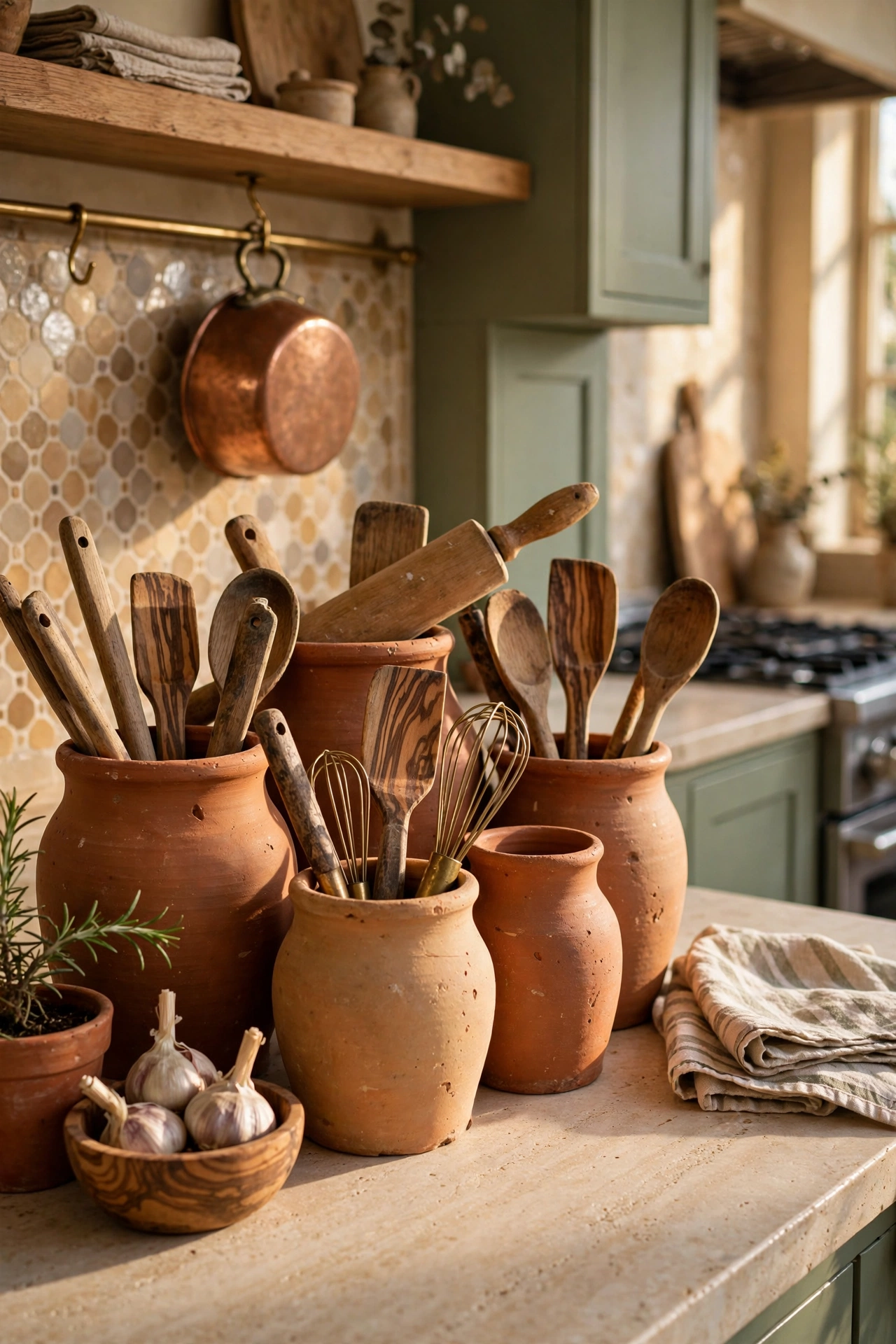
Choose a crock tall enough for your longest tools with a wide, stable base. Unglazed exteriors feel wonderfully tactile; glazed interiors wipe clean in seconds.
Group two or three crocks of different heights for a styled look – one for wooden spoons, one for metal tools, one for whisks. Tonal clay colors keep the grouping calm and cohesive.
Place crocks near the stove or prep zone where they are genuinely useful. Everyday tools deserve beautiful storage just as much as special-occasion pieces do.
Handmade crocks from local potters are affordable, and each one is unique. They also make thoughtful, personal gifts for fellow cooks.
Tuck a small crock beside the coffee station for stirrers and spoons, extending the handmade look beyond the stove. If you fall in love with a potter’s work, commission a matching set in graduated sizes – they nest visually even when each piece is one of a kind. A crock that is used daily becomes part of the kitchen’s rhythm.
22. Natural Linen Cafe Curtains
Linen cafe curtains filter sunlight into a soft, golden glow that makes the whole kitchen feel warmer. Their relaxed weave is the textile equivalent of a deep breath.
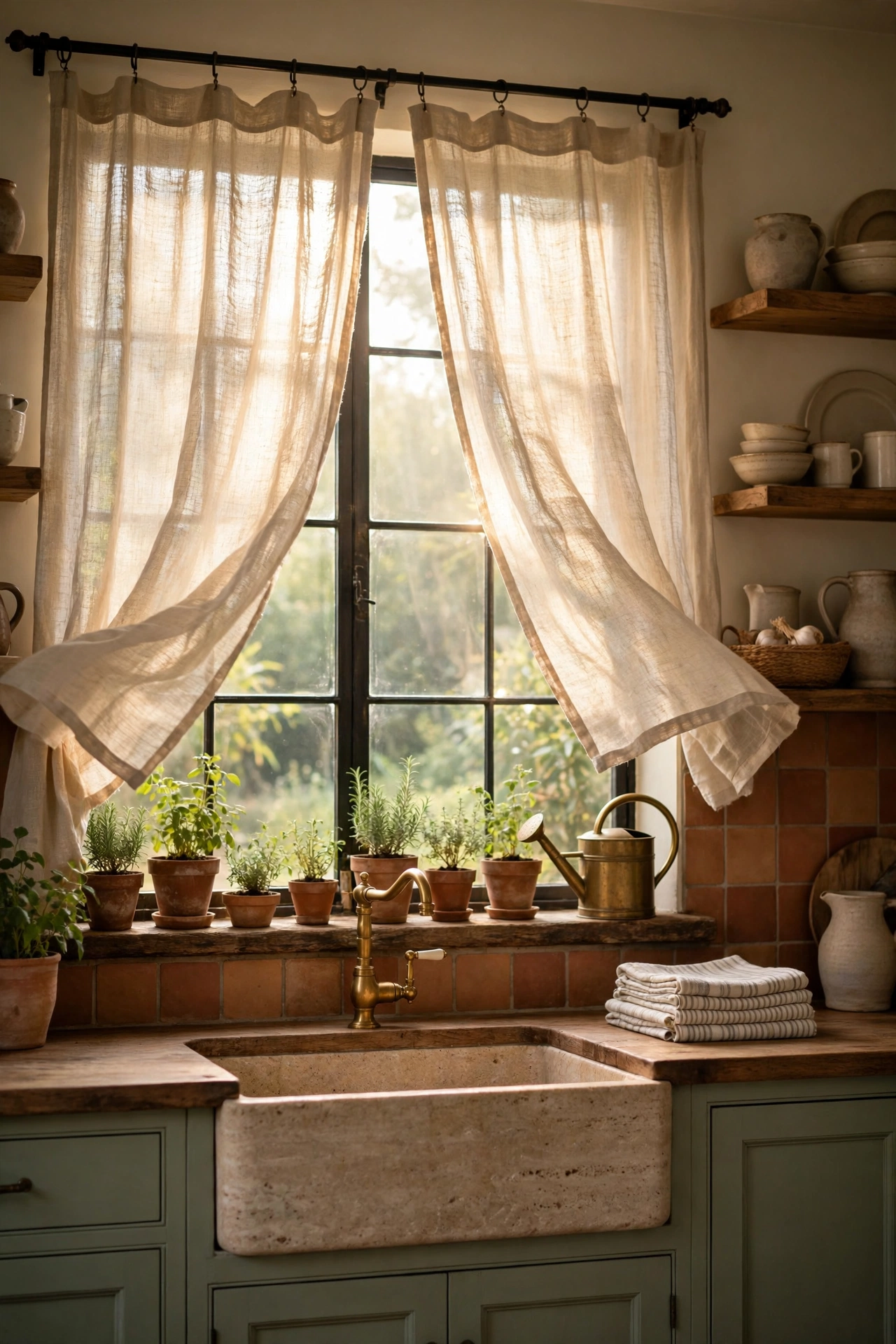
Cafe length – covering just the lower half of the window – keeps light pouring in from the top while providing privacy where you need it. It is a charming, old-world detail that suits earthy kitchens perfectly.
Choose undyed or oatmeal linen for the most natural look, or a soft stripe for a touch of pattern. The slight wrinkles are part of the appeal, so embrace rather than fight them.
Hang them on a simple brass or black rod with clip rings for an effortless look. Washable linen gets softer with every wash, which is exactly what you want from a kitchen textile.
Cafe curtains need very little fabric, making them an affordable sewing project or a budget-friendly ready-made buy. They transform a bare window in minutes.
For extra softness, layer sheers behind the cafe curtains on a double rod – you get filtered light plus adjustable privacy. Choose a relaxed header like a simple rod pocket or clip rings rather than anything stiff or formal, keeping the easygoing spirit intact.
23. Stacked Stone Accent Wall
A stacked stone accent wall brings raw, geological drama to the kitchen. The layered texture and natural color variation create a focal point that needs no other decoration at all.
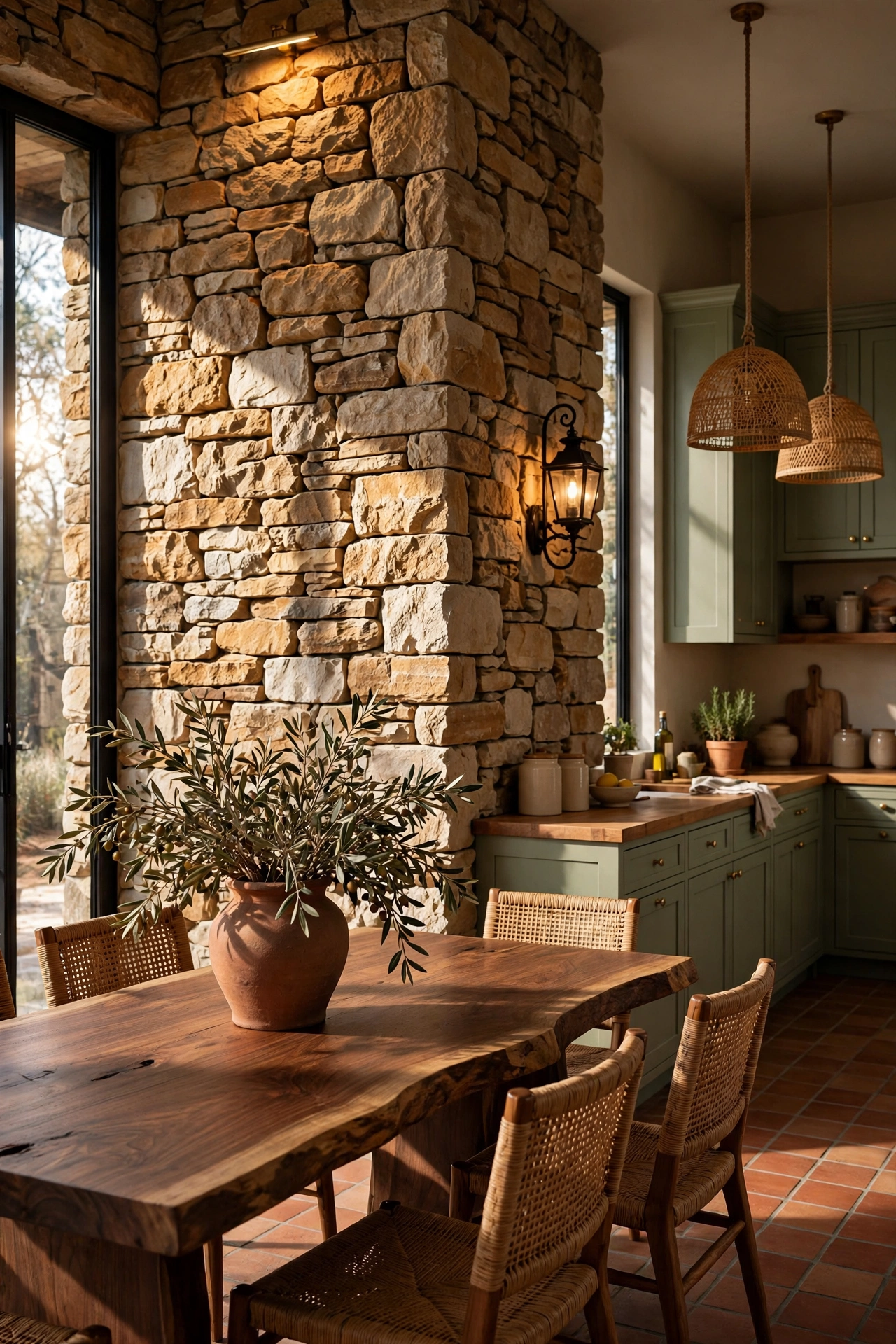
Use it on one wall only – behind the range, on the island face, or as a single feature wall. Stone has strong presence, and restraint keeps it from overwhelming the room.
Natural stone veneer in warm ledgestone tones suits the earthy palette best. Lighter stones keep small kitchens feeling open; darker ones add cozy drama to larger spaces.
Pair stone with soft companions to balance its ruggedness: wood shelving, linen textiles, and warm lighting keep the wall from feeling cold or austere.
Stone veneer is lighter and more affordable than full-depth stone, and many systems are DIY-friendly. One wall is often a weekend project with a very big payoff.
Seal the stone with a matte stone sealer to protect against cooking splatter, and choose a grout color close to the stone so the wall reads as one continuous surface. Add picture lights or directional spots above the wall to rake light across the texture – shadows are what make stacked stone come alive after dark.
24. Terracotta Planters on Open Shelves
Terracotta planters on open shelves double the warmth – the clay’s glow plus living green. It is one of the simplest ways to make shelves feel styled rather than merely stored.
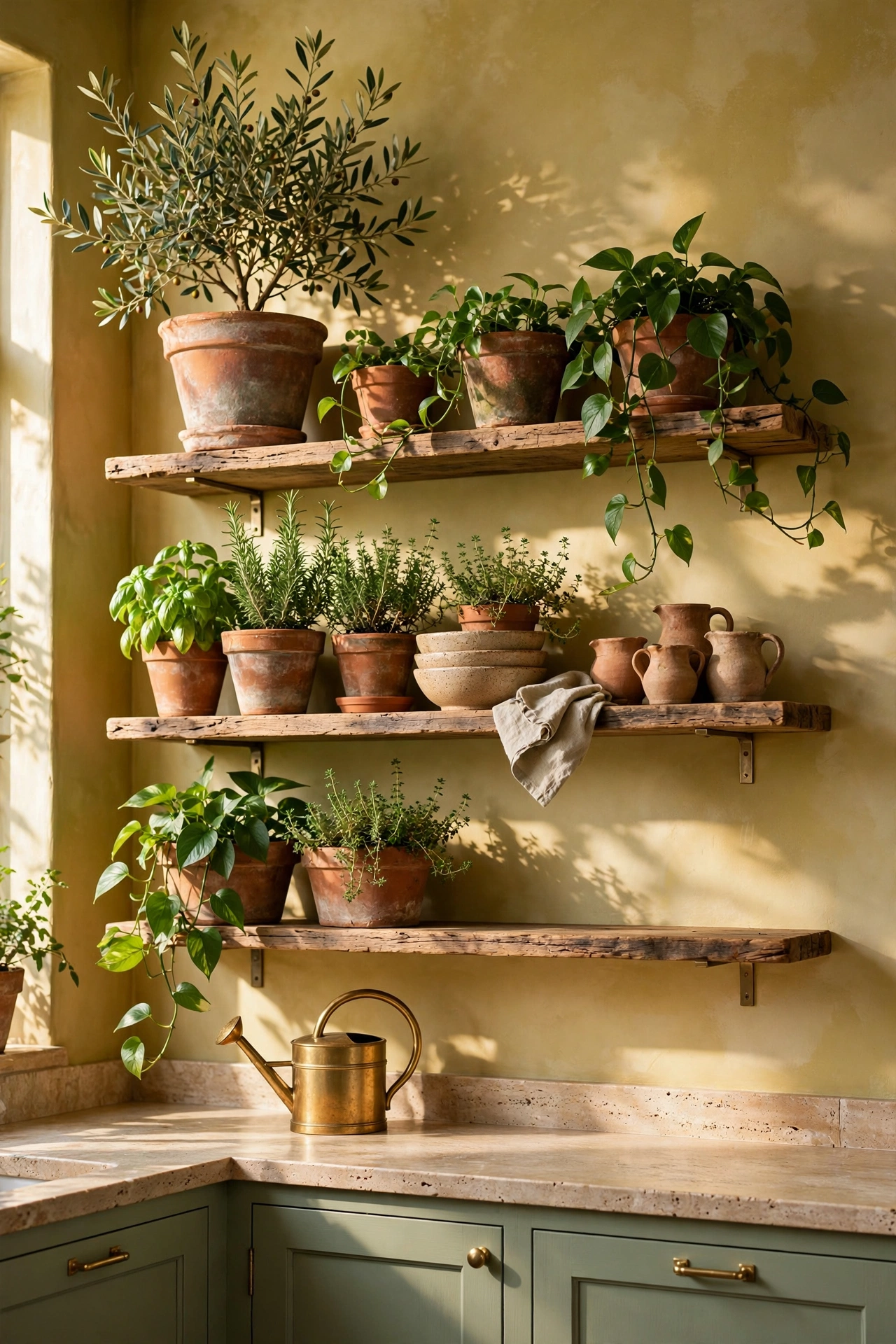
Mix planter sizes, and trail a pothos or string-of-pearls from the highest shelf for movement. Herbs in small pots near the cooking zone stay useful; decorative plants can live higher up.
Keep the planters in the terracotta family – classic orange clay, or aged and whitewashed versions – for a cohesive look. Saucers protect the shelf wood from water rings.
Choose plants that tolerate kitchen conditions: pothos, herbs, and small ferns handle humidity and variable light well. Rotate them occasionally for even, healthy growth.
This is a nearly free update if you already have shelves – a few clay pots and nursery plants transform the whole wall for very little money.
Water carefully – terracotta is porous, so pots dry out faster than glazed ones, which most herbs actually prefer. Feed plants lightly in spring and trim trailing vines to keep the display tidy. A small watering can in matching clay, kept on the shelf itself, turns plant care into part of the decor.
25. Walnut-Stained Island Base
A walnut-stained island base grounds the kitchen with deep, rich warmth. The dark wood reads as furniture, giving the island presence and permanence at the center of the room.
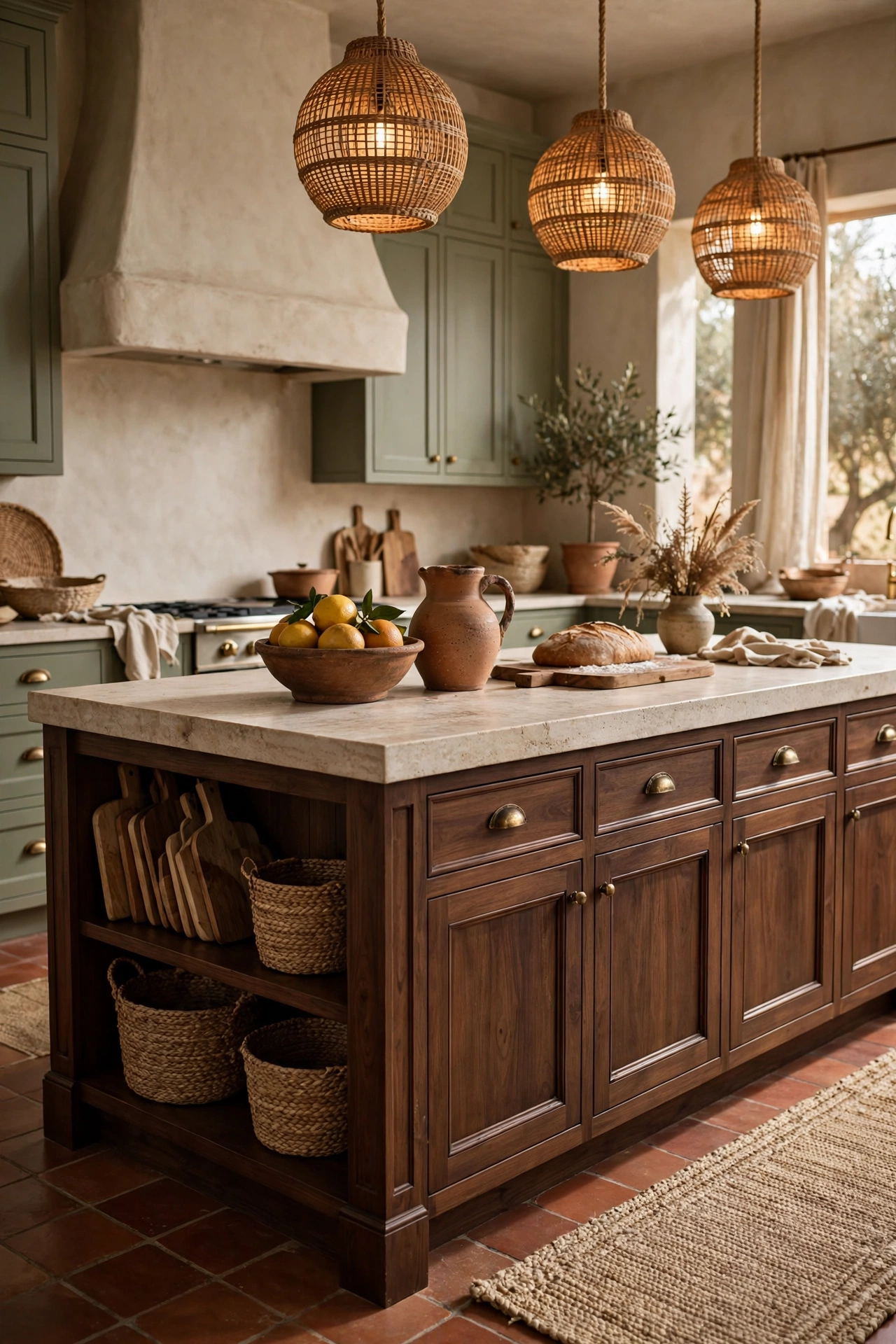
Walnut’s chocolate tones pair beautifully with lighter tops – butcher block, honed travertine, or warm white stone. The contrast is what makes both materials shine brighter.
A matte or satin stain finish keeps the wood feeling natural rather than glossy. Test the stain on your actual wood first, since species and lighting shift the final color noticeably.
Echo the walnut elsewhere in small doses – floating shelves, a picture ledge, or bar stools – so the island feels connected to the room rather than isolated.
Staining an existing island base is a budget-friendly transformation. A weekend of sanding and staining can deliver the look of a custom furniture piece.
If a full stain feels like too much, try walnut on just the island’s end panels or the toe-kick for a two-tone furniture look. Pair the base with light oak bar stools to keep the dark wood from feeling heavy, and add a runner in warm tones to tie the island into the floor. The result feels custom without the custom price tag.
26. Handwoven Seagrass Basket Storage
Seagrass baskets bring soft, woven texture to kitchen storage while hiding the clutter. Their natural tan weave works with every earthy palette and never looks fussy or overdone.
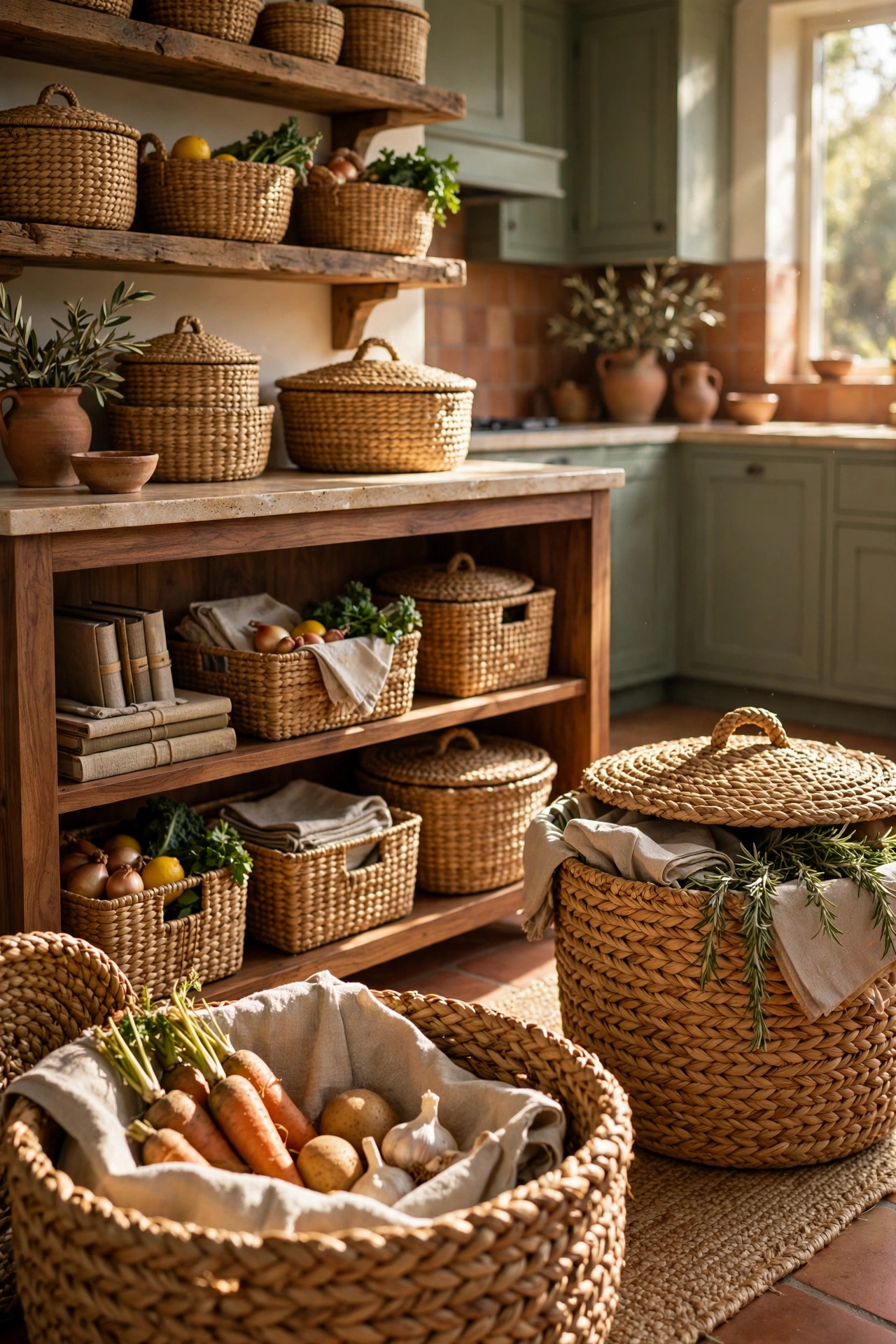
Use them on open shelves for dry goods, under the island for linens, or on top of cabinets for lesser-used items. Lidded baskets keep contents dust-free and the overall look tidy.
Mix round and rectangular shapes, and vary sizes within one consistent material. The uniformity of the weave is what keeps a basket collection looking curated rather than random.
Line baskets that hold produce or bread with a linen cloth for a softer look and easier cleaning. It is a small detail that elevates the whole arrangement noticeably.
Seagrass baskets are inexpensive and widely available. A coordinated set can organize an entire pantry wall for less than the cost of a single custom drawer.
Choose baskets with sturdy handles if you will lift them often, and look for tight, even weaving as a sign of quality. A quick vacuum with a brush attachment keeps dust from settling into the fibers. Because seagrass is so affordable, you can refresh the whole set every few years without a second thought.
27. Earthenware Dinnerware Display
Earthenware – with its warm, slightly rustic body and hand-glazed surfaces – deserves to be seen, not hidden in a cupboard. A display of plates, bowls, and platters becomes a wall of art in an earthy kitchen.
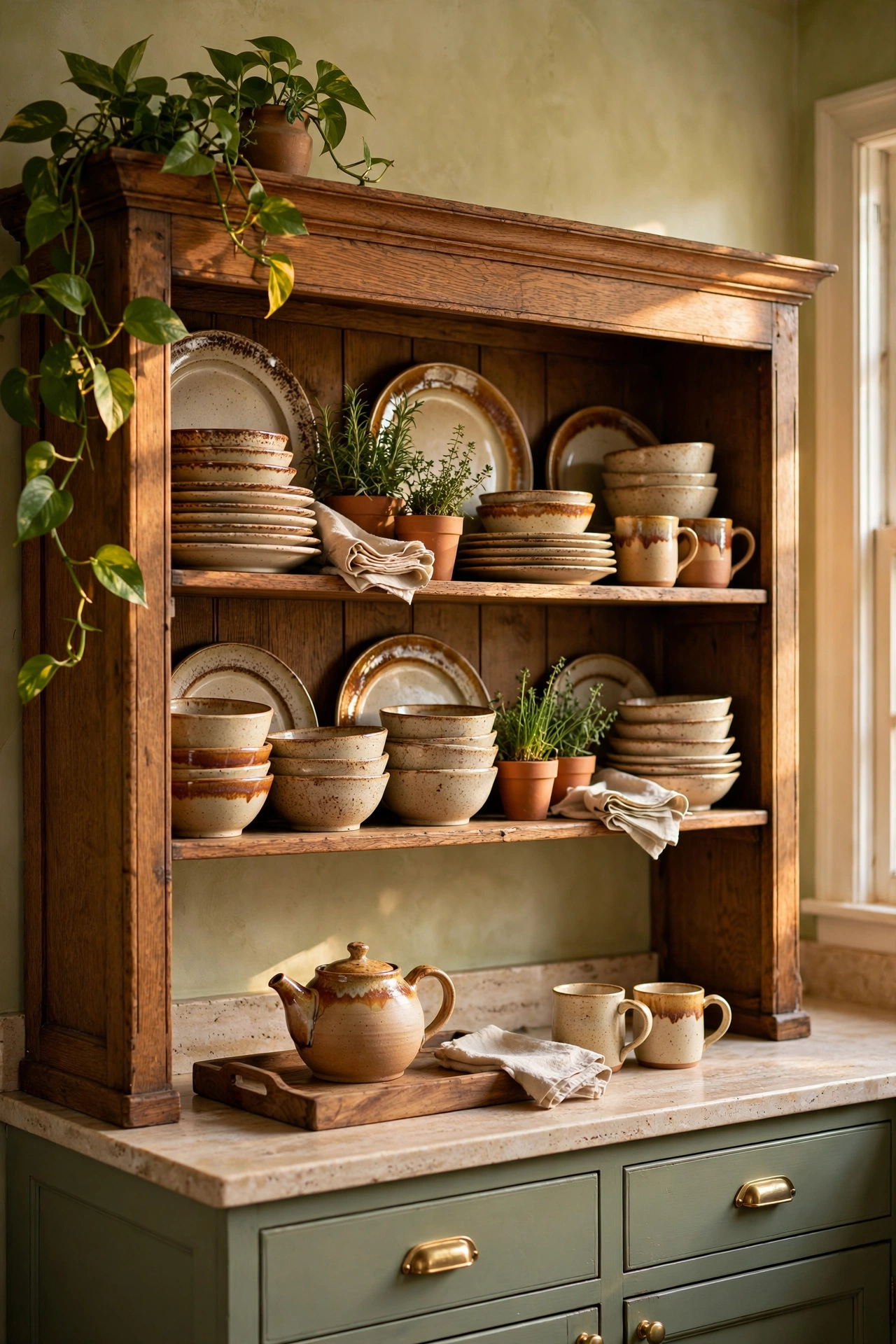
Plate racks, picture ledges, or simple wall hooks show off the pieces while keeping them accessible. Group by tone rather than matching exactly; the variation is the beauty.
Mix earthenware with your everyday stoneware for a collected-over-time feel. A few standout artisan pieces elevate the whole shelf without much effort.
Keep displays near the dining area or serving zone so beautiful pieces are easy to grab. Dinnerware that gets used stays dust-free and loved, which is the point.
Build the collection slowly from artisan markets, travels, and thrift finds. Each piece with a story makes the display more personal than any matched set ever could.
Wash earthenware by hand when you can – it is often more porous than stoneware and lasts longer with gentle care. Reserve one shelf for everyday pieces and a higher ledge for the decorative standouts. Over time the display becomes a visual diary of markets visited, trips taken, and makers you love.
28. Mushroom and Clay Color Palette
The mushroom-and-clay palette – warm taupes, soft mushrooms, terracotta, and sunbaked clay – is the earthy kitchen’s most sophisticated color story. It is neutral without being cold, and colorful without being loud.
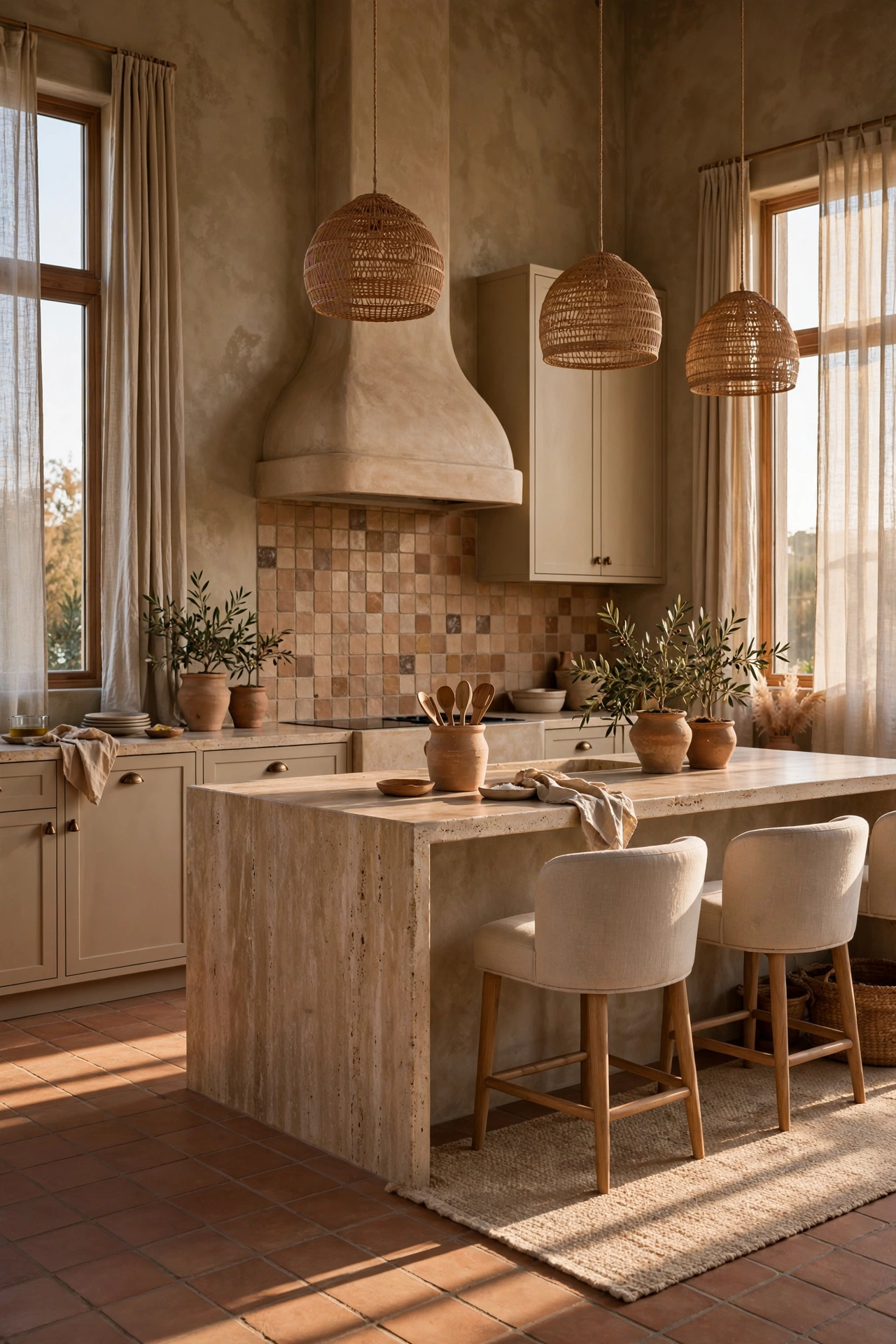
Build it in layers: mushroom walls or cabinetry as the calm base, clay and terracotta in tile, textiles, and pottery for warmth, and deep walnut or bronze for grounding contrast.
Natural light is this palette’s best friend – it makes the warm undertones glow. In darker kitchens, lean lighter on the mushroom tones and add clay accents to keep things warm.
Keep metals warm (brass, bronze, copper) and textiles natural (linen, jute, wool) so every element speaks the same earthy language from floor to ceiling.
Test the palette with large swatches and a few key pieces before committing. These tones shift beautifully with the light, so live with samples for a few days.
Introduce the palette through paint first – it is the cheapest way to test the mood – then echo it in textiles and pottery. A mushroom-painted island with clay-toned bar stools and a terracotta runner shows how the whole story hangs together. Photograph the room at different times of day to see how the tones shift before finalizing.
29. Sunlit Breakfast Nook in Natural Textures
A breakfast nook wrapped in natural textures is the earthy kitchen’s coziest corner. Morning light, wood, linen, and woven fibers turn the first coffee of the day into a small daily ritual.
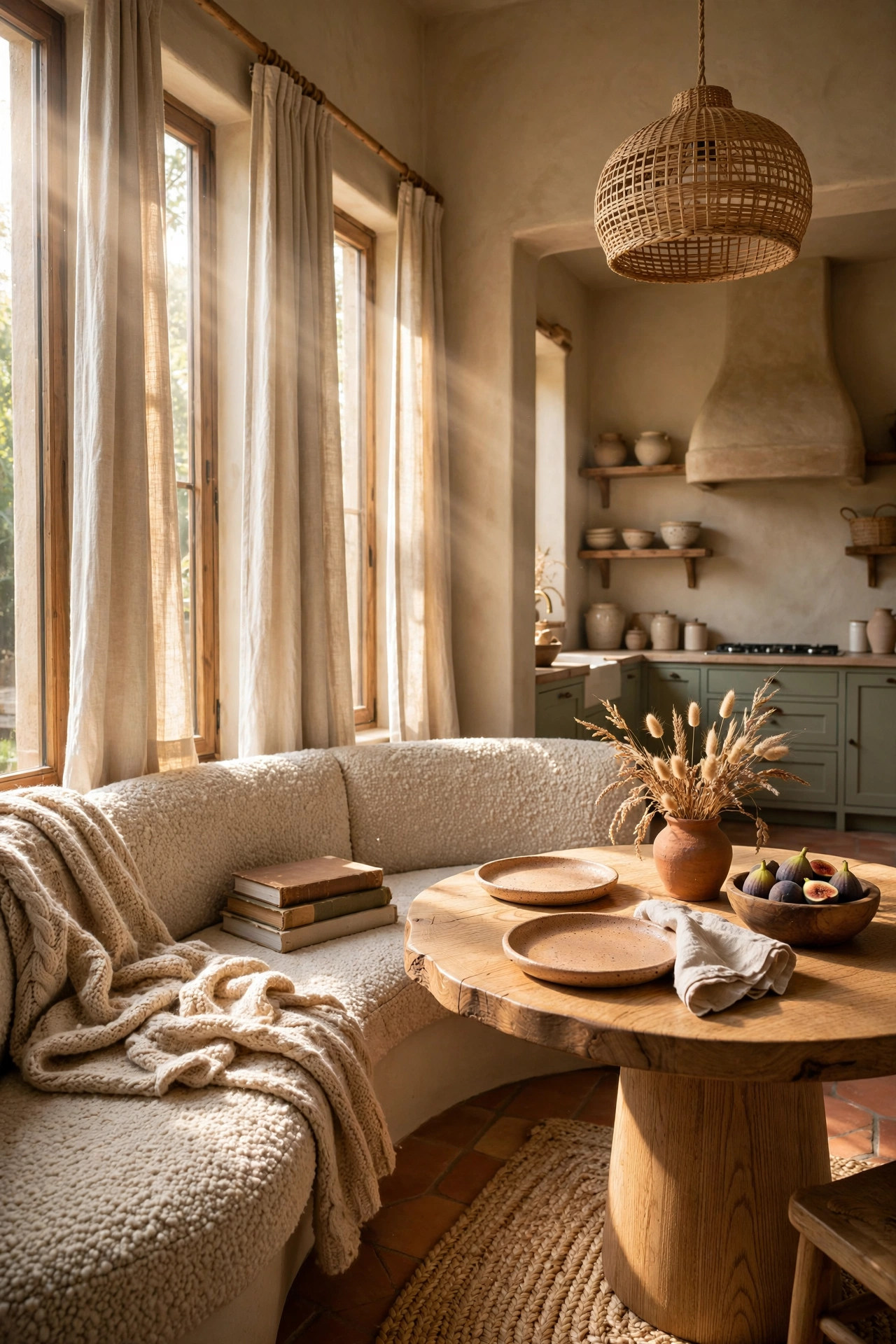
Anchor the nook with a wood table – live-edge or simple farmhouse – and surround it with a mix of seating: a built-in bench with linen cushions, plus a couple of woven or wooden chairs.
Layer textiles generously: a jute rug underfoot, linen seat pads, a wool throw over the bench. Texture is what makes a nook feel enveloping rather than merely functional.
Place the nook by the brightest window and keep the view uncluttered. Sheer linen curtains soften the light without blocking it, keeping the glow golden.
A nook does not need much space – even a small bay window fits a round table for two. It is often the most-loved seat in the entire house.
Add a small pendant or a candle lantern above the table for darker mornings, keeping the fixture simple so the daylight remains the star. A stack of cookbooks or a tiny vase of fresh herbs on the table keeps the nook feeling styled but unfussy. It quickly becomes everyone’s favorite seat in the house.
30. Aged Copper Pot Rail
An aged copper pot rail turns everyday cookware into a display. The warm, rosy metal with its soft patina is pure earthy-kitchen jewelry – functional and beautiful at once.
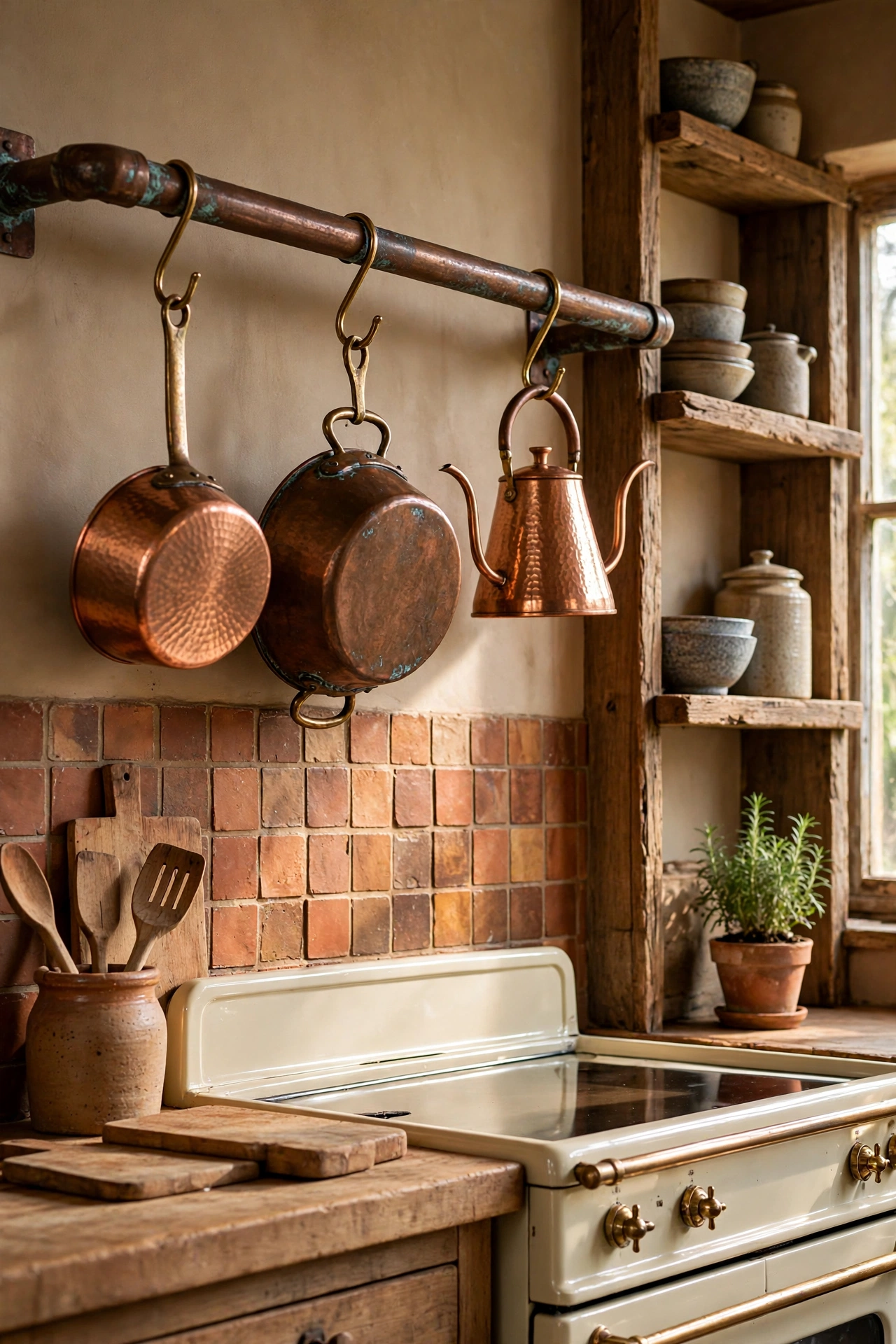
Mount a sturdy rail on the wall or hang it from the ceiling over the island, using solid brackets anchored into studs or joists. Copper pots are heavy, so the mounting must be serious, not decorative.
Let the patina develop naturally, or speed it along for an aged look from day one. Either way, avoid polishing to a shine – the mellow, lived-in finish is the whole point.
Hang the pots you actually use, spaced so each one is easy to grab. A rail of working cookware looks effortlessly styled precisely because it is honest.
A simple rail and hooks are affordable; the pots themselves are the investment. Build the collection over time from flea markets and family hand-me-downs.
Polish only the insides of cooking pots where food contact matters, leaving the exteriors to age gracefully. Pair the rail with a small shelf for lids and trivets, keeping the whole cooking station in one beautiful zone. Over the years the copper tells the story of every meal you have cooked.
An earthy kitchen is not built in a single renovation – it grows, layer by layer, as you find the materials and pieces that speak to you. Start with the moves that matter most to how the room feels: light, texture, and the surfaces you touch every day. A limewashed wall, a terracotta tile, a shelf of handmade pottery – each one pulls the kitchen a little further from the generic and a little closer to yours.
The beauty of working with natural materials is that they forgive, and they age gracefully. Wood deepens, copper develops its patina, clay gathers the marks of daily life, and the kitchen only gets more beautiful for it. Mix the ideas here freely, trust your eye, and let the room evolve at its own pace.
Most of all, build a kitchen that invites people in. Earthy spaces do that naturally – they are warm to the eye, soft to the touch, and easy to gather in. However you combine these thirty ideas, the result will be a kitchen that feels grounded, welcoming, and unmistakably home.
Key Takeaways
- Lead with natural materials – wood, clay, stone, and natural fibers are the foundation of every earthy kitchen; choose honest textures over glossy or synthetic finishes.
- Build a warm, grounded palette – terracotta, clay, mushroom, sage, and walnut tones layer together beautifully; keep metals warm with brass, bronze, or copper.
- Mix matte and textured finishes – limewash walls, honed stone, and handmade tile gain depth when contrasted with a few smooth or softly reflective surfaces.
- Let function double as decor – cutting boards, copper pots, stoneware, and herb gardens look beautiful precisely because they are used every day.
- Layer textiles and greenery – jute rugs, linen curtains, dried eucalyptus, and potted herbs soften hard surfaces and keep the room feeling alive.
- Start small, then build – hardware swaps, a utensil crock, or a shelf of pottery deliver big warmth on small budgets; save stone and tile for later phases.
- Embrace patina and imperfection – natural materials age gracefully, so choose finishes that improve with use rather than ones that demand perfection.