30 Country Kitchen Ideas That Bring Rustic Warmth and Timeless Charm Home

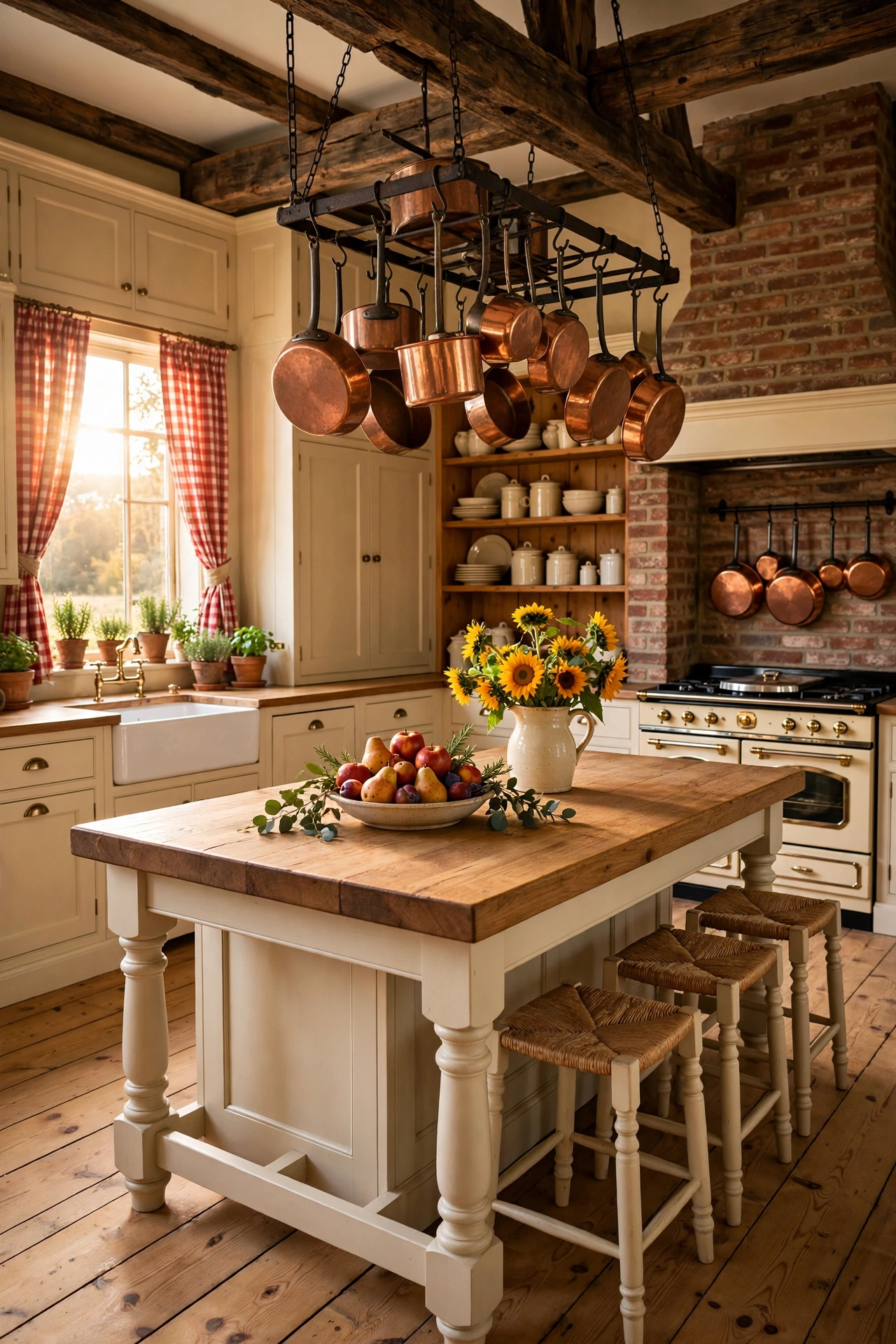
A country kitchen is less a design trend than a way of living. It is the room where bread cools on a wooden board, where copper pans catch the morning light, and where everyone naturally gathers around a worn farmhouse table. Above all, it is a room designed for lingering. Cream cabinets, honest timber, and handmade details give these kitchens a warmth that sleek, glossy spaces rarely manage to match.
What makes the country look so enduring is its practicality. Shaker doors wipe clean in seconds, butcher block can be sanded back to new, and open shelves keep everyday dishes exactly where busy hands need them. Nothing is precious, yet everything feels considered. Natural materials age gracefully here, gaining character from every family meal, muddy boot, and Sunday roast they witness. It is a style built for real households, not show homes.
This collection gathers thirty distinct country kitchen ideas, from apron-front sinks and exposed beams to checked curtains, plate racks, and walk-in pantries. Some are full renovation anchors, while others are weekend projects that cost very little. Read through, note the ideas that suit your space and budget, and start building a kitchen that feels like it has always belonged to your home.
1. Cream Shaker Cabinets with Brass Cup Pulls
Cream shaker cabinets are the backbone of the classic country kitchen. Softer than bright white yet lighter than beige, cream brings a mellow warmth that flatters timber floors, stone counters, and morning sunlight alike.
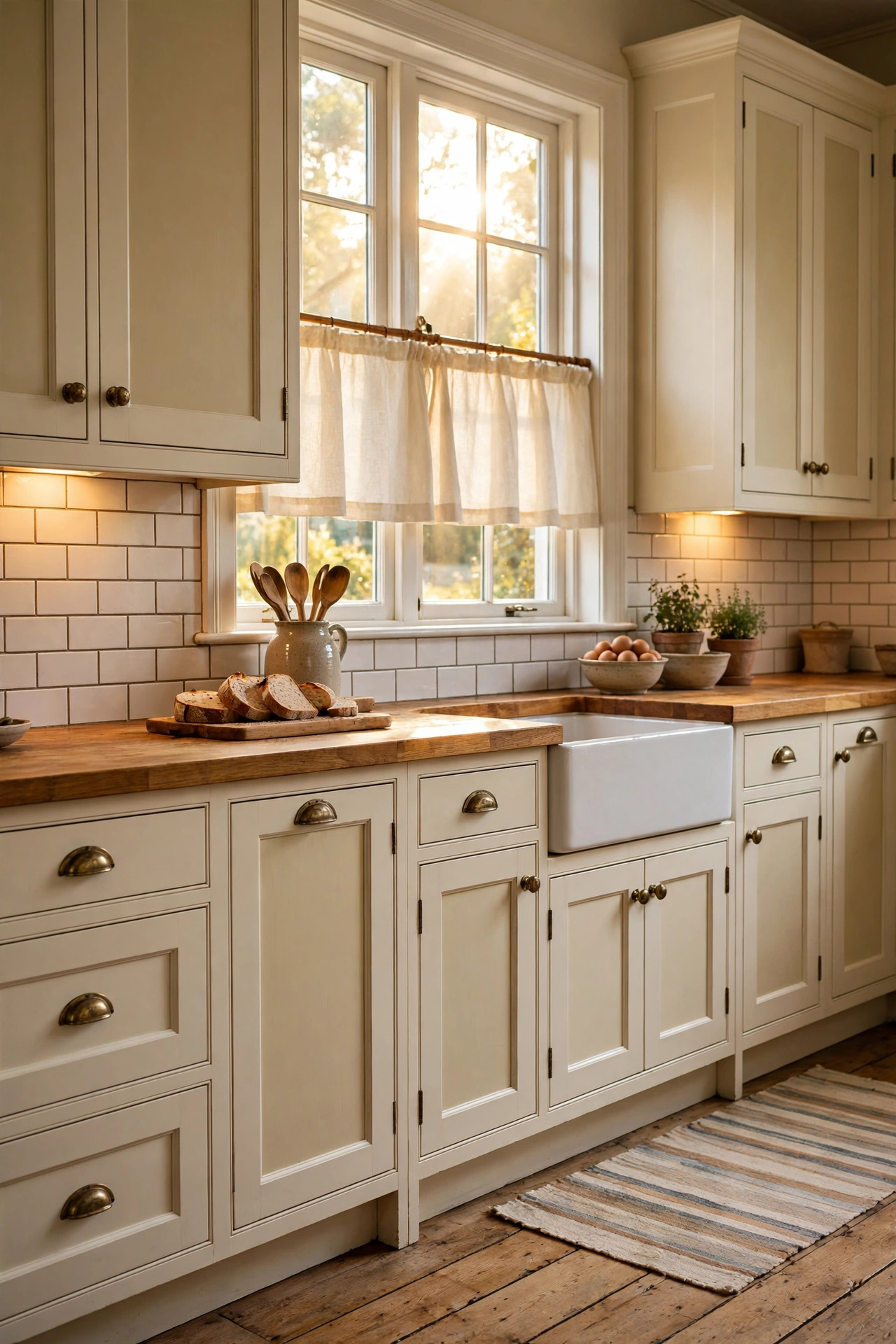
The shaker profile suits this color perfectly. Recessed center panels and simple rails have changed little in two centuries because the proportions simply work. Painted in cream with a satin finish, the doors catch soft shadows along their frames, giving flat walls of cabinetry gentle depth without any fussy ornament.
Brass cup pulls are the traditional finishing touch. Their half-moon shape suits drawers beautifully, while simple brass knobs handle the doors. Unlacquered brass is the country purist’s choice because it develops a living patina from daily touch, darkening in the recesses and shining where fingers polish it most.
Pair cream cabinets with warm partners. Butcher block or honed marble counters, a white subway tile backsplash, and aged oak flooring all sit comfortably beside it. Avoid cool blue-grey stones and chrome hardware, which can make cream look yellow and dated by comparison.
For a two-tone twist, paint a kitchen island or dresser unit in sage green or dusty blue beneath the cream uppers. The scheme stays calm, rooted, and unmistakably country.
2. Farmhouse Apron-Front Sink with Bridge Faucet
The apron-front sink is the country kitchen’s most recognizable fixture. Its deep, exposed front panel was designed for farmhouse life, holding everything from preserving jars to a whole harvest of vegetables.
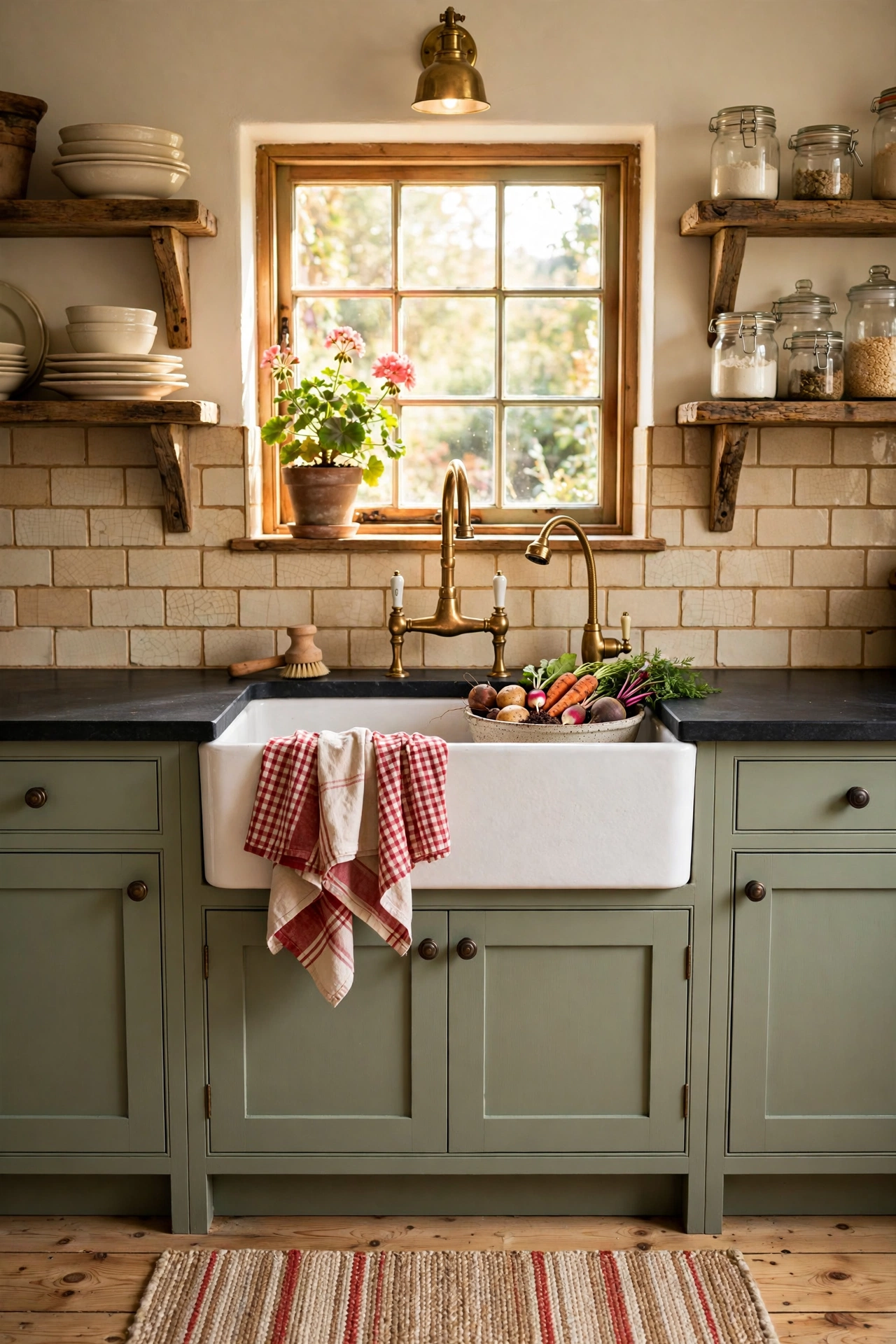
Size and depth are the practical rewards. A single generous bowl, usually nine or ten inches deep, swallows roasting pans, oven trays, and tall stockpots that defeat ordinary sinks. Choose fireclay for its glossy, chip-resistant glaze, or cast iron with enamel for reassuring weight and a softer, traditional sheen.

A bridge faucet completes the picture. Two separate valves joined by an exposed horizontal bar give precise control and unmistakable vintage charm. Oil-rubbed bronze suits rustic schemes, polished nickel feels fresher, and unlacquered brass warms beautifully beside cream or sage cabinetry.
Plan the installation carefully. Apron sinks need a dedicated base cabinet with reinforced support, because a fireclay sink can weigh as much as a grown adult. Measure twice, order the cabinet first, and let the worktop template follow the sink rather than the other way around.
Style the sink simply. A wooden dish brush, a folded linen towel over the apron front, and a small potted herb on the windowsill say country more eloquently than any accessory set.
3. Butcher Block Countertops in Warm Oak
Butcher block is the countertop country kitchens were built around. Warm oak, maple, or beech boards bring a honeyed glow that stone and laminate cannot imitate, and they invite the kind of hands-on cooking the style celebrates.
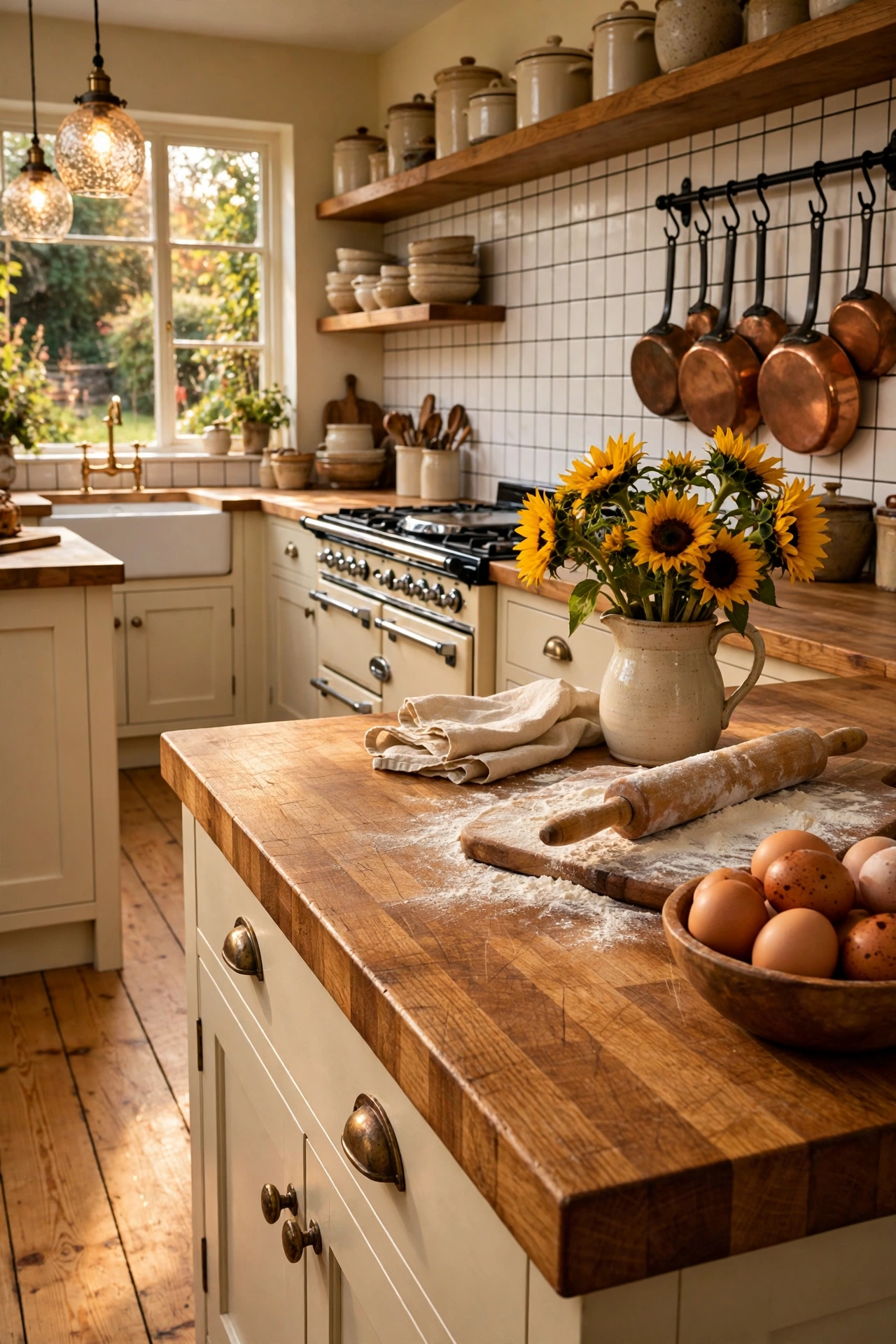
Oak is the classic choice for good reason. Its open grain hides crumbs and knife marks gracefully, and it deepens to a rich amber with age and oiling. Choose thick staves with visible grain character rather than bland, uniform boards.
Maintenance is simple but non-negotiable. Food-safe oil or oil-wax finishes need renewing every few months in hardworking zones, a ten-minute job that keeps the surface hygienic and glowing. Sand out stains and scorch marks as they happen.
Respect wood’s limits near water and heat. Fit a stone or steel inset beside the range for hot pans, seal end grain thoroughly around the sink, and wipe up standing water promptly. Treated with sense, butcher block lasts decades.
Few surfaces age this gracefully. Every ring, chop mark, and flour-dusted morning becomes part of the patina, which is exactly why country kitchens and wooden worktops belong together.
4. Open Wood Shelving with Iron Brackets
Open shelving is the country kitchen’s signature storage move. Thick wooden shelves on black iron brackets turn everyday dishes into decoration and keep everything within arm’s reach of the cook.
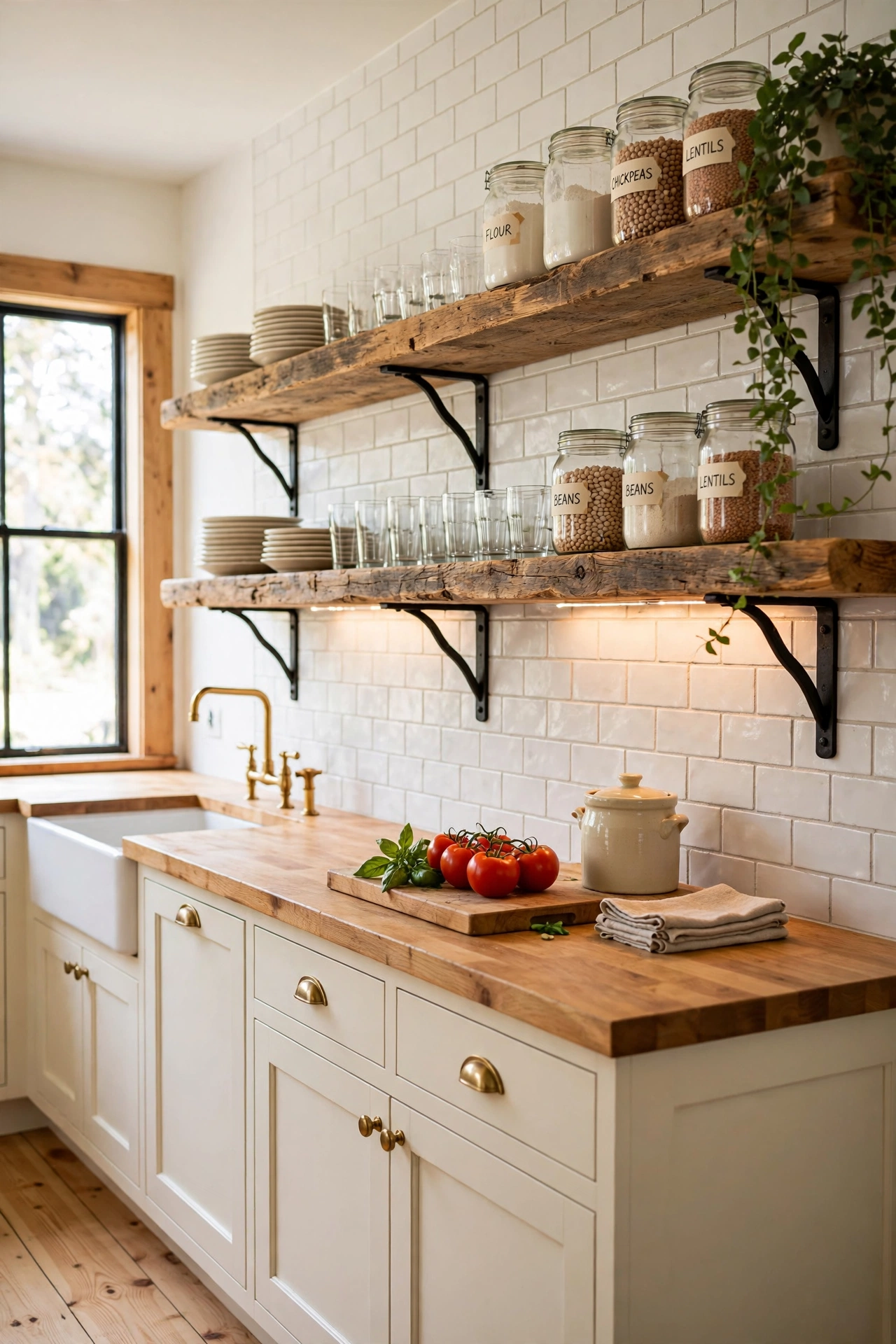
Timber choice sets the tone. Reclaimed scaffold boards or rough-sawn pine bring genuine age and saw marks, while new oak shelves with a hard-wax oil finish feel tailored. Keep shelves deep enough for dinner plates, at least twenty-five centimeters.
The brackets matter as much as the wood. Hand-forged or cast-iron brackets with a simple scroll or L profile read as farmhouse hardware, and they must be fixed into studs or solid masonry to carry a shelf of stoneware safely.
Style shelves with a working rhythm. Group daily dishes in short stacks and leave breathing room between groups. One trailing plant or a stoneware jug per shelf adds life without tipping display into clutter.
Be honest about upkeep. Open shelves near the hob need a weekly wipe, so many cooks keep them on the sink or preparation wall instead. Used thoughtfully, they deliver the relaxed, collected character that defines country style better than any cabinet door could.
5. Farmhouse Table Island with Turned Legs
Before islands became cabinetry, they were tables, and the farmhouse table island revives that idea beautifully. A thick wooden top on turned legs gives you preparation space, storage below, and a gathering spot that feels like furniture rather than a built-in block filling the room’s center.
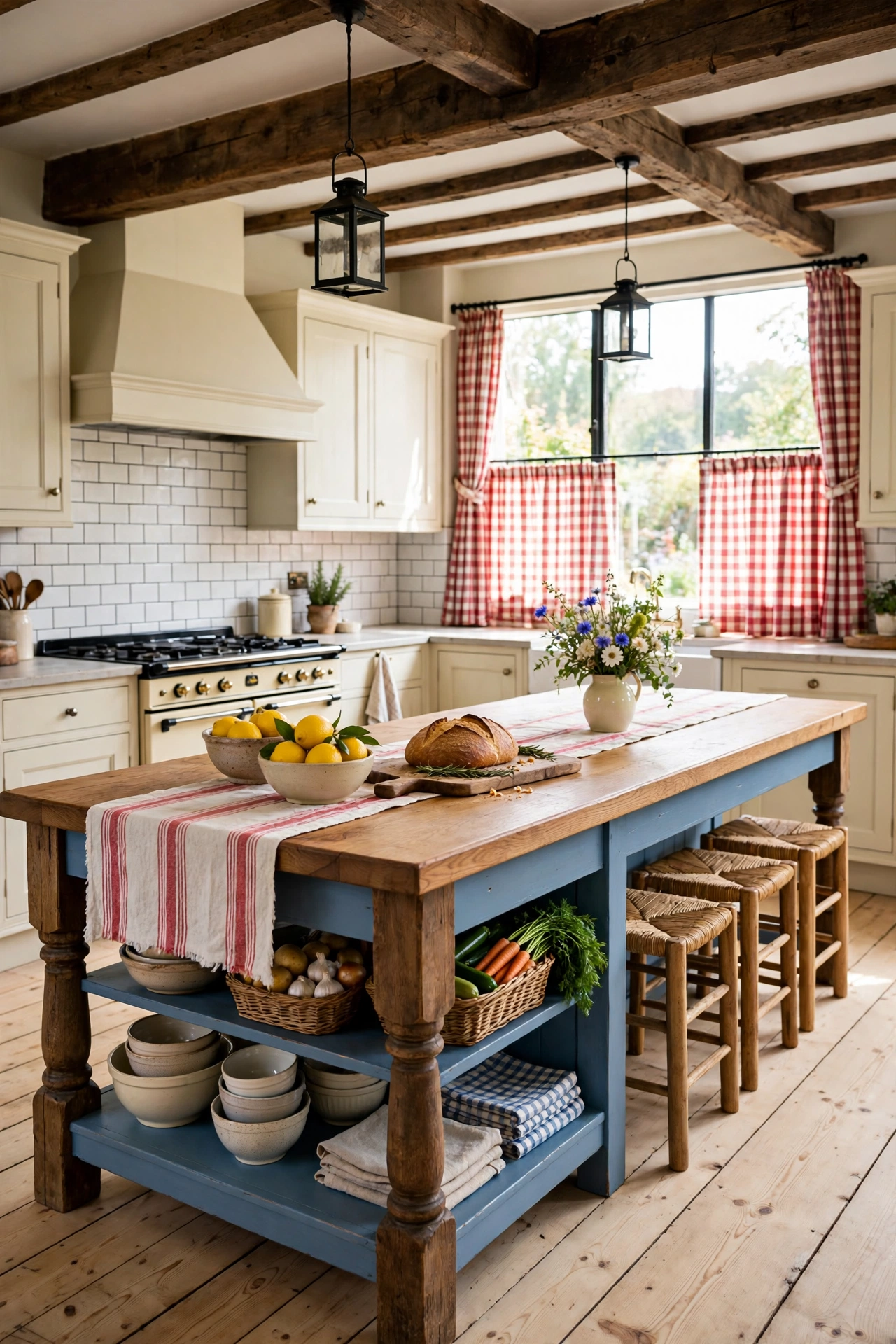
Turned legs are the detail that sells it. Chunky, hand-turned profiles in painted timber or natural oak instantly signal country craftsmanship. Paint the base cream, sage, or dusty blue while leaving the top in oiled wood, and the island becomes the room’s cheerful focal point without overwhelming smaller kitchens.
Make the format work hard. A low open shelf between the legs stores mixing bowls, baskets of vegetables, and stacked linens, while hooks on one end hold aprons and utensils. Because there are no cabinet sides, stools tuck in from every direction.
Size it generously but sensibly. Allow at least ninety centimeters of walkway on working sides, and choose a top at least sixty centimeters deep for comfortable prep. Thick end-grain or plank oak tops, sealed with hard-wax oil, shrug off daily chopping, hot dishes, and homework sessions alike.
This is also the friendliest island for older homes and renters. A freestanding table island needs no plumbing or electrical work, yet it delivers the country kitchen’s social heart in a single characterful piece.
6. Exposed Ceiling Beams in Reclaimed Timber
Nothing transforms a kitchen’s architecture like exposed ceiling beams. Dark, weathered timber overhead lowers a tall ceiling to a cozier scale, frames the room’s zones, and delivers the farmhouse silhouette that country style is built on. Even one beam across a range wall changes everything.
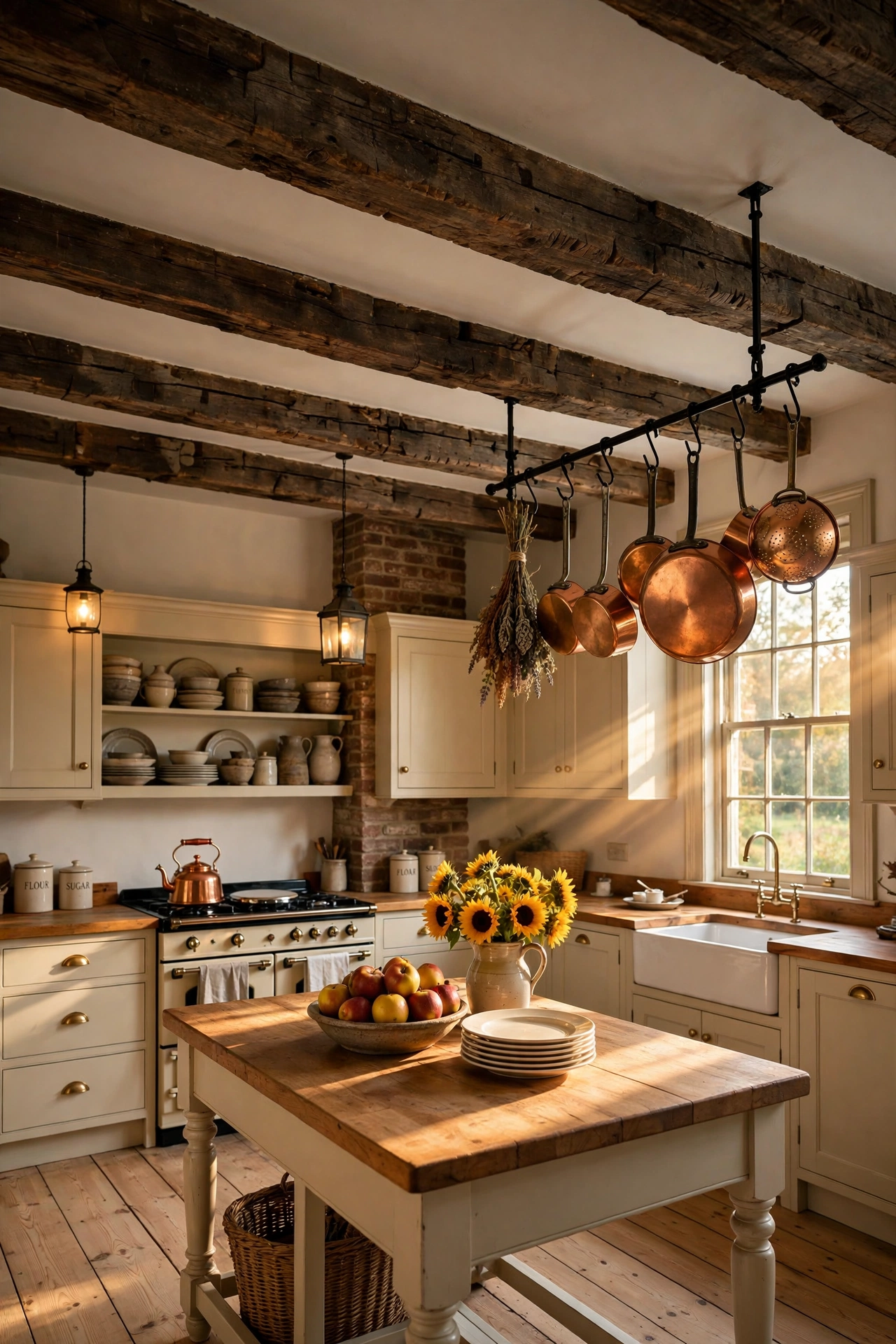
Genuine reclaimed beams carry unmatched character. Old barn and warehouse timbers arrive with saw marks, nail holes, and a century of patina that new wood cannot fake. Source them from architectural salvage yards, check carefully for woodworm and rot, and have a structural engineer confirm how they will be supported.
Where real beams are impractical, convincing alternatives exist. Hollow faux beams in lightweight timber or molded finishes weigh very little, hide wiring and pipes, and install in an afternoon. Stain new pine dark with a weathered finish, and from floor level almost nobody can tell the difference.
Keep the proportions honest. Beams that are too slim look apologetic, while oversized timbers can crush a low room. Beam depth around fifteen to twenty centimeters suits most ceilings, spaced evenly so the rhythm feels architectural rather than random.
Let beams earn their keep beyond looks. They carry pendant lights without ceiling roses, support hanging rails for copper pans and dried herbs, and give trailing plants height.
7. Beadboard Cabinet Doors and Wall Panels
Beadboard is country texture at its most charming. Narrow vertical boards separated by a small rounded bead bring rhythm and shadow to cabinet doors, wall panels, and ceilings. It is an inexpensive material with an expensive heritage, borrowed from nineteenth-century farmhouses.
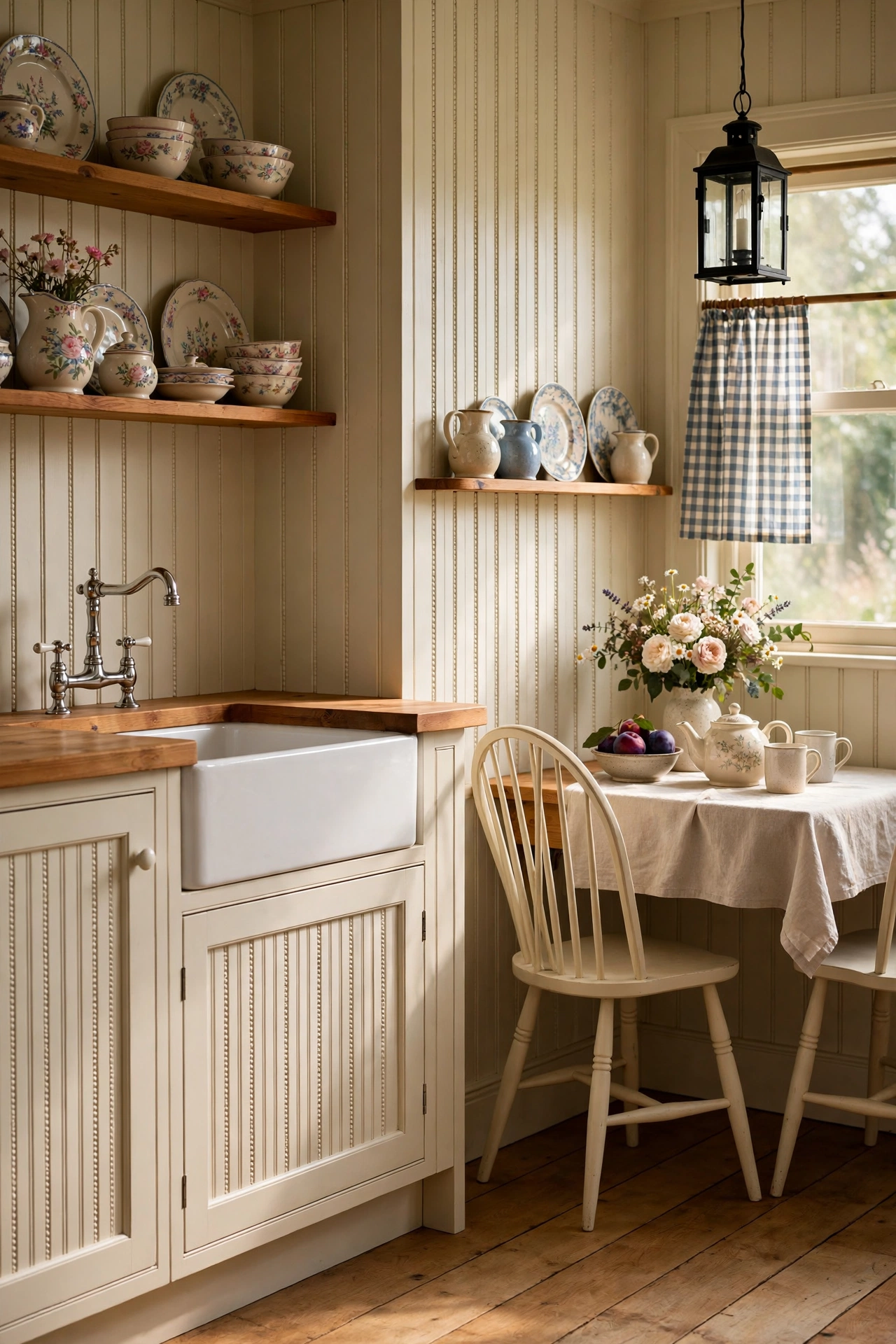
On cabinet doors, beadboard inserts soften shaker frames beautifully. Use it on a dresser unit, an island back, or a full run of doors for a relaxed cottage feel. Painted cream, white, or pale sage, the grooves catch light differently through the day, giving flat cabinetry quiet movement.
As wall paneling, beadboard protects where kitchens suffer most. Run it to chair-rail height behind a farmhouse table or along a breakfast nook, capped with a simple ledge for displaying plates and small jugs. Full-height beadboard behind open shelves unifies a whole wall.
Choose the right material for the zone. Real timber beadboard suits dry areas, while moisture-resistant MDF or PVC versions handle splash zones behind sinks and ranges far better. Prime every groove before painting, use a satin or eggshell finish, and caulk the top edge for a clean, fitted look.
A little beadboard goes a long way. Line a pantry door, wrap an island, or panel a ceiling between beams, and the whole kitchen gains handmade character. It makes new cabinetry feel generations old.
8. Stacked Stone and Exposed Brick Accents
Stone and brick bring the farmhouse’s exterior walls indoors, and no material grounds a country kitchen faster. A stacked stone range surround or an exposed brick wall adds weight, texture, and history that painted surfaces simply cannot imitate.
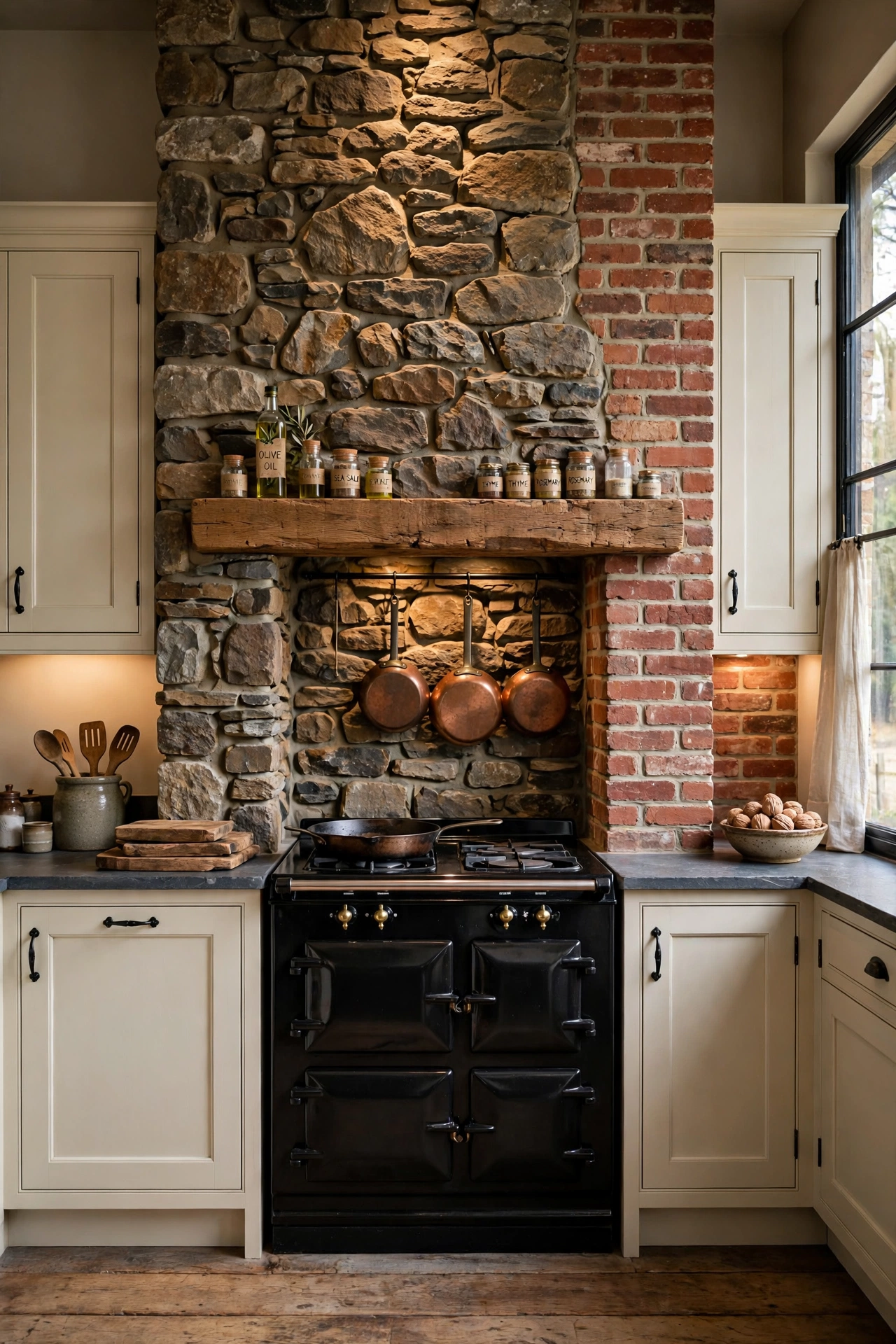
A cooking wall is the natural place to start. Stone or brick behind a range handles heat happily and hides splashes within its texture. Run it to the ceiling for a chimney-breast effect, flanked by cream cabinets so the masonry reads as architecture, not decoration.
Choose your material by character. Irregular stacked stone feels rugged and rural, suits cottages and barns, and pairs with dark timber. Reclaimed brick runs warmer and tidier, its reds and oranges flattering cream cabinetry and copper pans. Brick slips offer the same look at a fraction of the weight.
Mind the practicalities. Both materials need sealing in a kitchen to resist grease, and rough stone behind a hob is harder to wipe than brick. Keep worktop-level sections smooth, and point mortar in a warm, pale tone to stop walls feeling heavy.
Balance is everything. One masonry wall is plenty; surround it with painted wood, linen, and warm metal so the room stays a kitchen rather than becoming a cave. Done once and done well, stone or brick gives a country kitchen its sense of permanence.
9. Vintage-Style Range Cooker in Cream Enamel
A vintage-style range cooker is the country kitchen’s beloved workhorse and its prettiest appliance. Cream enamel, rounded corners, chrome rails, and chunky control knobs give modern multi-oven performance a face that belongs beside farmhouse sinks and timber beams.
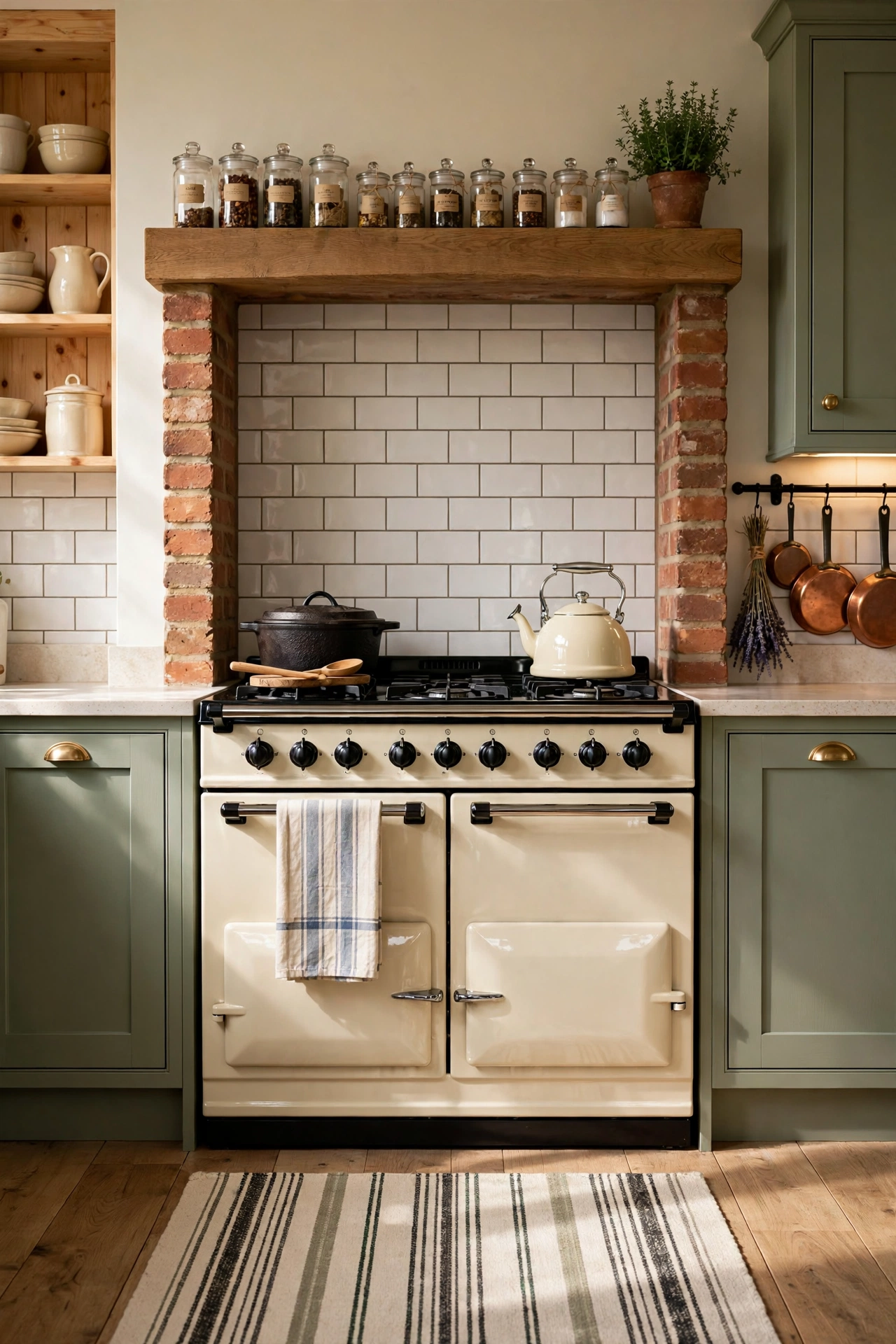
Beneath the looks sits serious cooking power. Most models offer two ovens, a separate grill, and five or six burners, in dual-fuel, induction, or all-gas formats. That capacity suits the country rhythm of life: roasts, preserves, bread, and a full breakfast all happening at once on a busy Saturday.
Cream is the classic color choice for good reason. It bridges white sinks and colored cabinets, hides flour dust and splashes better than black, and never dates the way fashion colors can. Burgundy, racing green, and slate blue make bolder statements if your cabinetry stays calm and neutral.
Plan the setting like a stage. Flank the range with heat-proof stone or brick, fit a simple plaster or timber mantel shelf above for oils and spices, and hang your best pans nearby. A kettle permanently on the hob, in cream or copper, completes the lived-in country picture.
Budget honestly, because these cookers are an investment, but they hold value and anchor a kitchen for decades. Choose the fuel your cooking loves, and the range will repay you every day.
10. Polished Copper Cookware on a Hanging Rail
Copper cookware is the country kitchen’s jewelry, and it deserves to be seen. A row of polished copper pans glowing against cream walls or dark beams delivers warmth, craft, and a hint of French farmhouse glamour. Better still, these are tools that cook as beautifully as they photograph.
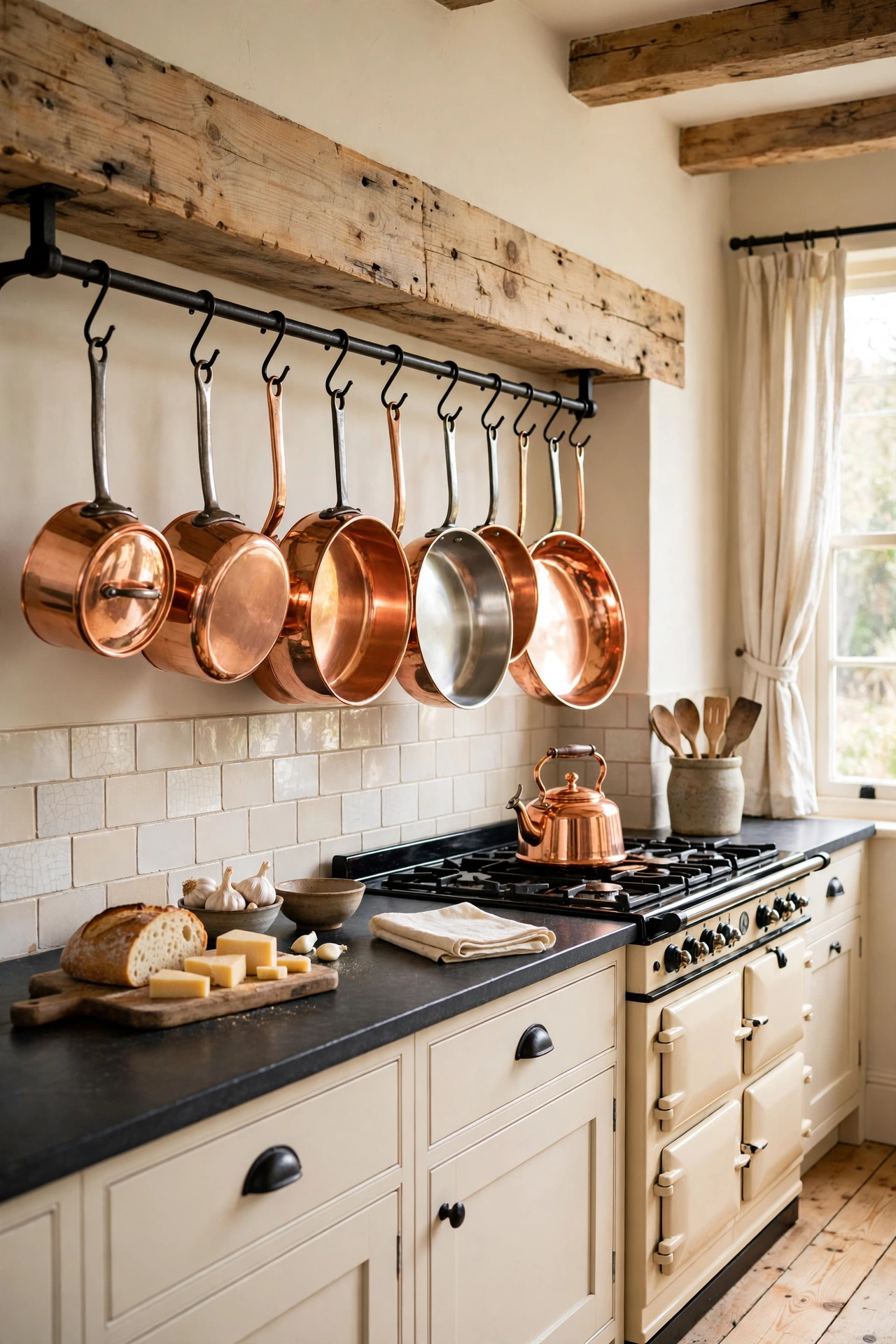
Hang them properly. A sturdy rail in black iron or brass, fixed firmly beneath a shelf or along the range wall, keeps pans sorted by size with S-hooks. Alternatively, a ceiling rack over the island puts every pan within reach of the cook while turning the collection into a chandelier of warm metal.
Copper rewards a little care. Tin or stainless linings make pans food-safe and durable, while the exteriors need only an occasional polish with lemon and salt or a gentle copper cleaner to restore the glow.
Build a collection slowly and use every piece. Start with a workhorse saute pan and a medium saucepan, then add a preserving pan or stockpot as your cooking demands. Vintage copper often costs less than new and arrives with character installed.
Keep the supporting palette quiet so copper can sing. Cream or sage cabinets, white tile, natural wood, and black iron all step back gracefully. When copper leads, the whole room feels warm and generous.
11. Red and White Checked Cafe Curtains
Few details say country kitchen faster than red and white checked cafe curtains. Hung at half height, they filter sunlight, hide a busy sink area, and splash the room’s happiest color across its hardest-working window. It is a small fabric decision with an outsized effect on mood.
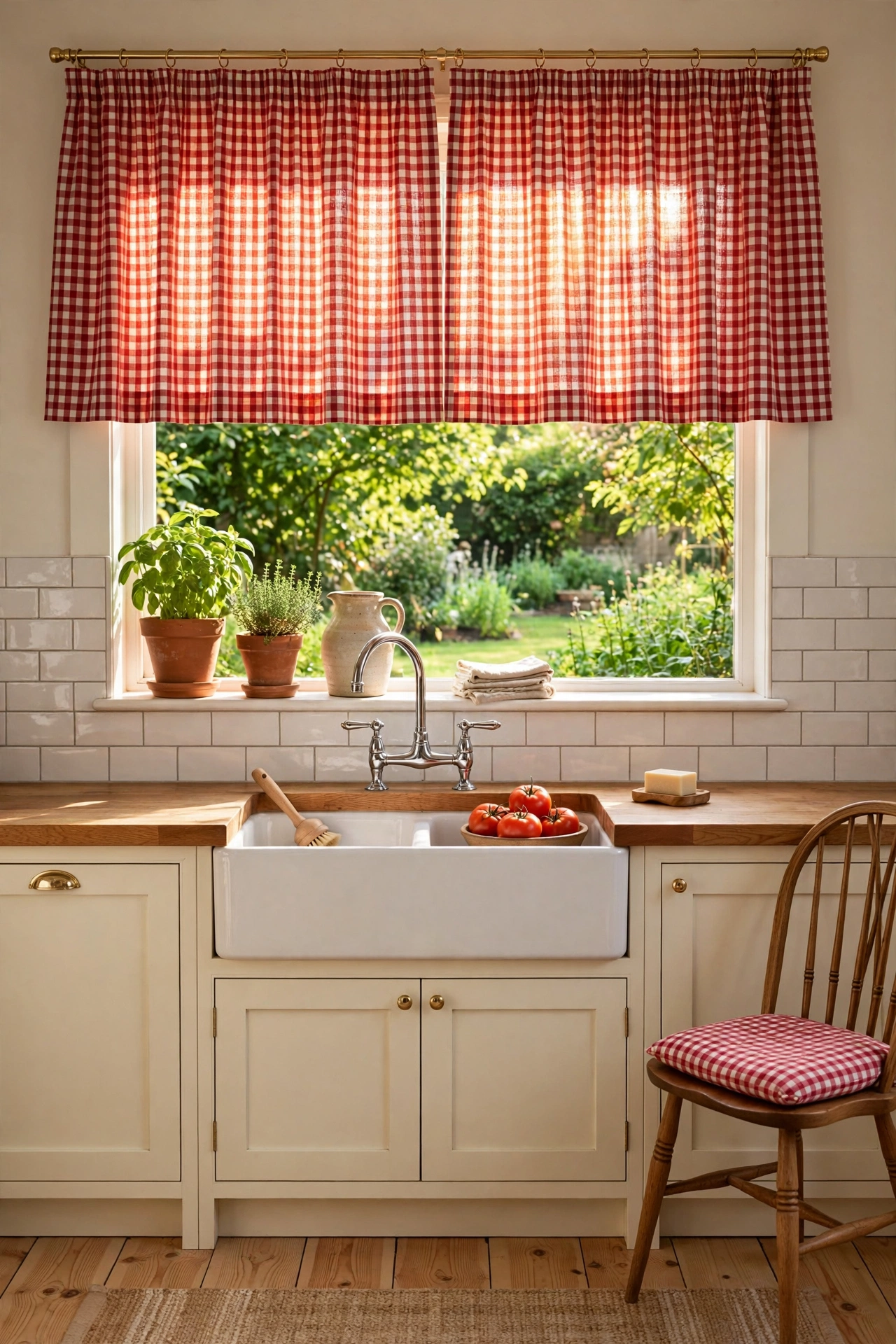
Cafe curtains suit kitchen windows perfectly. They cover the lower half where privacy matters and neighbors pass, while leaving the top open for daylight and sky. Above a farmhouse sink, it keeps the room bright while softening the view outside.
Choose the check with intention. Small gingham reads fresh and cottage-like, larger checks feel bolder and more bistro, and woven checks outlast printed ones through years of sunlight. Cotton and cotton-linen blends wash easily, which matters in a room full of steam, splashes, and cooking smells.
Hardware is refreshingly simple. A slim brass or black cafe rod, tension wire, or even a length of twine on cup hooks gives the gathered heading its casual drape. Hem curtains to just touch the sill, and make them generously full, at least one and a half times the window width.
Let the red echo once or twice, never everywhere. A checked cushion, a striped runner, or red enamelware on a shelf ties the scheme together.
12. Plate Rack Display for Everyday Stoneware
A plate rack is country storage with a story. Generations of farmhouse cooks dried and stored everyday plates in wall-mounted wooden racks above the sink, and the format still works beautifully today. Vertical slots keep stoneware visible, aired, and grabbed in one motion at serving time.
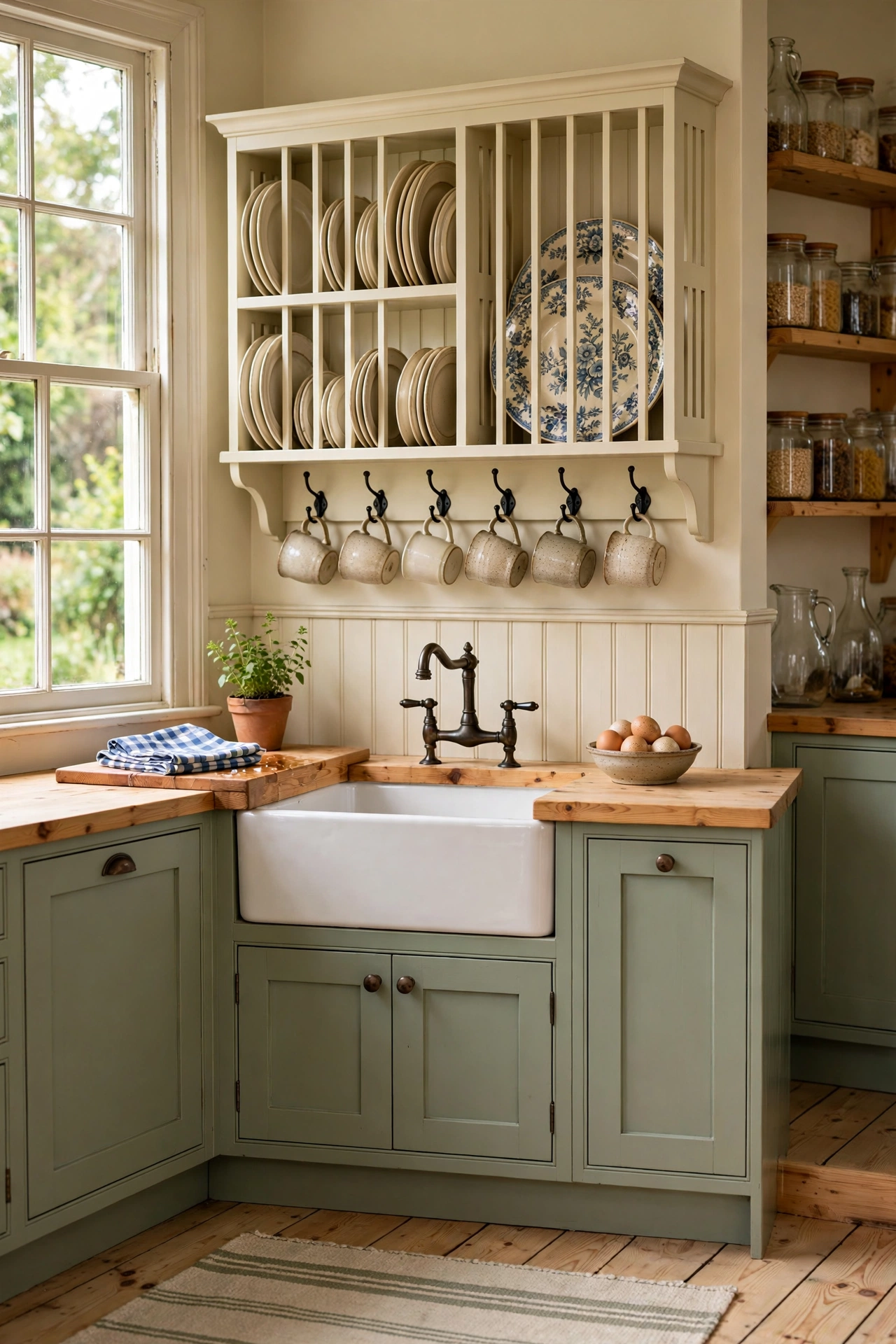
Position it where plates live their life. Beside or above the sink and dishwasher, a rack shortens the unload-and-store loop to a single step. Wall racks suit small kitchens because they claim no counter space.
Build or buy in painted timber to match your cabinetry, cream and sage being the classics. Slots need enough width for chunky stoneware, a small rail or bead stops plates tipping forward, and a drip ledge beneath protects the wall. Measure your largest dinner plates before ordering any vintage rack.
Style by use, not by color charts. Everyday white or cream stoneware in daily rotation looks best, with a few patterned or inherited pieces mixed in for soul. Add a row of mugs on hooks beneath the rack and the whole tea-and-breakfast ritual lives in one charming square meter.
A plate rack quietly changes how a kitchen feels. It swaps hidden cupboards for open, honest order. That is the country philosophy in a single piece of furniture.
13. Walk-In Pantry with a Sliding Barn Door
A walk-in pantry is the country kitchen’s quiet superpower. Floor-to-ceiling shelves of jars, baskets, and preserves keep the main kitchen calm and uncluttered, while a sliding barn door turns the entrance into the room’s most charming architectural feature.
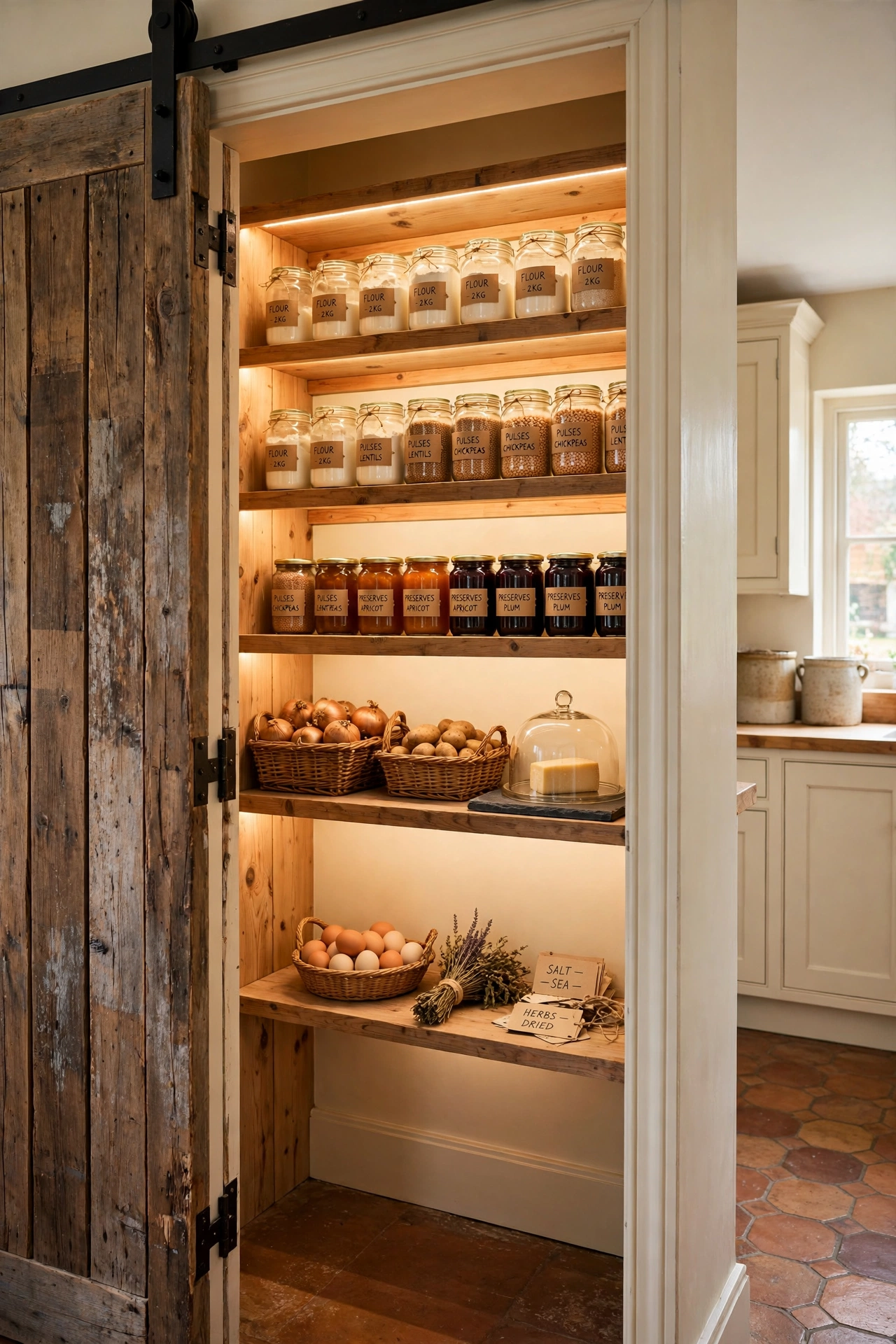
Plan the inside like a small shop. Open timber shelves at varied heights hold glass jars of flour, pulses, and preserves where you can see stock at a glance. Deep lower shelves take baskets for potatoes and onions.
The barn door earns its place beyond looks. Sliding on an exposed black iron track, it needs no swing space, so it suits tight kitchens and galley layouts where a hinged door would steal a whole corner. Reclaimed timber, painted boards, or a beadboard panel all carry the country mood.
Light and labels finish the job. A small window is traditional, but warm LED strips under each shelf work anywhere and make jar labels glow. Decant dry goods into matching labeled jars, and even a Monday stock-take feels pleasurable.
If a true walk-in is impossible, borrow the feeling. A deep larder cupboard with a barn-style door front, or a curtained alcove of timber shelves, delivers most of the charm and order. The country pantry is an attitude to storage: visible, plentiful, and proudly homemade.
14. Farmhouse Table Breakfast Nook with Bench Seating
Every country kitchen deserves a corner where the day starts slowly, and a farmhouse table breakfast nook is exactly that corner. A sturdy timber table and a built-in bench create the spot for coffee, homework, and long Sunday conversations.
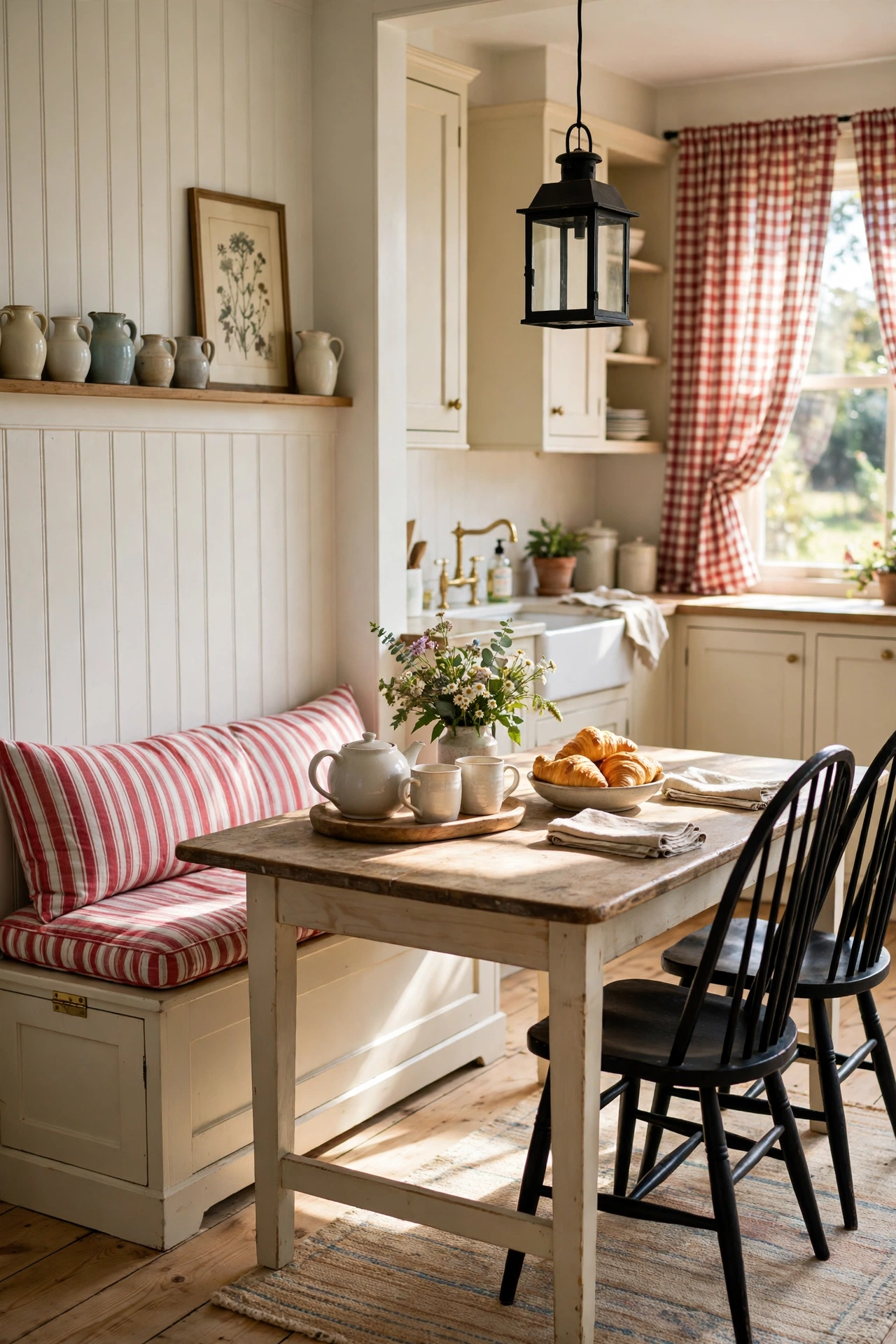
Bench seating is the clever country move. A fixed bench with a hinged top hides board games, table linens, and the good candles inside, while seating more people along a wall than chairs ever could. Add a washable cushion in checked or striped fabric and the bench becomes the most fought-over seat in the house.
Choose the table for work as much as meals. A scrubbed pine or oak top with a matte, repairable finish shrugs off mug rings and craft projects. Round tables soften tight corners and let extra chairs squeeze in.
Light makes the nook. Hang a single black lantern pendant or an enamel shade low over the table, and keep window dressings simple so morning sun floods in. A small vase of whatever the garden offers, even herbs or seed heads in winter, completes the picture without trying.
This is inexpensive square footage with enormous returns. The nook takes pressure off the island and quietly becomes where the household actually lives. Build it once, and breakfast will never happen anywhere else.
15. Classic White Subway Tile with Dark Grout
White subway tile is the country kitchen’s hardest-working backdrop, and dark grout is what makes it unmistakably farmhouse. The crisp brick pattern keeps walls bright and washable, while charcoal or warm grey grout lines draw the grid that gives the tile its handcrafted, utilitarian charm.
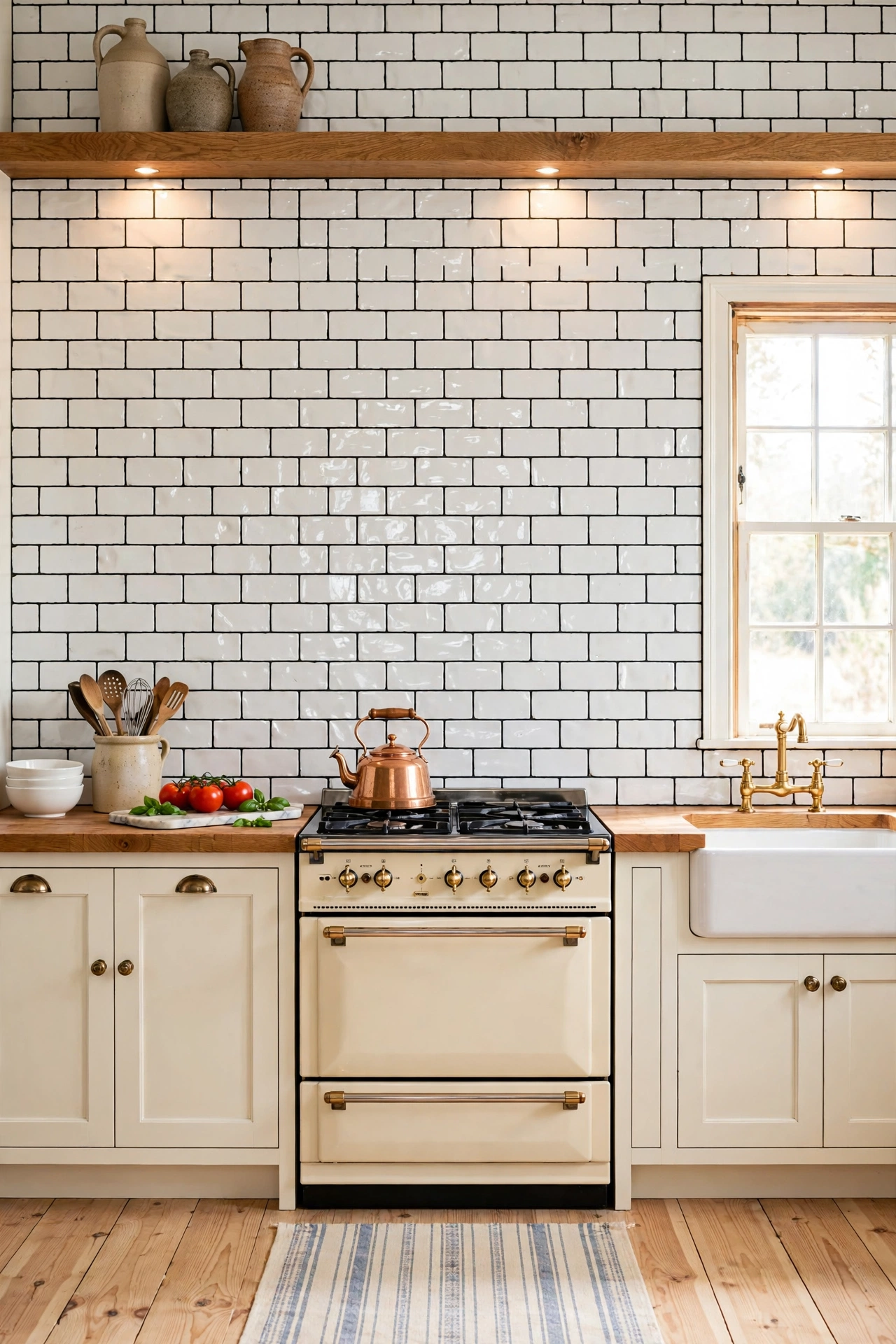
The grout does more than decorate. Dark lines disguise splashes and cooking stains that would grey a white grout within months, which is why this combination ruled in dairies and sculleries long before it ruled in magazines. It is the rare style choice that reduces housework while adding character.
Choose tile with a handmade character. Slightly uneven edges, a soft undulating glaze, and gentle color variation between tiles keep a big tiled wall from feeling clinical. Classic three-by-six inch tiles in a running bond pattern suit most kitchens.
Take the tile high for maximum country effect. Counter-to-ceiling tiling behind a range, or a full sink wall finished to a timber shelf, reads as architecture rather than a splashback strip.
Pair the wall with warm company. Cream or sage cabinets, brass or black fixtures, butcher block, and open wood shelves all soften the tile’s utility into charm. For pennies per square meter, white subway tile with dark grout delivers the country kitchen’s most reliable backdrop.
Country Kitchen Planning Guide: Elements, Materials and Timeless Tips
| Kitchen Element | Classic Country Choice | Practical Tip |
|---|---|---|
| Main cabinets | Cream or sage shaker with beadboard detail | Choose satin paint so doors wipe clean easily |
| Worktops | Oiled butcher block or honed natural stone | Re-oil wood every few months to resist stains |
| Sink | White fireclay apron-front farmhouse sink | Check cabinet support before fitting a heavy sink |
| Shelving | Thick reclaimed wood on black iron brackets | Keep everyday dishes on the lowest shelf only |
| Island | Farmhouse table style with turned legs | Leave knee space at one end for stool seating |
| Backsplash | White subway tile or beadboard panels | Dark grout hides cooking splashes gracefully |
| Flooring | Wide-plank pine or aged oak boards | Add washable woven runners at sink and range |
| Lighting | Black lantern pendants and mason jar lights | Use warm 2700K bulbs for a fireside glow |
| Hardware | Brass cup pulls and oil-rubbed bronze | Mix two finishes maximum for a collected look |
| Textiles | Gingham checks, florals and natural linen | Choose washable fabrics for busy family life |
16. Sage Green Cabinets with Natural Wood Accents
Sage green is the country kitchen’s favorite color after cream. Borrowed from garden herbs and painted farmhouse furniture, its greyed softness feels calm, grown-up, and permanently in tune with timber, stone, and linen. Sage brings color into the kitchen without ever raising its voice.
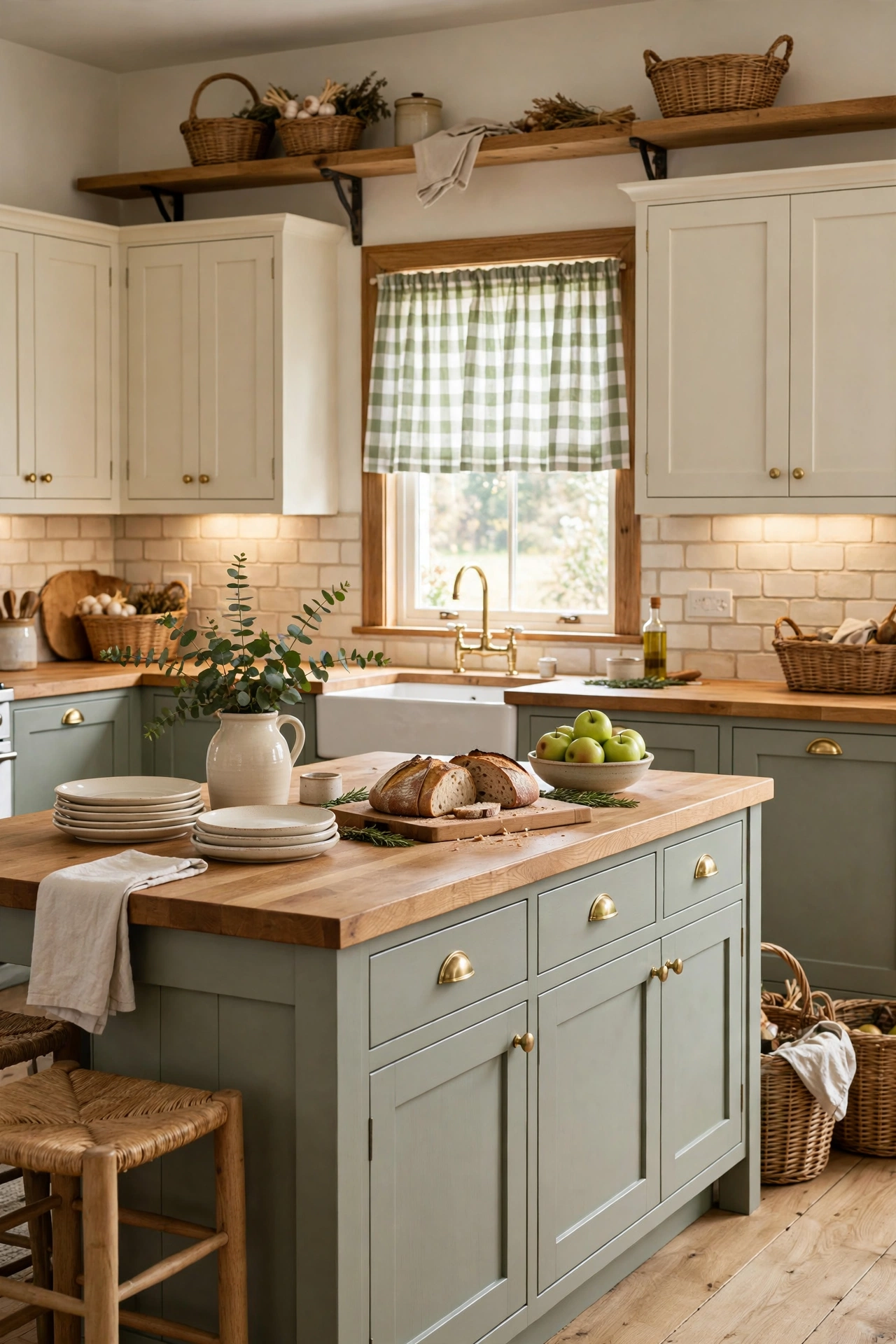
Use it where it works hardest. Sage on lower cabinets, an island, or a dresser unit grounds a room while cream or white uppers keep things airy. Full sage kitchens succeed too in bright rooms, especially with pale counters and plenty of natural light to stop the green turning muddy by evening.
Natural wood is sage’s essential partner. Oak or pine worktops, open shelves, a farmhouse table, and woven baskets warm the green’s cool undertone and complete the garden palette. The combination reads as landscape indoors: soft foliage green layered over honest, sun-bleached timber tones.
Hardware and metal choices fine-tune the mood. Unlacquered brass and antique bronze warm sage beautifully for a traditional feel, while black cup pulls and hinges sharpen it toward modern farmhouse.
Test the shade carefully before committing. Sage shifts dramatically with light direction, looking grey in north-facing rooms and almost mint under strong sun. Paint a large board and live with it for two days before deciding.
17. Distressed Painted Cabinets with Hand-Worn Edges
Distressed cabinets tell a story that brand-new joinery cannot. Edges worn back to timber and paint with the depth of many coats give a kitchen instant ancestry. It is the finish for people who want country character from day one.

Authentic distressing is a light touch. Paint is rubbed or sanded only where hands and life would naturally wear it: around handles, along drawer edges, at the corners of doors. Random, heavy sanding looks theatrical, so copy where time actually touches a kitchen.
The technique suits a weekend project. Paint sound cabinets in cream, sage, or dusty blue, let the finish cure fully, then work edges gently with fine sandpaper and a wax block resist in chosen spots. A final coat of clear wax protects the work.
Pair distressed doors with genuinely old companions. A scarred farmhouse table, vintage copper, and worn timber shelves make the cabinets feel inherited rather than decorated. Keep counters and appliances tidy so the room reads collected, never neglected or scruffy.
This finish hides real life beautifully too. Chips and knocks that would ruin a pristine lacquer simply join the pattern on distressed paint, making it the most forgiving choice for busy family kitchens. Country style at its most practical: beauty that improves with use.
18. Windsor Chairs and Woven Rush Counter Stools
Country seating should look gathered, not matched, and nothing gathers better than Windsor chairs and woven rush stools. Their turned spindles, curved backs, and natural fiber seats have furnished farmhouse kitchens for three centuries because they are comfortable, repairable, and beautiful from every angle.
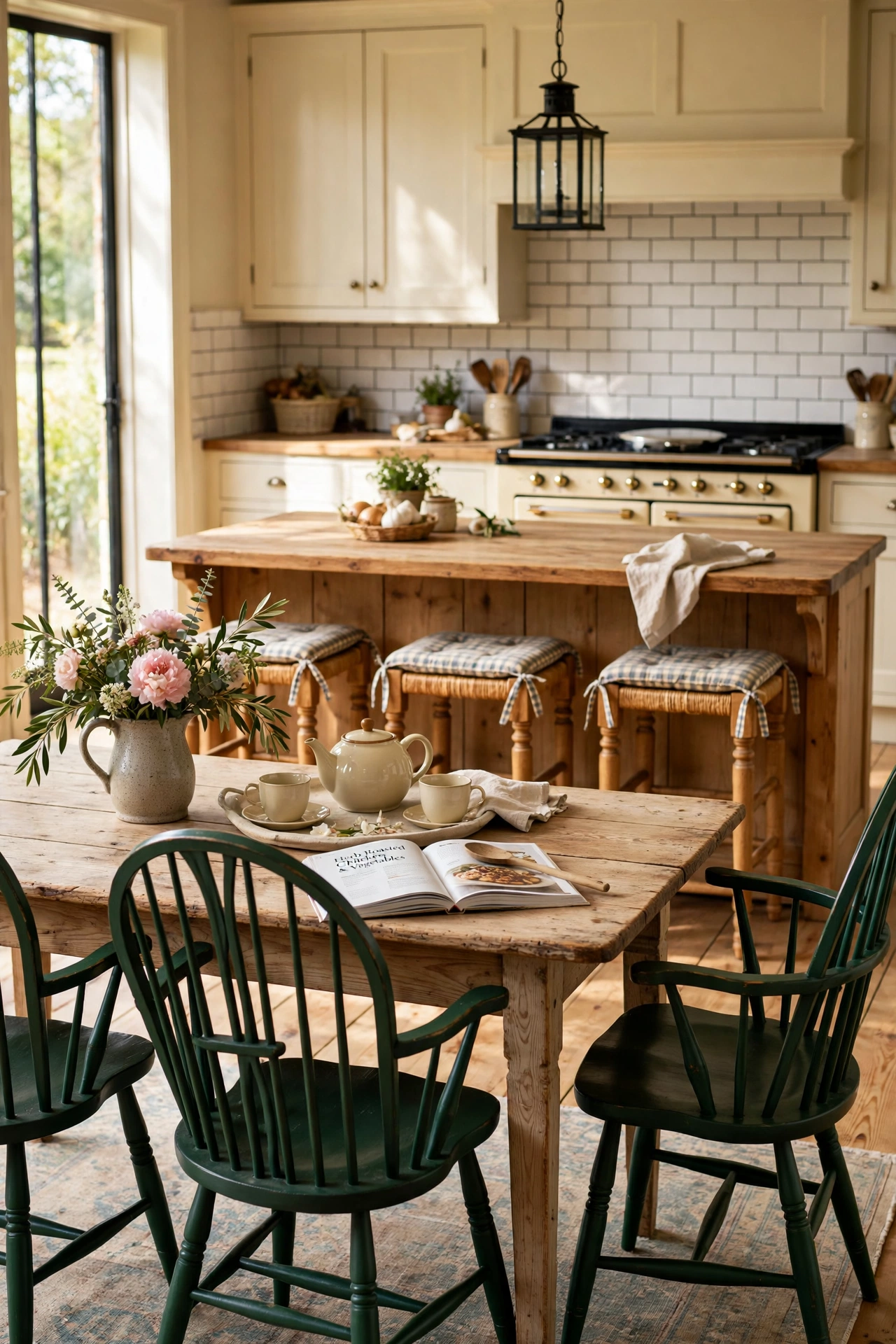
Windsor chairs bring instant heritage to a farmhouse table. A set in black or dark green paint gives a nook graphic strength, while natural or cream Windsors keep things light. Mixing two chair styles around one table is the most authentically country arrangement of all.
At the island, woven rush or seagrass stools add the texture country kitchens crave. Natural fiber seats soften stone and painted wood, flex comfortably through long breakfasts, and can be re-woven when they eventually sag. Choose backless stools to tuck fully under a table island, low backs where lingering is the plan.
Mind comfort in the details. Seat heights around sixty-five centimeters suit standard worktops, and a washable cushion pad helps on long sessions. Felt pads under every leg protect wide-plank floors from three centuries of enthusiasm.
Hunt secondhand first. Windsors and rush stools are plentiful at auctions and antique shops, often sturdier than new versions and far cheaper. A weekend with paint or Danish oil unifies a mismatched set into a family.
19. Mason Jar Pendants and Black Lantern Lighting
Lighting sets the country kitchen’s evening mood, and mason jar pendants with black lanterns strike its favorite balance of homemade and handsome. Clear glass jars glow like bottled fireflies over an island, while iron lantern fixtures bring the farmyard’s most practical light indoors, softened for supper.
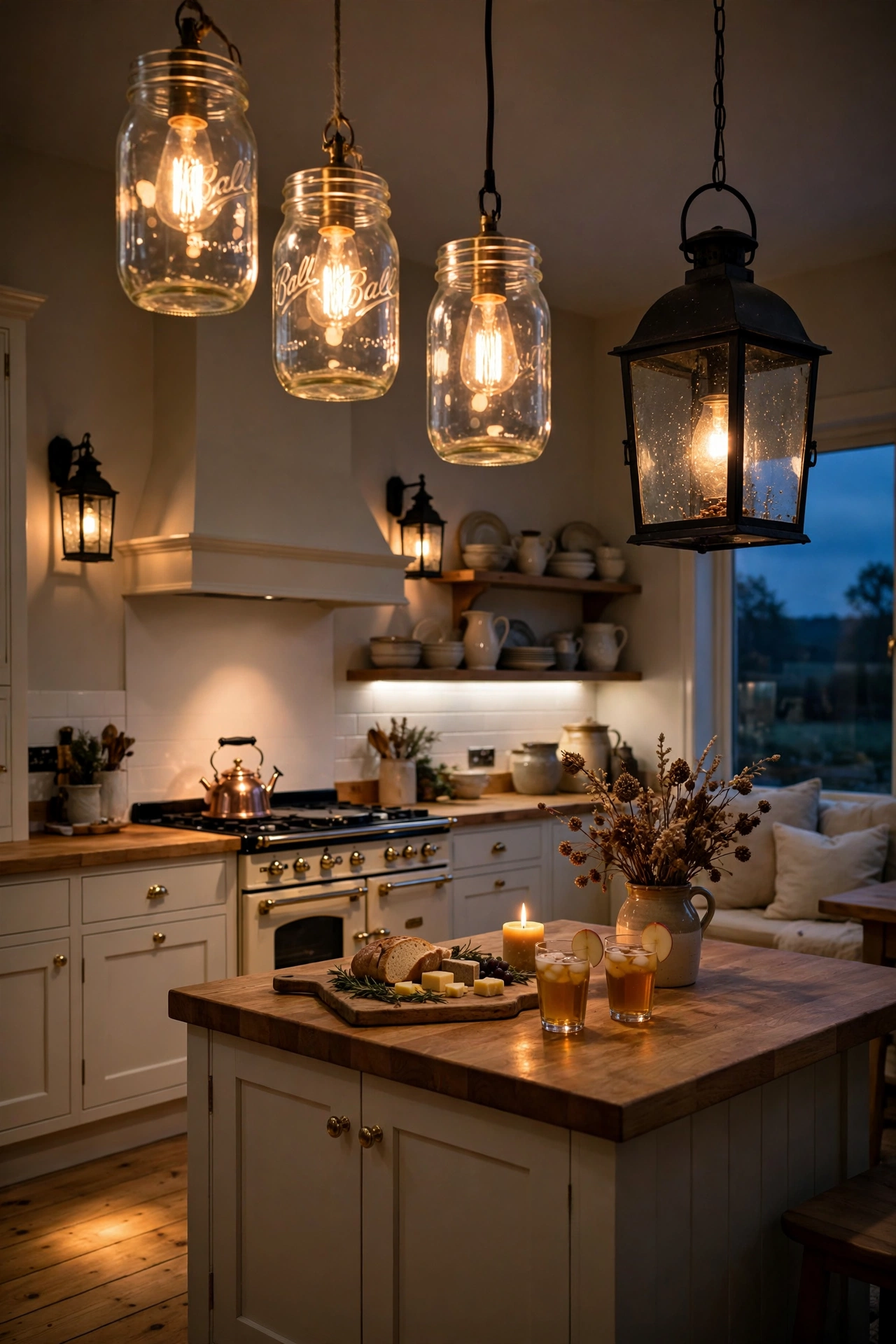
Mason jar pendants are charmingly simple. Genuine jars in clear or pale aqua glass, fitted with warm filament bulbs, cast sparkle without glare and show off the bulb’s glow. Group three over an island at staggered heights, and keep the glass clean; grease dulls the magic fast.
Black lanterns anchor the scheme. A large lantern pendant over a breakfast nook or a pair flanking a range adds structure and echoes iron brackets, pot racks, and hardware elsewhere in the room. Choose real metal and size generously; undersized lanterns look lost above country furniture.
Layer light like a farmer never could. Combine pendants with under-shelf strips, a small lamp on a dresser, and dimmers on everything. Bulbs around 2700 Kelvin keep cream cabinets and timber glowing honey-toned rather than blue after dark.
Best of all, this lighting is achievable on any budget. Jar pendants can be adapted from existing fittings, and quality lanterns exist at every price. Together they give a country kitchen warm pools of light and dark iron silhouettes.
20. Wide-Plank Pine Flooring with a Worn Patina
Wide-plank pine is the floor country kitchens grew up on. Boards twenty centimeters or more across, in honeyed softwood full of knots and grain, run warm underfoot and forgiving under dropped crockery. A worn patina, earned or lovingly faked, gives the whole room its sense of age.
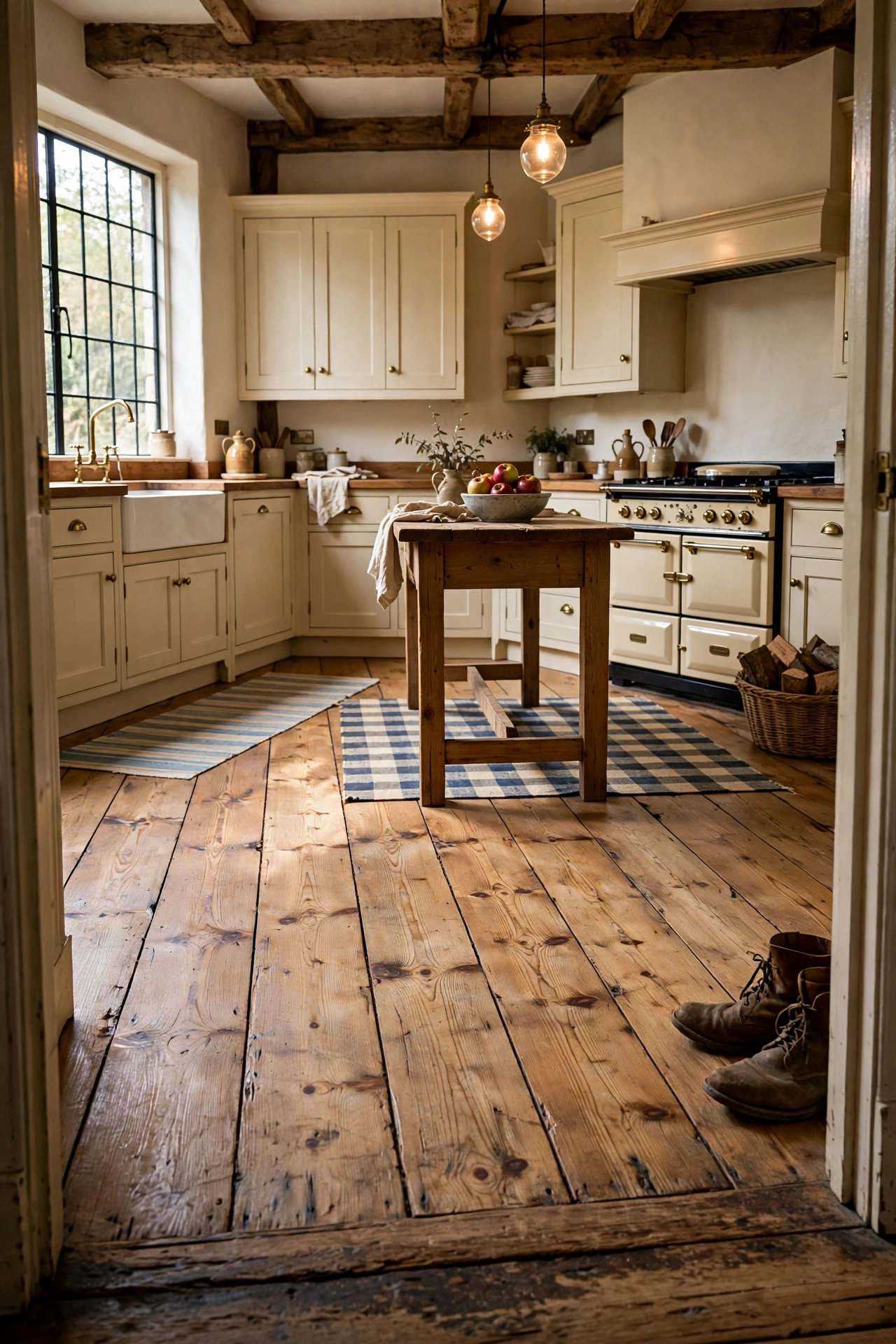
Pine’s softness is part of its character. It dents where chair legs live, darkens in doorways, and records the household’s geography in its surface. In a country kitchen that is a feature, not a flaw. Choose heart pine or slow-grown boards for the hardest, richest surface the budget allows.
Finish for living, not for show. Hard-wax oils keep the matte, barefoot feel and allow local repairs: a worn patch can be sanded and re-oiled in an hour without redoing the room. Avoid high-gloss varnishes, which turn pine orange and make every scratch flash white against the shine.
Reclaimed boards deliver instant history. Salvaged warehouse and barn pine arrives with nail holes, saw marks, and a century of tone that new wood needs years to earn. Budget for de-nailing and acclimatizing the boards before laying.
Soften and protect with textiles. Flat-weave runners in stripes or checks at the sink and range guard the busiest routes and add the country pattern floors love.
21. Freestanding Country Hutch and Dresser Storage
The country dresser, or hutch, is the piece of furniture this style was built around. Open shelves above for plates and jugs, cupboards and drawers below for everything else, it stores half a kitchen while looking like an heirloom. Freestanding and forgiving, it suits old houses perfectly.
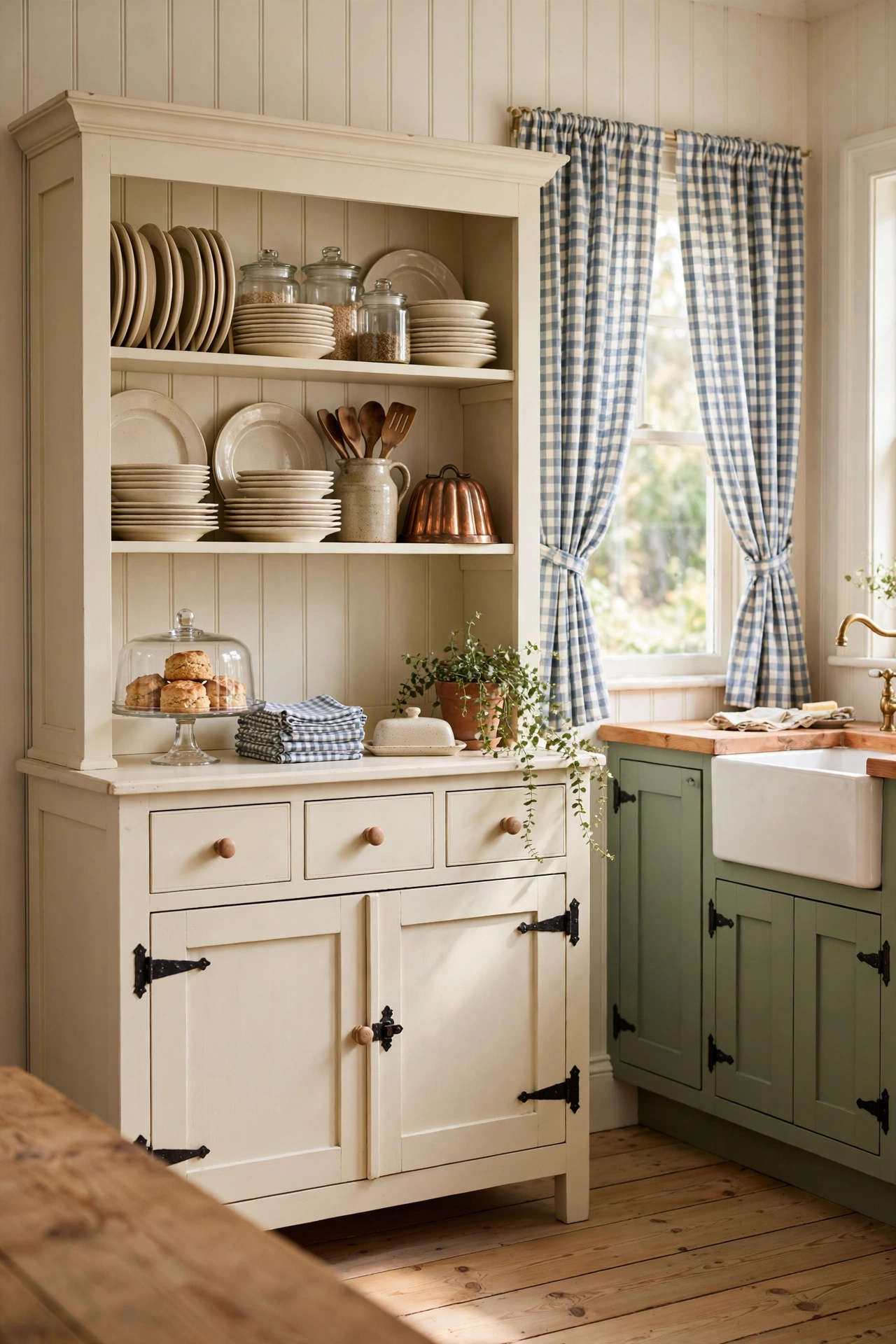
Dressers solve the problems fitted cabinets cannot. In rooms with uneven walls, low beams, or listed-building rules, a freestanding piece delivers generous storage without a single fitted unit. It also moves house with you and repaints whenever the color story changes.
Style the top shelves like a still life that works. Everyday stoneware in honest stacks, a row of glass jars, jugs holding wooden spoons, and one or two treasures, perhaps a inherited tureen or copper mold, earn their display. Keep the lowest shelf purely practical so daily grabbing never disturbs the arrangement.
Below decks, demand hardworking storage. Deep drawers take linens and cutlery, while cupboards hide small appliances, preserving pans, and the slow cooker. Look for plate grooves, spice drawers, and hand-forged hinges.
Buy vintage whenever possible. Solid pine dressers are plentiful, inexpensive, and built to outlast modern flat-pack furniture. A coat of cream or sage paint transforms a tired piece into the kitchen’s anchor.
22. Gingham, Floral and Linen Textiles
Textiles are where a country kitchen gets its softness and its seasons. Gingham checks, faded florals, and rumpled natural linen on curtains, cushions, and table linen warm all that wood and stone, absorb echo, and let you redecorate for the price of a few meters of fabric.
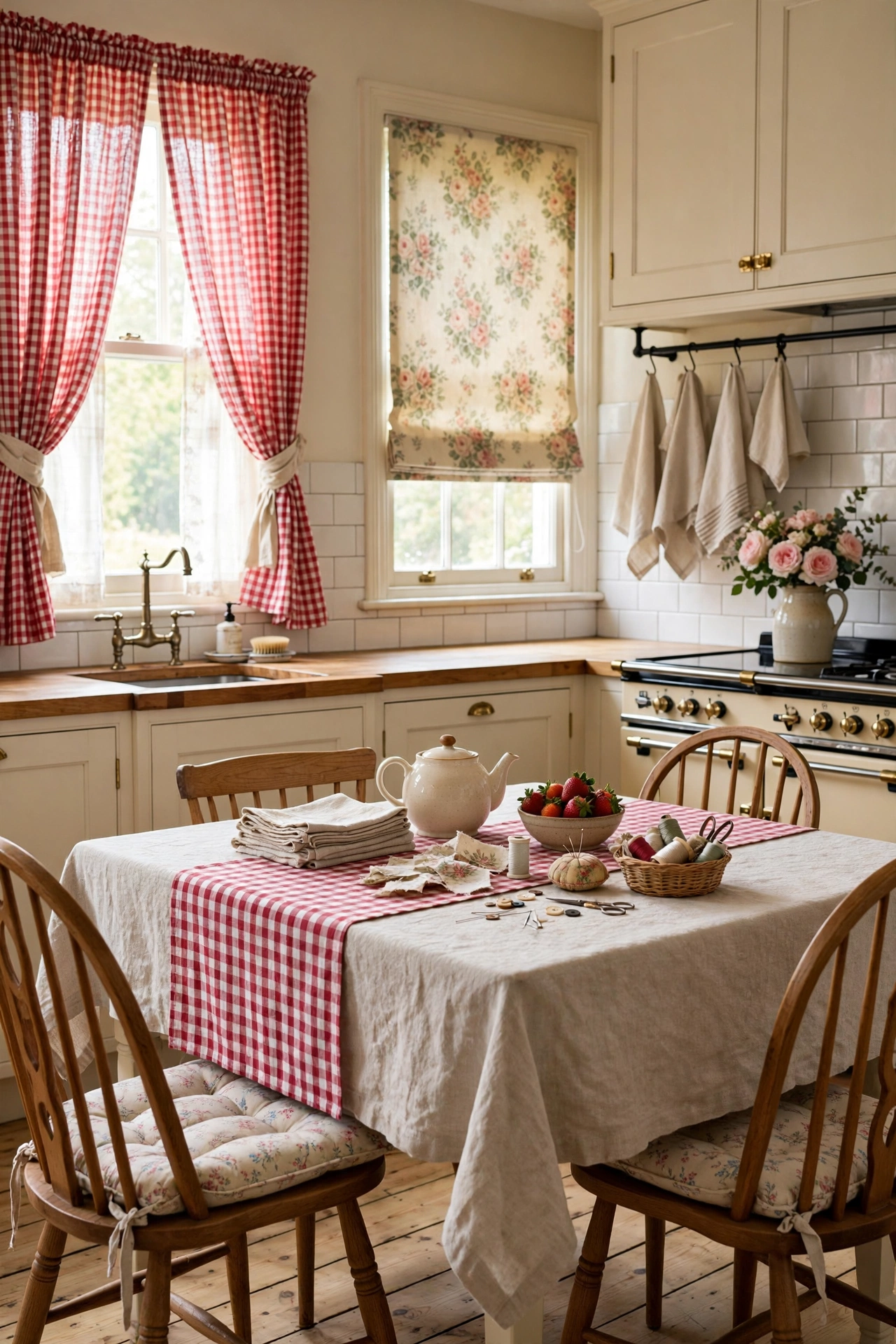
Gingham is the pattern of record. A small red, sage, or navy check on cafe curtains, chair pads, and a table runner delivers instant farmhouse recognition without overwhelming the room.
Florals add the garden. A faded cabbage-rose or sprigged cotton on a blind, cushion, or the lining of open shelves softens iron and timber beautifully. Keep the scale generous and the colors dusty rather than bright, and one floral per room is usually enough beside checks and stripes.
Linen does the quiet work. Natural flax tea towels, an unbleached tablecloth, and plain cushion covers bring the texture that stops patterns fighting. Linen softens with every wash, dries dishes without lint, and its gentle creases are not a flaw but the entire point of the country look.
Rotate textiles with the seasons for a kitchen that breathes. Light checks and florals for spring, heavier stripes and deeper reds for winter, always in washable natural fibers. Few updates refresh a country kitchen faster than opening the linen drawer.
23. Cast Iron Cookware Display Wall
Cast iron cookware is too handsome and too heavy to hide in a cupboard. A display wall of black skillets, Dutch ovens, and griddles hung beside the range turns the kitchen’s hardest-working tools into its strongest decoration.
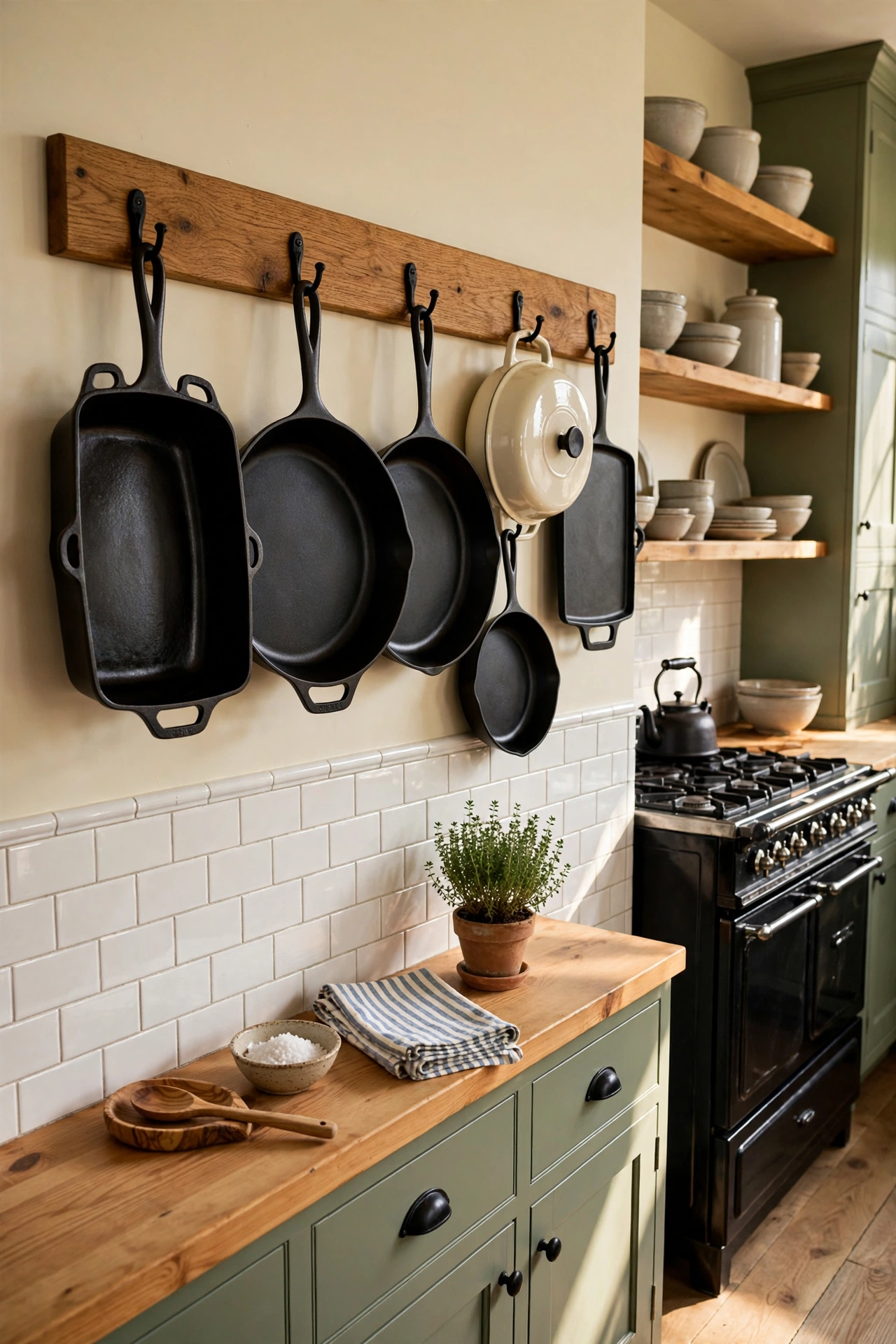
Hang iron with respect for its weight. A single skillet can exceed three kilograms, so hooks must fix into studs, solid masonry, or a mounted timber batten rated for the load. Space pans by size, handles aligned, and the arrangement looks deliberate.
Well-seasoned iron is the finish. Years of cooking build a deep, satiny black patina that no paint imitates, and displaying pans keeps them dry and aired, which protects that seasoning between uses. A light wipe of oil after washing keeps wall-hung pieces gleaming and rust-free in steamy kitchens.
Mix generations freely. Grandmother’s skillet, an enameled Dutch oven, and a market-find griddle hang happily together. Enameled pieces add the wall’s only color notes, so place them where the composition needs a lift.
Keep the working rule simple: if it hangs, it cooks. A display wall earns its space only when every pan is in regular rotation, which in a country kitchen is rarely a problem. Beauty through honest use is the oldest decorating principle this style knows.
24. Stoneware Crocks, Jugs and Utensil Holders
Stoneware crocks and jugs are the country kitchen’s small-scale heroes. Salt-glazed, cream, or speckled brown, they corral wooden spoons beside the range, hold herbs on the sill, and store onions in cool darkness.
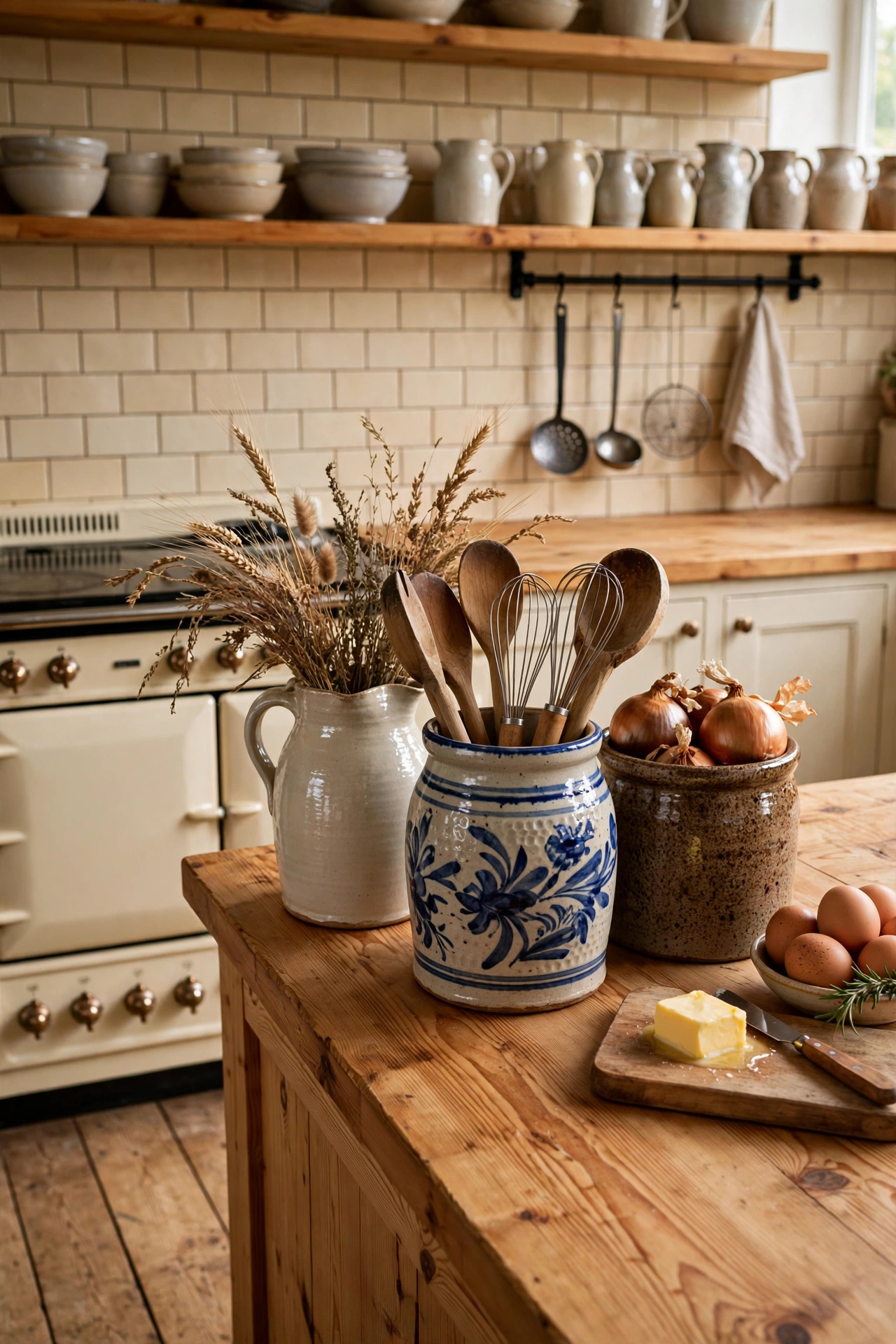
Beside the hob, a generous crock is pure practicality. Spoons, spatulas, ladles, and whisks stand ready in one grab, and stoneware’s weight keeps the pot steady when you pull a spoon free mid-recipe. Choose a wide mouth, a washable glaze inside, and enough presence to hold its own visually on the worktop.
Jugs multiply quietly through a country kitchen. One holds utensils, another takes flowers or dried grasses, a third serves water at the table, and small ones gather eggs, lemons, or the day’s herb cuttings. Cream and buttermilk glazes mix with everything, while a single salt-glazed antique adds the collection’s soul.
Hunt them everywhere except the homewares aisle. Vintage crocks with cobalt brushwork, old dairy jugs, and handmade studio pottery carry the irregularities that read as authentic. Check for cracks by tapping for a clear ring.
Group stoneware in odd numbers with breathing room: a tall crock, a medium jug, a small bowl. Against timber shelves and cream tiles, these humble pots deliver layered, collected texture.
25. Rustic Ceiling Pot Rack Over the Island
A ceiling pot rack over the island is the country kitchen’s chandelier and cupboard in one. Copper, cast iron, and steel pans hang in a gleaming row above the worktop, freeing deep drawers and putting every pan in the cook’s hand without a single bend or rummage.
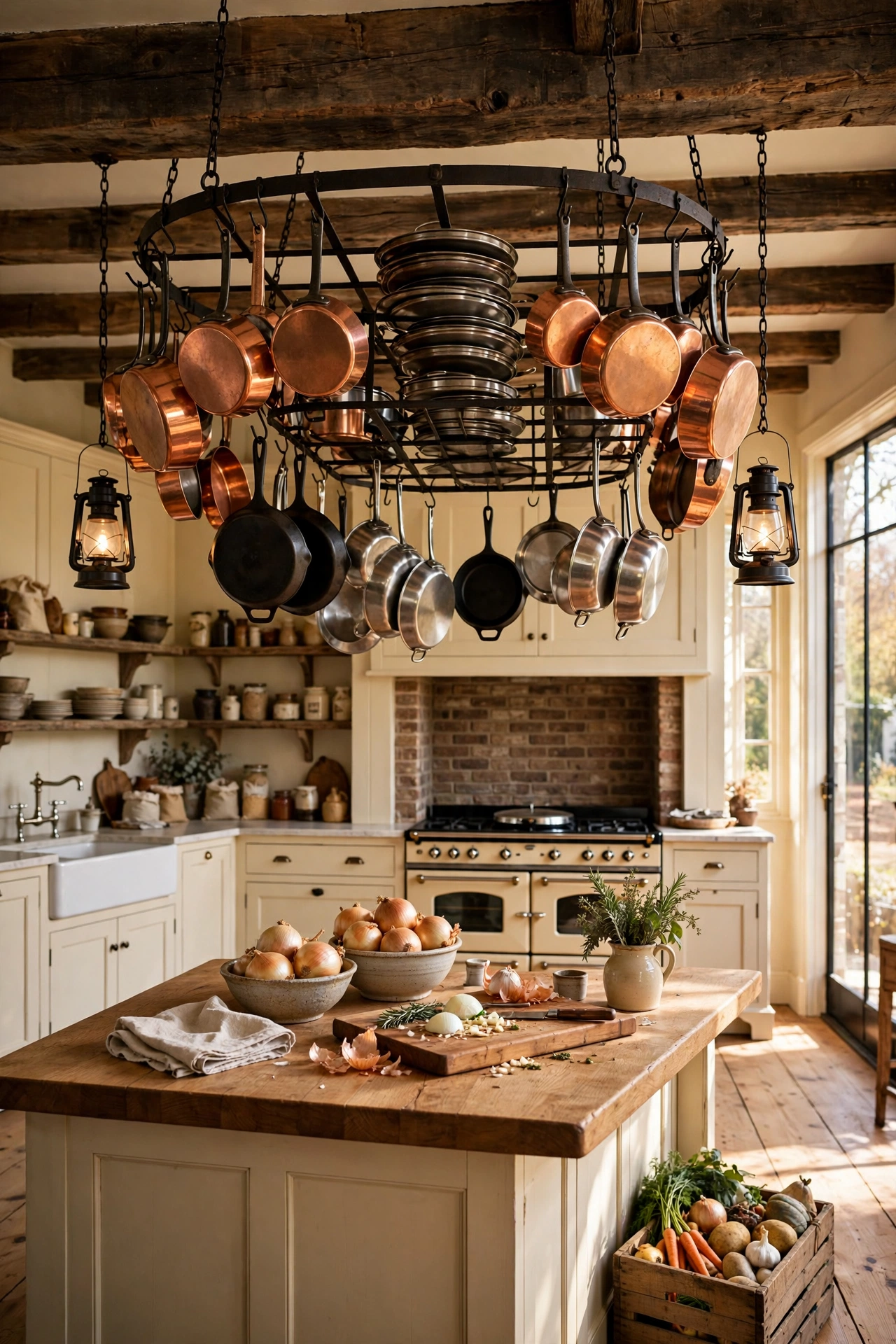
Structure comes first. A loaded rack can carry forty kilograms or more, so fixings must land in ceiling joists or a purpose-fitted timber beam, never in plasterboard alone. That beam often becomes a feature itself, tying the rack into exposed ceiling timbers for a look that feels original to the house.
Choose the rack to suit your metal story. Black wrought iron suits rustic rooms, while a brass rail rack warms a cream kitchen beautifully. Oval racks follow island shapes best; rectangular grids suit galley-style layouts.
Hang with a system you will actually keep. Everyday pans at the center within easy reach, lids and special-occasion pieces toward the ends, hooks spaced so pans kiss but never clang. Keep the lowest pan above head height, and light the arrangement so metal glows.
Few features photograph better or work harder. The rack signals a kitchen where cooking genuinely happens and turns storage into the centerpiece. In the country style, that is exactly where a good pan belongs.
26. Window Herb Garden on a Deep Farmhouse Sill
A deep farmhouse sill planted with herbs is the country kitchen’s living decoration. Pots of basil, thyme, rosemary, and parsley catch the light above the sink, perfume the room when you brush past, and season dinner within arm’s reach of the chopping board.
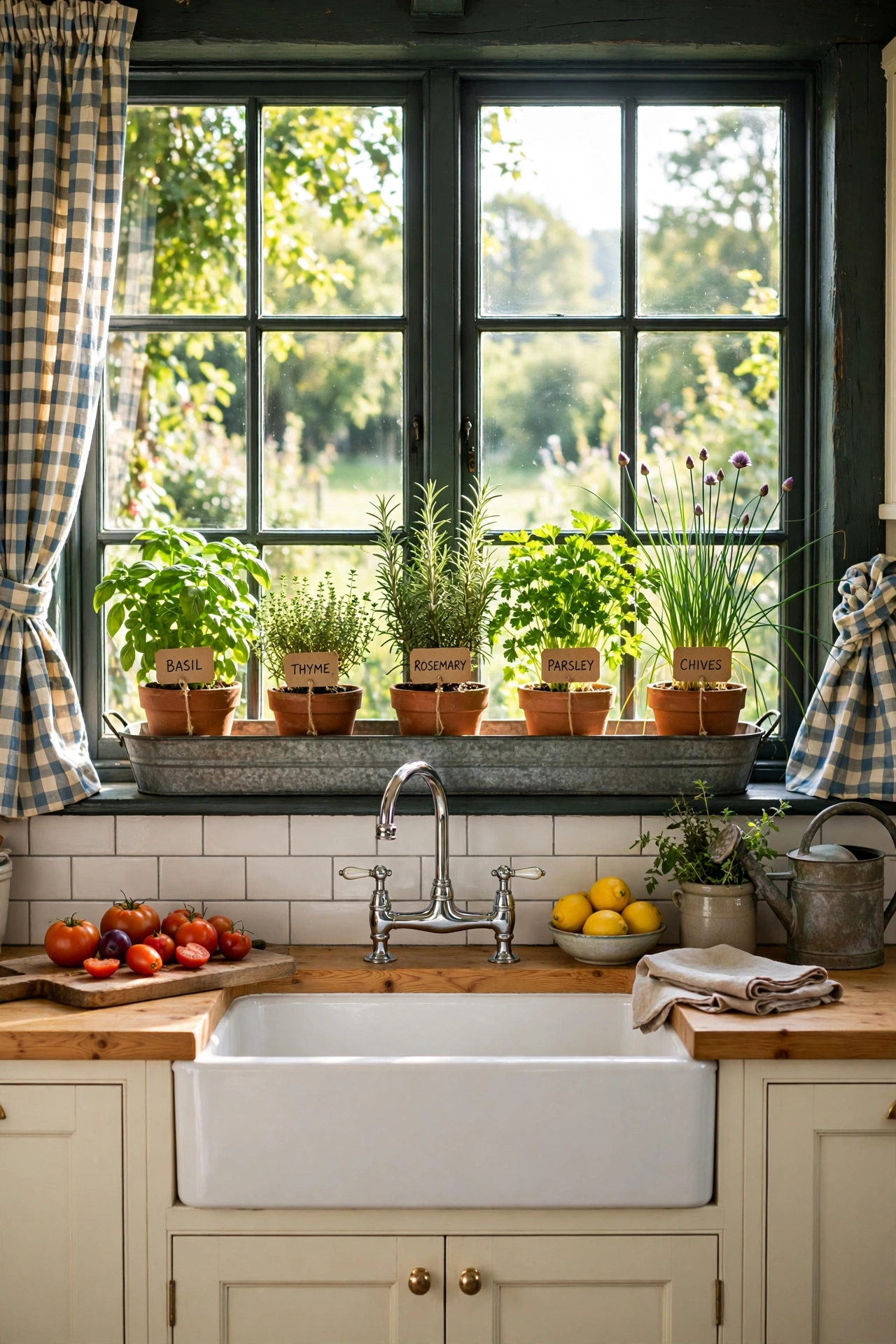
Depth is the enabler. A sill of fifteen centimeters or more holds proper pots rather than token miniatures, and pots matter: terracotta breathes, suits Mediterranean herbs, and ages into a lovely mottled patina. Group herbs in a shallow timber tray so watering is one trip.
Plant what you actually cook. Basil beside the tomatoes’ end of the sill, woody rosemary and thyme where drainage is sharpest, and mint strictly in its own pot before it colonizes the rest. Most herbs want the brightest sill you have.
Keep the rotation honest. Supermarket herb pots are grown soft and rarely last, so graduate to nursery plants or sow your own once the sill habit sticks. Pinch tips constantly for bushy growth and feed lightly in spring.
Style helps the garden earn its view. Matching terracotta, one characterful stoneware crock, handwritten labels or stamped metal tags, and suddenly the window becomes the kitchen’s favorite picture. Guests always drift to the herb sill; it is where a country kitchen proves it is alive.
27. Antique Brass and Oil-Rubbed Bronze Hardware
Hardware is the jewelry a country kitchen wears every day, and antique brass with oil-rubbed bronze are its heirloom metals. Warm, darkened, and visibly touched by time, they suit painted shaker doors far better than chrome’s cold shine, and they forgive fingerprints in a way polished finishes never will.
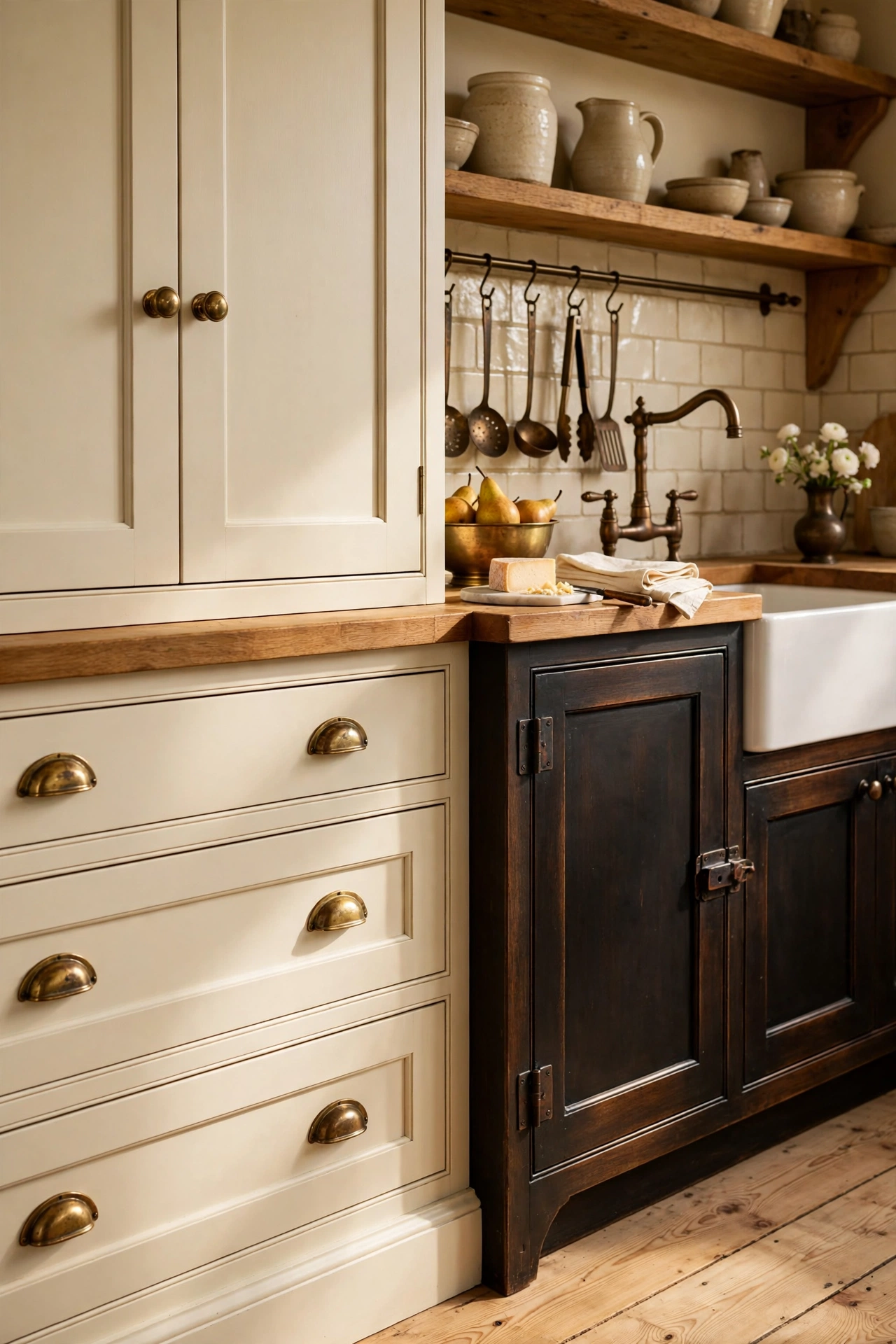
Antique brass brings the warmth. Its finish is deliberately aged, darker in the recesses and golden where hands polish it, so cup pulls, knobs, and hinges look inherited rather than installed. Unlacquered versions keep evolving with use, developing the patchy, living patina that country kitchens prize most.
Oil-rubbed bronze brings the depth. Nearly black with warm brown undertones showing at the edges, it grounds pale cream and sage cabinetry and echoes iron brackets, lantern lights, and cast iron pans across the room.
Mix the two metals with a plan. One leads on cabinetry, the other supports on lighting or the faucet. Repeat each finish at least twice in the room so every choice looks intentional from the doorway.
Quality shows in the hand. Solid brass and bronze have a weight and smoothness that plated substitutes cannot fake, and they will outlast the cabinets themselves. Buy the best handles you can, because in a country kitchen these small warm metals are touched a hundred times a day.
28. Freestanding Larder Cupboard and Pie Safe
The freestanding larder is the country kitchen’s answer to the fitted pantry wall. A tall cupboard in painted pine holds dry goods and preserves behind doors with pierced tin or mesh panels, a nod to traditional pie safes.
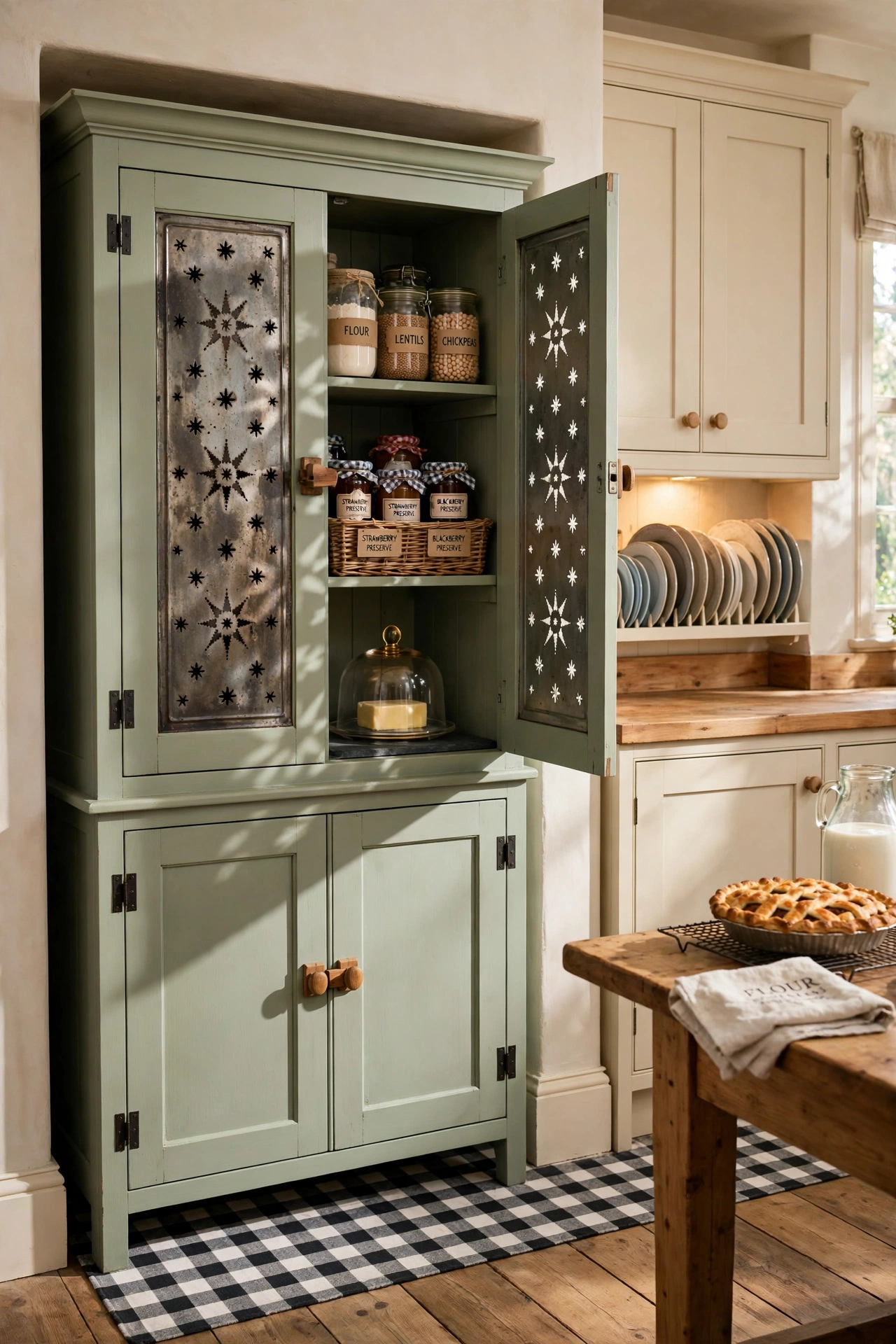
Pie safe panels are more than nostalgia. Perforated tin or fine mesh vents the cupboard gently, keeping flour, bread, and stored produce fresher than sealed cabinetry in a warm kitchen. Original punched-tin patterns, stars, eagles, and simple diamonds, turn a storage cupboard into folk art with a job to do.
Inside, organize like a shopkeeper. Adjustable shelves, labeled jars, and baskets make one cupboard swallow a surprising share of a kitchen. A marble or slate shelf at the base keeps butter and cheese traditionally cool.
Placement is flexible because the piece is furniture. A larder fills an awkward alcove, flanks a dresser, or stands at a galley kitchen’s end where fitted units would overwhelm. Paint it to match the cabinets for calm, or in a contrasting sage, blue, or red for the room’s cheerful exclamation mark.
Vintage larders and reproduction pieces both deliver. Solid timber construction, honest hinges, and a little wear around the handles are the qualities to seek. Few purchases add this much storage and story in a single delivery.
29. Small Country Galley Kitchen with Cottage Charm
A small galley kitchen may be the country style’s most natural home. Two honest runs of cabinetry, everything within reach, and no wasted steps suit the farmhouse way of cooking perfectly. With the right choices, a narrow galley feels less like a compromise and more like a cottage.
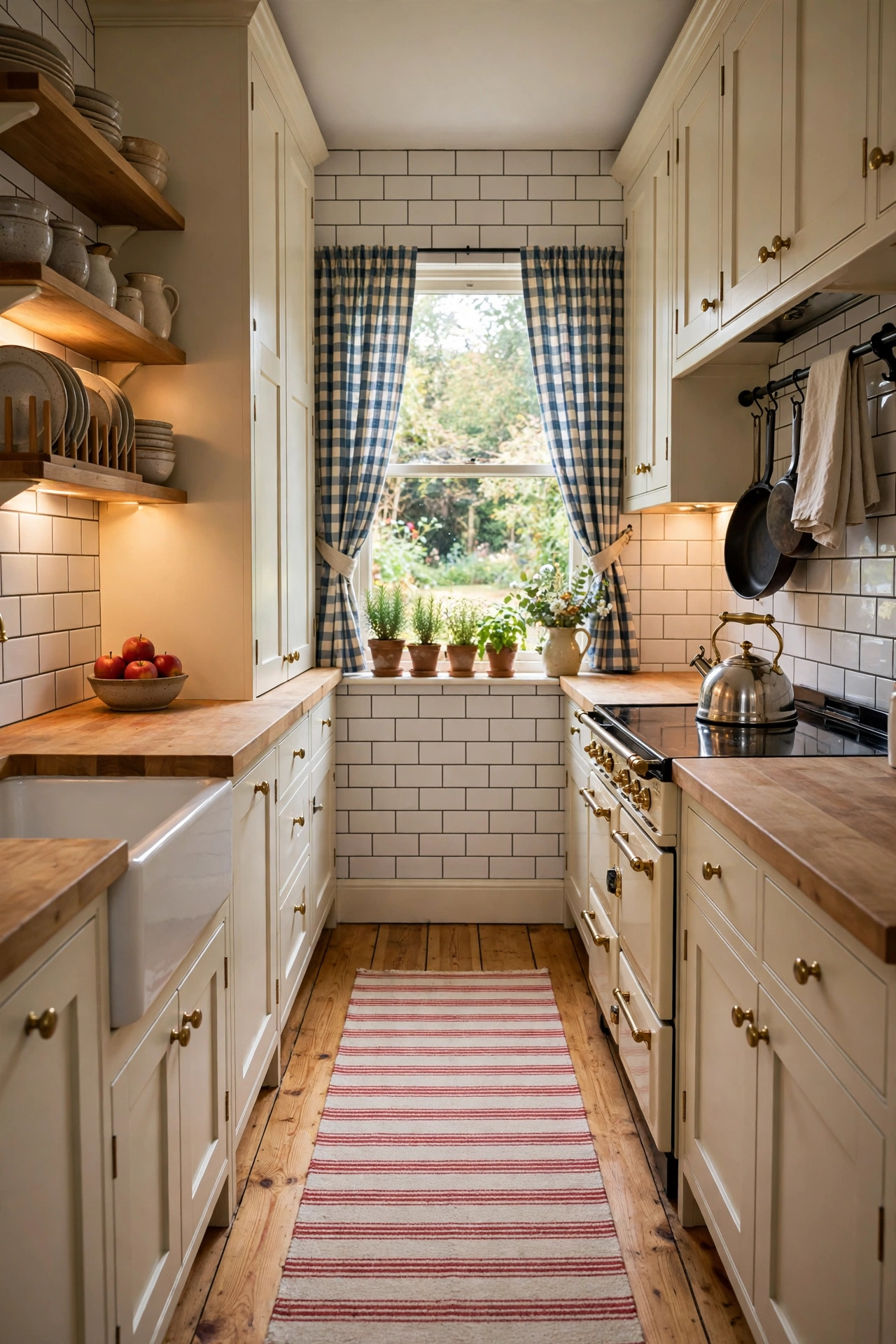
Keep the palette pale and unified. Cream or soft white shaker cabinets on both sides, one continuous run of butcher block, and white tile between them bounce light down the corridor and stop the walls closing in. A single color story from floor to ceiling makes the narrowest galley feel calm rather than cramped.
Steal the classic space tricks. Open shelves instead of upper cabinets on one side open the room at eye level, glass-front or chicken-wire doors lighten the other run, and a plate rack above the sink turns storage into decoration. Every vertical centimeter works, so take shelves and cabinets toward the ceiling.
Choose fittings with cottage manners. A compact apron-front sink and a slim vintage-style range keep a galley’s fittings charming. A runner in stripes or checks leads the eye down the room and softens the floor’s echo.
Small country galleys prove this style is about attitude, not acreage. Honest materials, visible tools, and herbs on the sill deliver the full farmhouse feeling.
30. Budget-Friendly Country Kitchen Refresh
The country look may be the most budget-friendly style of all, because it values age, wear, and secondhand finds over showroom perfection. Paint, timber, textiles, and market treasures can transform a tired kitchen for the cost of a single fitted cabinet, and every shortcut suits the style’s soul.
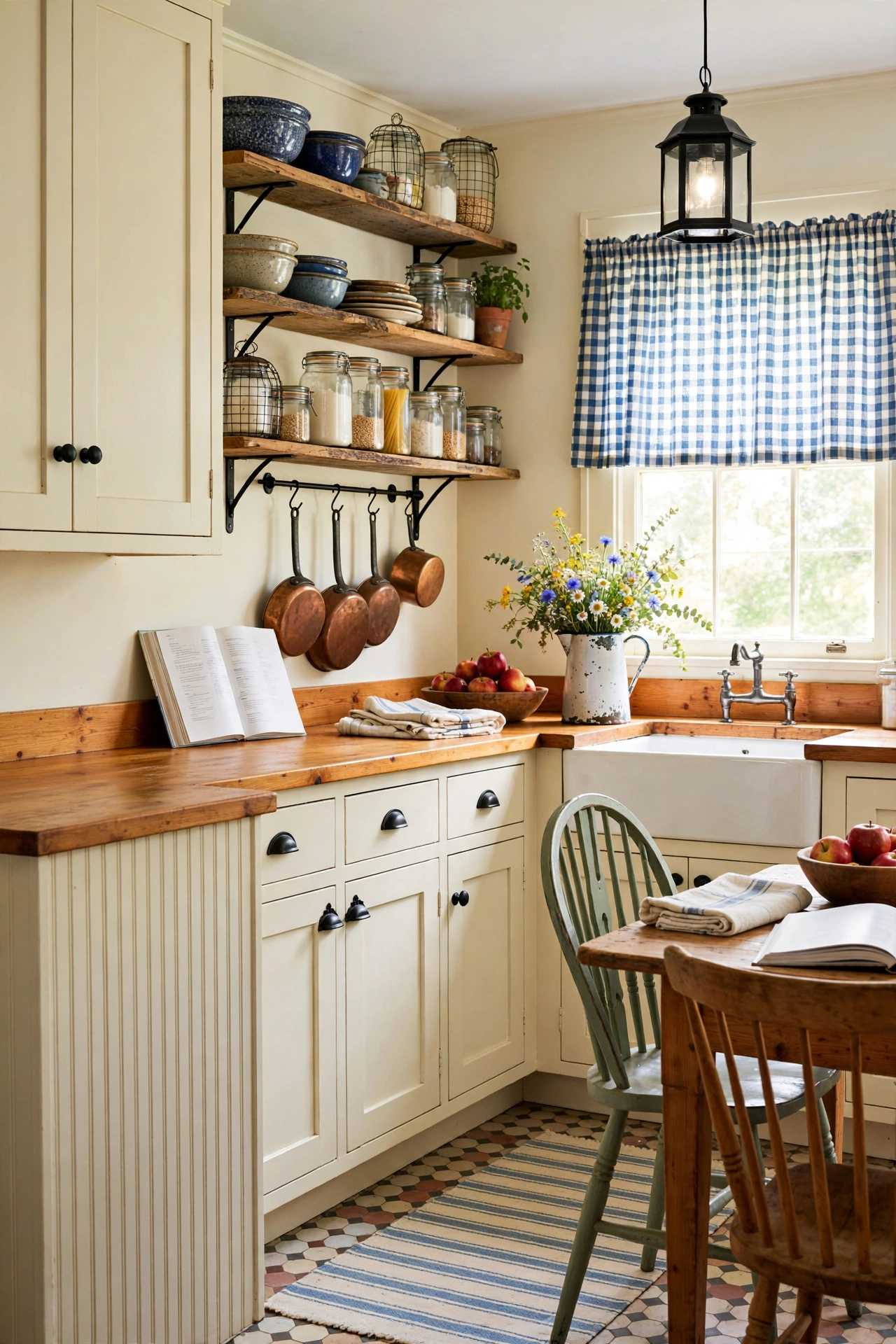
Paint does the heavy lifting. Sound cabinets in cream or sage with new cup pulls gain instant farmhouse character. Finish sound but dated worktops with a refresh of oil, and tired tiles brighten with proper cleaning alone.
Shop where country kitchens have always shopped. Auctions, salvage yards, and secondhand shops yield pine tables, Windsor chairs, stoneware crocks, copper pans, and dressers at a fraction of new prices. One genuine old piece anchors a room of basics.
Textiles and open storage fake the renovation. Swap two upper doors for open shelves, hang a checked curtain, and the room reads newly decorated. Group what you own into honest displays: jars decanted, pans hung, boards propped. Styling costs nothing and changes everything.
Spend the savings where hands notice: solid hardware, a good faucet, warm lighting. A budget country refresh succeeds because the style forgives the rest. Patina is the point, mismatched is the method, and a kitchen full of life beats a kitchen full of invoices every time.
Conclusion
A country kitchen is never really finished, and that is its greatest charm. It grows the way a garden grows: a copper pan added here, a dresser painted there, herbs thriving on the sill and checked curtains swapped with the seasons. The thirty ideas in this collection are starting points, not rules. Begin with the anchor pieces your budget allows, honest cabinets, a welcoming sink, timber underfoot and overhead, then let the room collect its details and its stories over time. Choose natural materials, keep everything useful within sight and reach, and favor warmth over perfection at every decision. Do that, and your kitchen will not simply look like a country kitchen in photographs. It will feel like one every morning, every meal, and every gathering, for years to come.
Key Takeaways
- Start with the country anchors: cream or sage shaker cabinets, an apron-front farmhouse sink, and warm butcher block worktops.
- Natural materials age best: timber shelves, wide-plank pine floors, and exposed beams gain character with every year of use.
- Keep everyday things visible: open shelving, plate racks, hanging copper, and cast iron walls make storage part of the decor.
- Warm metals matter: antique brass cup pulls and oil-rubbed bronze hardware keep painted cabinetry from feeling flat.
- Textiles bring the softness: gingham checks, faded florals, and natural linen on curtains, cushions, and table linen.
- Layer warm light at around 2700K with black lanterns and mason jar pendants so cream and timber glow after dark.
- Country style is budget-friendly by nature: paint, secondhand furniture, and honest patina beat a costly renovation.