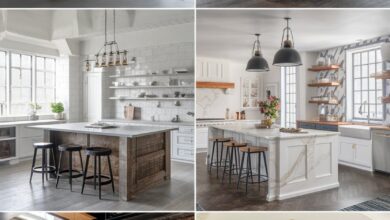
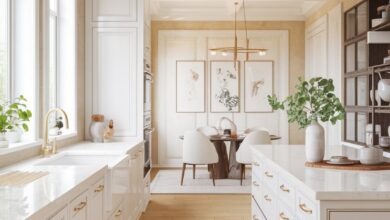
30 Farmhouse Kitchen Ideas That Blend Rustic Charm With Everyday Comfort

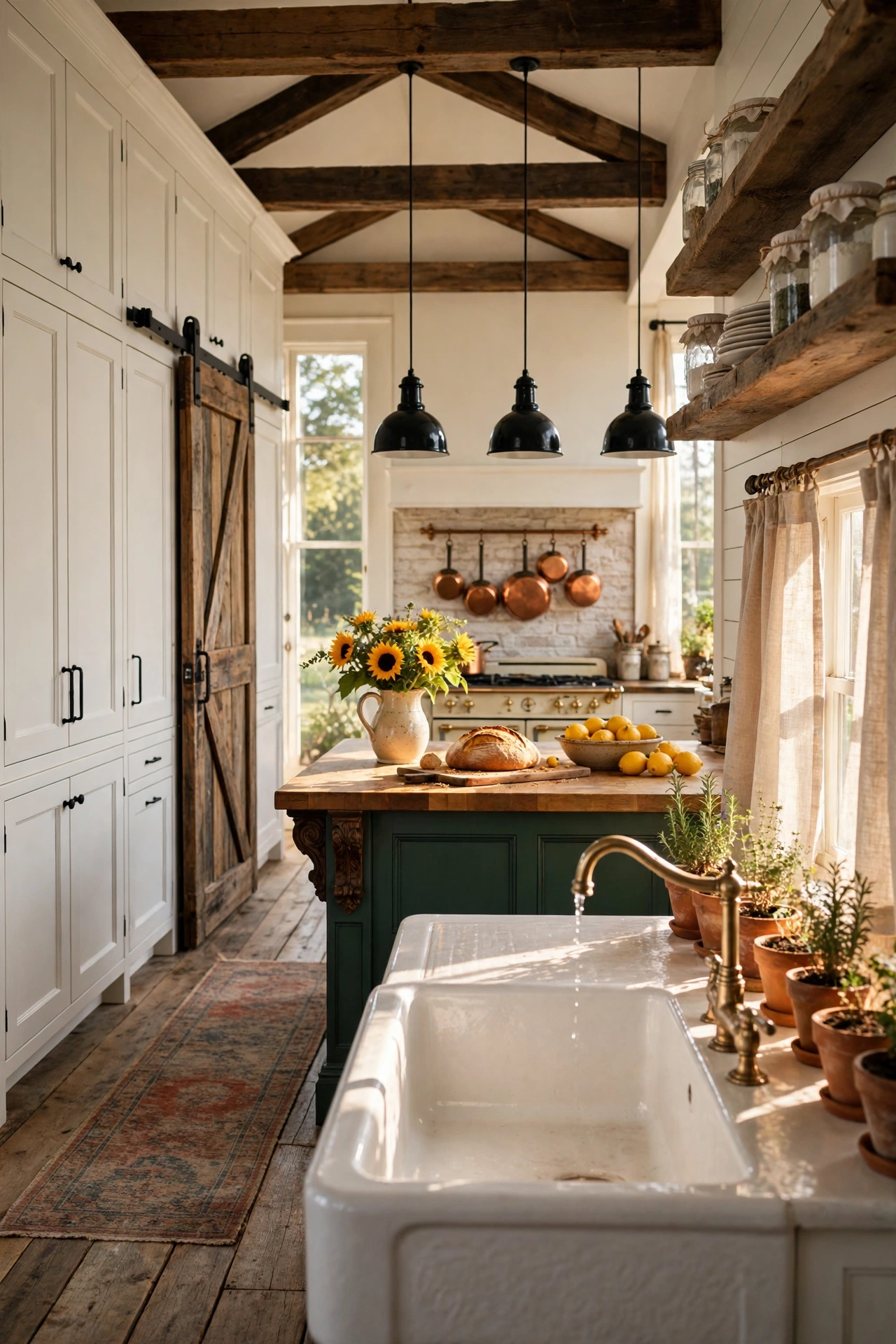
There is something about a farmhouse kitchen that feels like a deep breath. It is the scent of fresh coffee on a wide-plank floor, sunlight pooling across a butcher block counter, and the easy comfort of a room that was made for gathering. Whether you live on a working farm or in a city apartment, this style brings warmth, honesty, and lived-in beauty to the heart of your home.
Farmhouse design is built on contrast. Crisp white cabinetry meets rough-hewn wood beams. A gleaming apron-front sink sits beneath a window framed by simple linen curtains. Every element feels collected rather than decorated, as if the room grew slowly over generations. That layered, unhurried quality is exactly what makes these kitchens so deeply inviting.
The thirty ideas in this guide walk you through every way to capture that spirit. You will find architectural statements like shiplap walls and exposed beams, hardworking details like butcher block and copper rails, and styling touches like mason jars and vintage signs. Some ideas cost almost nothing. Others are worth the investment. Each one moves you closer to the kitchen you have been picturing.
As you read, notice how the best farmhouse kitchens balance rustic and refined. Distressed finishes pair with clean lines. Open shelving shows off pretty dishes while hiding the mess behind cabinet doors. Keep that balance in mind and you can mix these ideas freely to suit your space, your budget, and your family.
1. Apron-Front Farmhouse Sink
Nothing says farmhouse quite like a deep apron-front sink. That wide, exposed front panel is the room’s workhorse and its signature, big enough to soak sheet pans and tall enough to hide a stack of dishes. It anchors the whole kitchen with one bold, honest gesture.
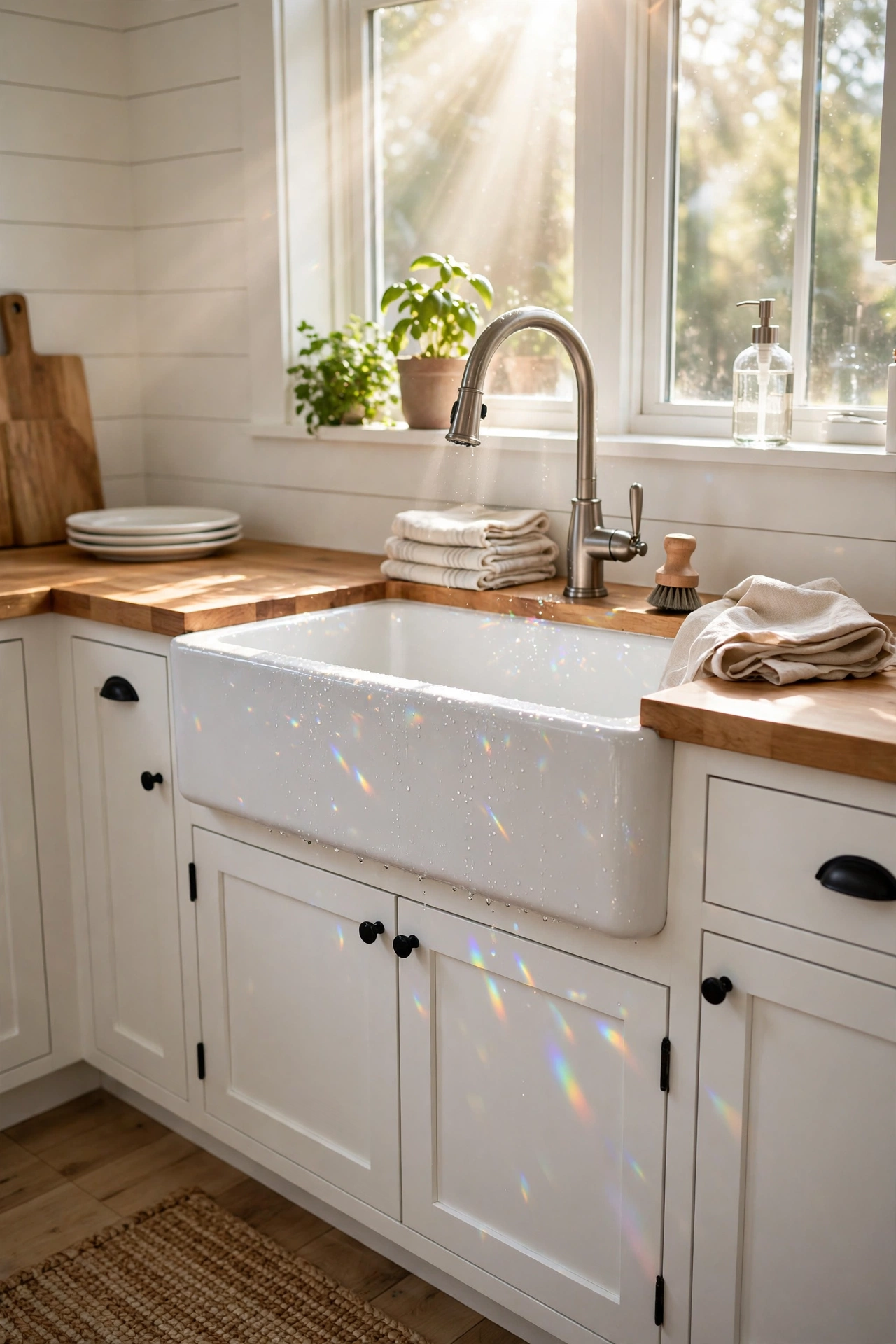
Choose a fireclay or cast-iron model in crisp white for the classic look. The glaze is famously durable, resisting chips and stains through years of daily use. If your style leans rustic, a hammered copper apron sink adds warmth and a beautiful patina that deepens over time.
Pair the sink with a bridge or gooseneck faucet in brushed nickel, matte black, or oil-rubbed bronze. A high-arc spout makes filling tall pots effortless, and a side sprayer handles the everyday rinsing. Keep the window above the sink uncluttered so the sink itself stays the star.
Style the ledge with a simple wooden dish brush, a folded linen towel, and a small potted herb. These kitchens reward restraint. When the sink is this beautiful, it needs no elaborate dressing to hold the room.
Installation matters. Apron sinks need cabinet support and a skilled installer, so plan for it early in any renovation. Done right, this one fixture will define your farmhouse kitchen for decades.
2. Shiplap Accent Wall
Shiplap turns a plain wall into a textural backdrop with instant farmhouse credibility. Those clean horizontal lines add rhythm and warmth, catching light in a way flat drywall never could. It is one of the fastest ways to give a kitchen countryside soul.


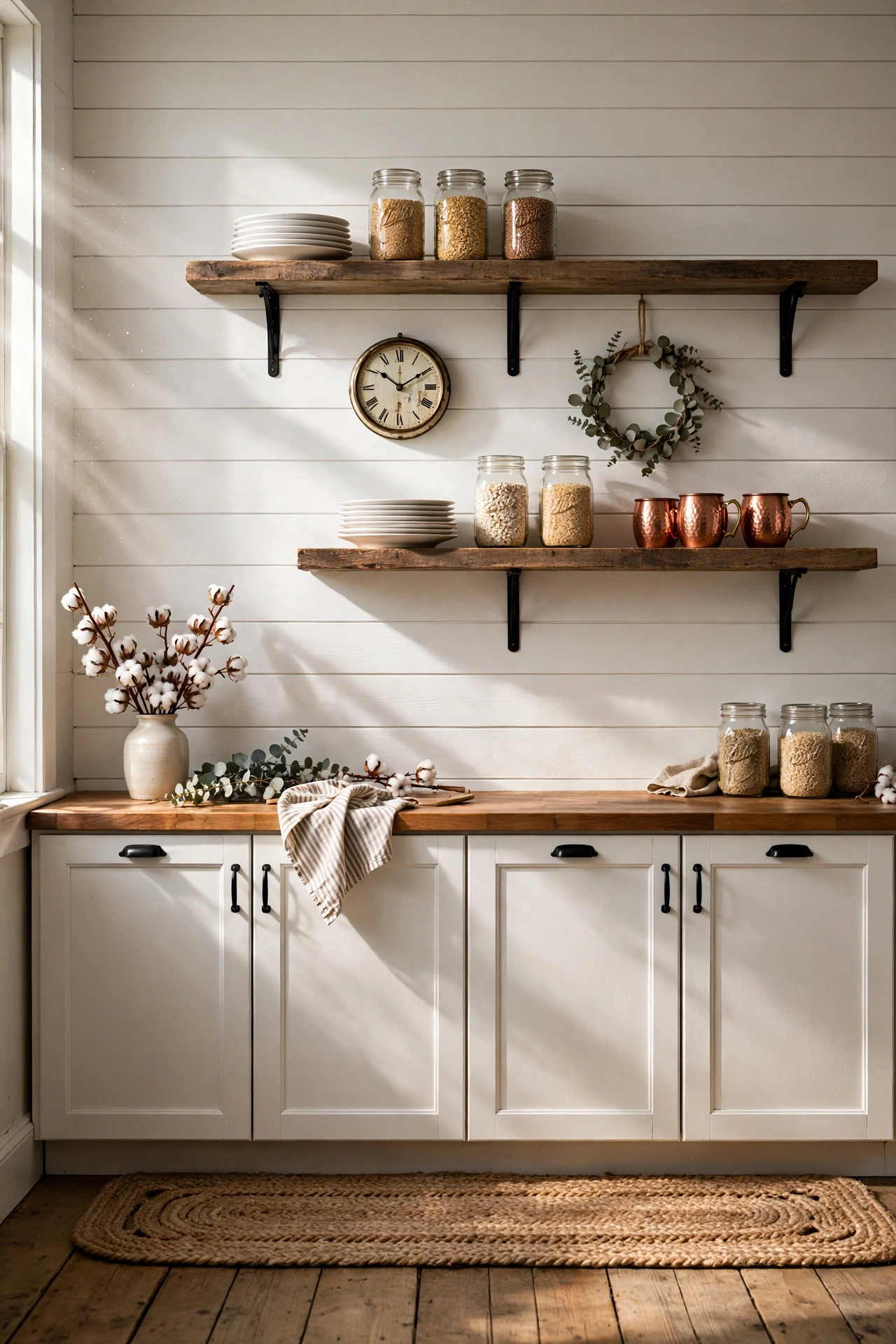
Use shiplap as an accent wall behind open shelving or around a breakfast nook. Painted white or soft cream, it keeps the room bright and airy. For more drama, try a warm wood stain on a kitchen island or the wall behind the range.
Real shiplap boards cost more but deliver authentic shadow lines. Budget-friendly plywood planks or MDF panels can look convincing once painted, especially in a smaller space. Whichever you choose, take the boards all the way to the ceiling for a finished, intentional look.
Keep the rest of the wall decor simple when shiplap is the feature. A couple of iron hooks, a vintage clock, or a small wreath is plenty. The boards themselves are the decoration.
One caution: shiplap near cooking zones needs a wipeable finish. Use satin or semi-gloss paint so grease and splatters clean off easily without dulling the texture. It is the kind of detail that makes guests linger a little longer in your kitchen.
3. Open Wooden Shelving
Open shelving is farmhouse style at its most personal. Rough or reclaimed wood shelves on simple iron brackets turn everyday dishes into display, making the kitchen feel collected and lived-in. It is decoration you were going to use anyway.
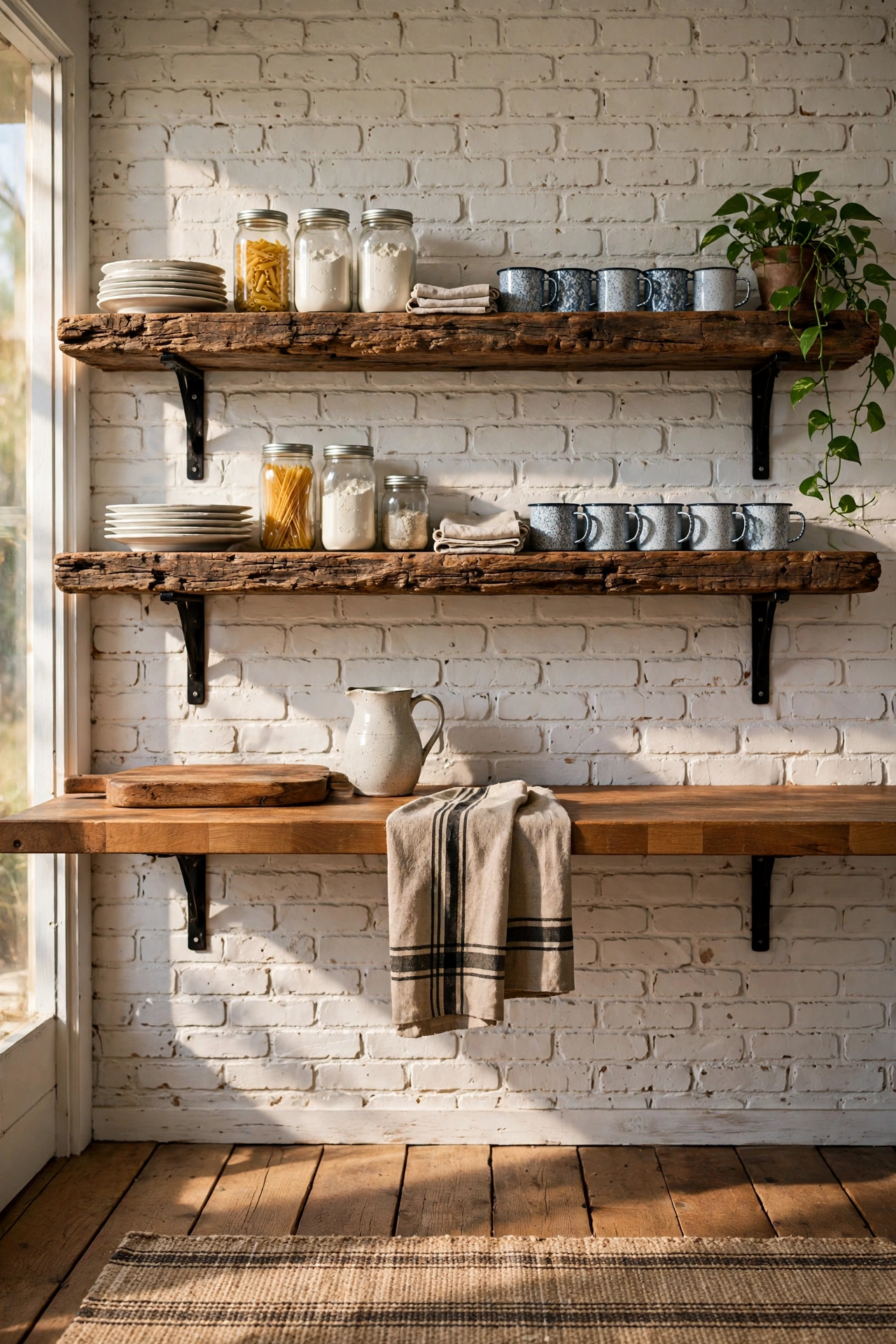
Stack white ironstone plates, clear glass jars, and a few copper mugs for the classic look. Group items by color and material, leaving breathing room between stacks. The eye reads tidy groupings as intentional rather than cluttered.
Function matters as much as looks. Hang shelves within easy reach of the dishwasher or prep zone so unloading becomes effortless. Keep daily-use items low and reserve the highest shelf for prettier, less-used pieces.
Maintenance is the trade-off. Open shelves collect dust and cooking film, so commit to a quick weekly wipe. In a small kitchen, two short shelves deliver the farmhouse feel without overwhelming the wall.
If you are not ready to commit, try a single shelf first. Live with it for a month. Many farmhouse cooks discover they love the easy access so much they convert a second cabinet soon after. Small choices like this are what give a farmhouse kitchen its unmistakable soul.
4. Butcher Block Countertops
Warm, tactile, and endlessly forgiving, butcher block is the farmhouse countertop of choice. Its honeyed wood tones soften white cabinetry and add the kind of warmth that stone can never quite match. Every scratch tells a story.
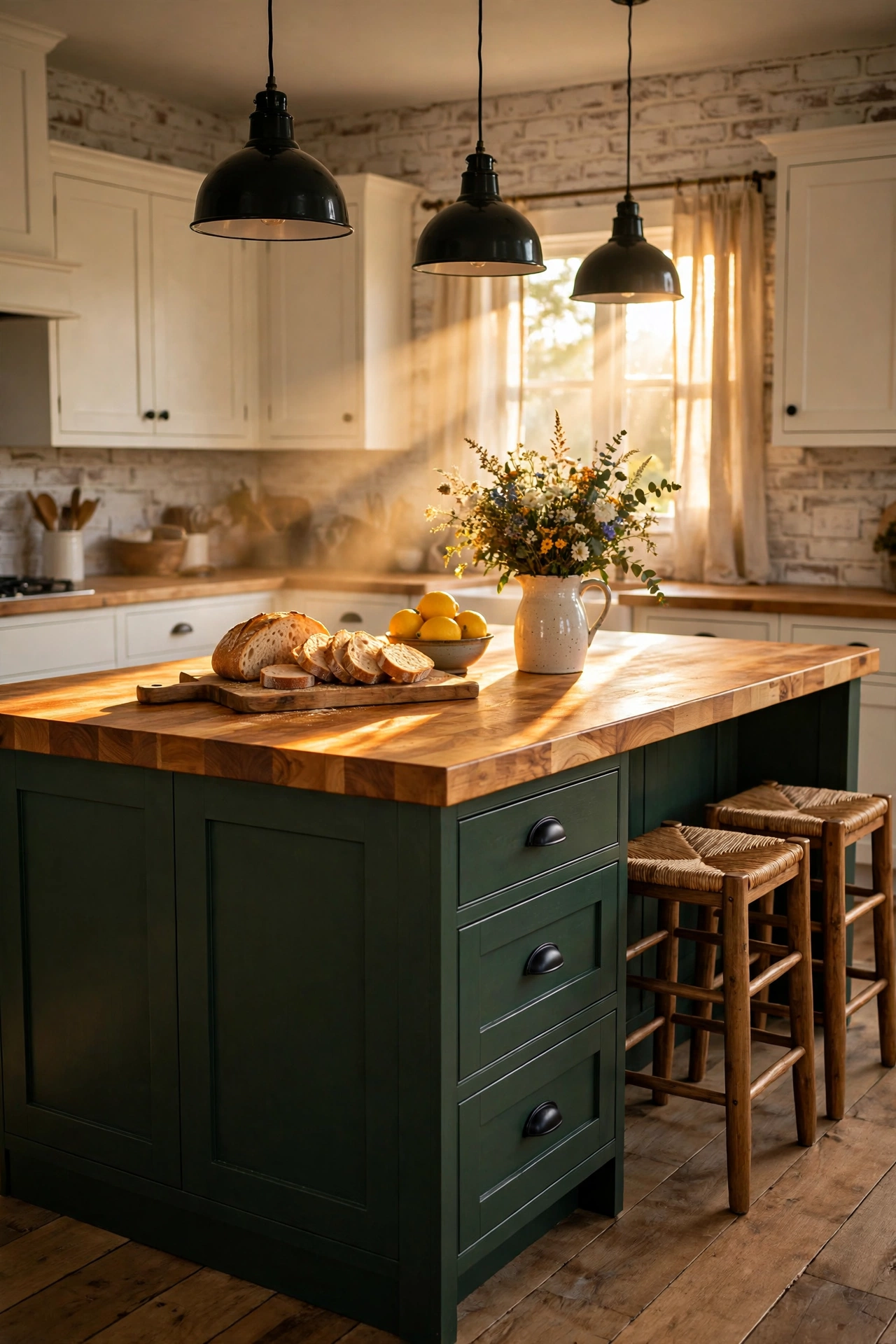
Use butcher block on an island or a single run of counters rather than everywhere. Mixed with painted cabinets or a stone perimeter, it becomes a deliberate design accent instead of a theme. Maple is classic; walnut reads richer and hides wear better.
Care is simple but non-negotiable. Oil the surface monthly with food-safe mineral oil, wipe spills promptly, and treat it as a working surface rather than a pristine one. A well-oiled block develops a deep, glowing patina over the years.
Pair butcher block with a dark bronze or black faucet and simple hardware. The wood brings the warmth, so let metals stay quiet and matte. A few cutting boards in different woods leaning against the backsplash echo the counter beautifully.
Budget watchers take note: butcher block is one of the most affordable countertop options per square foot. It delivers high farmhouse impact at a fraction of the cost of stone. Once it is in place, you will wonder how the kitchen ever felt complete without it.
5. Exposed Ceiling Beams
Nothing gives a kitchen instant farmhouse architecture like exposed beams. Whether structural or decorative, they draw the eye upward, add rhythm to the ceiling, and make even a modest kitchen feel like a centuries-old barn conversion.
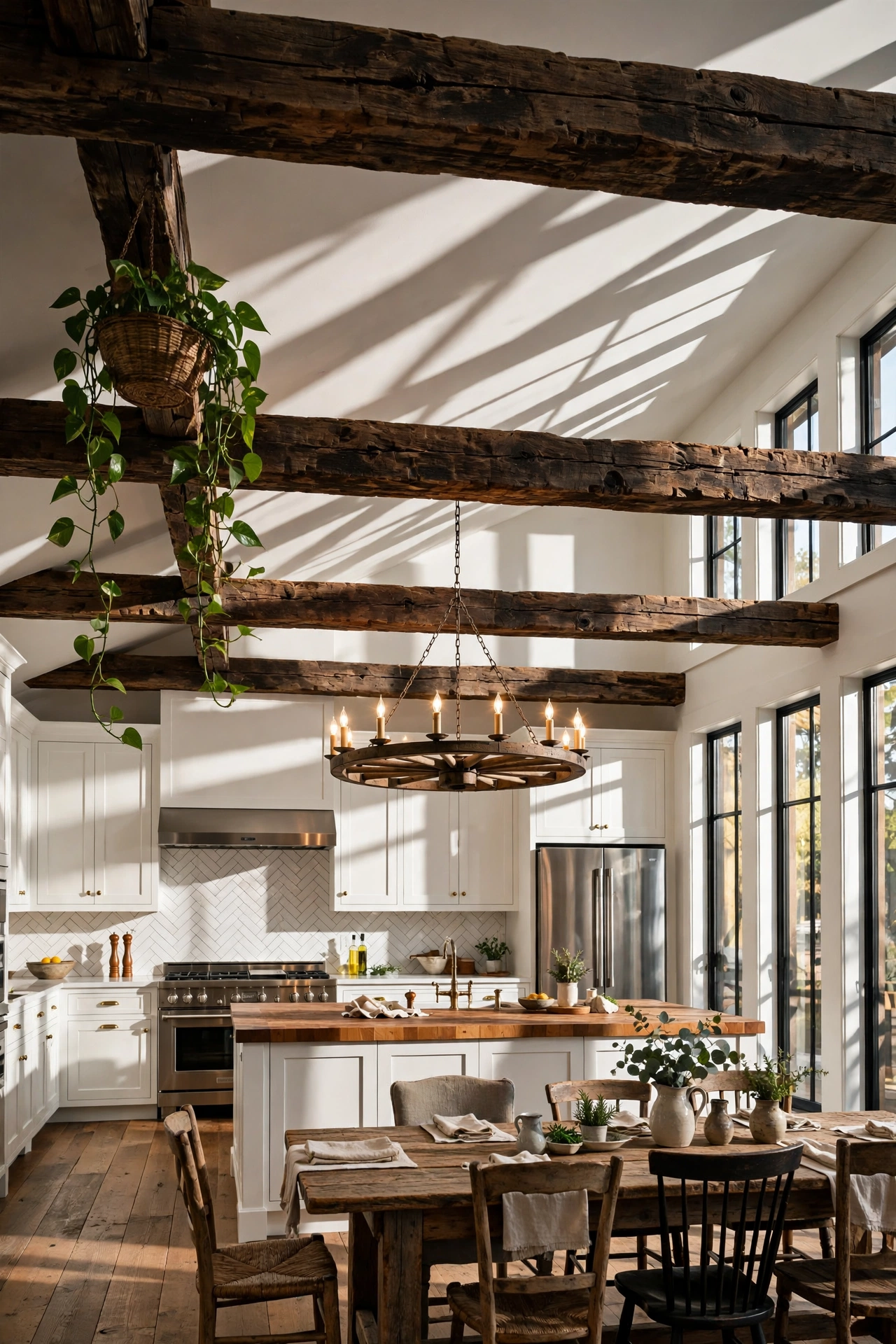
Real reclaimed beams carry the most character, with nail holes, knots, and a silvery patina. Box beams wrapped around a structural member or made from new lumber can look just as convincing, especially stained in a weathered gray-brown tone.
Scale matters. In a low-ceilinged kitchen, use slimmer beams spaced widely so the ceiling does not feel heavy. In a tall space, chunkier beams with darker stain add coziness and bring the room down to human scale.
Style around the beams rather than competing with them. Simple pendant lights hung between beams, a wagon-wheel chandelier, or a pot rail suspended from one beam all feel natural. Keep ceiling paint bright so the beams read as contrast.
If your home has hidden beams under drywall, it may be worth investigating. Many older homes hide beautiful timber behind plaster. A contractor can tell you quickly whether opening them up is feasible. This is farmhouse living at its best: beautiful, honest, and made for real life.
6. Shaker-Style Cabinets
Shaker cabinets are the quiet backbone of farmhouse kitchens. Their simple five-piece doors and clean lines suit every farmhouse mood, from modern to rustic, without ever looking fussy. They are the rare cabinet style that never dates.
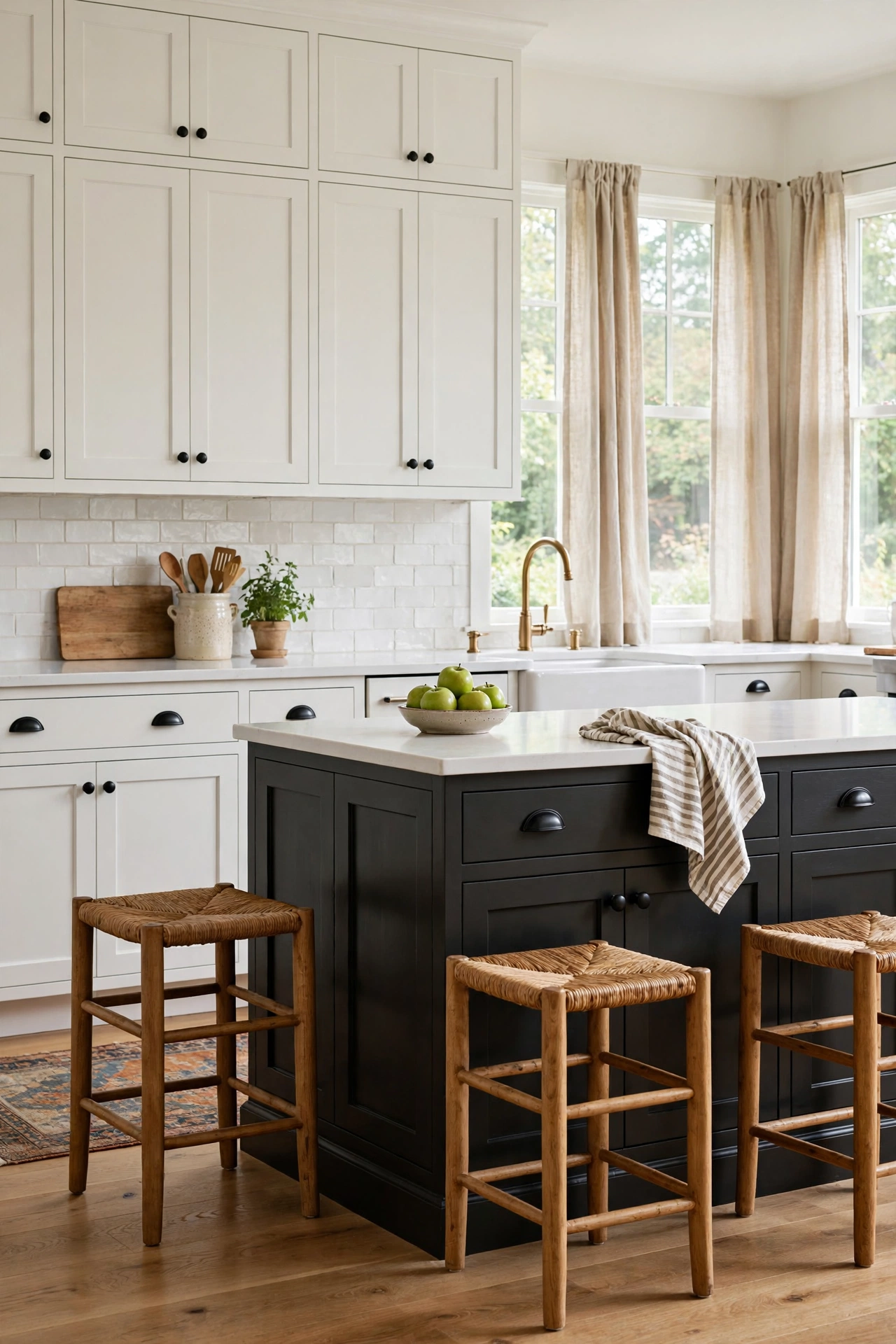
Paint them white, cream, or soft greige for the classic farmhouse palette. A darker island in navy, forest green, or warm black adds depth and makes the perimeter feel even brighter. The contrast keeps an all-white kitchen from feeling flat.
Hardware completes the look. Cup pulls and bin pulls on drawers, simple knobs on doors, in matte black, aged bronze, or brushed brass. Mixing metals works if you repeat each finish at least twice so it looks deliberate.
Take cabinets to the ceiling when you can. The extra storage is practical, and the tall run of cabinetry looks custom and substantial. A small rolling ladder or step stool handles the top shelves in style.
Quality construction pays off daily. Soft-close hinges, full-extension drawers, and solid drawer boxes make a Shaker kitchen feel expensive even when the style itself is humble. Done well, this single idea can carry the whole farmhouse feeling of the room.
7. Vintage Pendant Lighting
Pendant lights are the jewelry of a farmhouse kitchen, and vintage-inspired designs do the heavy lifting. Enamel shades, seeded glass, and aged metal finishes hang over islands and sinks like punctuation marks, defining zones and adding glow.
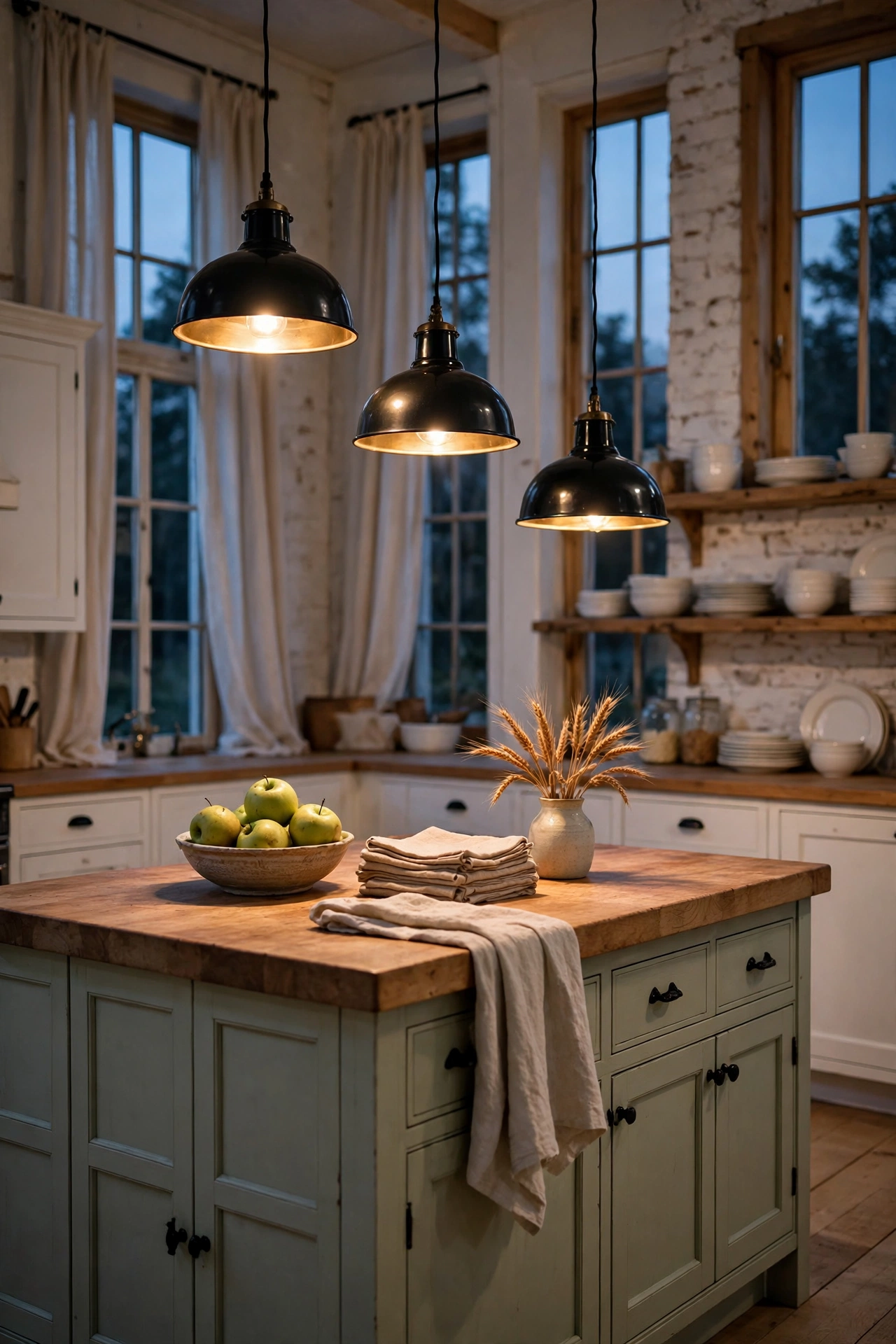
Hang pendants in odd numbers over an island: three for a standard island, two for a short one. Space them evenly and hang them low enough to light the work surface, roughly thirty to thirty-six inches above the counter.
Black enamel dome shades are the farmhouse workhorse, but consider galvanized metal for a barn feel, clear seeded glass for sparkle, or copper for warmth. Repeat the same pendant for cohesion, or mix two complementary styles for a collected look.
Scale the shade to the island. A large island swallows tiny pendants; a compact kitchen overwhelms with oversized ones. When in doubt, go slightly bigger than you think. Most people hang pendants too small, not too large.
Put pendants on dimmers. Bright light for chopping and homework, soft glow for evening wine. That single switch transforms the kitchen’s mood more than any other electrical upgrade. It is a small investment that pays back every single day in warmth and charm.
8. Sliding Barn Door Pantry
A sliding barn door turns a pantry from a closet into a statement. That chunky wood door on black iron hardware is pure farmhouse theater, and it saves the swing space a hinged door would need. Function and charm in one.
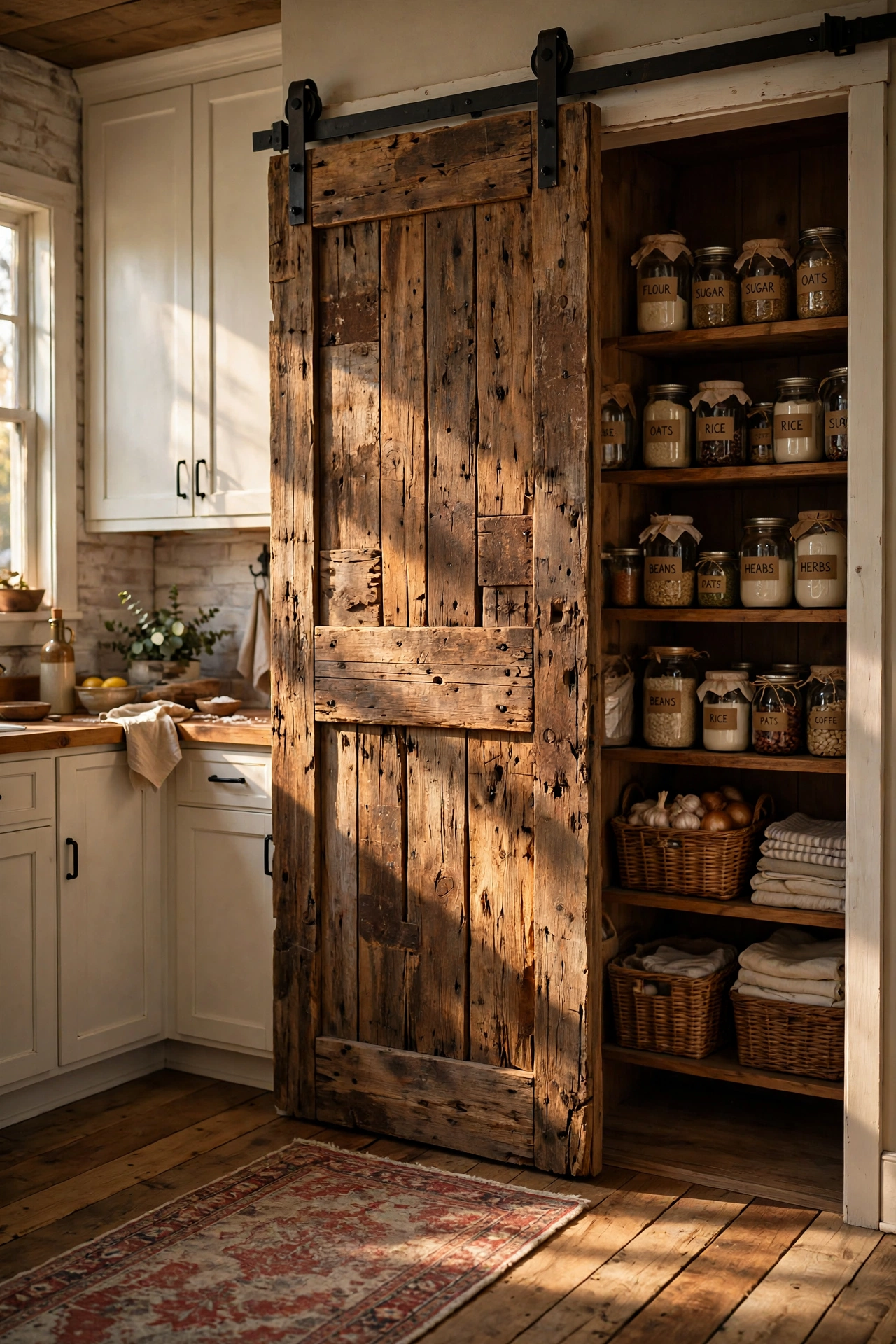
Use a reclaimed wood door with visible grain for maximum character, or build a simple Z-brace door from new pine and stain it dark. The hardware matters as much as the door: choose a sturdy black track with quiet rollers.
Inside, treat the pantry like a small shop. Open shelving, labeled jars, and baskets keep everything visible and reachable. A sliding door invites you to leave it open, so make the interior worth looking at.
Beyond pantries, barn doors hide laundry corners, offices, and messy shelving throughout the kitchen zone. Anywhere you want occasional concealment without a door swing, the barn door earns its keep.
Mind the wall space. The track needs clear wall on one side equal to the door’s width. Plan for it before you place shelves, art, or outlets on that wall. Few details deliver this much farmhouse character for this little effort.
9. Freestanding Kitchen Island
A freestanding island brings the furniture feel that built-in cabinetry cannot. It looks like a piece you found and loved, not a unit you ordered. That slightly imperfect, collected quality is pure farmhouse.
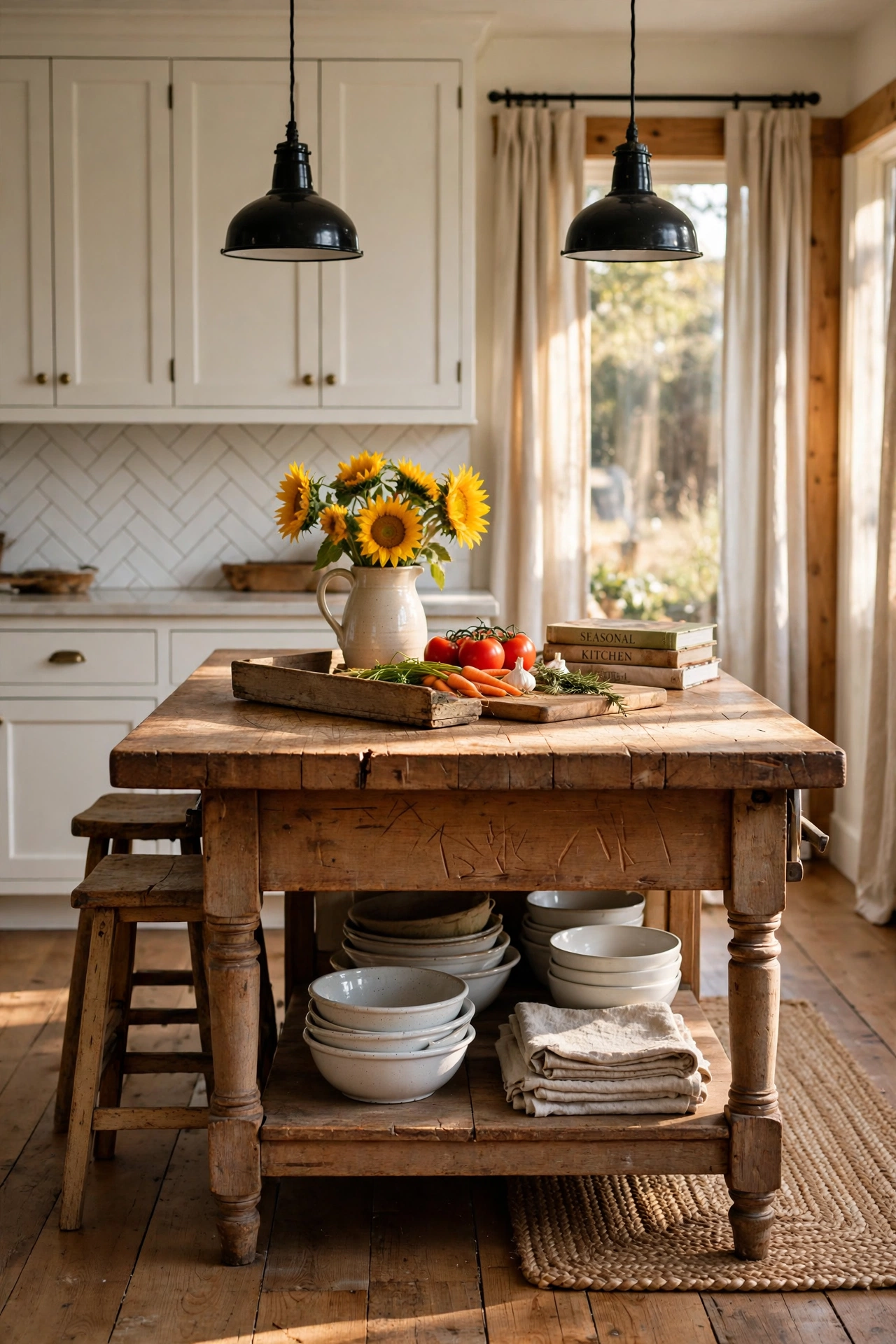
Choose a chunky worktable with a thick butcher block top, or repurpose a vintage dresser with a new stone top. The contrast of furniture-style legs and a solid top gives the island presence without bulk.
Size it to your room. You need at least thirty-six inches of clearance on all sides, forty-two if the island faces a range or dishwasher. A too-big island makes a kitchen feel cramped; a right-sized one makes it feel generous.
Add seating on one side for the classic eat-in island. Two or three counter stools in wood, metal, or woven rush turn the island into the room’s social center. Hang pendants above and the gathering spot is complete.
Finish with open shelves or a towel bar on the island’s ends. Practical touches like these make the island work harder while adding the layered, useful look farmhouse kitchens are known for. Your kitchen will feel more welcoming from the very first day it is done.
10. Board-and-Batten Wainscoting
Board-and-batten wainscoting adds farmhouse architecture to walls that would otherwise disappear. Vertical battens over flat boards create shadow lines and rhythm, giving a simple wall the feel of a country cottage.
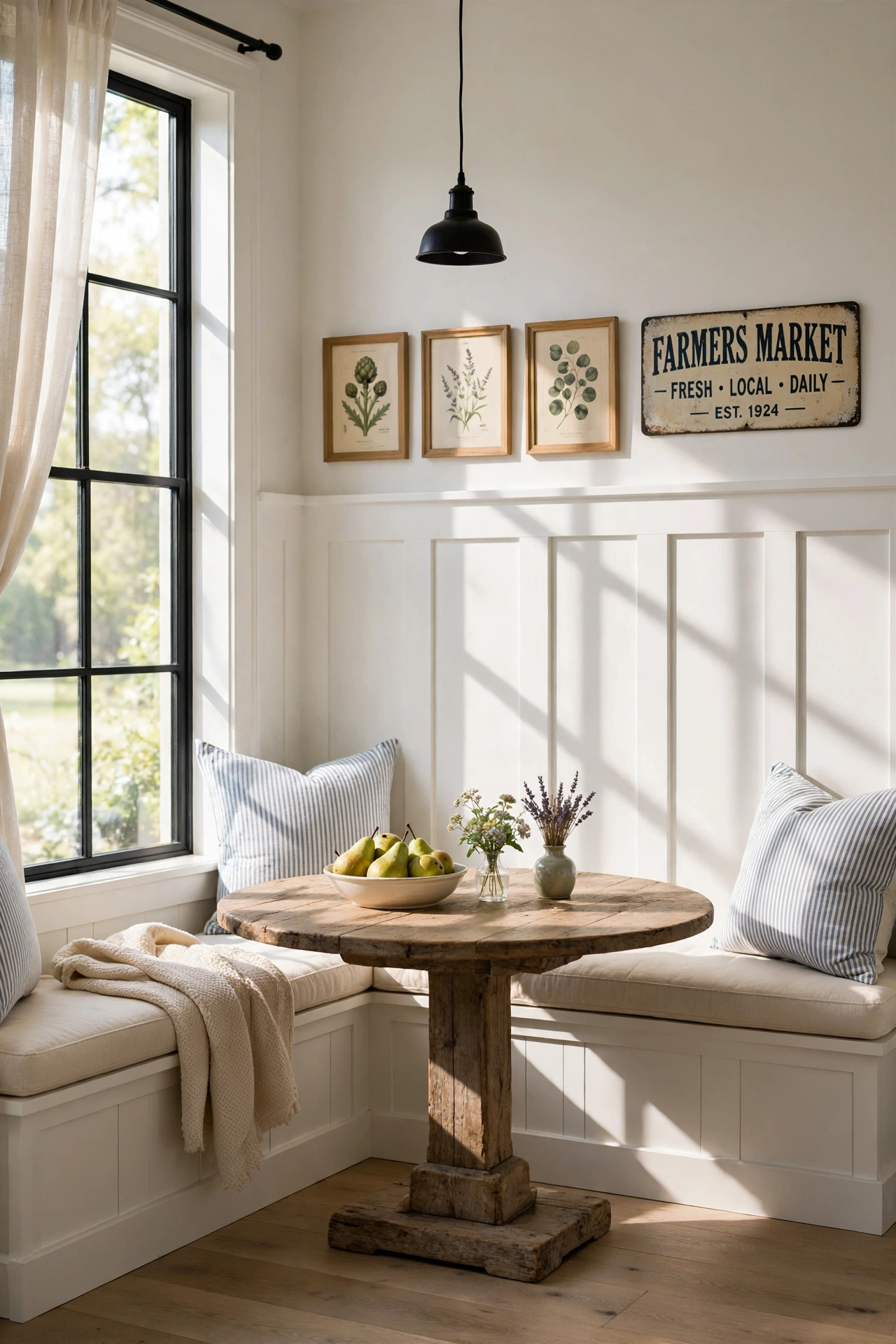
Run it around a breakfast nook, along a hallway wall, or as a full-kitchen treatment up to chair-rail height. Painted the same white as the walls, it adds texture without color. Painted a soft sage or greige, it becomes a gentle feature.
Keep the upper wall simple: a few framed prints, a vintage sign, or a small shelf. The wainscoting is the texture; the wall above it should stay calm and uncluttered.
This is a friendly DIY project. Basic boards, a nail gun, caulk, and paint can transform a wall in a weekend. The repetitive rhythm hides small imperfections, which is kind of the point of farmhouse style.
Cap the top with a simple chair rail or ledge deep enough to hold small frames and plates. That little shelf doubles your styling surface and finishes the wainscot like a pro detail. It is the kind of detail that makes guests linger a little longer in your kitchen.
11. Mason Jar Storage Display
Mason jars are the farmhouse storage icon: humble, honest, and endlessly useful. Lined up on open shelves or counters, filled with grains, pasta, and coffee, they turn pantry staples into decoration.
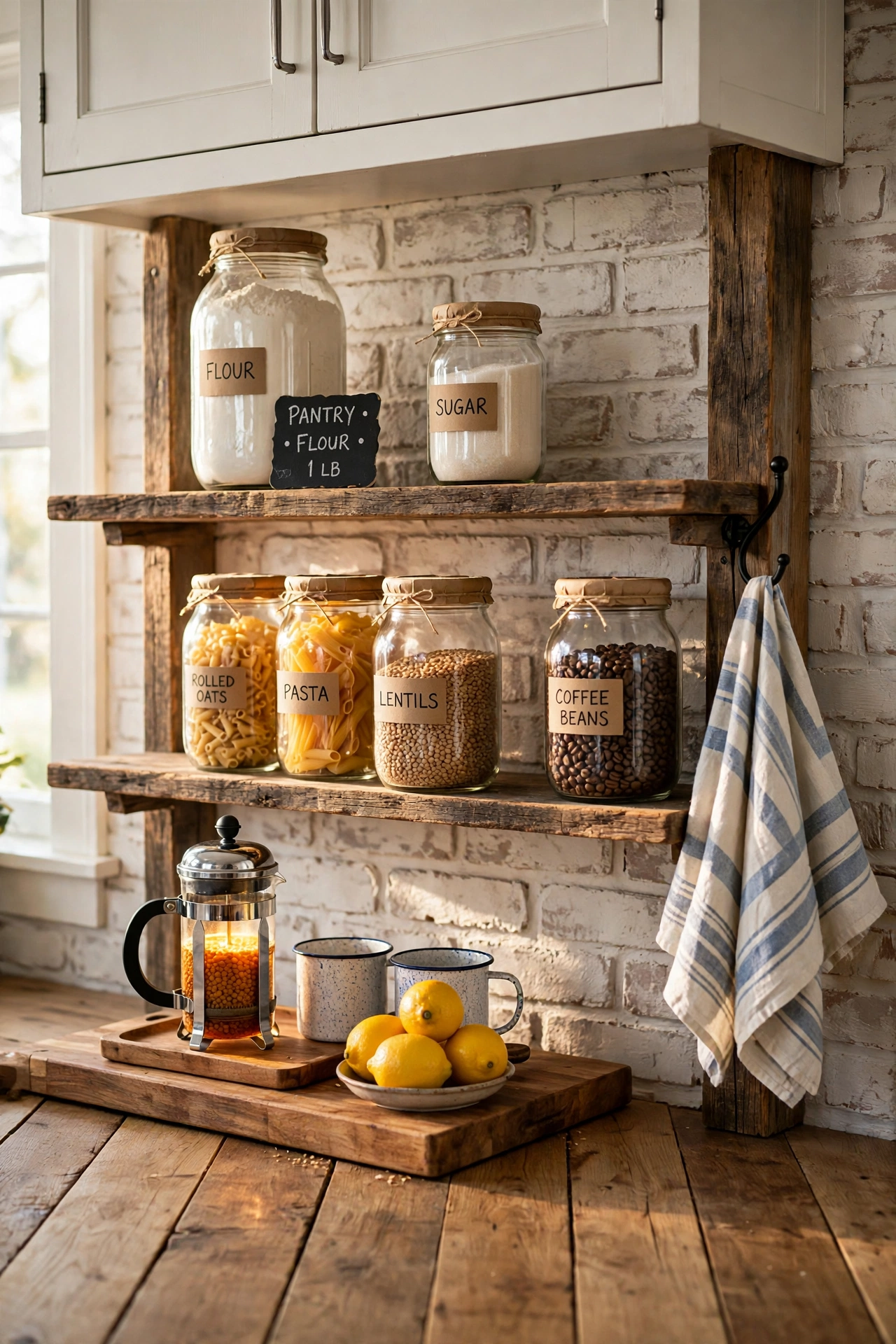
Use jars in several sizes for visual rhythm. Quart jars for flour and sugar, pints for rice and lentils, half-pints for spices and snacks. Consistent lids, wood or metal, keep the display tidy.
Label each jar with a simple tag or chalkboard label. The labels add farmhouse character while making cooking faster. Place everyday staples at counter level and backup supplies higher up.
Beyond the pantry, mason jars hold utensils by the stove, flowers on the table, and soap at the sink. Their versatility is the reason they have lasted a century in farmhouse kitchens.
Buy jars by the case for the best price, and wash them in the dishwasher between refills. A full set of sparkling jars on open shelving is one of the cheapest high-impact farmhouse updates there is. Small choices like this are what give a farmhouse kitchen its unmistakable soul.
12. Weathered Wide-Plank Flooring
Wide-plank floors are the farmhouse foundation, literally. Planks six inches or wider in a weathered, matte finish make the kitchen feel rooted and old, like the room has welcomed generations of boots and bare feet.
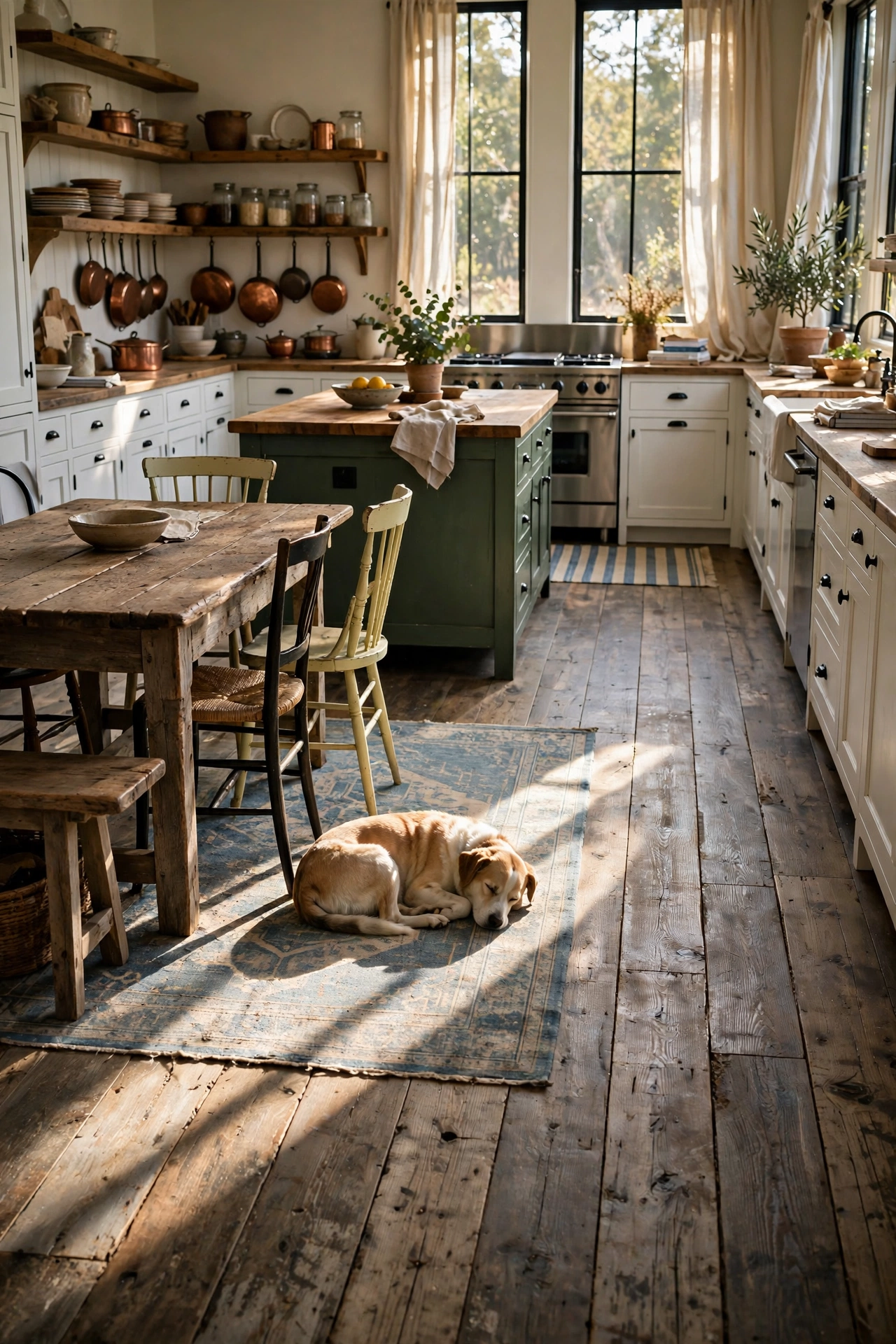
Choose engineered wood or luxury vinyl plank in a driftwood or warm gray tone for real-life durability. Both handle spills and traffic far better than solid pine while looking convincingly aged. A matte finish hides dust and footprints.
Run the planks in the longest direction of the room to make it feel larger. In open-plan spaces, carry the same floor into adjoining rooms. Continuous flooring is what makes a farmhouse kitchen feel like part of a whole home.
Layer a washable runner or flat-weave rug along the work zone. It softens the hard surface, adds pattern, and protects the floor where you stand most. Ruggable-style washable rugs are made for farmhouse kitchens.
Keep the floor tone mid-range, neither very dark nor very pale. Mid-tone wood hides crumbs, pairs with both white and dark cabinetry, and photographs beautifully for years. Once it is in place, you will wonder how the kitchen ever felt complete without it.
13. Cozy Breakfast Nook
A breakfast nook turns an awkward corner into the most loved seat in the house. Built-in benches, a round pedestal table, and morning light make it the spot for coffee, homework, and long weekend breakfasts.
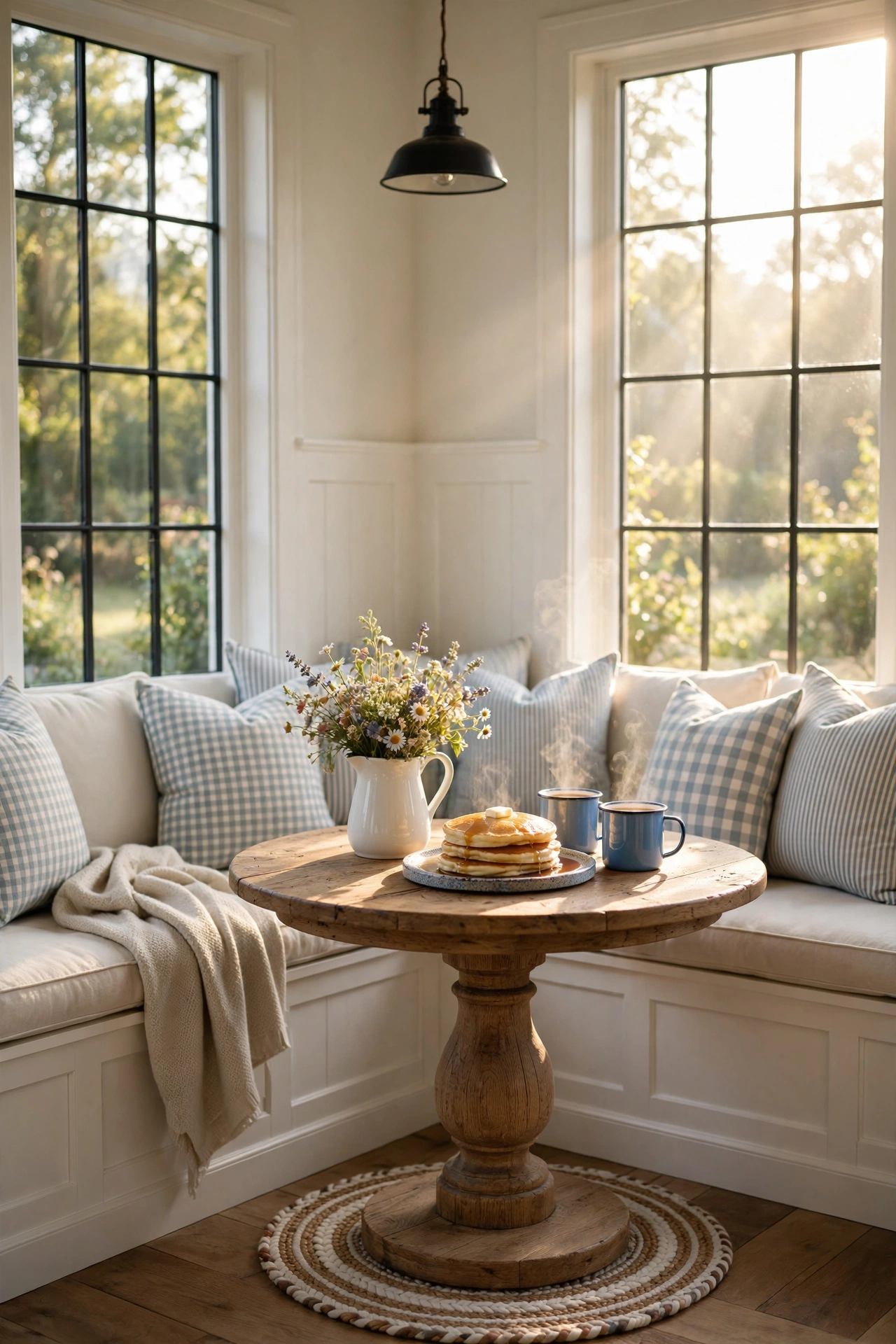
Banquette benches with storage inside solve two farmhouse problems: seating and clutter. Lift the seat for table linens, cookbooks, or the kids’ art supplies. The nook stays tidy because everything has a home.
Keep the palette light around a nook. White or cream benches, a simple wood table, and cushions in ticking stripe or gingham read instantly farmhouse. A small pendant or wall sconce above the table adds evening glow.
Style the table simply: a low bowl of fruit, a tiny vase of wildflowers, a folded runner. Nooks feel best when they look ready to use, not staged for a photograph.
If built-ins are too much, fake the nook with a freestanding bench, two chairs, and a round table pushed into a corner. Add a cushion and a throw, and the feeling is the same. This is farmhouse living at its best: beautiful, honest, and made for real life.
14. Copper Pot Rail
A copper pot rail hung over the range or island is farmhouse jewelry with a job to do. Gleaming copper pots on a dark iron rail add warmth, craft, and the promise of good cooking, all while freeing cabinet space.
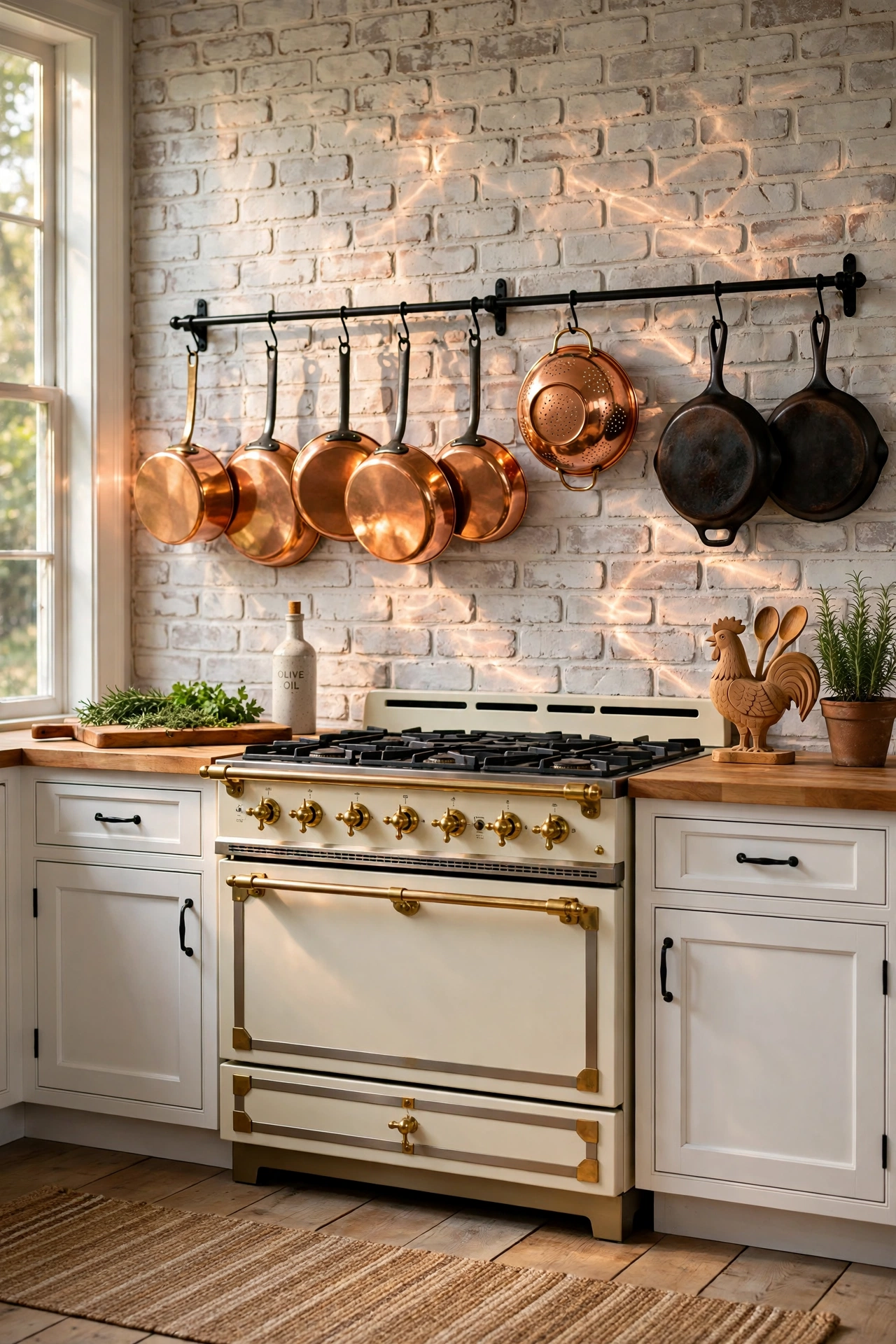
Mount the rail securely into studs or ceiling joists. Copper cookware is heavy, and a rail full of pots is heavier. A ceiling-mounted pot rack over an island or a wall rail beside the range both work beautifully.
Mix copper with a few cast-iron skillets and a hanging colander for a collected, working-kitchen look. The metals should look used and loved, not showroom polished. A living patina is the whole point.
Keep only the pots you actually use on the rail. Dusty, never-touched cookware reads as clutter. The pieces you reach for daily stay clean from use and look effortlessly authentic.
Polish copper twice a year if you like the shine, or let it darken naturally for a moodier farmhouse feel. Either way, a quick wipe after cooking keeps grease from building up. Done well, this single idea can carry the whole farmhouse feeling of the room.
15. Whitewashed Brick Backsplash
Whitewashed brick brings old-world texture to the backsplash with a softness raw brick cannot match. The thin wash lets the brick’s variation show through while keeping the kitchen light and fresh.
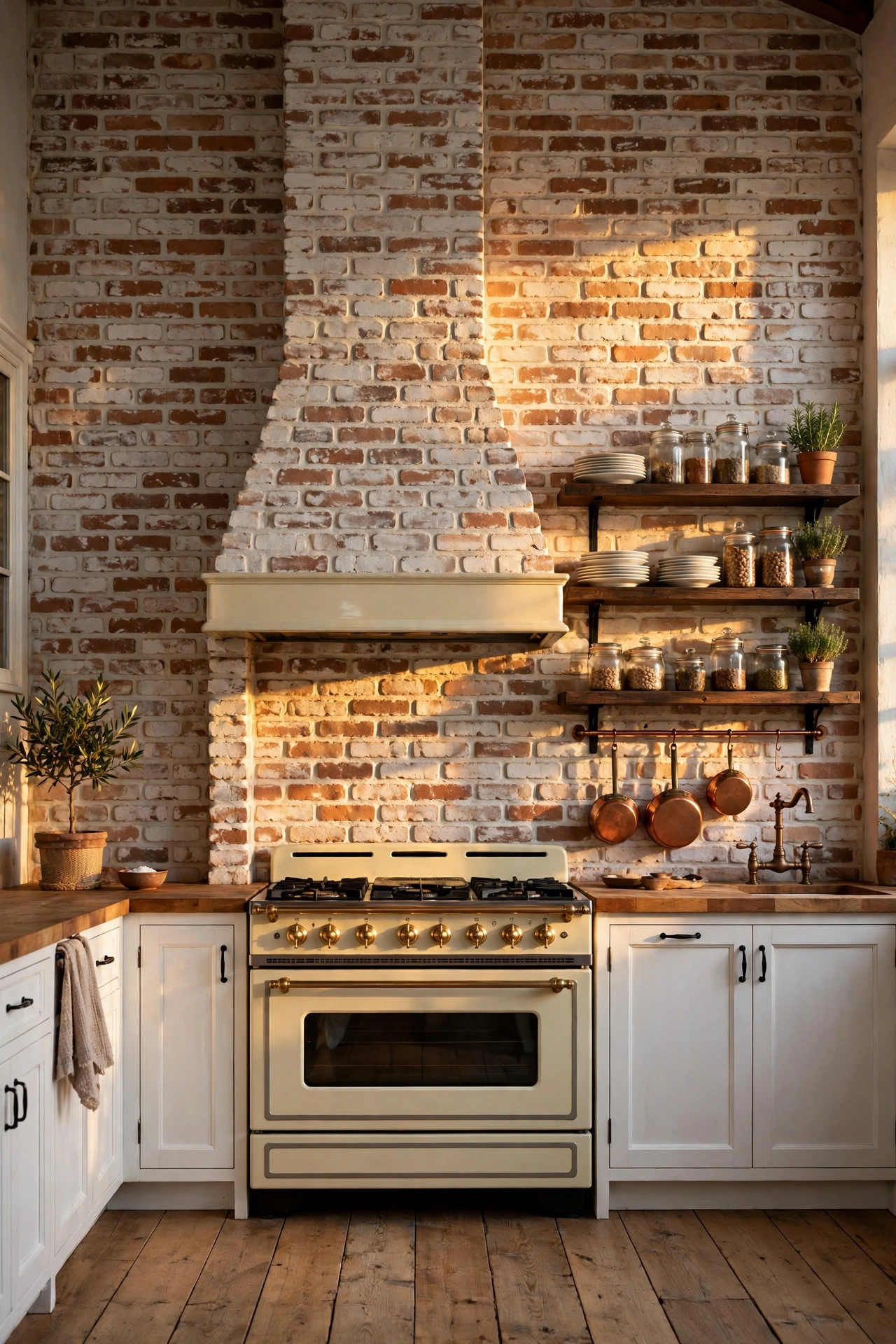
Use real thin-brick veneer for authenticity, or brick-look tile for easier cleaning. The whitewash itself is simple: diluted white paint brushed on and partially wiped back. Practice on a sample board first to find your ideal opacity.
Seal the finished brick with a matte stone sealer, especially behind the range. Kitchens are messy, and sealed brick wipes clean while unsealed brick absorbs every splatter permanently.
Pair whitewashed brick with dark wood open shelves and black hardware. The contrast of rough pale brick against dark accents is what gives this backsplash its modern-farmhouse edge.
Carry the brick up to the ceiling behind the range for a full chimney-breast effect. That floor-to-ceiling moment becomes the kitchen’s architectural anchor and photographs like a magazine feature. It is a small investment that pays back every single day in warmth and charm.
Farmhouse Kitchen Planning Guide
| Feature | Budget Range | Notes |
|---|---|---|
| Apron-Front Sink | $400 – $1,200 | Fireclay or cast iron; plan cabinet support early |
| Shiplap Accent Wall | $200 – $800 | One wall; satin paint for wipeable finish |
| Butcher Block Counters | $50 – $150 /sq ft | Oil monthly; great island accent |
| Open Wooden Shelving | $100 – $400 | Two shelves; style in color groups |
| Exposed Ceiling Beams | $500 – $2,000 | Box beams; mind ceiling height |
| Barn Door Pantry | $300 – $900 | Needs clear wall for the track |
| Pendant Lighting | $80 – $300 each | Odd numbers; add dimmers |
| Wide-Plank Flooring | $4 – $12 /sq ft | Engineered or LVP in matte finish |
| Farmhouse Table | $600 – $2,500 | Six-foot seats six; mix seating |
| Coffee Station Setup | $50 – $200 | Tray, hooks, jars; near the sink |
16. Rolling Library Ladder
A rolling library ladder on a brass rail is farmhouse romance you can actually use. It reaches the top shelves of tall cabinets, looks like it belongs in a country estate, and makes guests smile every time it glides.
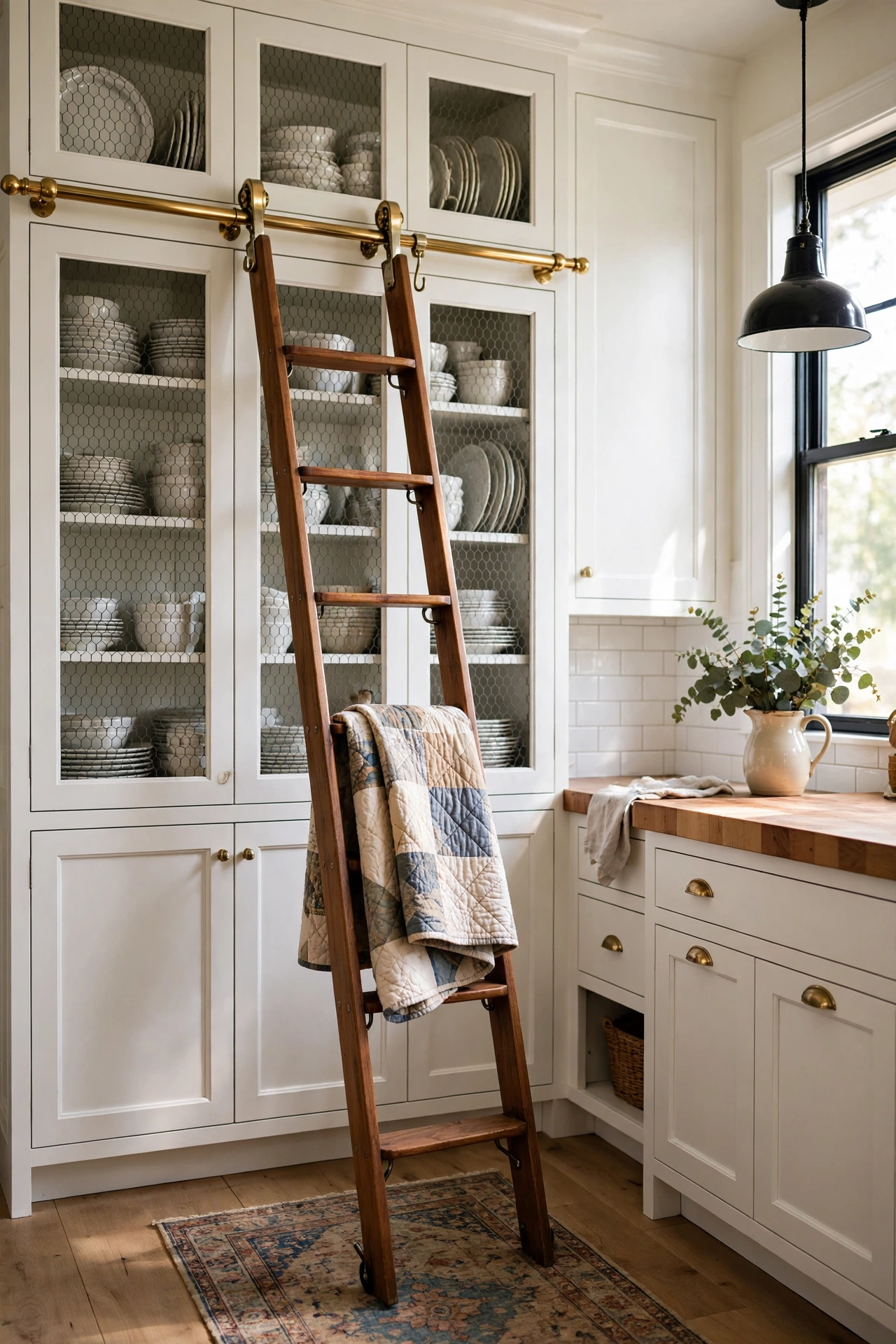
Install a sturdy metal rail on tall pantry or cabinet runs, sized for the ladder’s hooks. Wood ladders with a warm stain suit farmhouse kitchens best. Make sure the rail is anchored into studs, not just cabinetry.
Beyond its looks, the ladder earns its place in kitchens with high storage. Seasonal dishes, serving platters, and the good china live up top and come down easily. No more wobbling on step stools.
Style the ladder as decor when it is parked. Drape a folded throw over a rung or hang a small wreath from it at the holidays. It is the rare functional piece that doubles as styling.
Safety first: choose a ladder rated for the load, keep the floor clear of clutter, and teach kids it is a tool, not a toy. A beautiful ladder that is also safe is farmhouse perfection. Few details deliver this much farmhouse character for this little effort.
17. Galvanized Metal Accents
Galvanized metal brings the barn into the kitchen with its soft silver-gray sheen. Buckets, trays, and light fixtures in this humble finish add industrial-farmhouse grit that keeps the style from feeling too precious.
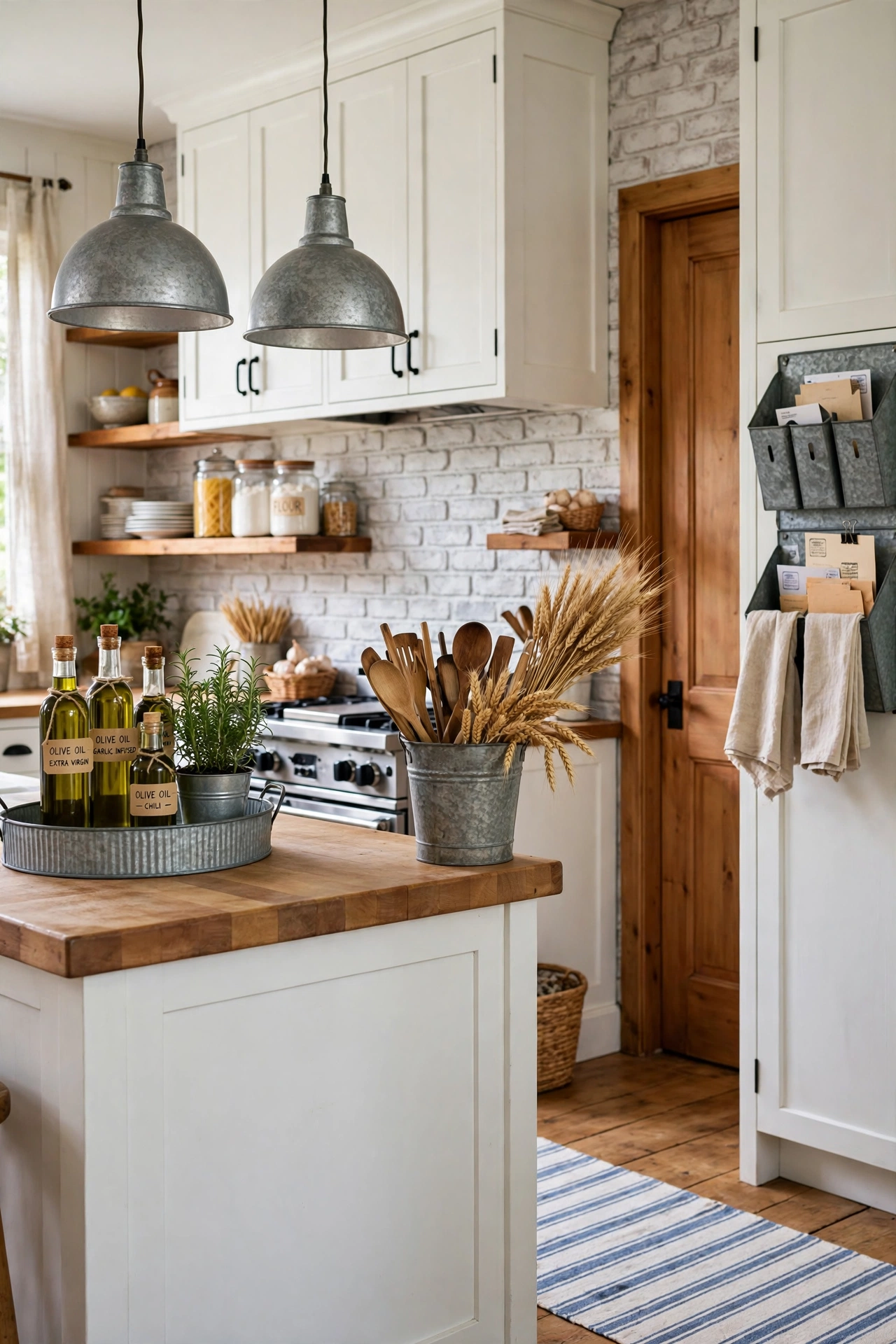
Use it in lighting first: galvanized dome pendants or barn sconces over the sink and island. The finish bounces light softly and pairs with every farmhouse palette, from all-white to dark and moody.
Small doses work everywhere. A galvanized tray corrals oils by the range, a bucket holds utensils or a fiddle-leaf fig, and metal bins organize the pantry. The finish looks better with age and dings, so do not baby it.
Balance the cool metal with warm wood and soft textiles. Galvanized pieces can read cold in an all-white kitchen, so pair them with butcher block, woven runners, and linen to keep the room cozy.
Shop flea markets and salvage stores for authentic pieces. Real aged galvanized metal has a patina no reproduction fully matches, and the hunt is half the farmhouse fun. Your kitchen will feel more welcoming from the very first day it is done.
18. Reclaimed Wood Farmhouse Table
A reclaimed wood farmhouse table is the soul of the farmhouse kitchen. Thick planks, visible grain, and a sturdy trestle or turned legs make it the gathering place for meals, homework, and late-night talks.
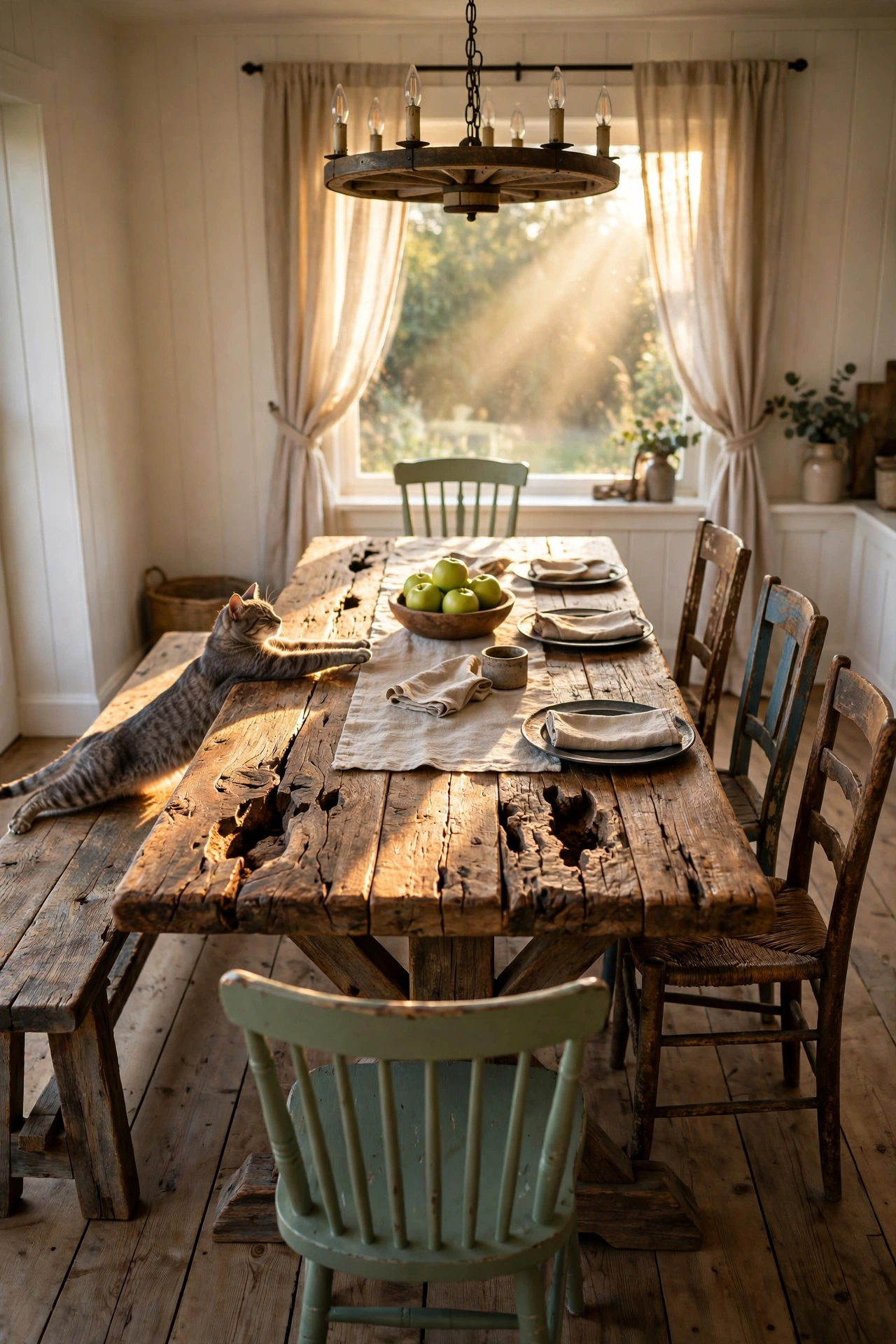
Size the table to your room and your crowd. A six-foot table seats six comfortably; an eight-footer handles holidays. Leave at least thirty-six inches around it so chairs pull out easily.
Mix seating for the collected farmhouse look. A long bench on one side, mismatched wooden chairs on the other, maybe a painted chair at each end. The mix looks effortless and welcomes extra guests.
Protect the top with a matte polyurethane or hardwax oil so it survives real life. Reclaimed wood is beautiful but thirsty; a good finish lets you wipe up spills without worry while keeping the matte, aged look.
Style it simply day to day: a runner, a low centerpiece, a bowl of fruit. The table is the star. At dinner parties, it needs nothing more than good food and candles to look magnificent. It is the kind of detail that makes guests linger a little longer in your kitchen.
19. Distressed China Hutch
A distressed hutch brings antique-shop charm and serious storage to a farmhouse kitchen. Painted in cream or sage with worn edges, it displays pretty dishes up top and swallows clutter below.
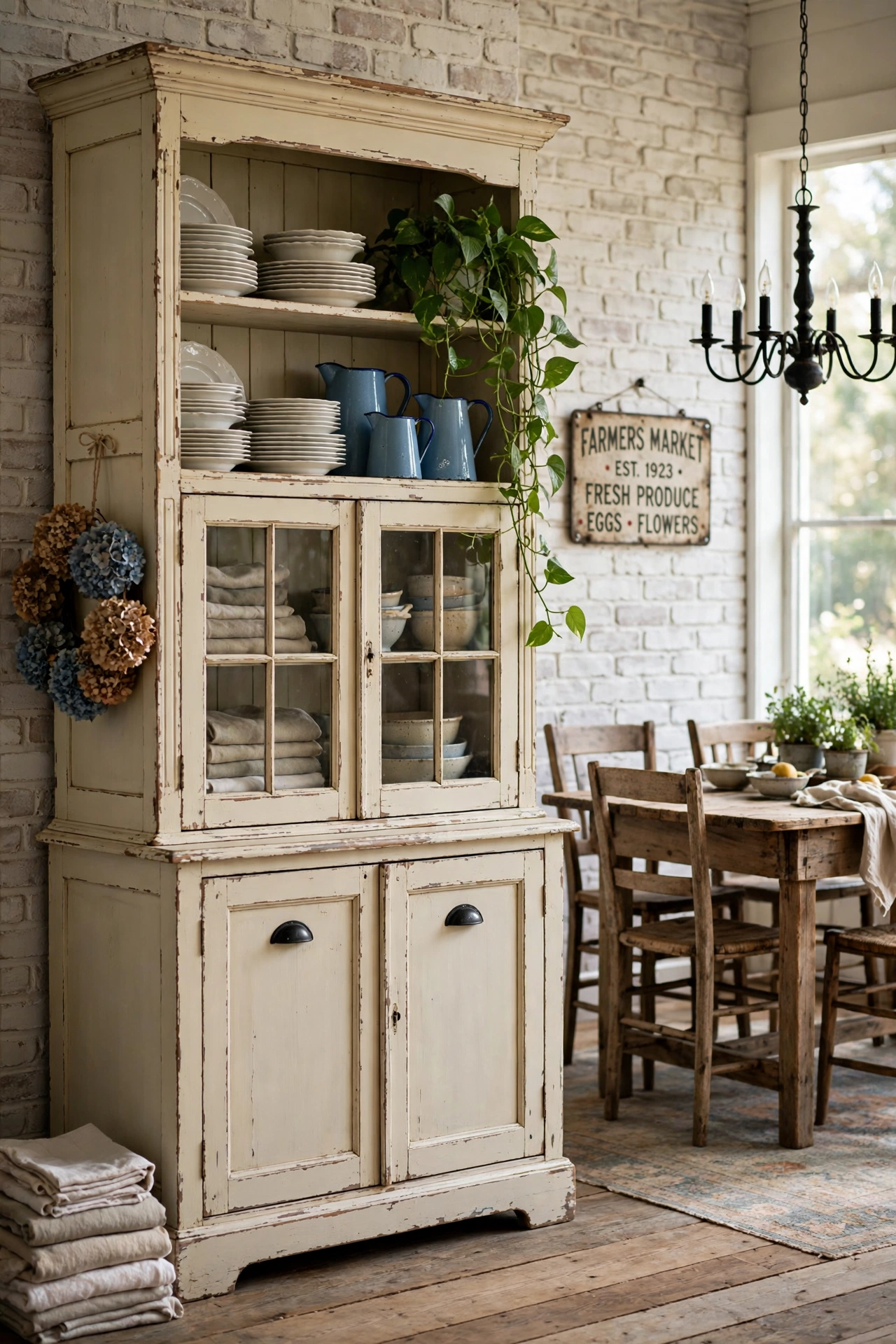
Hunt for hutches at estate sales, flea markets, and online marketplaces. Look for solid wood construction and good bones; the finish can be rough because you will likely repaint or distress it anyway.
Style the open top with stacked plates, pitchers, and a few trailing plants. Inside glass doors, group by color for a calm look. The closed base hides the less photogenic realities of a working kitchen.
Place the hutch where it can breathe: against a dining-room wall, at the end of a cabinet run, or flanking a doorway. A hutch crammed into a tight corner loses its furniture presence.
Milk paint or chalk paint gives the most authentic distressed finish. Sand the edges and raised details lightly after painting, then seal with wax. The worn look should follow the piece’s natural high points. Small choices like this are what give a farmhouse kitchen its unmistakable soul.
20. Herringbone Tile Backsplash
A herringbone backsplash adds movement and craft to a farmhouse kitchen without leaving the classic palette. Those angled subway tiles catch light from every direction, turning a simple white backsplash into a feature.
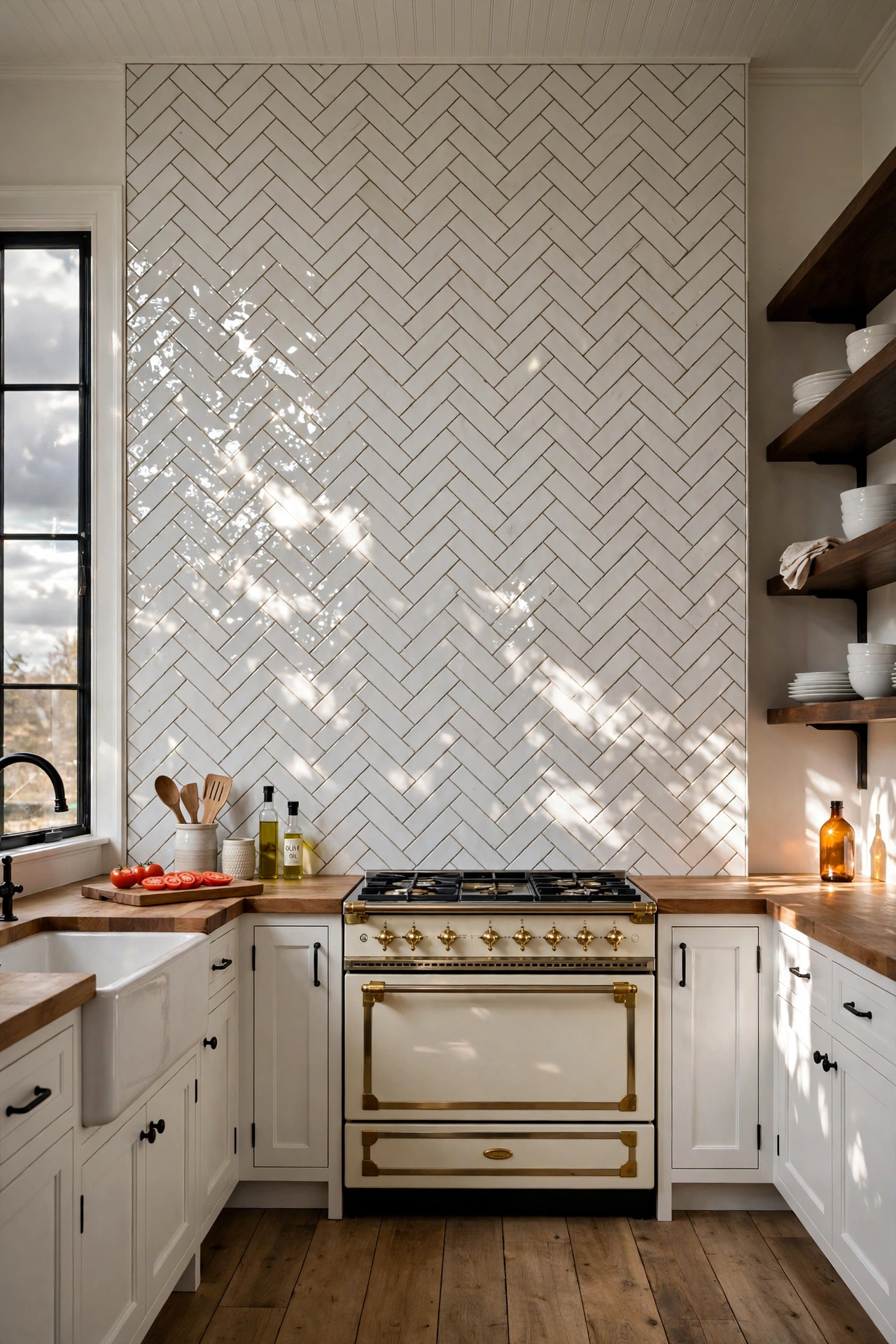
Use standard three-by-six subway tile laid in herringbone for the timeless look. Handmade-look tiles with slight variation add artisan character. Keep grout light gray or white for a soft, cohesive finish.
Herringbone demands a skilled installer and more cuts than straight layouts, so budget accordingly. The payoff is a backsplash that looks custom and considered, the opposite of a builder-grade afterthought.
Limit the pattern to the backsplash. With herringbone on the wall, keep counters quiet and cabinetry simple. The backsplash is the pattern moment; everything else should support it.
Behind the range, run the herringbone to the ceiling or frame it with a simple border. That vertical emphasis draws the eye up and makes the whole kitchen feel taller and more designed. Once it is in place, you will wonder how the kitchen ever felt complete without it.
21. Vintage Enamelware Collection
Chipped, speckled enamelware is farmhouse nostalgia in physical form. Those white-with-blue-rim pitchers, bowls, and mugs recall grandmothers’ kitchens and add instant history to open shelves and counters.
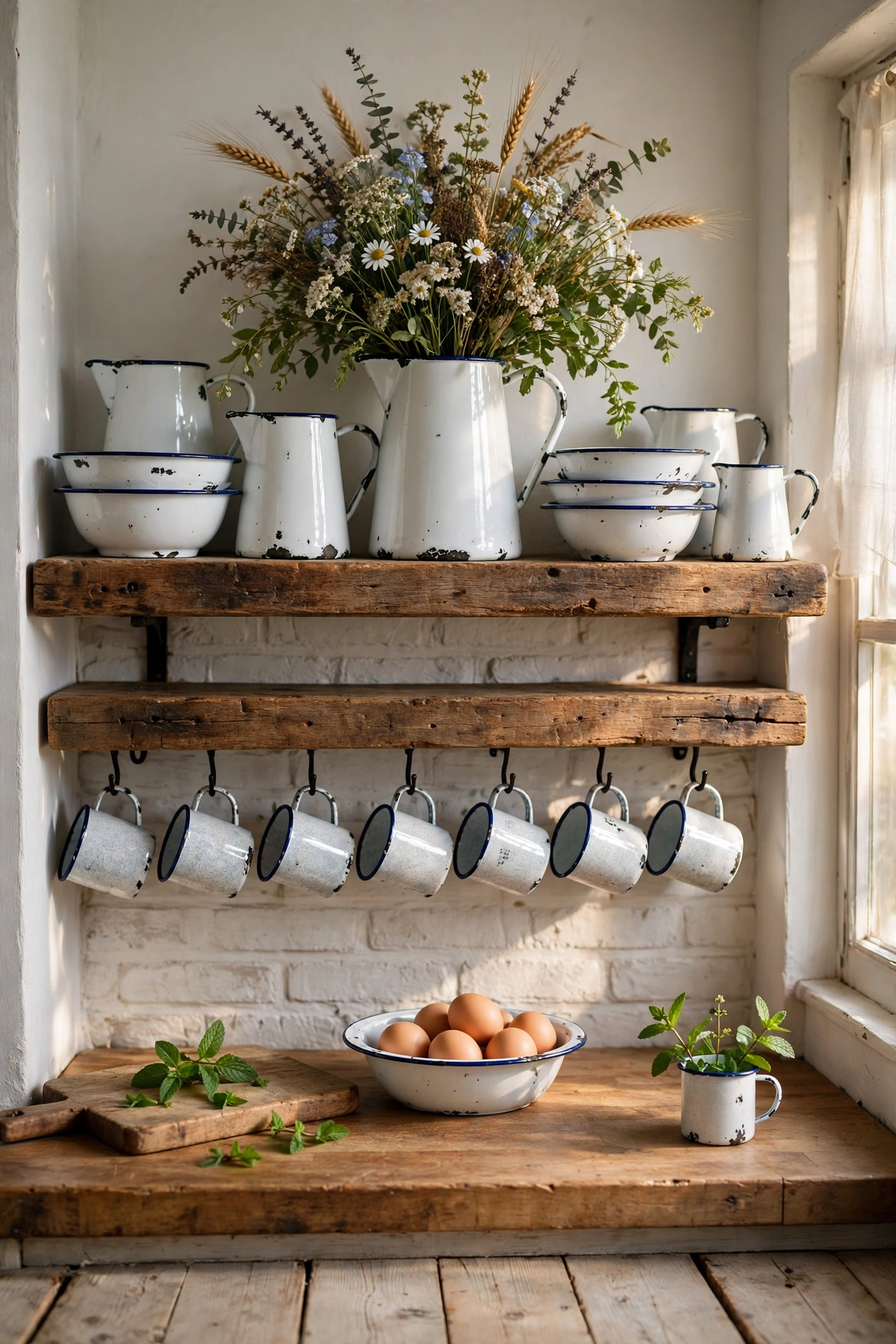
Collect gradually at flea markets and thrift stores. Look for the classic white with navy or red rims, and do not fear chips. In enamelware, wear is character, and perfect pieces can look suspiciously new.
Display enamelware on open shelves, hanging from a rail, or stacked on the counter. A big enamel pitcher of wildflowers on the island is the quintessential farmhouse still life.
Use it, too. Enamelware is tough, oven-safe, and dishwasher-friendly. Serving salad in a big enamel bowl or coffee from enamel mugs makes everyday meals feel like a countryside gathering.
Keep the collection cohesive by sticking to one or two rim colors. A tight palette of white, navy, and red reads as a collection; a rainbow of rims reads as clutter. This is farmhouse living at its best: beautiful, honest, and made for real life.
22. Cast-Iron Cookware Display
Cast-iron skillets are farmhouse tools that happen to be beautiful. Hung on a wall rail or stacked on open shelves, their dark, seasoned surfaces add weight and craft to a light, airy kitchen.
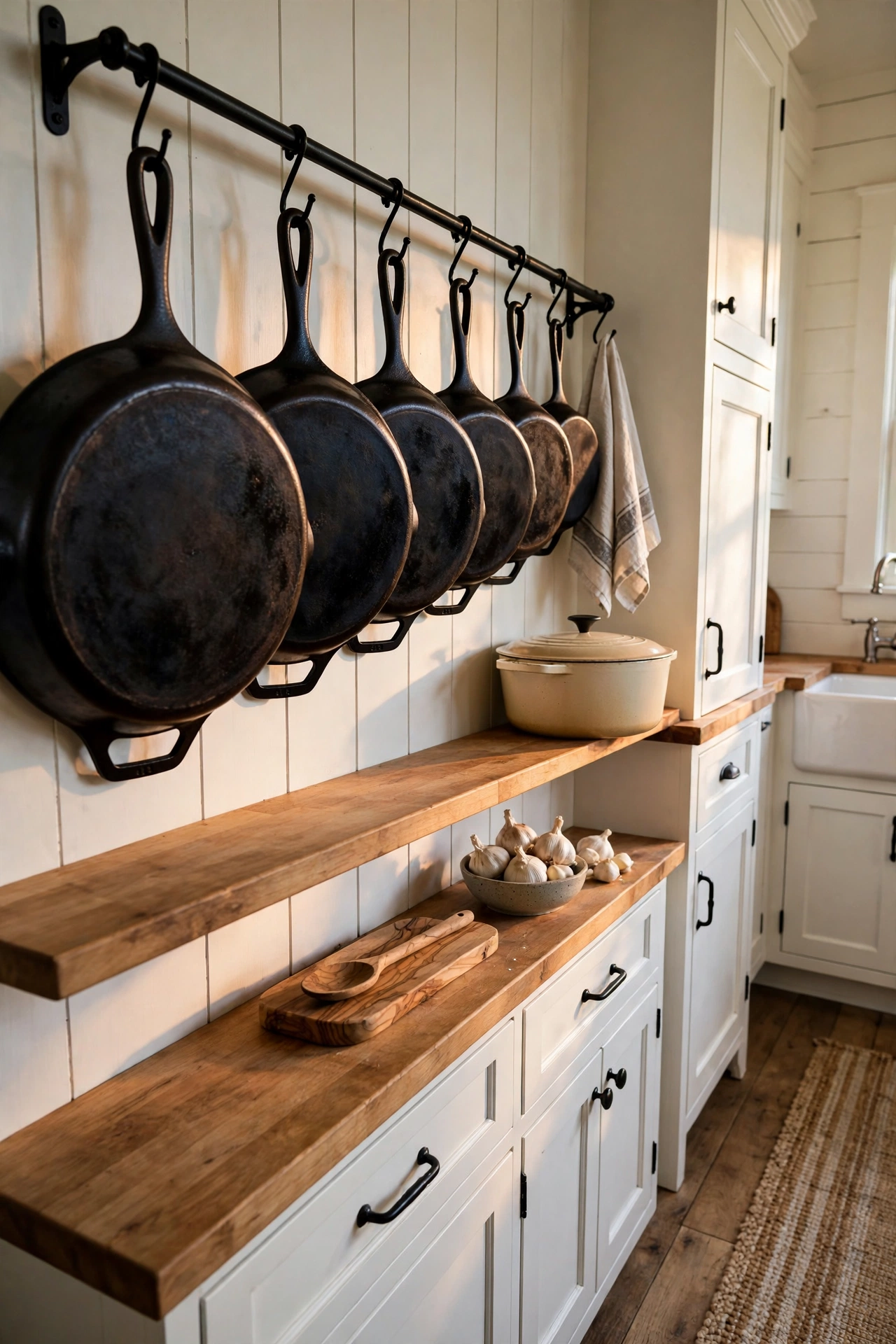
Hang a row of skillets on a simple iron rail beside the range. Arrange by size, handles aligned, for a look that is both decorative and supremely practical. The pan you need is always within reach.
Season and care for the iron properly and it only gets better. A well-seasoned skillet is nearly nonstick, lasts generations, and develops a deep black sheen that no new cookware can fake.
Balance the dark iron with light surroundings. White walls, pale wood shelves, and bright dishware keep the display from feeling heavy. The contrast is what makes cast iron look intentional rather than just stored.
Add one enameled Dutch oven in cream or sage for color. That single pop of color among the black iron is a classic farmhouse move, beautiful on the stove and on the shelf. Done well, this single idea can carry the whole farmhouse feeling of the room.
23. Linen Sink Skirt
A linen sink skirt softens a farmhouse kitchen like nothing else. That gathered fabric panel beneath the sink hides pipes and cleaning supplies while adding the gentle, old-fashioned charm of a cottage curtain.
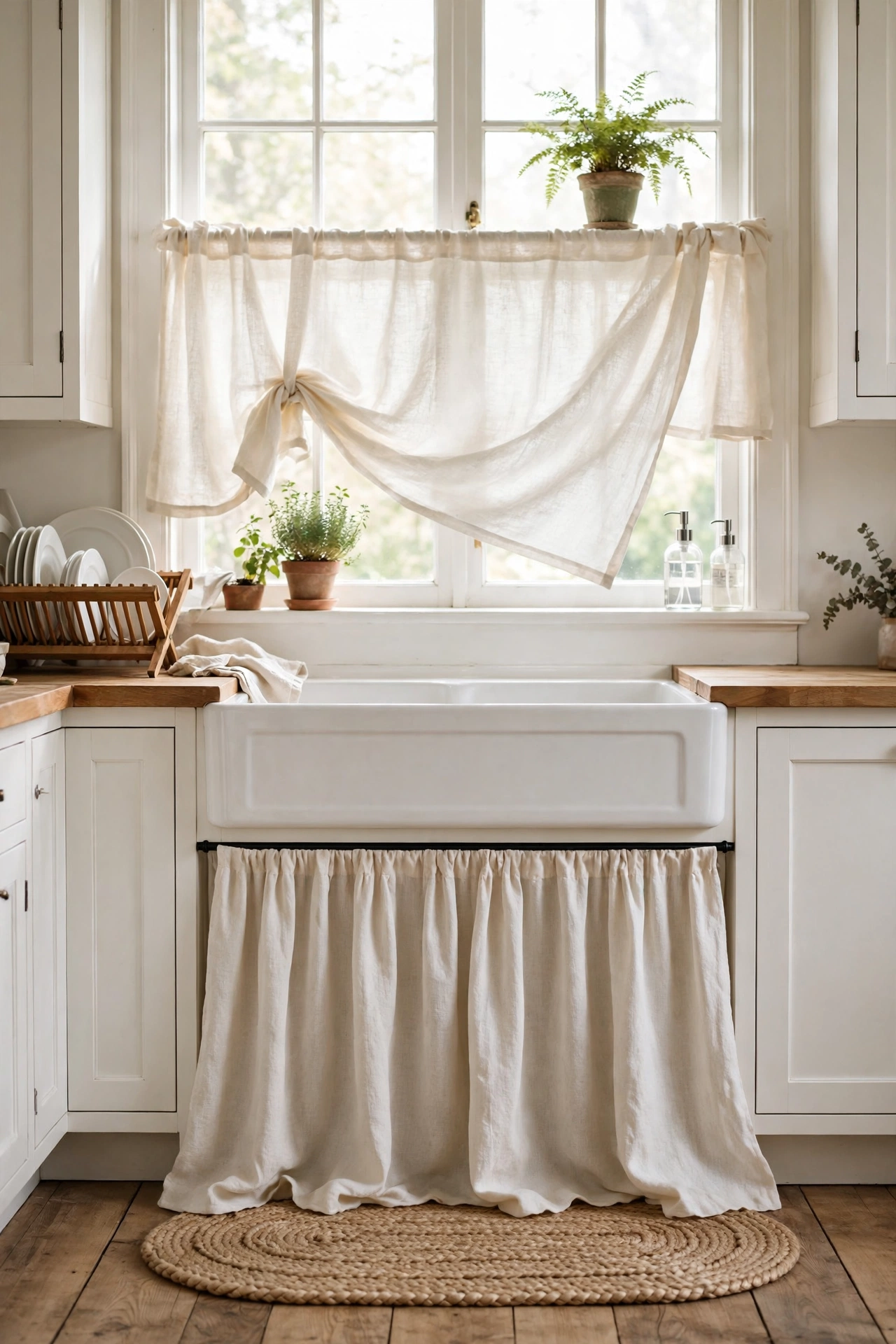
Choose natural linen or cotton in white, cream, or a subtle stripe. Hem it generously and gather it full so it hangs with soft folds. A tension rod or hook-and-loop tape makes it easy to remove for washing.
Skirts work beautifully under farmhouse sinks and on open vanity-style cabinetry. They are also a renter-friendly trick: hide an ugly under-sink area without touching the plumbing or the landlord’s cabinets.
Keep the fabric above the floor by an inch or two so it stays clean and dry. Machine-washable fabric is essential in a kitchen. Linen softens with every wash and looks better the more relaxed it gets.
Pair the skirt with a simple roman shade or cafe curtain in a matching fabric. Repeating the textile at the window ties the whole kitchen together with one soft, cohesive gesture. It is a small investment that pays back every single day in warmth and charm.
24. Wagon Wheel Chandelier
A wagon wheel chandelier is farmhouse lighting at its most dramatic. That big rustic ring, hung with candle-style bulbs, centers a kitchen with old-west romance and casts a warm, flickering-style glow.
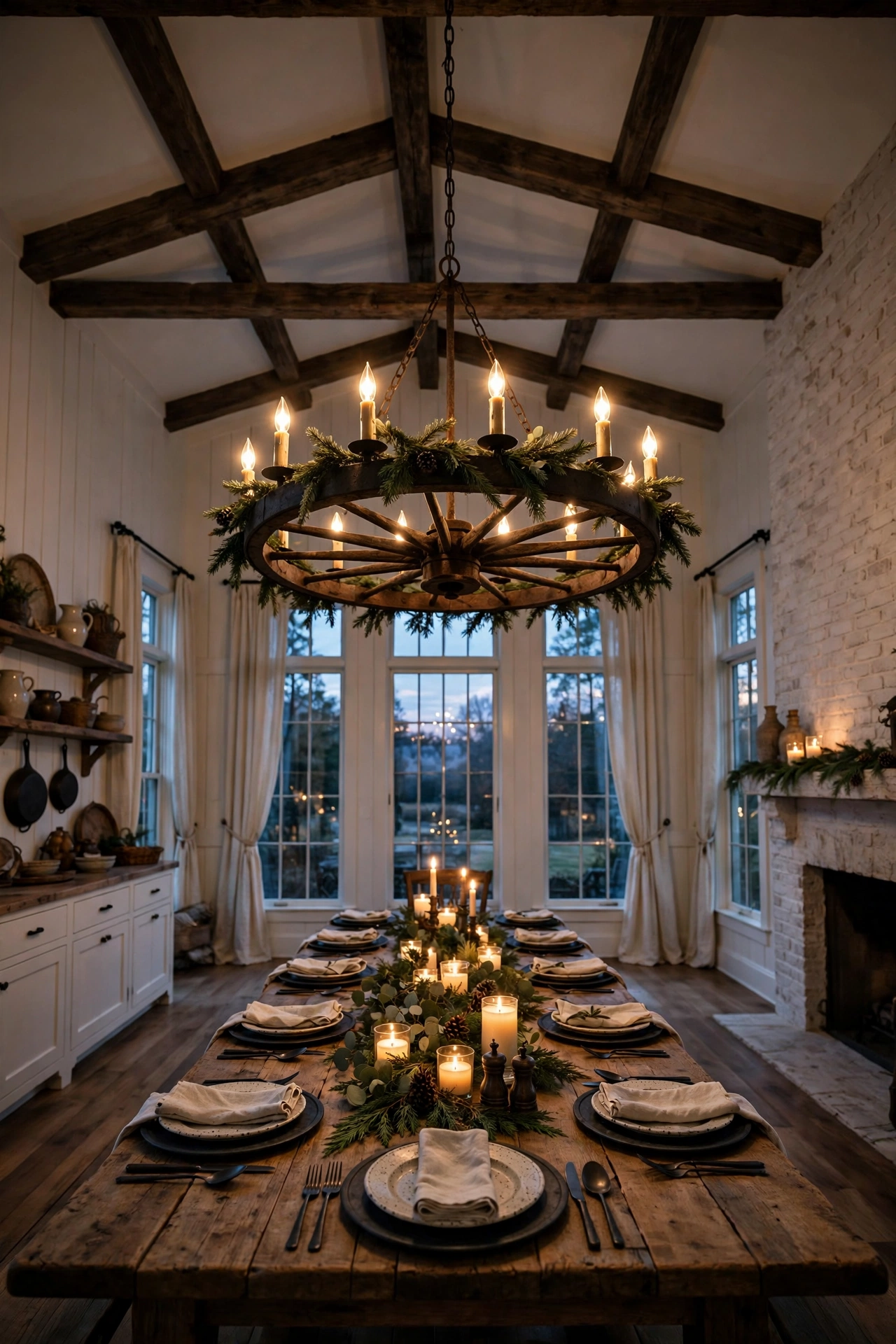
Scale it to the room. A thirty-six-inch wheel suits a large island or dining table; smaller rooms need a twenty-four-inch version. Hang it high enough to see under, around thirty inches above a table.
Choose dark iron or weathered wood for authenticity. Candle-sleeve bulbs complete the look; Edison-style filament bulbs add a softer, more modern glow. A dimmer is essential for shifting from task light to mood.
Balance the chandelier’s rusticity with refined surroundings. White shiplap, clean-lined cabinetry, and simple furniture keep the wheel from tipping the room into theme-park territory.
Greenery transforms a wagon wheel at the holidays. A simple evergreen garland woven through the ring, with a few pinecones, turns the chandelier into the season’s centerpiece with almost no effort. Few details deliver this much farmhouse character for this little effort.
25. Reclaimed Brick Fireplace Wall
If your kitchen has a fireplace, or room for a faux one, reclaimed brick makes it the heart of the home. That warm, textured wall turns a kitchen into a hearth room where everyone naturally gathers.
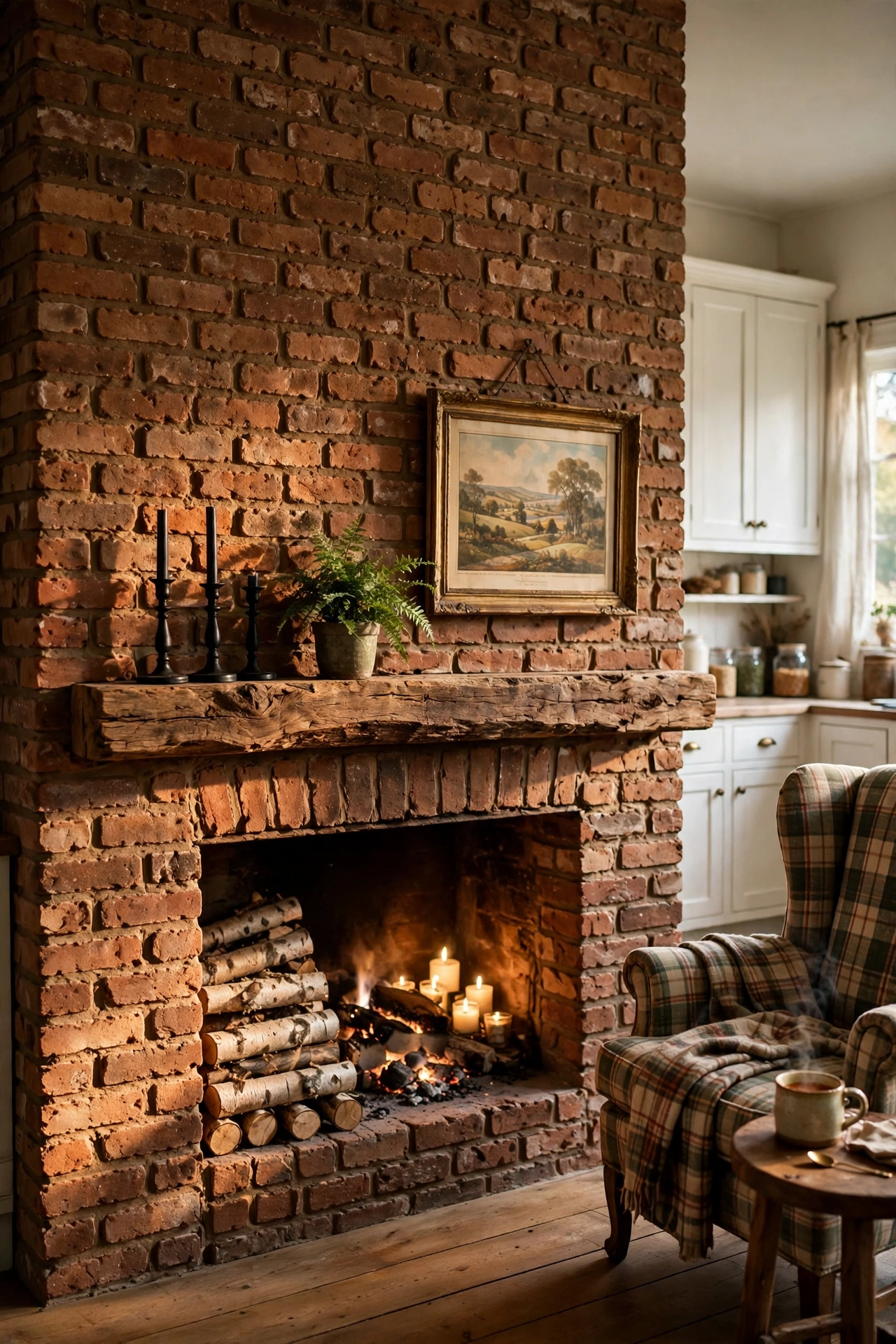
Use real thin-brick veneer over a framed chimney breast for the authentic look. A simple wood mantel beam, deep enough for candles and garlands, completes the composition. Keep the firebox simple: a gas insert or candles.
Style the mantel seasonally but simply. A vintage mirror or framed art above, candlesticks and a small plant on the beam. The brick is the texture; the mantel styling should stay quiet.
No chimney? A shallow faux fireplace against one wall still delivers the farmhouse feeling. Even a non-working hearth with stacked logs and candles becomes a beloved focal point.
Seal the brick to protect it from kitchen grease, and keep the palette around it light. White or cream walls let the warm brick tones glow without darkening the room. Your kitchen will feel more welcoming from the very first day it is done.
26. Herb Garden Window
A sunny window lined with potted herbs is the farmhouse kitchen’s living detail. Basil, thyme, and rosemary in terracotta pots bring green life, fresh flavor, and a garden scent to the busiest room in the house.
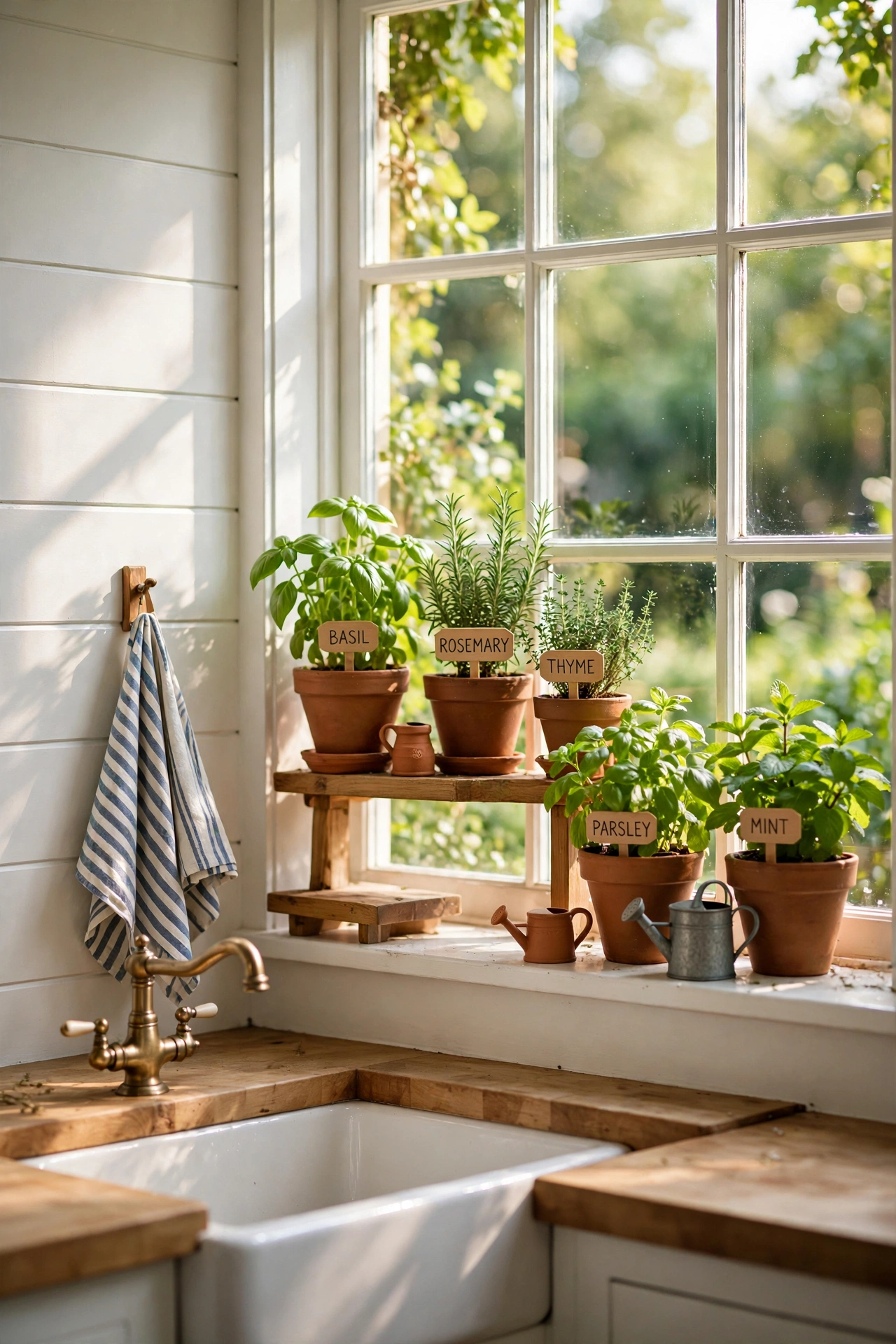
Choose the sunniest window, ideally south or west facing. Group pots on the sill, on a small tiered stand, or in a window box inside. Terracotta pots suit the farmhouse look and let roots breathe.
Start with the herbs you cook with most. Basil and parsley for everyday cooking, rosemary and thyme for roasts, mint for drinks. Three to five pots is plenty; a crowded sill becomes hard to water and clean.
Label each pot with a small wooden marker or chalkboard stake. The labels add farmhouse character and help guests, and kids, identify what is growing. Snip regularly to keep plants bushy and productive.
No sunny window? A small grow light on a timer keeps herbs happy through winter. The farmhouse kitchen embraces practical solutions, and fresh herbs in January feel like a small miracle. It is the kind of detail that makes guests linger a little longer in your kitchen.
27. Chicken Wire Pantry Doors
Chicken wire cabinet doors are farmhouse charm with a practical twist. The wire fronts keep pantry contents visible and ventilated while adding rustic texture that solid doors cannot match.
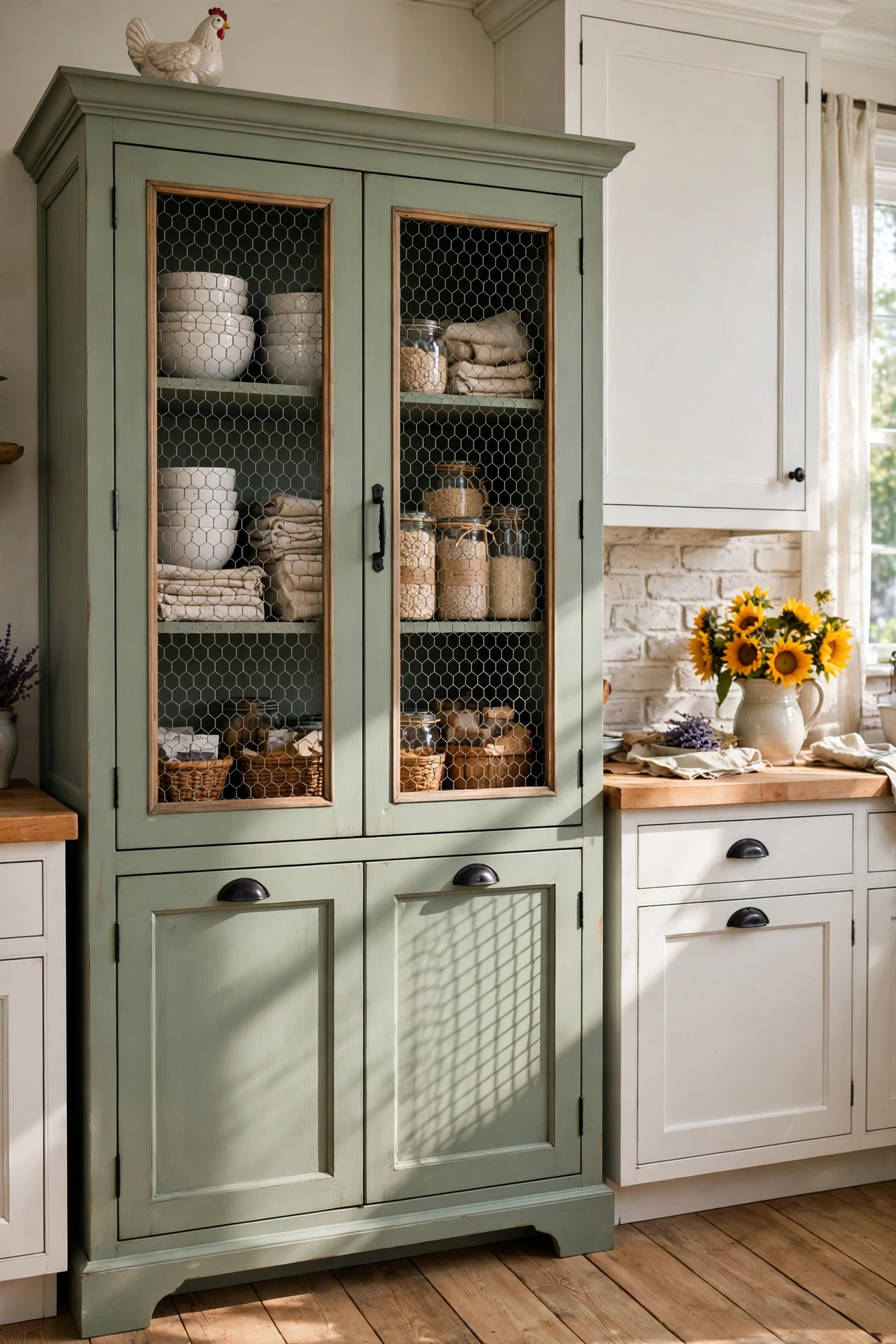
Use chicken wire inserts on a pantry cabinet, a pie safe, or upper cabinets flanking the range. Frame the wire in painted wood doors for a finished look. The wire reads farmhouse instantly.
Line the interiors with pretty contents since they will show. Matching jars, folded linens, and stacked dishes look wonderful behind wire. This is not the cabinet for the mismatched plastic containers.
Chicken wire is easy to work with and inexpensive. Remove the door’s center panel, staple the wire to the back of the frame, and trim the edges. A weekend project with high visual payoff.
Dust the wire occasionally with a soft brush. It collects kitchen film like any open surface, but a quick wipe keeps it sparkling. The texture is worth the tiny bit of upkeep. Small choices like this are what give a farmhouse kitchen its unmistakable soul.
28. Farmhouse Coffee Station
A dedicated coffee station turns a kitchen corner into a morning ritual. A small stretch of counter with the coffeemaker, mugs on hooks, and beans in jars makes every day start with a little ceremony.
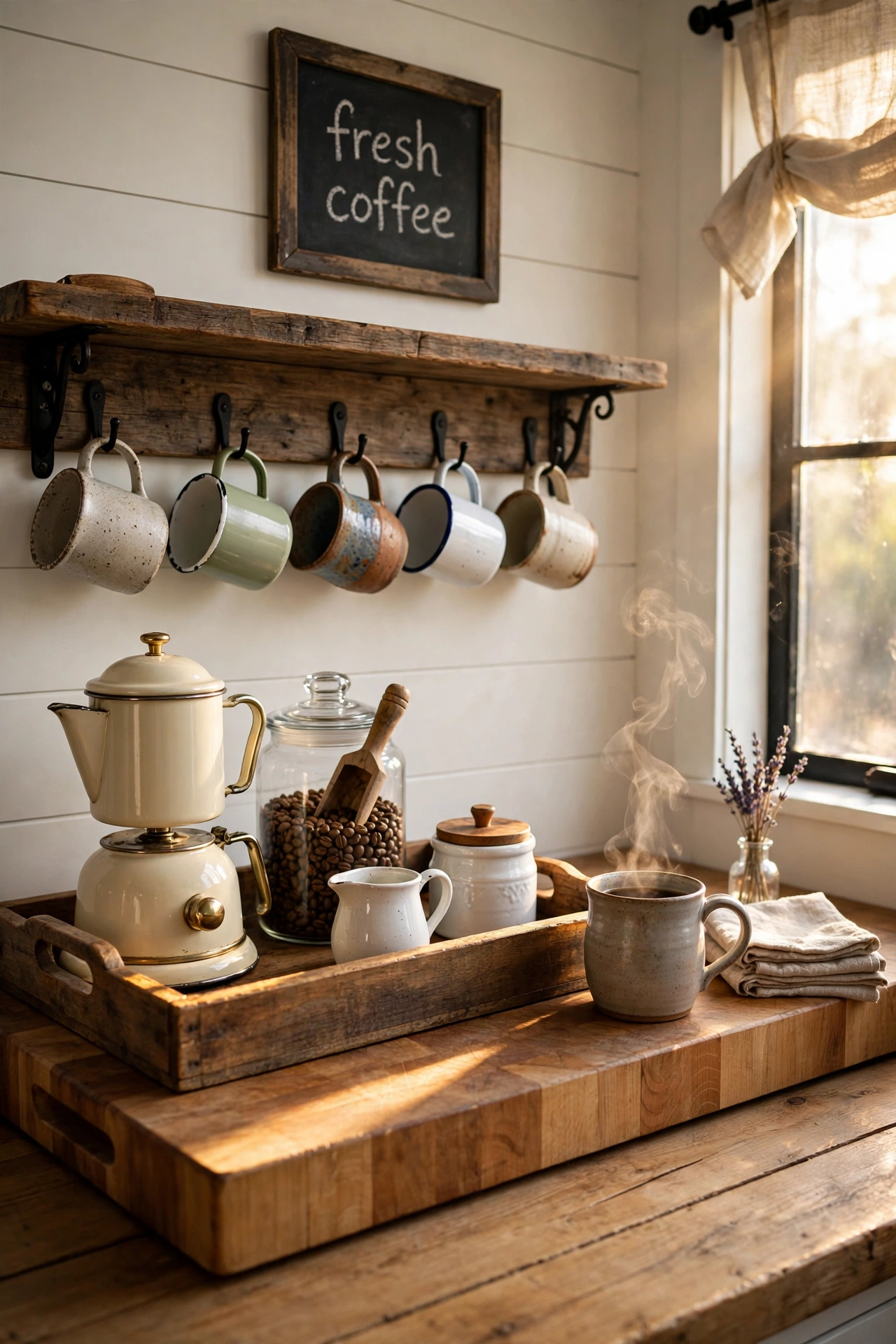
Choose a spot near the sink for easy water and cleanup. A section of counter, a rolling cart, or a repurposed sideboard all work. Corral everything on a large tray so the station reads as one intentional zone.
Hang mugs on hooks under a shelf or on a wall-mounted rack. A mix of ironstone, enamel, and handmade pottery mugs adds farmhouse character. Keep the daily mugs low and the pretty ones up high.
Stock the station thoughtfully: good beans in a sealed jar, sugar in a small crock, a tiny pitcher for cream. A small framed print or chalkboard menu above completes the cafe feeling.
Keep it tidy with a daily two-minute reset. A coffee station only feels charming when it is clean. Wipe the tray, rinse the mugs, and the ritual stays delightful instead of becoming clutter. Once it is in place, you will wonder how the kitchen ever felt complete without it.
29. Corbel-Detailed Kitchen Island
Wooden corbels under an island countertop add the architectural detail that separates a good farmhouse kitchen from a great one. Those carved brackets bring old-world craftsmanship to the room’s hardest-working surface.
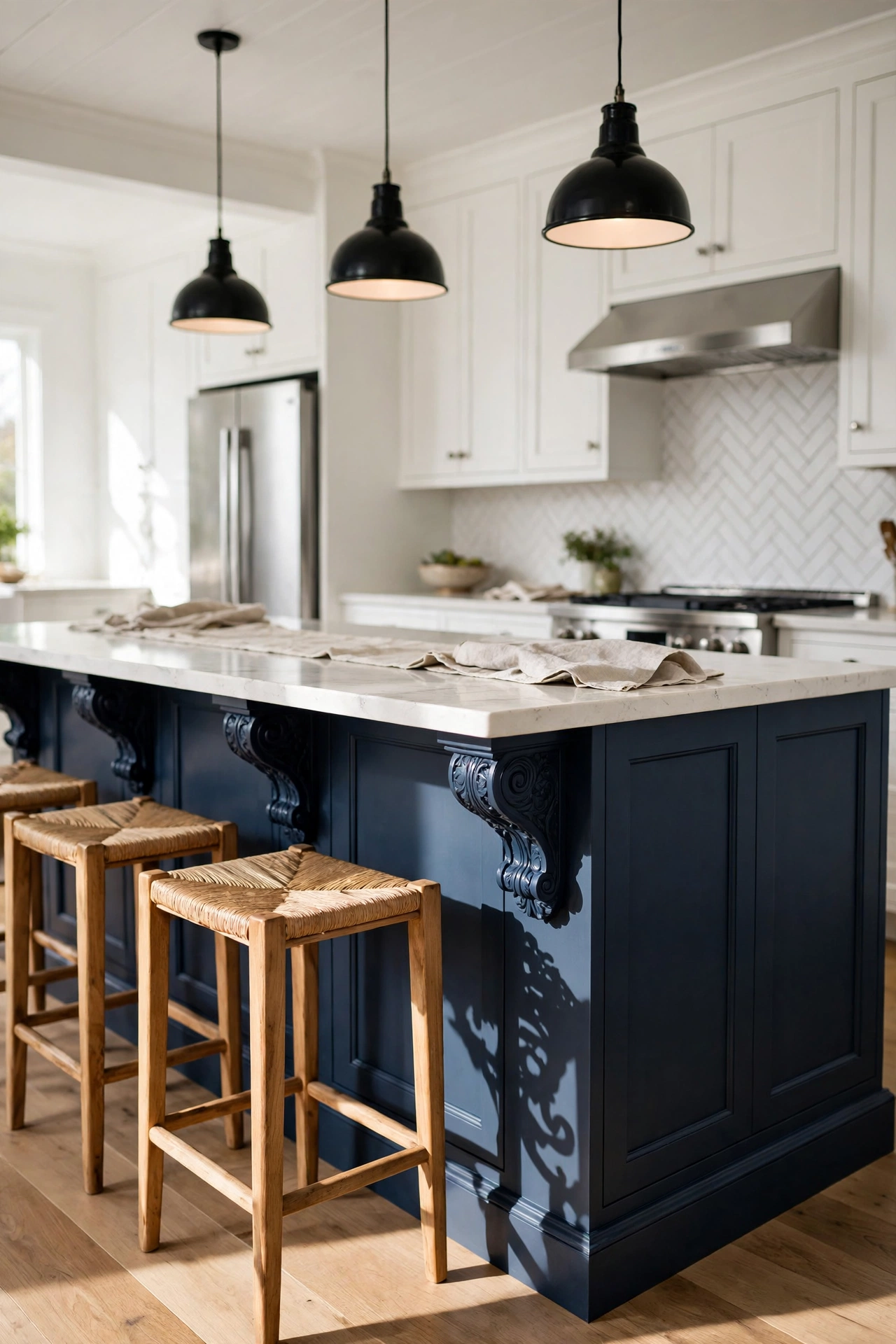
Install corbels at the island’s corners and along long overhangs. They support the countertop visually and structurally, especially on seating overhangs. Painted to match the island, they look built-in; stained, they become a feature.
Choose a corbel profile that suits your kitchen’s mood. Simple shaker-style brackets for modern farmhouse, more ornate scroll designs for traditional. Repeat the same profile at least twice for a deliberate look.
Echo the corbels elsewhere for cohesion. The same brackets under open shelves, a mantel, or a range hood tie the whole kitchen together with one repeated detail. Repetition is what makes a room feel designed.
Source corbels from architectural salvage for authentic age, or buy new unfinished ones and paint them. Either way, they install with construction adhesive and a few screws, a small project with outsized impact. This is farmhouse living at its best: beautiful, honest, and made for real life.
30. Vintage Wall Sign Gallery
Vintage-style wall signs are the farmhouse finishing touch. Market signs, farm quotes, and grain-sack graphics add personality and humor, turning blank walls into a gallery of countryside character.
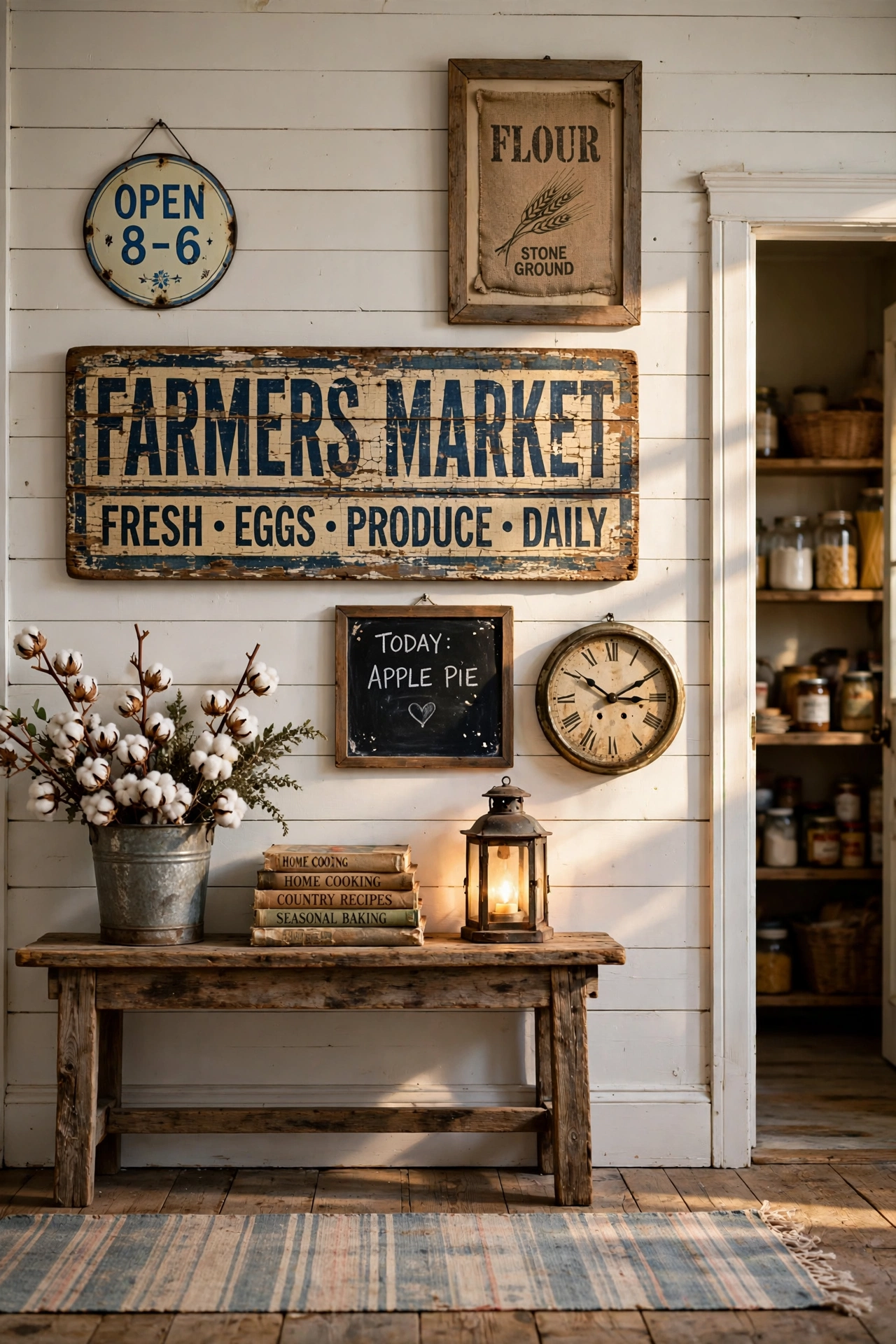
Build the gallery gradually. Start with one large statement sign over the range or dining table, then add smaller pieces around it. Antique markets, salvage shops, and artisan makers are the best sources.
Mix sign styles for a collected look: a big painted wood sign, a small enamel plaque, a framed grain-sack print. Vary the sizes and shapes but keep the palette tight, mostly black, white, and wood tones.
Hang signs where they can be read and enjoyed: above doorways, on the pantry door, flanking windows. A sign tucked behind the coffeemaker gets lost. Give each piece enough wall to breathe.
Balance signs with non-sign decor. Too many words on the walls feels like a gift shop. Alternate signs with wreaths, mirrors, and simple art so the gallery feels curated, not cluttered. Done well, this single idea can carry the whole farmhouse feeling of the room.
Conclusion
A farmhouse kitchen is never really finished, and that is its greatest charm. It grows with you, collecting a new sign here, a vintage pitcher there, each piece adding to the story. Start with the bones that matter most to you, whether that is the sink, the beams, or the table, and let the rest follow naturally.
Remember the balance that makes this style sing. Rustic against refined, old against new, useful against beautiful. Every idea in this guide works on its own, but the magic happens when you mix them: the gleam of copper against whitewashed brick, the softness of linen against weathered wood.
So pick the three ideas that made your heart beat fastest and start there. Paint the island, hang the rail, plant the herbs. Your farmhouse kitchen is waiting, and it is going to be wonderful.
Key Takeaways
- Start with one anchor piece, like an apron sink, farmhouse table, or beams, and build the room around it.
- Balance rustic textures with clean, simple lines so the kitchen feels collected, not cluttered.
- Mix materials deliberately: warm wood, white paint, dark metal, and one natural stone or brick.
- Choose hardworking details, butcher block, copper, cast iron, that look better with daily use.
- Use open shelving, rails, and hutches to display the pretty and hide the practical.
- Repeat key details, corbels, hardware finishes, textiles, at least twice for a designed feel.
- Let the kitchen evolve; the best farmhouse rooms are collected slowly over time.